Kirjojen hintavertailu. Mukana 11 244 527 kirjaa ja 12 kauppaa.

Kirjahaku

Etsi kirjoja tekijän nimen, kirjan nimen tai ISBN:n perusteella.

4 kirjaa tekijältä Rene Crevel

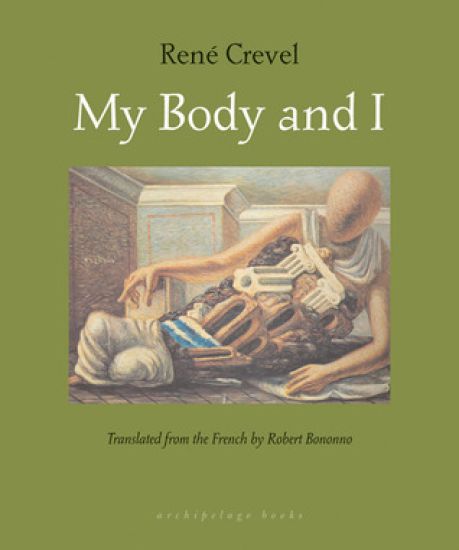
My Body And I

My Body And I

Rene Crevel

Archipelago Books
2010
nidottu
In "My Body and I" (1925), Rene Crevel attempts to trace with words the geography of a being, exploring the tension between body and spirit. Crevel's meditation is a vivid personal journey through illusion and disillusion, secret desire, memory, the possibility and impossibility of life, sensuality and sexuality, poetry and the wilderness of the imagination. The narrator's Romantic mind moves from evocative tales to frank confessions, making the reader a confidant to this great soul trapped in an awkward-fitting body. Admired greatly by Andre Breton and Ezra Pound, Crevel might be thought of as a surrealist Proust.Robert Bononno's translations include Henri Raczymow's "Swan's Way" and Herve Guibert's "Ghost Image."
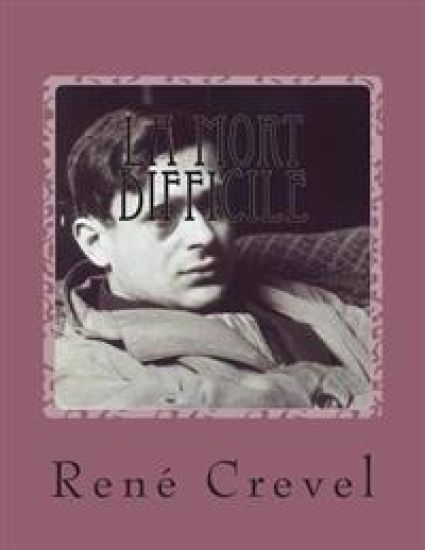
La mort difficile

La mort difficile

Rene Crevel

Createspace Independent Publishing Platform
2014
nidottu
Description Pierre Dumont, homosexuel et toxicomane, personnage central de La mort difficile, aime Arthur Bruggle l'Am ricain, venu en Europe comme laveur de vaisselle, maintenant dandy capricieux et insolent. Pierre est aussi aim de Diane, sa soeur d'ombre . Quand Arthur trompe Pierre, ce dernier trouve, un temps, consolation aupr s de son amie. Entre la douce compagne compr hensive et attentive et son fr re de lumi re, repr sentant d'une jeunesse embellie par les f tes et les griseries de toutes sortes, Pierre h site, d sorient , troubl , fragile. Au cours d'une soir e, Arthur, humilie Pierre; ce qui le conduira au suicide. Pris de remords, Arthur pleurera sur son cadavre et trouvera le r confort aupr s de Diane. Roman po tique et d sesp r , La mort difficile brasse la fois le r el et l'imaginaire coups de phrases br ves et de notations ironiques qui saisissent de l'int rieur les motivations des personnages. Ce roman t moigne de l'obsession autobiographique et de la bisexualit de Ren Crevel et d livre un document essentiel sur une certaine jeunesse des ann es 1920.
Putting My Foot in It

Putting My Foot in It

Rene Crevel

Dalkey Archive Press
1994
nidottu
Imagine, if you can, Freud and Proust sitting down for a chat with Zippy the Pinhead and the marquis de Sade. Then, just when things are starting to get a bit silly, in walks Karl Marx with a dead serious face to deliver a vitriolic diatribe. After he has finished his speech, Jacques Lacan enters and slips a couch under the narrator, who begins psychoanalyzing himself and his text. Zippy soon prevails, however, and the narrative has turned into a political allegory with characters out of Felix the Cat: a surrealist, graphic (historiographic, geographic, pornographic) version of The Romance of the Rose. Rene Crevel's 1933 novel Putting My Foot in It (Les Pieds dans le plat) has long been considered a classic of the surrealist period, but has never been translated into English until now. Loosely structured around a luncheon attended by thirteen guests, the novel is a surrealistic critique of the intellectual corruption of post-World War I France, especially the capitalist bourgeoisie and its supporter, the Catholic Church. The novel begins with an account of the family of the major character, known as the "Prince of Journalists." This bizarre family - the grandparents a soldier and a sodomized woman, the parents an orphaned epileptic and a hunchback - is matched by Crevel's bizarre syntax and vocabulary: nouns that initially appear legitimate, intact, and respectable, soon decompose into obscene epithets, making other nouns, both common and proper, suspect. The story continues in this way to deconstruct itself on many levels - literary, semantic, psychological, ideological - until the final chapter, when the luncheon degenerates in a way reminiscent of a Bunuel film and all of the novel'scharacters appear in a dirty movie entitled The Geography Lesson, a final metaphor for the corruption of European society between the world wars. This edition also reprints Ezra Pound's well-known essay on Crevel as a foreword, and includes an introduction by Edouard Roditi, who