Kirjojen hintavertailu. Mukana 11 342 296 kirjaa ja 12 kauppaa.

Kirjahaku

Etsi kirjoja tekijän nimen, kirjan nimen tai ISBN:n perusteella.

4 kirjaa tekijältä Reyner Banham

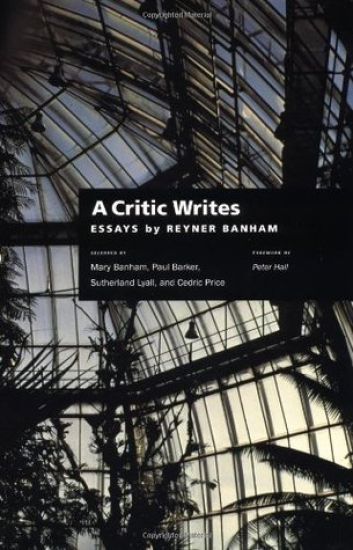
A Critic Writes

A Critic Writes

Reyner Banham

University of California Press
1999
pokkari
Few twentieth-century writers on architecture and design have enjoyed the renown of Reyner Banham. Born and trained in England and a U.S. resident starting in 1976, Banham wrote incisively about American and European buildings and culture. Now readers can enjoy a chronological cross-section of essays, polemics, and reviews drawn from more than three decades of Banham's writings. The volume, which includes discussions of Italian Futurism, Adolf Loos, Paul Scheerbart, and the Bauhaus as well as explorations of contemporary architecture by Frank Gehry, James Stirling, and Norman Foster, conveys the full range of Banham's belief in industrial and technological development as the motor of architectural evolution. Banham's interests and passions ranged from architecture and the culture of pop art to urban and industrial design. In brilliant analyses of automobile styling, mobile homes, science fiction films, and the American predilection for gadgets, he anticipated many of the preoccupations of contemporary cultural studies. Los Angeles, the city that Banham commemorated in a book and a film, receives extensive attention in essays on the Santa Monica Pier, the Getty Museum, Forest Lawn cemetery, and the ubiquitous freeway system. Eminently readable, provocative, and entertaining, this book is certain to consolidate Banham's reputation among architects and students of contemporary culture. For those acquainted with his writing, it offers welcome surprises as well as familiar delights. For those encountering Banham for the first time, it comprises the perfect introduction.
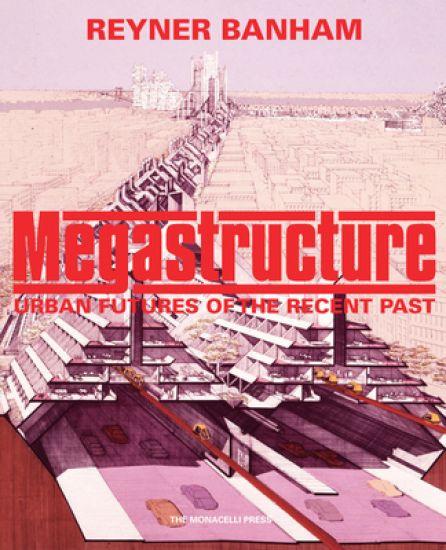
Megastructure

Megastructure

Reyner Banham

Monacelli Press
2020
sidottu
A long-sought reprint of this classic of architectural history and criticism, surveying a movement that would inspire architects, fantasists, and filmmakers alike. A long-sought reprint of this classic of architectural history and criticism, surveying a movement that would inspire architects, fantasists, and filmmakers alike. It is an architectural concept as alluring as it is elusive, as futuristic as it is primordial. Megastructure is what it sounds like- a vastly scaled edifice that can contain potentially countless uses, contexts, and adaptations. Theorized and briefly experimented with in built form in the 1960s, megastructures almost as quickly went out of fashion in the profession. But Reyner Banham's 1976 book compiled the origin stories and ongoing mythos of this visionary movement, seeking to chart its lively rise, rapid fall, and ongoing meaning. Now back in print after decades and with original editions fetching well over $100 on the secondary market, Megastructure- Urban Futures of the Recent Past is part of the recent surge in attention to this quixotic form, of which some examples were built but to this day remains--decades after its codification--more of a poetic idea than a real architectural type. Banham, among the most gifted and incisive architectural critics and historians of his time, sought connections between theoretical origins in Le Corbusier's more starry-eyed drawings to the flurry of theories by the Japanese Metabolist architects, to less intentional examples in military architecture, industry, infrastructure, and the emerging instances in pop culture and art. Had he written the book a few years later he would find an abundance of examples in speculative art and science fiction cinema, mediums where it continues to provoke wonder to this day. A long-sought study by an author who combined imagination, wit, and pioneering scholarship, the republication of Megastructure is an opportunity for scholars and laypeople alike to return to the origins of this fantastic urban idea.
Edward Ruscha

Edward Ruscha

Reyner Banham

Steidl Verlag
2005
sidottu
The Catalogue Raisonne of Paintings of Ed Ruscha is a six-volume series of books co-published by Steidl and Gagosian Gallery. This is the second volume, which contains entries on 178 paintings completed between 1971 and 1982 - from the artist's crisis at the onset of the seventies, when he quits painting pictures, to his first major museum retrospective, which opened in March 1982 at the San Francisco Museum of Modern Art. The catalogue includes a comprehensive exhibition history, bibliography and biographical chronology, as well as a preface by the editor Robert Dean, an essay by UCLA film historian Peter Wollen examining Ruscha's use of color as it relates to his use of language, and an essay by the late Reyner Banham.