Kirjojen hintavertailu. Mukana 12 439 908 kirjaa ja 12 kauppaa.

Kirjahaku

Etsi kirjoja tekijän nimen, kirjan nimen tai ISBN:n perusteella.

5 kirjaa tekijältä Riccardo Viale

Nudging

Nudging

Riccardo Viale

MIT PRESS LTD
2022
sidottu
How "nudges" by government can empower citizens without manipulating their preferences or exploiting their biases. We're all familiar with the idea of "nudging"--using behavioral mechanisms to encourage people to make certain choices--popularized by Richard Thaler and Cass Sunstein in their bestselling 2008 book Nudge. This approach, also known as "libertarian paternalism," goes beyond typical programs that simply provide information and incentives; nudges can range from automatic enrollment in a pension plan to flu-shot scheduling. In Nudging, Riccardo Viale explores the evolution of nudging and proposes new approaches that would empower citizens without manipulating them paternalistically. He shows that we can use the tools of the behavioral sciences without abandoning the principle of conscious decision-making. Viale discusses the work of Herbert Simon, Gerd Gigerenzer, Daniel Kahneman, and Amos Tversky that laid the foundation of behavioral economics, describes how policy makers have sought to help people avoid bad decisions, offers examples of effective nudging, and considers how to nudge the nudgers. How can we tell good nudges from bad nudges? Viale explains that good nudges help us avoid bias and encourage deliberate decision making; bad nudges, on the other hand, use bias to nudge people unconsciously into unintentional behaviors. Bad nudges attempt to compel decisions based on economic rationality. Good nudges encourage decisions based on a pragmatic, adaptive, ecological kind of rationality. Policy makers should take note.
Methodological Cognitivism

Methodological Cognitivism

Riccardo Viale

Springer-Verlag Berlin and Heidelberg GmbH Co. K
2012
sidottu
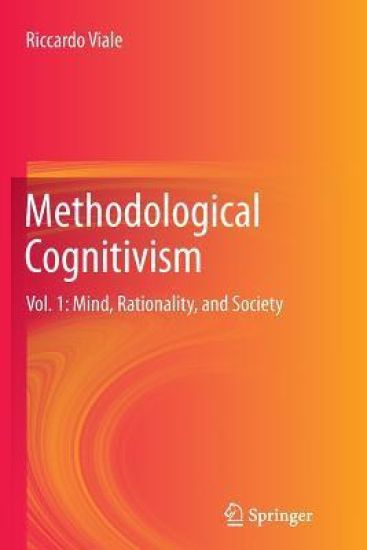
This book deals with the cognitive foundation of the theory of social action. The social sciences are still guided by models of social action, far from the empirical reality of the psychology of action. While economics seems to have made greater progress in accepting the changes to the theory of action derived from cognitive science (see, for example, the 2002 Nobel prize for economics awarded to Daniel Kahneman), sociology is still being oriented on the dualism of hermeneutics vs. structuralism, which leaves very little room for a cognitive theory of social action. The unique features of the book are its combination of epistemology, philosophy of mind and cognitive science in order to renew and overcome the limits of the current methodologies of social science and in particular methodological individualism.Methodological cognitivism is proposed as an alternative to the holistic character of structuralism, to the intentionalist and rationalist features of methodological individualism, and to the relativistic character of hermeneutics and ethnomethodology.
Methodological Cognitivism

Methodological Cognitivism

Riccardo Viale

Springer-Verlag Berlin and Heidelberg GmbH Co. K
2014
sidottu
This book covers a broad spectrum of topics, from experimental philosophy and cognitive theory of science, to social epistemology and research and innovation policy. Following up on the previously published Volume 1, “Mind, Rationality, and Society,” it provides further applications of methodological cognitivism in areas such as scientific discovery, technology transfer and innovation policy. It also analyzes the impact of cognitive science on philosophical problems like causality and truth. The book is divided into four parts: Part I “Experimental Philosophy and Causality” tackles the problem of causality, which is often seen as straddling metaphysics, ontology and epistemology. Part II “Cognitive Rationality of Science” deals with the cognitive foundation of scientific rationality, starting from a strong critique of the neopositivist rationality of science on the one hand and of the relativist and social reduction of the methodology of science on the other. Part III “Research Policy and Social Epistemology” deals with topics of social epistemology, science policy and culture of innovation. Lastly, Part IV “Knowledge Transfer and Innovation” addresses the dynamics of knowledge generation, transfer and use in technological innovation.
Methodological Cognitivism

Methodological Cognitivism

Riccardo Viale

Springer-Verlag Berlin and Heidelberg GmbH Co. K
2014
nidottu
This book deals with the cognitive foundation of the theory of social action. The social sciences are still guided by models of social action, far from the empirical reality of the psychology of action. While economics seems to have made greater progress in accepting the changes to the theory of action derived from cognitive science (see, for example, the 2002 Nobel prize for economics awarded to Daniel Kahneman), sociology is still being oriented on the dualism of hermeneutics vs. structuralism, which leaves very little room for a cognitive theory of social action. The unique features of the book are its combination of epistemology, philosophy of mind and cognitive science in order to renew and overcome the limits of the current methodologies of social science and in particular methodological individualism.Methodological cognitivism is proposed as an alternative to the holistic character of structuralism, to the intentionalist and rationalist features of methodological individualism, and to the relativistic character of hermeneutics and ethnomethodology.
Methodological Cognitivism

Methodological Cognitivism

Riccardo Viale

Springer-Verlag Berlin and Heidelberg GmbH Co. K
2016
nidottu
This book covers a broad spectrum of topics, from experimental philosophy and cognitive theory of science, to social epistemology and research and innovation policy. Following up on the previously published Volume 1, “Mind, Rationality, and Society,” it provides further applications of methodological cognitivism in areas such as scientific discovery, technology transfer and innovation policy. It also analyzes the impact of cognitive science on philosophical problems like causality and truth. The book is divided into four parts: Part I “Experimental Philosophy and Causality” tackles the problem of causality, which is often seen as straddling metaphysics, ontology and epistemology. Part II “Cognitive Rationality of Science” deals with the cognitive foundation of scientific rationality, starting from a strong critique of the neopositivist rationality of science on the one hand and of the relativist and social reduction of the methodology of science on the other. Part III “Research Policy and Social Epistemology” deals with topics of social epistemology, science policy and culture of innovation. Lastly, Part IV “Knowledge Transfer and Innovation” addresses the dynamics of knowledge generation, transfer and use in technological innovation.