Kirjojen hintavertailu. Mukana 11 699 587 kirjaa ja 12 kauppaa.

Kirjahaku

Etsi kirjoja tekijän nimen, kirjan nimen tai ISBN:n perusteella.

27 kirjaa tekijältä Richard A. Gabriel

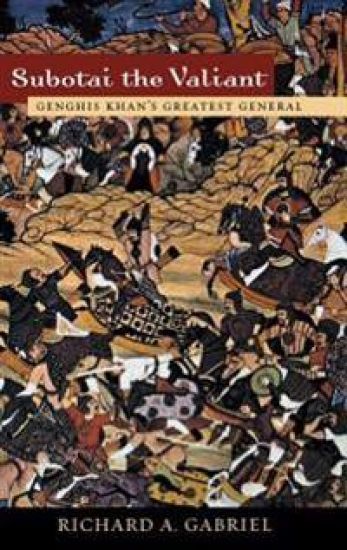
Subotai the Valiant

Subotai the Valiant

Richard A. Gabriel

Praeger Publishers Inc
2004
sidottu
This book tells the story of Subotai the Valiant, one of the greatest generals in military history, surely the equal of Hannibal and Scipio in tactical brilliance and ranking right along with both Alexander and Caesar as a strategist. Subotai commanded armies whose size, scale, and scope of operations surpassed all of the commanders of the ancient world. Under his direction and command, Mongol armies moved faster, over greater distances, and with a greater scope of maneuver than any army had ever done before. His legacy lives to the present day, for much of the theory and practice of modern military operations was first used by Subotai. The modern emphasis on speed, maneuver, surprise, envelopment, the rear battle, the deep battle, concentration of firepower, and the battle of annihilation all emerged as tactical skills first practiced by this great Mongol general. Subotai died at age 73, by which time he had conquered 32 nations and won 65 pitched battles, as the Muslim historians tell us. For 60 of those years, Subotai lived as Mongol soldier, first as a lowly private who kept the tent door of Genghis himself, rising to be the most brilliant and trusted of Genghis Khan's generals. When Genghis died, Subotai continued to be the moving force of the Mongol army under his successors. It was Subotai who planned and participated in the Mongol victories against Korea, China, Persia, and Russia. It was Subotai's conquest of Hungary that destroyed every major army between the Mongols and the threshold of Europe. Had the great Khan not died, it is likely that Subotai would have destroyed Europe itself.
The Military History of Ancient Israel

The Military History of Ancient Israel

Richard A. Gabriel

Praeger Publishers Inc
2003
sidottu
Exactly how did the Israelites cross the desert? How did Moses cross the Red Sea? How did Joshua take Jericho, and how did the sun appear to stand still at the Ayjllon Valley? No one has ever analyzed the Bible as a military history Gabriel provides the first attempt at a continuous historical narrative of the military history of ancient Israel. He begins with a military analysis of Exodus, an unprecedented and hugely significant contribution to Exodus Studies. This book includes collaborative findings from archaelogy, demography, ethnography, and other relevant disciplines. As a seasoned infantry officer and military historian, Gabriel brings a soldier's eye to the infantry combat described in the Bible. Seeking to make military sense of the Biblical narrative as preserved in Hebrew, he renders comprehensible some of the mysterious explanations for famous events.
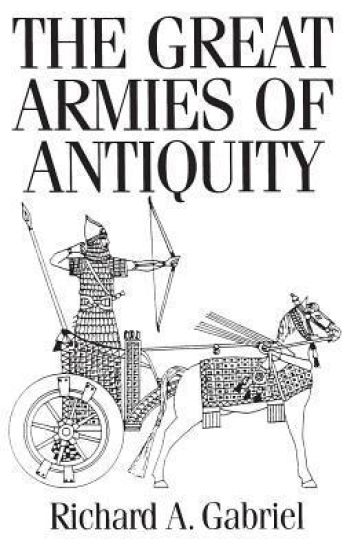
The Great Armies of Antiquity

The Great Armies of Antiquity

Richard A. Gabriel

Praeger Publishers Inc
2002
sidottu
Gabriel examines 18 ancient army systems, examining the organizational structure and weapons employed and the degree to which cultural values and imperatives shaped the form and application of military force. The tactical doctrines and specific operational capabilities of each army are analyzed to explain how certain technical limitations and societal/cultural imperatives affected the operational capabilities of ancient armies. Cross-cultural and cross-historical connections ground the analysis in the larger historical context of the ancient world. •Sumer and Akkad •The Armies of the Pharaohs •The Hittites •The Mitanni •Armies of the Bible •The Iron Army of Assyria •Chinese Armies •Persia and the Art of Logistics •The Greeks •Carthaginian Armies •Armies of India •Rome •The Iberians, Celts, Germans, and Goths •The Army of Byzantium •The Vikings •The Arab Armies •The Japanese Way of War •The Mongols •The Ottomans This book also provides an introductory overview of war in the ancient world, from 2500 B.C.E. to 1453 C.E., as well as an examination of the evolution of modern warfare from 1453 to 2002 C.E.
The Mind of the Soviet Fighting Man

The Mind of the Soviet Fighting Man

Richard A. Gabriel

Greenwood Press
1984
sidottu
This is a systematic, comparative attitudinal study of the Soviet fighting man. The author interviewed emigre ex-Soviet servicemen from all branches and of all ranks to determine their feelings about their military experience. Each of the three major sections of the work addresses one branch of the service, detailing the answers of respondents to eighty-one questions. The resulting sets of data are divided into twelve categories dealing with various aspects of military service in the Soviet Union: general views of military service, military life, combat ability, training, quality of officers and NCOs, leadership, morale and discipline, ideology, unit cohesion, desertion and AWOL, alcohol use, and suicide. Gabriel's conclusions, as well as the data he presents, answer critical questions about Soviet military effectiveness and encourage further analysis of the psychology of the Soviet fighting man.
The Painful Field

The Painful Field

Richard A. Gabriel

Praeger Publishers Inc
1988
sidottu
Colored by the popular and official mythologies of heroism, the accepted view of mental collapse during combat is that it is a fairly rare occurrence that can be attributed to psychological weakness or simple cowardice. With the advent of each new generation of weapons, however, this view becomes less tenable. The increasingly lethal battlefields of conventional warfare have sharply escalated the numbers of psychiatric casualties, which reached staggering proportions worldwide by the early 1980s. Professor Gabriel, a leading authority on military psychiatry, provides the first systematic examination of the problem, its history and current dimension, the systems developed by the superpowers to counter it, and the far-reaching implications of our continued acceptance of warfare under radically altered conditions.
The Culture of War

The Culture of War

Richard A. Gabriel

Praeger Publishers Inc
1990
sidottu
Although war has been analyzed from many perspectives, no scholar has satisfactorily explained why the human race fights and how we came to create a degree of military sophistication capable of destroying the entire species. Gabriel addresses these questions in his study of the origins and development of warfare. He looks particularly at the relationship between the evolution of the social institution of war and the development of the military institutions, tactical sciences, and technology required for organized conflict. Beginning with a discussion of the biological and evolutionary history of man, Gabriel investigates the proposition that the human race is genetically predisposed to warlike behavior. He next reviews the archaeological record to test the common assumption that war has existed from the earliest times. He traces the evolution of the social institutions and technology of war in a succession of ancient cultures beginning with the Bronze Age. The development of armies, tactics, logistics, and weapons is examined, together with the psychological and social implications of mankind's choice to use them. The work concludes with a discussion demonstrating how the practice of war in modern times relates to the perpetuation of values and institutional forms created by earlier societies--especially those of classical Greece and Rome. The first study to integrate the findings of cultural anthropology with the concerns of military analysis, this work will be of interest to students and academics in these and related fields.
Great Captains of Antiquity

Great Captains of Antiquity

Richard A. Gabriel

Praeger Publishers Inc
2000
sidottu
Gabriel expands upon the groundbreaking work of B. H. Lidell-Hart's Great Captains by offering detailed portraits of six great captains of the ancient world who met the challenges of their age and shaped the future of their societies, and civilization itself, through their actions. He analyzes the lives of Thutmose III of Egypt, Sargon II of Assyria, Philip II of Macedon, Hannibal of Carthage, Scipio Africanus of Republican Rome, and Caesar Augustus of Imperial Rome for the lessons contemporary leaders, particularly military leaders, can learn. While all were great military men, with the exception of Caesar Augustus, they were also great political leaders who, in this capacity more often than through their feats of arms, shaped their societies. All were educated men, and all possessed the quality of imaginative reasoning. A provocative analysis for scholars, students, and general readers of military history and the ancient world. Military personnel will find the parallels to current military organization and thinking particularly valuable.
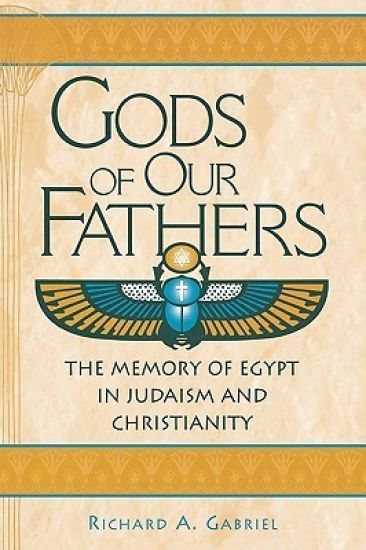
Gods of Our Fathers

Gods of Our Fathers

Richard A. Gabriel

Praeger Publishers Inc
2001
sidottu
Gabriel offers a startling new look at Judaism and Christianity by attempting to trace their historical theological roots, not to the revelations of God, but to the common theological ancestor, the religions of ancient Egypt. Using new material only recently made available by archaeology, Gabriel shows how the theological premises of Christianity were in existence three thousand years before Christ and how the heresy of Akhenaten became the source for Moses' Judaism. Gabriel begins with the challenge that the dawn of man's ethical conscience began in Egypt by 3400 BCE, long before the age of revelation in the West. Over the course of 3000 years, Egyptian theologians developed a complete theology of trinitarian monotheism, immortality of the soul, resurrection, and a post-mortem judgment within the Osiris myth. These concepts existed nowhere else in the ancient world and were passed directly to Christianity. In 1200 BCE, the heretic pharaoh Akhenaten abandoned Egyptian tradition and invented his own theology of a single god, no immortal soul, no resurrection, and no post-mortem judgment. This tradition was passed to the West through Moses whose Judaic theology is identical to Akhenaten's.
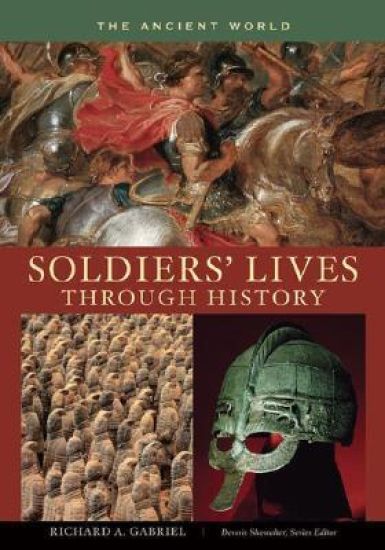
Soldiers' Lives through History - The Ancient World
Once warfare became established in ancient civilizations, it's hard to find any other social institution that developed as quickly. In less than a thousand years, humans brought forth the sword, sling, dagger, mace, bronze and copper weapons, and fortified towns. The next thousand years saw the emergence of iron weapons, the chariot, the standing professional army, military academies, general staffs, military training, permanent arms industries, written texts on tactics, military procurement, logistics systems, conscription, and military pay. By 2,000 B.C.E., war was an important institution in almost all major cultures of the world. This book shows readers how soldiers were recruited, outfitted, how they fought, and how they were cared for when injured or when they died. It covers soldiers in major civilizations from about 4000 B.C.E. to about 450 C.E. Topics are discussed cross-culturally, drawing examples from several of the cultures, armies, and time periods within each chapter in order to provide the reader with as comprehensive an understanding as possible and to avoid the usual Western-centric perspective too common in analyses of ancient warfare.
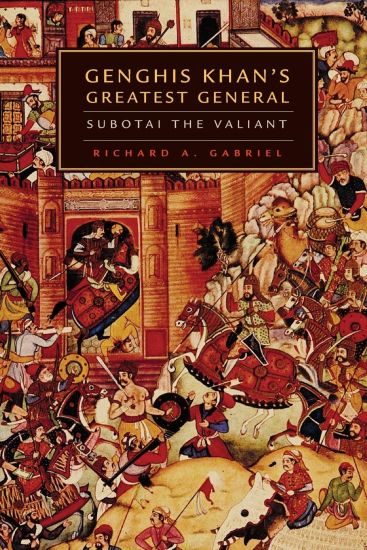
Genghis Khan's Greatest General

Genghis Khan's Greatest General

Richard A. Gabriel

University of Oklahoma Press
2006
nidottu
This book tells the story of Subotai the Valiant, a warrior for Genghis Khan and one of the greatest generals in military history. Subotai commanded armies whose size, scale, and scope of operations surpassed those led by any other commander in the ancient world. Under Subotai's direction, Mongol armies moved faster, over greater distances, and with a greater scope of maneuver than any army had ever done before.When Subotai died at age seventy-three, he had conquered thirty-two nations and won sixty-five pitched battles, according to Muslim historians. Had the great Khan not died, Subotai likely would have destroyed Europe itself.
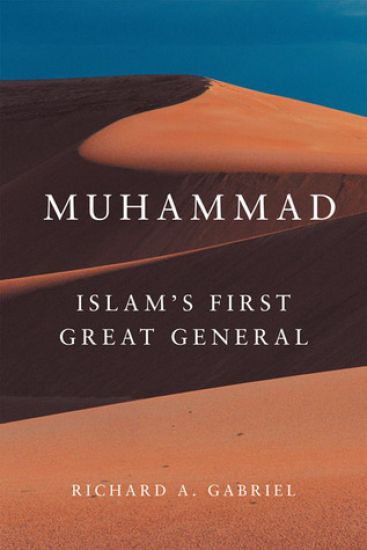
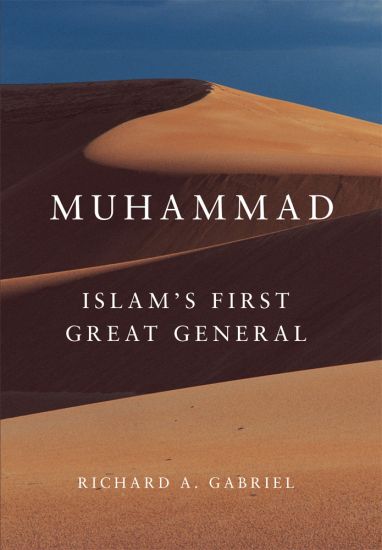
Muhammad

Muhammad

Richard A. Gabriel

University of Oklahoma Press
2007
sidottu
That Muhammad succeeded as a prophet is undeniable; a prominent military historian now suggests that he might not have done so had he not also been a great soldier.Best known as the founder of a major religion, Muhammad was also Islam's first great general. While there have been numerous accounts of Muhammad the Prophet, this is the first military biography of the man. In Muhammad: Islam's First Great General, Richard A. Gabriel shows us a warrior never before seen in antiquity--a leader of an all-new religious movement who in a single decade fought eight major battles, led eighteen raids, and planned thirty-eight other military operations. Gabriel's study portrays Muhammad as a revolutionary who introduced military innovations that transformed armies and warfare throughout the Arab world. Gabriel analyzes the environment in which Muhammad lived and the religion he inspired as they relate to his military achievements. Gabriel explains how Muhammad changed the social composition of Arab armies by replacing traditional ways of fighting with a new command structure. Muhammad's transformation of Arab warfare enabled his successors to establish the core of the Islamic empire--an accomplishment that, Gabriel argues, would have been militarily impossible without Muhammad's innovations. Richard A. Gabriel challenges existing scholarship on Muhammad's place in history and offers a viewpoint not previously attempted.
Muhammad

Muhammad

Richard A. Gabriel

University of Oklahoma Press
2021
nidottu
That Muhammad succeeded as a prophet is undeniable; a prominent military historian now suggests that he might not have done so had he not also been a great soldier. Best known as the founder of a major religion, Muhammad was also Islam’s first great general. While there have been numerous accounts of Muhammad the Prophet, this is the first military biography of the man.In Muhammad: Islam’s First Great General, Richard A. Gabriel shows us a warrior never before seen in antiquity-a leader of an all-new religious movement who in a single decade fought eight major battles, led eighteen raids, and planned thirty-eight other military operations. Gabriel’s study portrays Muhammad as a revolutionary who introduced military innovations that transformed armies and warfare throughout the Arab world.Gabriel analyzes the environment in which Muhammad lived and the religion he inspired as they relate to his military achievements. Gabriel explains how Muhammad changed the social composition of Arab armies by replacing traditional ways of fighting with a new command structure.Muhammad’s transformation of Arab warfare enabled his successors to establish the core of the Islamic empire-an accomplishment that, Gabriel argues, would have been militarily impossible without Muhammad’s innovations. Richard A. Gabriel challenges existing scholarship on Muhammad’s place in history and offers a viewpoint not previously attempted.