Kirjojen hintavertailu. Mukana 11 487 580 kirjaa ja 12 kauppaa.

Kirjahaku

Etsi kirjoja tekijän nimen, kirjan nimen tai ISBN:n perusteella.

4 kirjaa tekijältä Richard A. McCabe

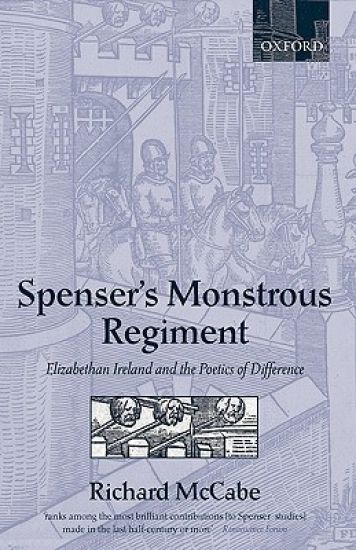
Spenser's Monstrous Regiment

Spenser's Monstrous Regiment

Richard A. McCabe

Oxford University Press
2002
sidottu
Spenser's "Monstrous Regiment" is a scholarly account of how the experience of living and writing in Ireland qualified Spenser's attitude towards female regiment and challenged his notions of English nationhood. It also provides a detailed analysis of his association with Lord Grey through examination of secretarial letters.
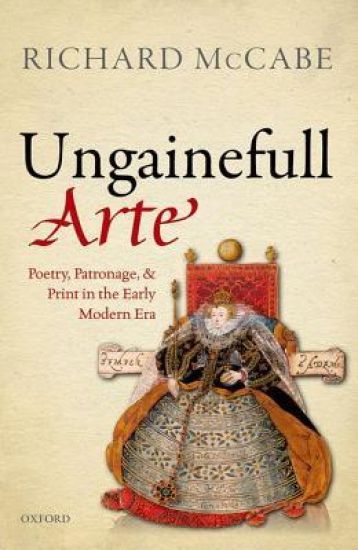
'Ungainefull Arte'

'Ungainefull Arte'

Richard A. McCabe

Oxford University Press
2016
sidottu
From antiquity to the Renaissance the pursuit of patronage was central to the literary career, yet relationships between poets and patrons were commonly conflicted, if not antagonistic, necessitating compromise even as they proffered stability and status. Was it just a matter of speaking lies to power? The present study looks beyond the rhetoric of dedication to examine how traditional modes of literary patronage responded to the challenge of print, as the economies of gift-exchange were forced to compete with those of the marketplace. It demonstrates how awareness of such divergent milieux prompted innovative modes of authorial self-representation, inspired or frustrated the desire for laureation, and promoted the remarkable self-reflexivity of Early Modern verse. By setting English Literature from Caxton to Jonson in the context of the most influential Classical and Italian exemplars it affords a wide comparative context for the reassessment of patronage both as a social practice and a literary theme.
Spenser's Monstrous Regiment

Spenser's Monstrous Regiment

Richard A. McCabe

Oxford University Press
2005
nidottu
In this important study of Spenser and nationhood - the first to contextualize Spenser's response to the Irish colonial situation by reference to contemporary Gaelic literature - Richard McCabe examines the poet's canon within the dual contexts of imperial aspiration and female 'regiment'. He shows how the experience of writing from Ireland, where the queen's influence repeatedly frustrated the expansionist ambitions of New English settlers, intensified Spenser's sense of alienation from female sovereignty and led to the remarkable fusion of colonial and sexual anxieties evident in The Faerie Queene's pervasive images of anti-heroic emasculation. At the same time the paradoxical attempt to impose civility through violence compromised the poem's moral vision and problematized its conception of national identity. The attempt to create an English myth of origin coincided uneasily with the need to discredit its Gaelic counterpart, as formulated in such works as the Lebor Gabála Érenn, while the perceived 'degeneration' of Old English families within the Pale confounded the ethnic distinctions upon which the colonial enterprise had come to rest and challenged the validity of all nationalist 'myth'. By drawing upon a wide range of Gaelic poets, historians, and polemicists, McCabe seeks to recover the voices that the dialectical format of A View of the Present State of Ireland is designed to exclude and to demonstrate how the Irish dimension of The Faerie Queene provides a dark, but aesthetically enhancing subtext to the poetics of national celebration.
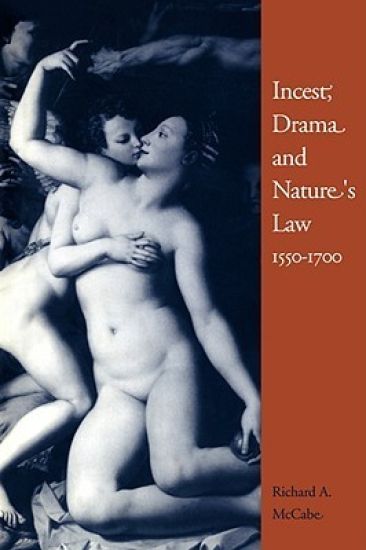
Incest, Drama and Nature's Law, 1550–1700

Incest, Drama and Nature's Law, 1550–1700

Richard A. McCabe

Cambridge University Press
2008
pokkari
This is a full-length study of incest in English Renaissance and Restoration drama. Richard McCabe's comprehensive survey offers a literary history of this theme, informed by an investigation of the intellectual background, with particular emphasis on changing concepts of natural law, and consequent reassessments of classical tradition. It examines a wide range of theological, philosophical, legal and literary sources, in the context of modern psychological and sociological theories of family development. Extensive comparisons with classical models and contemporary European dramatists, from Tasso to Corneille and Racine, explore the volatile association between dramatic form and emotional content, structural experiment and sexual ambivalence. The centrality of the family to all human relationships, and the mutual reflection of familial politics and the patriarchal state make incest a powerful metaphor for the ambivalence of all concepts of 'natural' authority, and for various forms of social and political revolt.