Kirjojen hintavertailu. Mukana 12 016 292 kirjaa ja 12 kauppaa.

Kirjahaku

Etsi kirjoja tekijän nimen, kirjan nimen tai ISBN:n perusteella.

3 kirjaa tekijältä Richard Alba

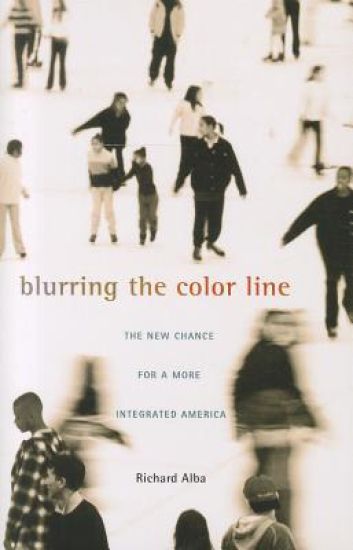
Blurring the Color Line

Blurring the Color Line

Richard Alba

Harvard University Press
2012
nidottu
Richard Alba argues that the social cleavages that separate Americans into distinct, unequal ethno-racial groups could narrow dramatically in the coming decades. During the mid-twentieth century, the dominant position of the United States in the postwar world economy led to a rapid expansion of education and labor opportunities. As a result of their newfound access to training and jobs, many ethnic and religious outsiders, among them Jews and Italians, finally gained full acceptance as members of the mainstream. Alba proposes that this large-scale assimilation of white ethnics was a result of “non-zero-sum mobility,” which he defines as the social ascent of members of disadvantaged groups that can take place without affecting the life chances of those who are already members of the established majority.Alba shows that non-zero-sum mobility could play out positively in the future as the baby-boom generation retires, opening up the higher rungs of the labor market. Because of the changing demography of the country, many fewer whites will be coming of age than will be retiring. Hence, the opportunity exists for members of other groups to move up. However, Alba cautions, this demographic shift will only benefit disadvantaged American minorities if they are provided with access to education and training. In Blurring the Color Line, Alba explores a future in which socially mobile minorities could blur stark boundaries and gain much more control over the social expression of racial differences.
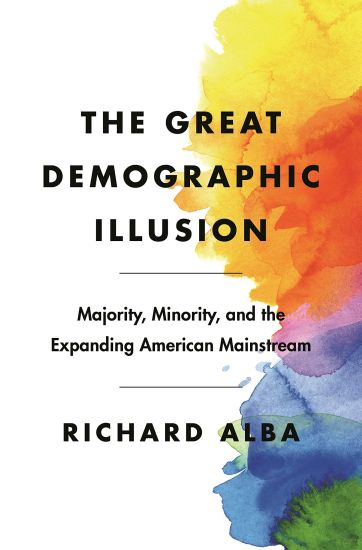
The Great Demographic Illusion

The Great Demographic Illusion

Richard Alba

PRINCETON UNIVERSITY PRESS
2020
sidottu
Why the number of young Americans from mixed families is surging and what this means for the country’s future Americans are under the spell of a distorted and polarizing story about their country’s future—the majority-minority narrative—which contends that inevitable demographic changes will create a society with a majority made up of minorities for the first time in the United States’s history. The Great Demographic Illusion reveals that this narrative obscures a more transformative development: the rising numbers of young Americans from ethno-racially mixed families, consisting of one white and one nonwhite parent. Examining the unprecedented significance of mixed parentage in the twenty-first-century United States, Richard Alba looks at how young Americans with this background will play pivotal roles in the country’s demographic future.Assembling a vast body of evidence, Alba explores where individuals of mixed parentage fit in American society. Most participate in and reshape the mainstream, as seen in their high levels of integration into social milieus that were previously white dominated. Yet, racism is evident in the very different experiences of individuals with black-white heritage. Alba’s portrait squares in key ways with the history of immigrant-group assimilation, and indicates that, once again, mainstream American society is expanding and becoming more inclusive.Nevertheless, there are also major limitations to mainstream expansion today, especially in its more modest magnitude and selective nature, which hinder the participation of black Americans and some other people of color. Alba calls for social policies to further open up the mainstream by correcting the restrictions imposed by intensifying economic inequality, shape-shifting racism, and the impaired legal status of many immigrant families.Countering rigid demographic beliefs and predictions, The Great Demographic Illusion offers a new way of understanding American society and its coming transformation.
The Great Demographic Illusion

The Great Demographic Illusion

Richard Alba

PRINCETON UNIVERSITY PRESS
2022
pokkari
Why the number of young Americans from mixed families is surging and what this means for the country’s future Americans are under the spell of a distorted and polarizing story about their country’s future—the majority-minority narrative—which contends that inevitable demographic changes will create a society with a majority made up of minorities for the first time in the United States’s history. The Great Demographic Illusion reveals that this narrative obscures a more transformative development: the rising numbers of young Americans from ethno-racially mixed families, consisting of one white and one nonwhite parent. Examining the unprecedented significance of mixed parentage in the twenty-first-century United States, Richard Alba looks at how young Americans with this background will play pivotal roles in the country’s demographic future.Assembling a vast body of evidence, Alba explores where individuals of mixed parentage fit in American society. Most participate in and reshape the mainstream, as seen in their high levels of integration into social milieus that were previously white dominated. Yet, racism is evident in the very different experiences of individuals with black-white heritage. Alba’s portrait squares in key ways with the history of immigrant-group assimilation, and indicates that, once again, mainstream American society is expanding and becoming more inclusive.Nevertheless, there are also major limitations to mainstream expansion today, especially in its more modest magnitude and selective nature, which hinder the participation of black Americans and some other people of color. Alba calls for social policies to further open up the mainstream by correcting the restrictions imposed by intensifying economic inequality, shape-shifting racism, and the impaired legal status of many immigrant families.Countering rigid demographic beliefs and predictions, The Great Demographic Illusion offers a new way of understanding American society and its coming transformation.