Kirjojen hintavertailu. Mukana 11 384 148 kirjaa ja 12 kauppaa.

Kirjahaku

Etsi kirjoja tekijän nimen, kirjan nimen tai ISBN:n perusteella.

10 kirjaa tekijältä Richard Archer

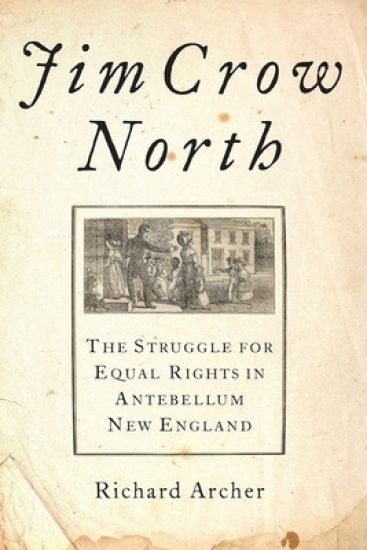
Jim Crow North

Jim Crow North

Richard Archer

Oxford University Press Inc
2017
sidottu
More than a century before Rosa Parks refused to give up her seat on a Montgomery bus, Shadrach Howard, David Ruggles, Frederick Douglass, and others had rejected demands that they relinquish their seats on various New England railroads. They were protesting segregation on Jim Crow cars, a term that originated in New England in 1839. Theirs was part of a larger movement for equal rights in antebellum New England. Using sit-ins, boycotts, petition drives, and other initiatives, African-American New Englanders and their white allies attempted to desegregate schools, transportation, neighborhoods, churches, and cultural venues. Above all they sought to be respected and treated as equals in a reputedly democratic society. Jim Crow North is the tale of that struggle and the racism that prompted it. Despite widespread racism, black New Englanders were remarkably successful. By the advent of the Civil War African American men could vote and hold office in every New England state but Connecticut. Schools, except in the largest cities of Connecticut and Rhode Island, were integrated. Railroads, stagecoaches, hotels, and cultural venues (with occasional aberrations) were free from discrimination. People of African descent and of European descent could marry one another and live peaceably, even in Maine and Rhode Island where such marriages were legally prohibited. There was an emerging, if still small, black middle class who benefitted most. But there were limits to progress. A majority of African-Americans in New England were mired in poverty preventing full equality both then and now.
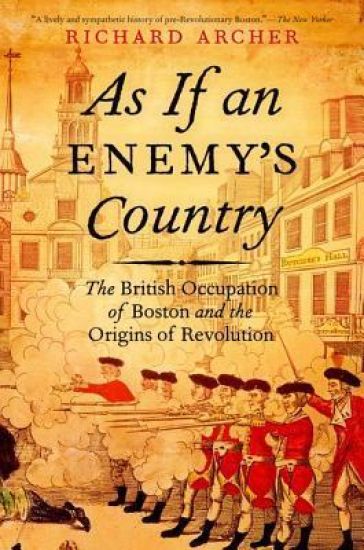
As If an Enemy's Country

As If an Enemy's Country

Richard Archer

Oxford University Press Inc
2010
sidottu
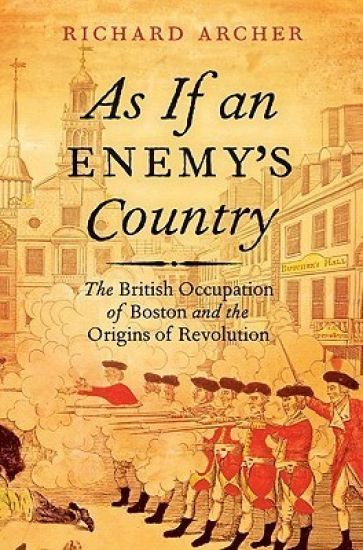
In the dramatic few years when colonial Americans were galvanized to resist British rule, perhaps nothing did more to foment anti-British sentiment than the armed occupation of Boston. As If an Enemy's Country is Richard Archer's gripping narrative of those critical months between October 1, 1768 and the winter of 1770 when Boston was an occupied town. Bringing colonial Boston to life, Archer deftly moves between the governor's mansion and cobblestoned back-alleys as he traces the origins of the colonists' conflict with Britain. He reveals the maneuvering of colonial political leaders such as Governor Francis Bernard, Lieutenant Governor Thomas Hutchinson, and James Otis Jr. as they responded to London's new policies, and he evokes the outrage many Bostonians felt towards Parliament and its local representatives. Archer captures the popular mobilization under the leadership of John Hancock and Samuel Adams that met the oppressive imperial measures--most notably the Sugar Act and the Stamp Act--with demonstrations, Liberty Trees, violence, and non-importation agreements. When the British government decided to garrison Boston with troops, it posed a shocking challenge to the people of Massachusetts. The city was flooded with troops; almost immediately, tempers flared and violent conflicts broke out. Archer's vivid tale culminates in the swirling tragedy of the Boston Massacre and its aftermath, including the trial and exoneration of the British troops involved. A thrilling and original work of history, As If an Enemy's Country tells the riveting story of what made the Boston townspeople, and with them other colonists, turn toward revolution.
Jim Crow North

Jim Crow North

Richard Archer

Oxford University Press Inc
2020
nidottu
More than a century before Rosa Parks refused to give up her seat on a Montgomery bus, Shadrach Howard, David Ruggles, Frederick Douglass, and others had rejected demands that they relinquish their seats on various New England railroads. They were protesting segregation on Jim Crow cars, a term that originated in New England in 1839. Theirs was part of a larger movement for equal rights in antebellum New England. Using sit-ins, boycotts, petition drives, and other initiatives, African-American New Englanders and their white allies attempted to desegregate schools, transportation, neighborhoods, churches, and cultural venues. Above all they sought to be respected and treated as equals in a reputedly democratic society. Jim Crow North is the tale of that struggle and the racism that prompted it. Despite widespread racism, black New Englanders were remarkably successful. By the advent of the Civil War African American men could vote and hold office in every New England state but Connecticut. Schools, except in the largest cities of Connecticut and Rhode Island, were integrated. Railroads, stagecoaches, hotels, and cultural venues (with occasional aberrations) were free from discrimination. People of African descent and of European descent could marry one another and live peaceably, even in Maine and Rhode Island where such marriages were legally prohibited. There was an emerging, if still small, black middle class who benefitted most. But there were limits to progress. A majority of African-Americans in New England were mired in poverty preventing full equality both then and now.
As If an Enemy's Country

As If an Enemy's Country

Richard Archer

Oxford University Press Inc
2012
nidottu
In the dramatic period leading to the American Revolution, no event did more to foment patriotic sentiment among colonists than the armed occupation of Boston by British soldiers. As If an Enemy's Country is Richard Archer's gripping narrative of those critical months between October 1, 1768 and the winter of 1770 when Boston was an occupied town. Bringing colonial Boston to life, Archer moves between the governor's mansion and cobble-stoned back-alleys as he traces the origins of the colonists' conflict with Britain. He reveals the maneuvering of colonial political leaders such as Governor Francis Bernard, Lieutenant Governor Thomas Hutchinson, and James Otis Jr. as they responded to London's new policies, and he evokes the outrage many Bostonians felt toward Parliament and its local representatives. Equally important, Archer captures the popular mobilization under the leadership of John Hancock and Samuel Adams that met the oppressive imperial measures--most notably the Sugar Act and the Stamp Act--with demonstrations, Liberty Trees, violence, and non-importation agreements. When the British government responded with the decision to garrison Boston with troops, it was a deeply felt affront to the local population. Almost immediately, tempers flared and violent conflicts broke out. Archer's tale culminates in the swirling tragedy of the Boston Massacre and its aftermath, including the trial of the British troops involved--and sets the stage for what was to follow. "Combining engaging prose and a wealth of interesting characters, Archer has provided a concise, appealing work of first-rate scholarship." --Library Journal (Starred Review) "A remarkably fresh examination of the story of the British occupation of Boston in the years before the Revolution. Its close attention to the social and economic context of the dramatic events of those years gives the book much of its richness; and its telling of the events themselves, ending with a splendid account of the Boston Massacre, is accomplished with great clarity, detail, and verve. Altogether it is a fascinating book." --Robert Middlekauff, author of The Glorious Cause: The American Revolution
This Ain't No Shit!

This Ain't No Shit!

Richard Archer

Page Publishing, Inc.
2019
pokkari
The collection of life experiences enclosed herein are true incidents that I witnessed or actively participated in. In many of them, I narrowly evaded some dire consequences of military justice via avenues of quick thinking, slick talking, or just plain dumb luck I discovered a couple of best kept secrets that helped me skate through these adventures. Those secrets being, know what is in the Bureau of Personnel manual; have a good understanding of the grievance procedures (under the right circumstances, an enlisted dude can put the Commanding Officer on report; but you had better do your homework ); and lastly, tie in with a mentor who will show you the "ropes" about the Navy Now this is in no way a sailor's guide to misbehaving. It is simply a comical look at one sailor that may well have proven himself to be a "magnificent bastard" as he advanced from Seaman Recruit to Senior Chief
A Pigeon Among the Cats

A Pigeon Among the Cats

Richard Archer

Createspace Independent Publishing Platform
2018
nidottu
A Pigeon Among the Cats, sees Richard Archer delve deeper into his emotional lexicon, delivering poetry that will blow you away, whilst still sharing his subtle humour within verse. This is a book of depth, beautifully compiled by a master-craftsmen, who spins poems and verse of tragedy and pain against a backdrop of gentleness and humour, which is so often lost in the world today. This book represents Richard's strongest work to date. It is measured, direct and beautiful. It is a work of art