Kirjojen hintavertailu. Mukana 11 244 527 kirjaa ja 12 kauppaa.

Kirjahaku

Etsi kirjoja tekijän nimen, kirjan nimen tai ISBN:n perusteella.

14 kirjaa tekijältä Richard Barber

Edward III and the Triumph of England

Edward III and the Triumph of England

Richard Barber

Penguin Books Ltd
2014
pokkari
The destruction of the French army at Crécy in 1346 and the subsequent siege and capture of Calais marked a new era in European history. The most powerful, glamorous and respected of all western monarchies had been completely humiliated by England, a country long viewed either as a chaotic backwater or a mere French satellite.The young Edward III's triumph would launch both countries, as we now know, into a grim cycle of some 90 years of further fighting ending with English defeat, but after Crécy anything seemed possible - Edward's claim to be King of France could be pressed home and, in any event, enormous rewards of land, treasure and prestige were available both to the king and to the close companions who had made the victory possible. It was to enshrine this moment that Edward created one of the most famous of all knightly orders, the Company of the Garter.Barber writes about both the great campaigns and the individuals who formed the original membership of the Company - and through their biographies makes the period tangible and fascinating. This is a book about knighthood, battle tactics and grand strategy, but it is also about fashion, literature and the privates lives of everyone from queens to freebooters. Barber's book is a remarkable achievement - but also an extremely enjoyable one.
Henry II (Penguin Monarchs)

Henry II (Penguin Monarchs)

Richard Barber

Penguin Books Ltd
2018
nidottu
The acclaimed Penguin Monarchs series: short, fresh, expert accounts of England's rulers - now in paperbackHenry II (1154-89) through a series of astonishing dynastic coups became the ruler of an enormous European empire. One of the most dynamic, restless and clever men ever to rule England, he was brought down both by his catastrophic relationship with his archbishop Thomas Becket and his debilitating arguments with his sons, most importantly the future Richard I and King John. His empire may have ultimately collapsed, but in Richard Barber's vivid and sympathetic account the reader can see why Henry II left such a compelling impression on his contemporaries.Richard Barber has written for Penguin The Penguin Guide to Medieval Europe, The Holy Grail and Edward III and the Triumph of England. He is a major figure in medieval studies, both as a writer and as a publisher.
The Black Prince

The Black Prince

Richard Barber

Sutton Publishing Ltd
2003
nidottu
Edward, Prince of Wales and Aquitaine, known as the Black Prince, is one of the legendary figures of English history-the victor of three great battles and a model pf chivalry and courtesy. Based on official records, particularly of Edward's own household and of those who campaigned with him, this work aims to get behind the familiar splendid vision of chivalry to reveal the realities of his character and of the life that he led. Special attention has been paid not only to the confusing and confused accounts of the great battles, but also to the prince's early years, the close companions who contributed so greatly to his success, and his government of Aquitane-an obscure but important part of his career. The author also seeks to correct a number of minor but persistent errors in earlier histories, deriving from Froissart, and examines how the legend of the Black Prince - including his curious nickname-came into being. Richard Barber's biography of this leading figure of the medieval period, has dominated the field since it was first published, covering all aspects of the Black Prince's life and military career. Son of Edward III, and father of Richard II, Edward the Black Prince was one of the most successful English commanders in the Hundred Years War who won victories on the battlefields of Crecy and Poitiers.
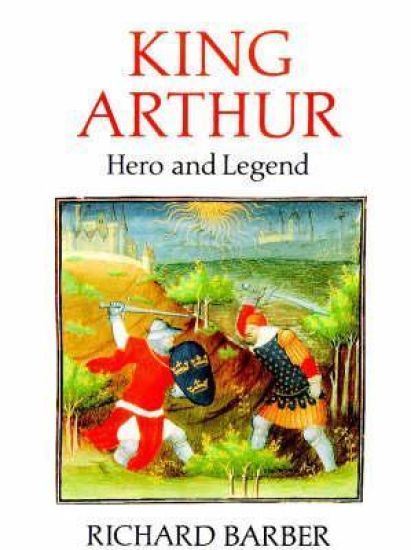
King Arthur: Hero and Legend

King Arthur: Hero and Legend

Richard Barber

The Boydell Press
1986
pokkari
The whole subject is brought up to date - Arthurian buffs will want this book. DAILY TELEGRAPH Who was the real Arthur? Why were his knights so famous? Was he buried at Glastonbury? Richard Barber takes the story from the anonymous 8th century chronicler who first listed his battles to the novelists of the 20th century. A clear and readable account of the development of the stories about Arthur and his court from the earliest times to the present day.
The Life and Campaigns of the Black Prince

The Life and Campaigns of the Black Prince

Richard Barber

The Boydell Press
1979
pokkari
Letters, reports, campaign diaries and the chronicles of Geoffrey le Baker and Chandos Herald document the life and dazzling exploits of the legendary Black Prince. Edward of Woodstock, eldest son of Edward III, known as the Black Prince, is one of those heroes of history books so impressive as to seem slightly unreal. At sixteen he played a leading part in the fighting at Crécy; at twenty-six he captured the king of France at Poitiers; and eleven years later he restored Pedro of Castile to histhrone at the battle of Najera. His exploits were chronicled by Jean Froissart, but Froissart was writing three or four decades after the events he describes. There are other sources much closer to events, and it is on these that the present volume draws. Most immediate are the reports sent home by the prince's companions-in-arms and his own letters, which graphically convey the hardships and difficulties of campaigning, its dangers and sheer fatigue. These are followed by campaign diaries and the story of Crécy and other exploits of the prince's from Geoffrey le Baker's chronicle (c.1358-60), itself drawing on similar letters and diaries. Finally there is the chronicle of Chandos Herald, which shows the prince as he appeared to an English writer in the 1380s. Each of the sources is discussed in detail in the introductions to the extracts. RICHARD BARBER's books on the age of chivalry include The Knight and Chivalry, Edward Prince of Wales and Aquitaine, King Arthur: Hero and Legend and Arthurian Legends. He has also written the Companion Guide to Gascony and the Dordogne, the background to so many of the Black Prince's exploits, and the Penguin Guide to Medieval Europe.
Pilgrimages

Pilgrimages

Richard Barber

The Boydell Press
1991
pokkari
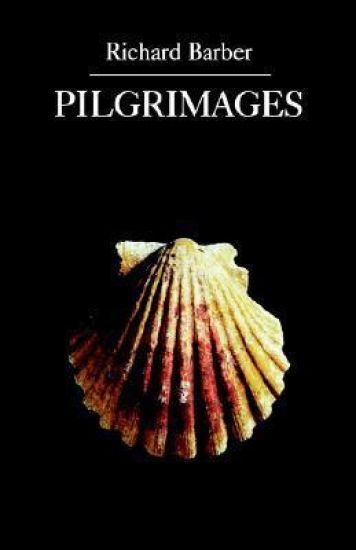
The first book to give an account of the major pilgrimage traditions of all the great religions of the world. Pilgrimage, the journey to a distant sacred goal, is found in all the great religions of the world. It is a journey both outwards to hallowed places and inwards to spiritual improvement; it can express penance for past evils, or the search for future good; the pilgrim may pursue spiritual ecstasy in the sacred sites of a particular faith, or seek a miracle through the medium of god or saint. Throughout the world, pilgrims move invisibly in huge numbers among the tourists of today, indistinguishable from them except in purpose. In England each year 000 pilgrims make the journey to Canterbury cathedral and the shrine of Thomas Becket; the great festival at Prayaga on the Ganges attracts over fifteen million men and women. This is the first book to offer a survey of the great pilgrimage traditions. It outlines the history of different customs and brings together some of the common themes, revealing in the process surprising similarities in practice among pilgrims of widely differing beliefs and times. RICHARD BARBER's interests range widely over the middle ages. He is the author of The Knight and Chivalry and the Penguin Guide to Medieval Europe;he has also written biographies of the Henry II and the Black Prince, and a history, The Pastons: A Family in the Wars of the Roses, as well as two classic Arthurian books, Arthurian Legends and King Arthur: Hero and Legend.Cover illustration: The scallop shell symbol of pilgrims to the shrine of St James at Santiago de Compostela. This scallop shell, still showing simple colouring, was found inthe grave of a young man buried in Keynsham Abbey in the 12th century; the holes in the beak, for attaching the shell to the pilgrim's scrip, are clearly visible.
Edward, Prince of Wales and Aquitaine

Edward, Prince of Wales and Aquitaine

Richard Barber

The Boydell Press
1996
pokkari
`...excellent study of the prince's career. A first-class synthesis of the entire literature of this subject.' BRITISH BOOK NEWS Edward, prince of Wales and Aquitaine, known as the Black Prince, is one of the legendary figures of English history, victor of three great battles and a model of chivalry and courtesy. Behind this image, which many of his contemporaries accepted and eagerly believed in, it is difficult to get at the realities of his character and of the life that he led. Most of his biographers have based their work on the splendid vision of chivalry conjured up by Froissart, but the present book deliberately shuns this approach, to see what can be found in official records, particularly from the prince's household and those who campaigned with the prince. Special attention has been paid not onlyto the confusing and confused accounts of the great battles, but also to the prince's early years, his close companions who contributed so greatly to his successes, and to his government of Aquitaine, an obscure but very importantpart of his career. A number of minor but persistent errors in early histories, deriving from Froissart, are corrected. A concluding chapter examines how the legend of the Black Prince (and his curious nickname) came into being.By separating the image and the reality, a clearer picture of the prince emerges. Dr RICHARD BARBER is the author of The Arthurian Legends, King Arthur: Hero and Legend, Tournaments, a biography of Henry II, The Penguin Guide to Medieval Europe, and the recently revised seminal study of The Knight and Chivalry.
Bestiary

Bestiary

Richard Barber

The Boydell Press
1992
pokkari
A delightful translation of one of the finest, and most beautiful, examples of a medieval Bestiary. Bestiaries are a particularly characteristic product of medieval England, and give a unique insight into the medieval mind. Richly illuminated and lavishly produced, they were luxury objects for noble families. Their three-fold purpose was to provide a natural history of birds, beasts and fishes, to draw moral examples from animal behaviour (the industrious bee, the stubborn ass), and to reveal a mystical meaning - the phoenix, for instance, as a symbol of Christ's resurrection. This Bestiary, MS Bodley 764, was produced around the middle of the thirteenth century and is of singular beauty and interest. The lively illustrations have the freedom and naturalistic quality of the later Gothic style, and make dazzling use of colour. This book reproduces the 136 illuminations to the same size and in the same place as the original manuscript, fitting the text around them. Richard Barber's translation from the original Latin is a delight to read, capturing both the serious intent of the manuscript and its charm. RICHARD BARBER has written many books on the history of and life in the middle ages, from his Somerset Maugham Award-winning The Knight and Chivalry, by way of biographies of Henry II and the Black Prince, to an anthology of Arthurian literature from England, France and Germany, Arthurian Legends, and an account of the historical Arthur, King Arthur: Hero and Legend.
Legends of Arthur

Legends of Arthur

Richard Barber

The Boydell Press
2003
pokkari
This anthology shows the diversity of the Arthurian legends and their many sources by presenting contrasting versions of the stories of Arthur, Gawain, Tristan and other medieval Arthurian heroes - and heroines. The image of Arthur has haunted the poets and writers of western Europe for nearly nine centuries, and there is no sign of an end to the reign of the "once and future king" in the world of literature. The Arthurian epic is as popular a subject now as it was when it was first fashioned, and the stories about Arthur and the heroes associated with him come in a bewildering number of guises. The sheer variety of the legends, both in style and content, is extraordinary; and this collection attempts to present, in a small space, something of this diversity. Sir Thomas Malory, half a millennium ago, plundered a whole range of sources to create his masterpiece, Le Morte Darthur; buthe did so to weld them together within the framework of Arthur's own career. Legends of King Arthur draws on different sources, but emphasises the way in which writers have created new stories around the great heroes, or have told the stories in different ways. So there are two versions of each hero's exploits. Arthur is shown as emperor and warlord, and as the triumphant and tragic king of the romances, betrayed by Lancelot and Guinevere. Gawain is the central figure of the wonderful adventures of a Dutch romance, and the courtly and subtle hero of the English masterpiece Sir Gawain and the Green Knight. Tristan appears as the single-minded lover of Iseult in the original version of his story, and then as a knight of the Round Table whose devotion to chivalry is almost as great as his passion for his beloved. In these differing versions, we can see how the Arthurian romances held the medieval world spellbound for so long, in all their colour and variety. RICHARD BARBER's books on Arthur include Arthurian Legends: An Illustrated Anthology, King Arthur: Hero and Legend and Myths and Legends of theBritish Isles.
Arthurian Literature XI

Arthurian Literature XI

Richard Barber

D.S. Brewer
1992
sidottu
The vital index to all previous volumes, I-X; plus new research. Epitomises what is best in Arthurian scholarship today.ZEITSCHRIFT FUR ROMANISCHE PHILOLOGIE Arthurian Literatureis now established as a leading publication for research articles of monograph length on subjects of perennial interest to Arthurians. The Indexto the first ten volumes, representing the years 1980-1990, will be warmly welcomed by Arthurians and other scholars with an interest in medieval and later literature. Additionally an extended biographical essay by JANET GRAYSON draws together material relating to the life and work of Jessie Weston, who, largely working outside the mainstream of scholarly tradition, exercised a powerful influence on Arthurian studies. The regular "Update" feature catalogues Arthurian legend in the fine and applied art of the 19th and early 20th centuries, contributed by ROGER SIMPSON.
Magnificence

Magnificence

Richard Barber

The Boydell Press
2020
sidottu
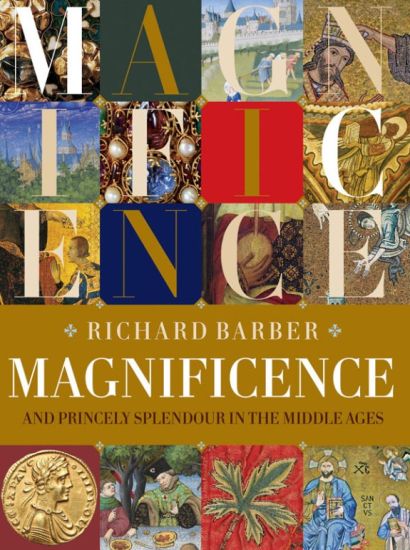
This highly-illustrated volume, by bestselling author Richard Barber, shows how medieval princes proclaimed their special status through displays of magnificence. The book is stunning, in every respect, and will be the gold standard in its subject for years to come. ALISON WEIR "This is glorious! It's a peach-and-peacock of a book, as befits its subject: scholarly, always accessible, with a wealth of fabulous illustrations, superbly designed." KEVIN CROSSLEY-HOLLAND How do you recognise a king when you see one? By the thirteenth century, the special status, which had evolved over thecenturies, was matched by the display of kingly grandeur. This was enshrined in the idea of "magnificence". Magnificence was seen as the king's duty, was applied to everything: his person, the garments he wore, his courtiers, the artists, the musicians and architects he employed. Above all, it was on show in his public appearances, his feasts and ceremonies. The "magnificent" collections of jewels, manuscripts and holy relics were displayed to a handfulof favoured visitors. Those visitors also had to be entertained, and royal feasts developed into an amazing form of performance art. This book is not only about objects and occasions, but also about the people who created them, from the kings themselves and their court servants to the artists, craftsmen and musicians of all kinds, down to the scribes and clerks, the showmen, dancers and acrobats, and the servants at table. All this is explored in this wide-ranging survey, covering the whole of western Europe, but centring on France, the wealthiest of the kingdoms, members of whose extended royal family were at different times kings of Poland, Hungary, Naples, Jerusalem, England, and, most spectacularly, dukes of Burgundy. Pageantry and displays of splendour always catch our attention, and medieval feasts and tournaments are among the most popular forms of historical re-enactment today. Magnificence celebrates many of the high points of the medieval world, drawing them together in a sumptuous volume.
Myths and Legends of the British Isles

Myths and Legends of the British Isles

Richard Barber

The Boydell Press
2004
pokkari
Tales from the dawn of Christianity to the age of the Plantagenets reveal a mythology in its time as potent as that of the classical world. The British Isles have a long tradition of tales of gods, heroes and marvels, hinting at a mythology once as relevant to the races which settled the islands as the Greek and Roman gods were to the classical world. The tales drawntogether in this book, from a wide range of medieval sources, span the centuries from the dawn of Christianity to the age of the Plantagenets. The Norse gods which peopled the Anglo-Saxon past survive in Beowulf; Cuchulainn, Taliesin and the magician Merlin take shape from Celtic mythology; and saints include Helena who brought a piece of the True Cross to Britain, and Joseph of Arimathea whose staff grew into the Glastonbury thorn. Tales of the British Arthur are followed by legends of later heroes, including Harold, Hereward and Godiva. These figures and many others were part of a familiar national mythology on which Shakespeare drew for Lear, Macbeth and Hamlet, creating the famous versions that are known today. Here the original stories are presented. RICHARD BARBER's other books include and The Knight and Chivalry.
The Reign of Chivalry

The Reign of Chivalry

Richard Barber

The Boydell Press
2005
sidottu
Richard Barber, author of Holy Grail: The History of a Legend and King Arthur: Hero and Legend, has written an engaging and intriguing book on one of the most original concepts of the medieval mind. Profusely illustrated and redesigned for a new generation of readers. Profusely illustrated and redesigned for a new generation of readers, Richard Barber's classic The Reign of Chivalry presents a broad picture of the chivalric world, and shows how chivalry affected or was affected by greatsocial movements, great writers and great events, and analyses the legacy it passed down to later ages. The opening chapter looks at the central figure of the whole chivalric world, the knight, and asks why he is such a different figure from other fighting men. Following sections deal with chivalry in relation to the main themes of medieval literature, especially the vast cycle of Arthurian romances, and discuss the attitudes towards chivalry of writers such as Jean Froissart, whose pages cast a golden glow over the harsh realities of war. Later sections look at chivalry's influence on the Renaissance and later culture, beginning with the knight's transition to gentleman. The element by which chivalry is now most remembered, its respectful, even adoring, attitude towards women, is the subject of a wide-ranging discussion, covering both medieval reality and modern ideals. Richard Barber, author of Holy Grail: History of a Legend, Myths and Legends of the British Isles and King Arthur: Hero and Legend, has written an engaging and intriguing book on one of the most original concepts of the medieval mind.
Forty Books for Forty Years

Forty Books for Forty Years

Richard Barber

The Boydell Press
2009
pokkari
Books define the character of a publishing house better than any account of its business transactions or its organisation. This selection of forty books to mark the fortieth anniversary of Boydell & Brewer reflects the evolution of the company and the changing focus of its activities. It began as the Boydell Press, a very small and very general operation and is now a group of primarily academic imprints. The story of the company's progress and developmentis told through the books, with a strong emphasis on authors and supporters and the occasions linked to the books. Reading Beowulf by firelight on Mound One at Sutton Hoo on an October evening; holding a tournament on the castlemeadow at Framlingham; renting Orford castle for the day; giving the Pepys Dinner in association with Magdalene College - all these add colour to the routine business of publishing. But there is a more serious side. During the 1970s and 1980s, dissatisfaction with the inflexibility of academic publishing led scholars and independent publishers to set up companies designed to serve the needs of their specialised fields. Four such firms, D.S. Brewer, Tamesis, Camden House and James Currey, together with the University of Rochester Press (created in collaboration with the University) make up the Boydell & Brewer Group of today.