Kirjojen hintavertailu. Mukana 12 390 323 kirjaa ja 12 kauppaa.

Kirjahaku

Etsi kirjoja tekijän nimen, kirjan nimen tai ISBN:n perusteella.

111 kirjaa tekijältä Richard Brown

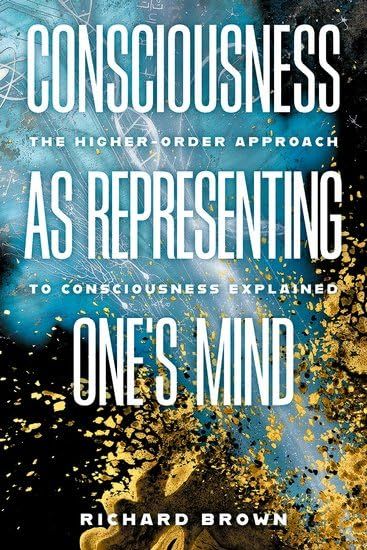
Consciousness as Representing One's Mind

Consciousness as Representing One's Mind

Richard Brown

OXFORD UNIVERSITY PRESS INC
2025
sidottu
The science of consciousness is now at the point where we need to evaluate the theories of consciousness currently on offer. Higher-order theories of consciousness, having originated in philosophy rather than science, are at this point not well understood. Even worse, it is often not clear what would or would not count as an empirical test of these kinds of theories. Richard Brown here carefully presents and defends a novel higher-order theory of consciousness, and compares it to the existing theories with an emphasis on empirical falsification. Brown affectionately calls his novel theory the HOROR-Higher-Order Representation of a Representation-theory. After presenting and defending the HOROR theory, he turns to situating this theory in the contemporary landscape of higher-order theories. Throughout, he emphasizes the extent to which empirical results would constitute a challenge to higher-order theories. Along the way, he develops a new taxonomy for higher-order theories, and uses it to classify the existing varieties of higher-order theories.
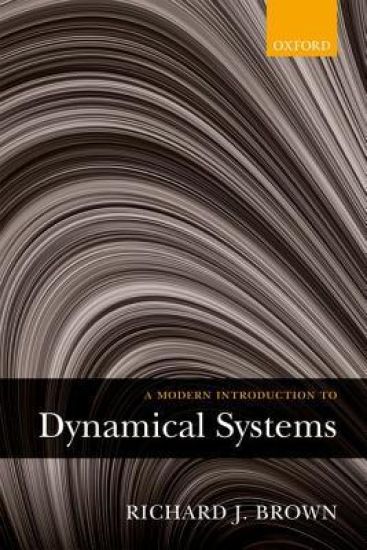
A Modern Introduction to Dynamical Systems

A Modern Introduction to Dynamical Systems

Richard Brown

Oxford University Press
2018
nidottu
This text is a high-level introduction to the modern theory of dynamical systems; an analysis-based, pure mathematics course textbook in the basic tools, techniques, theory and development of both the abstract and the practical notions of mathematical modelling, using both discrete and continuous concepts and examples comprising what may be called the modern theory of dynamics. Prerequisite knowledge is restricted to calculus, linear algebra and basic differential equations, and all higher-level analysis, geometry and algebra is introduced as needed within the text. Following this text from start to finish will provide the careful reader with the tools, vocabulary and conceptual foundation necessary to continue in further self-study and begin to explore current areas of active research in dynamical systems.
A Modern Introduction to Dynamical Systems

A Modern Introduction to Dynamical Systems

Richard Brown

Oxford University Press
2018
sidottu
This text is a high-level introduction to the modern theory of dynamical systems; an analysis-based, pure mathematics course textbook in the basic tools, techniques, theory and development of both the abstract and the practical notions of mathematical modelling, using both discrete and continuous concepts and examples comprising what may be called the modern theory of dynamics. Prerequisite knowledge is restricted to calculus, linear algebra and basic differential equations, and all higher-level analysis, geometry and algebra is introduced as needed within the text. Following this text from start to finish will provide the careful reader with the tools, vocabulary and conceptual foundation necessary to continue in further self-study and begin to explore current areas of active research in dynamical systems.
Writing the Social Text

Writing the Social Text

Richard Brown

AldineTransaction
1992
sidottu
During the past decade, it has become commonplace to interpret social and cultural reality-the very groundwork of the social sciences-as linguistic constructions. Not only is society viewed as a text, but scientific texts themselves are seen as rhetorical constructions.This collection of scholarly essays begins with an overview of this emerging field, and covers the specific stylistic practices by which social scientists create "objective" or "true" representations of society. The volume closes with a consideration of the more telling challenges to the rhetorics of the social sciences and how these might be encompassed or overcome.
Writing the Social Text

Writing the Social Text

Richard Brown

AldineTransaction
1992
nidottu
During the past decade, it has become commonplace to interpret social and cultural reality-the very groundwork of the social sciences-as linguistic constructions. Not only is society viewed as a text, but scientific texts themselves are seen as rhetorical constructions.This collection of scholarly essays begins with an overview of this emerging field, and covers the specific stylistic practices by which social scientists create "objective" or "true" representations of society. The volume closes with a consideration of the more telling challenges to the rhetorics of the social sciences and how these might be encompassed or overcome.
Society and Economy in Modern Britain 1700-1850
For both contemporaries and later historians the Industrial Revolution is viewed as a turning point' in modern British history. There is no doubt that change occurred, but what was the nature of that change and how did affect rural and urban society? Beginning with an examination of the nature of history and Britain in 1700, this volume focuses on the economic and social aspects of the Industrial Revolution. Unlike many previous textbooks on the same period, it emphasizes British history, and deals with developments in Wales, Scotland, and Ireland in their own right. It is the emphasis on the diversity, not the uniformity of experience, on continuities as well as change in this crucial period of development, which makes this volume distinctive. In his companion title Richard Brown completes his examination of the period and looks at the changes that took place in Britain's political system and in its religious affiliations.
Church and State in Modern Britain 1700-1850
In this, the second part of his history of the Industrial Revolution, Richard Brown examines the political and religious developments which took place in Britain between the 1780s and 1840s in terms of the aristocratic elite and through the expression of alternative radical ideologies. Opening with a discussion of the nature of history, and of Britain in 1700, it goes on to consider Britain's foreign policy, the emergence of the modern state and the mid-century 'crisis' of the 1840s. Unlike many previous works, it emphasises British not just English history. It is this diversity of experience and the focus on continuity as well as change, women as well as men, that makes this a distinctive text. Students will also find the theoretical foundations of historical narrative and analysis clearly explained.
James Joyce and Sexuality

James Joyce and Sexuality

Richard Brown

Cambridge University Press
1988
pokkari
This highly original study seeks to correct the critical misapprehension that James Joyce was a figure who remained aloof and disengaged from the intellectual and social concerns of his time. By exploring Joyce’s interest in sexual questions, Dr Brown shows that, on the contrary, his work represents a more complex and subtle kind of engagement with such concerns. There are four main areas of interest. The first is Joyce’s extensive reading on the question of marriage and its impact on his work, a subject invested with greater interest through Joyce’s elopement with and delayed marriage to Nora Barnacle. The second is Joyce’s responsiveness to the new sexual ideology as expounded in the writings of Freud and Havelock Ellis. Thirdly, Dr Brown considers the feminist dimension of the oeuvre and explores Joyce’s profound concern with twentieth-century discussions of sexual divisions and difference, a topic hitherto neglected in the classic critical treatments. Finally, the book argues for a new type of Joycean aesthetic in which the major works are analysed as responses to readings of other texts. Dr Brown offers a substantial and original account of Joyce’s work as modern in its social ideas as well as in its literary form, and suggests how the stylistic modernity itself may be seen to arise in part as a response to the difficulties of dealing with sex.
Revolution, Radicalism and Reform

Revolution, Radicalism and Reform

Richard Brown

Cambridge University Press
2000
pokkari
The period from the late eighteenth century to the first part of the nineteenth century was characterised by change: rapid industrial change, the agricultural revolution, political, economic and social reform. Yet there was also continuity, which led to tensions between improvement and resistance, modernity and tradition, rich and poor. Revolution, Radicalism and Reform provides a foundation for the study of the political, economic and social developments of the period. Topics covered include: Pitt and Liverpool, the French wars, the age of Peel, economy and industrialisation, poverty and Chartism. Revolution, Radicalism and Reform is part of the Cambridge Perspectives in History series. The book matches the requirements of the OCR examination specifications. It is suitable for all Advanced Subsidiary (AS) students, as well as students and undergraduates needing an introduction to the period. The book also contains a document study section on the condition of England at that time.
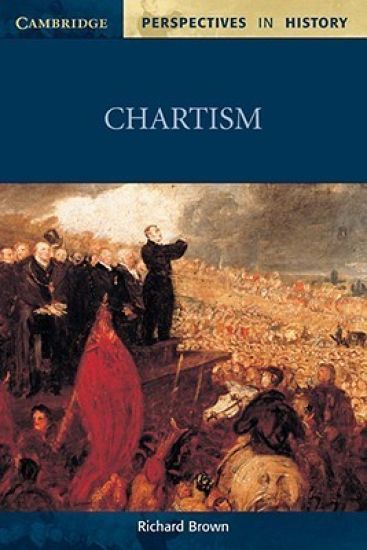
Chartism

Chartism

Richard Brown

Cambridge University Press
1998
pokkari
This book considers the ways in which working people in the nineteenth century sought justice through the Chartist movement. Richard Brown poses fundamental questions about the movement and considers them through the interpretations of both contemporary and later historians. Central themes and episodes covered include a study of the emergence of Chartism, the Chartists and their leaders and an account of the three phases of Chartism from 1836 to 1848.
This Is Not For You

This Is Not For You

Richard Brown

Oregon State University
2021
nidottu
This Is Not For You is a book about how and why to become an engaged, activist citizen-and about how activists can stay grounded, no matter how deeply they immerse themselves in the work. It also offers an intimate, firsthand look at policing: about what policing is and could be, about how civilians can have a say, and how police can and should be responsive to and inclusive of those civilians' voices. The book speaks on every page about being Black in America: about Black pride, and Black history and art and culture, and the experience of resisting white supremacy. And it stands as a much-needed counternarrative to Portlandia, telling a different story about the city, and who has shaped it.
Radicalism and Chartism 1790-1860

Radicalism and Chartism 1790-1860

Richard Brown

Independently Published
2019
nidottu
Radicalism and Chartism 1790-1860 brings together the first two books in the Reconsidering Chartism series--Before Chartism: Exclusion and Resistance, and Chartism: Rise and Demise, both published in 2014-in a substantially revised second edition. The prologue examines the nature of economic networks in the late-eighteenth and early-nineteenth century. The first chapter explores the ways in which society changed in the decades leading up to the 1830s and considers the ways in which working people responded to economic change. Chapter 2 looks at the ways in which working- and middle-class radicals confronting the question of reform from the 1790s through to 1830. The politics of inclusion and exclusion and the role of repression by the Whig governments in the 1830s and the specific economic conditions from the mid-1830s are examined in Chapter 3. The remainder of the book explores the development of Chartism chronologically from its beginnings in the mid-1830s to its demise in the 1850s and divides this into four phases explored in Chapters 4 to 7 The first phase covers the years between 1838 and 1841 and revolves round the critical events of 1839, the first Convention, the First Petition and the Newport Rising. The second phase lasts from 1841 to 1843 and focuses on the emergence of the so-called Chartist 'new move', the creation of the National Charter Association, the relationship between Chartists and the middle-classes and the strikes of 1842. The third phase covers the years between 1843 and 1850 during which there were attempts to reposition the movement, the Land Plan and the seminal events of 1848. The final phase considers the ways in which the movement developed during the 1850s when leadership shifted away from Feargus O'Connor to Ernest Jones. The book ends with a chapter on the radical dilemma. Richard Brown has published sixty print and Kindle books and 50 articles and papers on nineteenth century history. He is the author of a successful blog, The History Zone, which has a wide audience amongst students and researchers. He is also a Fellow of both the Royal Historical Society and the Historical Association.
Chambers Island: A Story of Cheating and Revenge

Chambers Island: A Story of Cheating and Revenge

Richard Brown

Independently Published
2019
nidottu
Life is good, until it isn't. Whether unexpected illness, a drunk driver, or betrayal by the spouse you love more than life itself, disaster walks behind you, over your left shoulder and three paces to your rear. God laughs as you make your plans. Adversity reveals the character of our souls. Does Brad Taylor, our reluctant hero, cry "why me," and allow the winds of fate and the will of others to direct his path through a waking nightmare? Or does he stand up to the unexpected and forge his own path, surprising friend and foe alike, overcoming all odds? Is revenge a dish best served cold-or is a life well lived the best revenge of all? Discover how one man answered these questions, faced his nightmare, the betrayal he never saw coming. Make your own decision about his actions and reactions. Is he a calm hero, a crazed over-reacting fool, or that complex mixture of good and bad, right and wrong, smart and stupid that we call an ordinary man? However you judge him, prepare to be surprised.