Kirjojen hintavertailu. Mukana 11 647 150 kirjaa ja 12 kauppaa.

Kirjahaku

Etsi kirjoja tekijän nimen, kirjan nimen tai ISBN:n perusteella.

4 kirjaa tekijältä Richard C. Box

Citizen Governance

Citizen Governance

Richard C. Box

SAGE Publications Inc
1998
sidottu
Governing American communities becomes ever more challenging in the contemporary political and economic environment. People in communities seek to exercise local control of public programs as they confront powerful special interests and public demands for a smaller, more responsive public sector. Furthermore, they contend with an entrenched traditional view of public professionals as experts who control public agencies and provide services. Drawing on fundamental ideas about the relationship of citizens to the public sphere, Richard C. Box presents a model of "citizen governance." Recognizing the challenges in the community governance setting, he advocates rethinking the structure of local government and the roles of citizens, elected officials, and public professionals in the 21st century. His model shifts a large part of the responsibility for local public policy from the professional and the elected official to the citizen. Citizens take part directly in creating and implementing policy, elected officials coordinate the policy process, and public professionals facilitate citizen discourse, offering the knowledge of public practice needed for successful "citizen governance."
Citizen Governance

Citizen Governance

Richard C. Box

SAGE Publications Inc
1998
nidottu
Governing American communities becomes ever more challenging in the contemporary political and economic environment. People in communities seek to exercise local control of public programs as they confront powerful special interests and public demands for a smaller, more responsive public sector. Furthermore, they contend with an entrenched traditional view of public professionals as experts who control public agencies and provide services. Drawing on fundamental ideas about the relationship of citizens to the public sphere, Richard C. Box presents a model of "citizen governance." Recognizing the challenges in the community governance setting, he advocates rethinking the structure of local government and the roles of citizens, elected officials, and public professionals in the 21st century. His model shifts a large part of the responsibility for local public policy from the professional and the elected official to the citizen. Citizens take part directly in creating and implementing policy, elected officials coordinate the policy process, and public professionals facilitate citizen discourse, offering the knowledge of public practice needed for successful "citizen governance."
Public Service Values

Public Service Values

Richard C. Box

Routledge
2014
sidottu
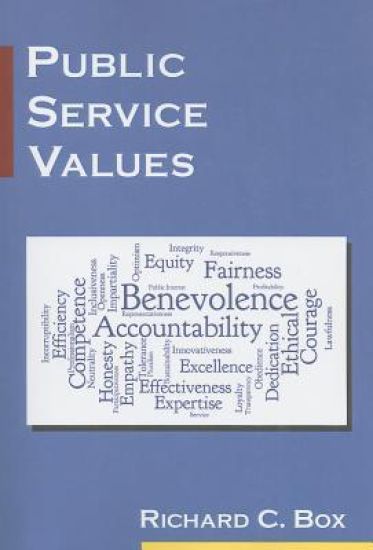
Public service values are too rarely discussed in public administration courses and scholarship, despite recent research demonstrating the importance of these values in the daily decision making processes of public service professionals. A discussion of these very tenets and their relevance to core public functions, as well as which areas might elicit value conflicts for public professionals, is central to any comprehensive understanding of budget and finance, human resource management, and strategic planning in the public sector. Public Service Values is written specifically for graduate and undergraduate courses in public administration, wherever a discussion of public service ideals might enrich the learning experience and offer students a better understanding of daily practice. Exploring the meaning and application of specific values, such as Neutrality, Efficiency, Accountability, Public Service, and Public Interest, provides students and future professionals with a ‘workplace toolkit’ for the ethical delivery of public services. Well-grounded in scholarly literature and with a relentless focus on the public service professional, Public Service Values highlights the importance of values in professional life and encourages a more self-aware and reflective public practice. Case studies to stimulate reflection are interwoven throughout the book and application to practice is cemented in a final section devoted to value themes in professional life as well as a chapter dedicated to holding oneself accountable. The result is a book that challenges us to embrace the necessity of public service values in our public affairs curricula and that asks the important questions current public service professionals should make a habit of routinely applying in their daily decision making.
Public Service Values

Public Service Values

Richard C. Box

Routledge
2014
nidottu
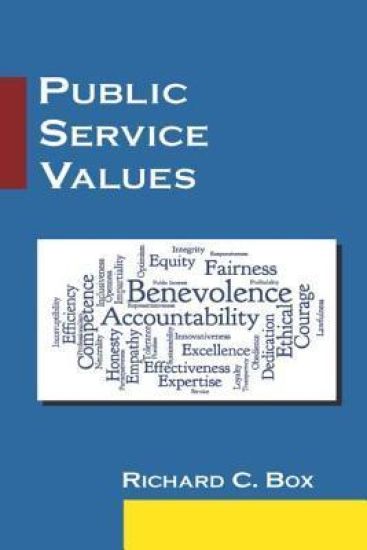
Public service values are too rarely discussed in public administration courses and scholarship, despite recent research demonstrating the importance of these values in the daily decision making processes of public service professionals. A discussion of these very tenets and their relevance to core public functions, as well as which areas might elicit value conflicts for public professionals, is central to any comprehensive understanding of budget and finance, human resource management, and strategic planning in the public sector. Public Service Values is written specifically for graduate and undergraduate courses in public administration, wherever a discussion of public service ideals might enrich the learning experience and offer students a better understanding of daily practice. Exploring the meaning and application of specific values, such as Neutrality, Efficiency, Accountability, Public Service, and Public Interest, provides students and future professionals with a ‘workplace toolkit’ for the ethical delivery of public services. Well-grounded in scholarly literature and with a relentless focus on the public service professional, Public Service Values highlights the importance of values in professional life and encourages a more self-aware and reflective public practice. Case studies to stimulate reflection are interwoven throughout the book and application to practice is cemented in a final section devoted to value themes in professional life as well as a chapter dedicated to holding oneself accountable. The result is a book that challenges us to embrace the necessity of public service values in our public affairs curricula and that asks the important questions current public service professionals should make a habit of routinely applying in their daily decision making.