Kirjojen hintavertailu. Mukana 11 699 587 kirjaa ja 12 kauppaa.

Kirjahaku

Etsi kirjoja tekijän nimen, kirjan nimen tai ISBN:n perusteella.

8 kirjaa tekijältä Richard C. Bush

War Like No Other

War Like No Other

Richard C. Bush

John Wiley Sons Inc
2007
sidottu
Nobody approaches the objectivity and precision of Bush and O'Hanlon when it comes to analysis of the military and political dimensions of the Taiwan issue. This is one challenge that U.S. policymakers and military strategists cannot afford to get wrong, and scholars cannot afford to ignore.- Michael Green, former Senior Director for Asian Affairs National Security Council The Showdown to Come In 1995, during a heated discussion about that year's Taiwan crisis, a Chinese general remarked to a U.S. diplomat, ""In the end, you care more about Los Angeles than you do about Taipei."" In a single sentence, he both questioned the level of America's commitment to a longtime ally and threatened massive, perhaps nuclear, retaliation should the United States intervene militarily on Taiwan's behalf. In the end, President Clinton sent two aircraft carriers to the region, and China ceased its military exercises in the Taiwan Strait. A decade later, however, China is much stronger, both economically and militarily, and it holds a significant amount of America's national debt. If another Taiwan crisis should occur-as it almost certainly will-would China back down? In A War Like No Other, you'll discover how little it would take to transform the close cooperation and friendly rivalry between the United States and the People's Republic of China into the first-ever shooting war between two nuclear powers. This chilling look into one possible future offers thoughtful advice to both governments on how to reduce the chances of such a nightmare actually occurring. Two Brookings Institution scholars offer specific prescriptions on how the two nations can improve communications, especially in times of crisis; avoid risky behavior, even when provoked; and, above all, remember which buttons not to push.
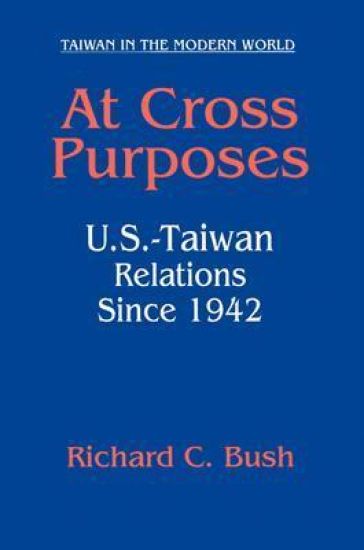
At Cross Purposes

At Cross Purposes

Richard C. Bush

Routledge
2004
sidottu
Written by the former chairman and managing director of the American Institute in Taiwan, this book sheds new light on key topics in the history of U.S.-Taiwan relations. It fills an important gap in our understanding of how the U.S. government addressed Taiwan and the Taiwan Strait issue from the early 1940s to the present. One theme that runs through these essays is the series of obstacles erected that denied the people of Taiwan a say in shaping their own destiny: Franklin Roosevelt chose to return Taiwan to mainland China for geopolitical reasons; there was little pressure on the Kuomintang to reform its authoritarian rule until Congress got involved in the early 1980s; Chiang Kai-shek spurned American efforts in the 1960s to keep Taiwan in international organizations; and behind the ROC's back, the Nixon, Carter, and Reagan administrations negotiated agreements with the PRC that undermined Taiwan's position. In addition to discussing how the United States reacted to key human rights cases from the 1940s to the 1980s, the author also discusses the Bush and Clinton administrations' efforts to preserve U.S. interests while accommodating new forces in the region. All these episodes have an enduring relevance for the people of Taiwan, and in his conclusion the author discusses where the relationship stands today. The book includes related documents that helped shape the U.S.-Taiwan relationship.
At Cross Purposes

At Cross Purposes

Richard C. Bush

Routledge
2004
nidottu
Written by the former chairman and managing director of the American Institute in Taiwan, this book sheds new light on key topics in the history of U.S.-Taiwan relations. It fills an important gap in our understanding of how the U.S. government addressed Taiwan and the Taiwan Strait issue from the early 1940s to the present. One theme that runs through these essays is the series of obstacles erected that denied the people of Taiwan a say in shaping their own destiny: Franklin Roosevelt chose to return Taiwan to mainland China for geopolitical reasons; there was little pressure on the Kuomintang to reform its authoritarian rule until Congress got involved in the early 1980s; Chiang Kai-shek spurned American efforts in the 1960s to keep Taiwan in international organizations; and behind the ROC's back, the Nixon, Carter, and Reagan administrations negotiated agreements with the PRC that undermined Taiwan's position. In addition to discussing how the United States reacted to key human rights cases from the 1940s to the 1980s, the author also discusses the Bush and Clinton administrations' efforts to preserve U.S. interests while accommodating new forces in the region. All these episodes have an enduring relevance for the people of Taiwan, and in his conclusion the author discusses where the relationship stands today. The book includes related documents that helped shape the U.S.-Taiwan relationship.
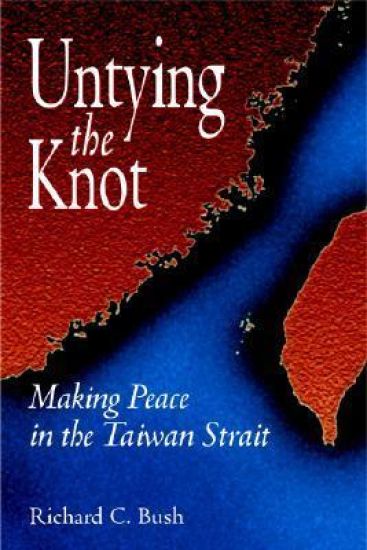
Untying the Knot

Untying the Knot

Richard C. Bush

Brookings Institution
2006
nidottu
"The relationship between Taiwan and China is a paradox. On the one hand, the two economies are becoming increasingly integrated, as Taiwanese companies have come to regard the mainland as the best place to manufacture their products and maintain global competitiveness. On the other hand, the long-running and changing political dispute between the two governments remains unresolved. Each side fears the intentions of the other and is acquiring military capabilities to deter disaster. In its pursuit of peace in the Taiwan Strait, the United States could get drawn into a war between the two rivals. Richard C. Bush, whose career has been dedicated to Taiwan-China issues, explores the conflicts between these nations and the difficulties that must be resolved. Disagreements over sovereignty and security form the core of the dispute. What would be the legal status and international role of the Taiwan government in a future unified China? Given China's growing military power, how could Taiwan feel secure? Complicating these issues are domestic politics and international competition, as well as misperceptions on both sides. Thus multiple obstacles prevent the two sides from even getting to the negotiating table, much less reaching a mutually acceptable resolution. For reasons of policy and politics, the United States is constrained from a central role. To begin with, it must provide China with some reassurance about its policy in order to secure cooperation on foreign policy issues. At the same time, it must bolster Taiwan's political confidence and military deterrence while discouraging provocative actions. The arcane nature of this dispute severely restricts the role of the United States as conflict mediator. But if there is to be any solution to this conflict, the comprehensive analysis that this book provides will be required reading for effective policy."
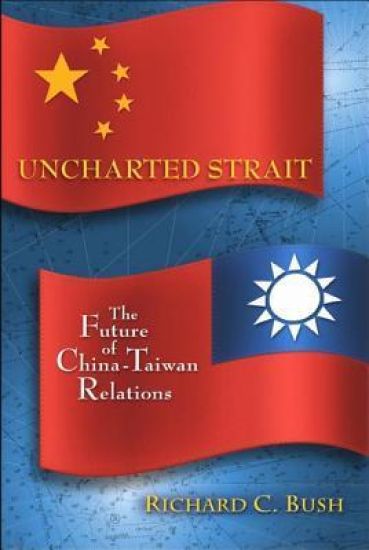
Uncharted Strait

Uncharted Strait

Richard C. Bush

Brookings Institution
2013
sidottu
The future of the Taiwan Strait is more wide open than at any other time in recent decades. Tensions between China and Taiwan have eased since 2008. But the movement toward full rapprochement remains fragile. Whether the two sides of the Strait can sustain and expand a cooperative relationship after years of mutual distrust and fear is still uncertain. The waters of the Strait are uncharted, and each side worries about shoals beneath the surface. The current engagement between Beijing and Taipei may make possible a solution to their six-decade-long dispute. Whether, when, and how that might happen is, however, shrouded in doubt. China fears the island's permanent separation, by way of either an overt move to de jure independence or continued refusal to unify with the mainland. Taiwan fears subordination to an authoritarian regime that does not have Taipei's interests at heart. And the United States worries about the stability of the East Asian region.Richard Bush, who studied issues surrounding Taiwan during almost twenty years in the U.S. government, explains the current state of relations between China and Taiwan, providing the details of what led to the current situation. And he extrapolates on the likely future of cross-Strait relations. Bush also discusses America's stake, analyzing possible ramifications for U.S. interests in the critically important East Asia region and recommends steps to protect those interests.“At the heart of the [Taiwan conundrum] is a question of definition. Does the dispute stem from the protracted division of the Chinese state after World War II, or does the Republic of China on Taiwan in some sense constitute a successor state of the old Republic of China (ROC), one on a par with the People's Republic of China on the Chinese mainland? Whether and how the unification of the two entities might occur hinges on the answer. Indeed, I have argued that the core of the dispute between the two sides has been their disagreement over whether the Republic of China - or Taiwan - is a sovereign entity for purposes of cross-Strait relations. It follows that if unification is a real option, the two sides must form a political union that bridges the disagreement over the island's legal status. Is that possible?” - from the Introduction
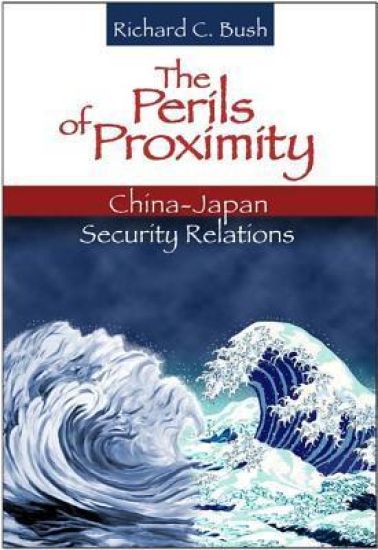
The Perils of Proximity

The Perils of Proximity

Richard C. Bush

Brookings Institution
2013
nidottu
"The rivalry between Japan and China has a long and sometimes brutal history, and they continue to eye each other warily as the balance of power tips toward Beijing. They cooperate and compete at the same time, but if competition deteriorates into military conflict, the entire world has much to lose. The Perils of Proximity evaluates the chances of armed conflict between China and Japan, presenting in stark relief the dangers it would pose and revealing the steps that could head off such a disastrous turn of events.Richard Bush focuses his on the problematic East China Sea region. Although Japan's military capabilities are more considerable than some in the West realize, its defense budget has remained basically flat in recent years. Meanwhile, Chinese military expenditures have grown by double digits annually. Moreover, that the emphasis of China's military modernization is on power projection—the ability of its air and naval forces to stretch their reach to the east, thus encroaching on its island neighbor.Tokyo regards the growth of Chinese power and its focus on the East China Sea with deep anxiety. How should they respond? The balance of power is changing, and Japan must account for that uncomfortable fact in crafting its strategy. It is incumbent on China, Japan, and the United States to take steps to reduce the odds of clash and conflict in the East China Sea, and veteran Asia analyst Bush presents recommendations to that end. The steps he suggests won't be easy, and effective political leadership will be absolutely critical. If implemented fully and correctly, however, they have the potential of reducing the perils of proximity in Asia."
Hong Kong in the Shadow of China

Hong Kong in the Shadow of China

Richard C. Bush

Brookings Institution
2016
nidottu
Hong Kong in the Shadow of China explores the recent Hong Kong turmoil, where the Chinese government insisted on gradual movement toward full democracy and protesters occupied major thoroughfares to insist on full democracy now.Fueling this struggle is deep public resentment over growing inequality and how the political system established by China and dominated by the local business community reinforces the divide been those who have a lot and those who have little., Richard Bush, Director of The Brookings Institution’s Center on East Asia Policy Studies, considers what Hong Kong and China must do to ensure both economic competitiveness and good governance, and the implications of Hong Kong developments for United States policy.
Difficult Choices

Difficult Choices

Richard C. Bush

Brookings Institution
2021
nidottu
How Taiwan can overcome internal stresses and the threat from ChinaTaiwan was a poster child for the “third wave” of global democratization in the 1980s. It was the first Chinese society to make the transition to democracy, and it did so gradually and peacefully. But Taiwan today faces a host of internal issues, starting with the aging of society and the resulting intergenerational conflicts over spending priorities. China's long-term threat to incorporate the island on terms similar to those used for Hong Kong exacerbates the island's home-grown problems. Taiwan remains heavily dependent on the United States for its security, but it must use its own resources to cope with Beijing's constant intimidation and pressure. How Taiwan responds to the internal and external challenges it faces—and what the United States and other outside powers do to help—will determine whether it is able to stand its ground against China's ambitions.The book explores the broad range of issues and policy choices Taiwan confronts and offers suggestions both for what Taiwan can do to help itself and what the United States should do to improve Taiwan's chances of success.