Kirjahaku
Etsi kirjoja tekijän nimen, kirjan nimen tai ISBN:n perusteella.
16 kirjaa tekijältä Richard Carr
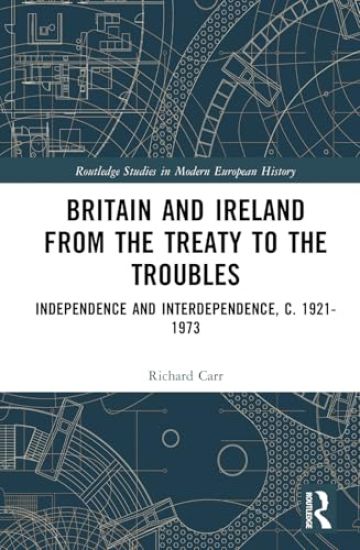
Using extensive and fresh archival material, this book places the relationship between the United Kingdom and Ireland after 1921 in a new light, encouraging us to rethink the dominant narrative of conflict and strife. While the work does not shy away from the clear points of dispute, it contends that these were far from the full story.Clearly, partition and the Troubles seen from the late 1960s onwards cast a long shadow, but disputes over Northern Ireland must be placed alongside those successes seen elsewhere. Unpacking a variety of topics including trade, tourism, the treatment of tuberculosis, and migration, this work covers new ground in social and political history. It balances an analysis of high politics – Cosgrave and de Valera on the one side and Baldwin and Attlee on the other – with the actions of ordinary people – nurses, doctors, sports fans, and labourers. The British–Irish story is also placed in a wider context through comparison with both countries’ dealings with America and an outline of their coordinated entry into the European Economic Community.This study will be an ideal resource to both students and all those wishing to consider and re-examine the fate of the United Kingdom, Ireland, and the British Empire.
Veteran MPs and Conservative Politics in the Aftermath of the Great War
Richard Carr
TAYLOR FRANCIS LTD
2024
nidottu
Between 1918 and 1939, 448 men who performed uniformed service in the First World War became Conservative MPs. This relatively high-profile cohort have been under-explored as a distinct body, yet a study of their experiences of the war and the ways in which they - and the Conservative Party - represented those experiences to the voting public reveals much about the political culture of Interwar Britain and the use of the Great War as political capital. Radicalised ex-servicemen have, thus far, been considered a rather continental phenomenon historiographically. And whilst attitudes to Hitler and Mussolini form part of this analysis, the study also explores why there were fewer such types in Britain. The Conservative Party, it will be shown, played a crucial part in such a process - with British politics serving as a contested space for survivors' interpretations of what the war should mean.

What is One Nation politics? What has it been, and what should be it be today? Since Ed Miliband’s speech at the 2012 Labour Party Conference these questions have been much asked, but not so often clearly answered. Outlining the historical context, and offering suggestions for contemporary thinkers, this comprehensive overview shows how all three major UK political parties have made a significant contribution to the One Nation agenda over the past century and a half. Re-asserting the One Nation tradition inherent in interventionist liberals like Keynes and Lloyd George, it encourages us to look beyond reformist high Tory politicians such as Benjamin Disraeli and sketches out precedents for current politicians in areas such as house building, local government, the living wage, a financial transaction tax, and the welfare state. Providing an accessible guide to the One Nation ideal, Richard Carr gives those of all political persuasions some food for thought whilst pointing the way for future policy making.
Richard Carr’s Charlie Chaplin places politics at the centre of the filmmaker’s life as it looks beyond Chaplin’s role as a comedic figure to his constant political engagement both on and off the screen. Drawing from a wealth of archival sources from across the globe, Carr provides an in-depth examination of Chaplin’s life as he made his way from Lambeth to Los Angeles. From his experiences in the workhouse to his controversial romantic relationships and his connections with some of the leading political figures of his day, this book sheds new light on Chaplin’s private life and introduces him as a key social commentator of the time. Whether interested in Hollywood and Hitler or communism and celebrity, Charlie Chaplin is essential reading for all students of twentieth-century history.
Richard Carr’s Charlie Chaplin places politics at the centre of the filmmaker’s life as it looks beyond Chaplin’s role as a comedic figure to his constant political engagement both on and off the screen. Drawing from a wealth of archival sources from across the globe, Carr provides an in-depth examination of Chaplin’s life as he made his way from Lambeth to Los Angeles. From his experiences in the workhouse to his controversial romantic relationships and his connections with some of the leading political figures of his day, this book sheds new light on Chaplin’s private life and introduces him as a key social commentator of the time. Whether interested in Hollywood and Hitler or communism and celebrity, Charlie Chaplin is essential reading for all students of twentieth-century history.
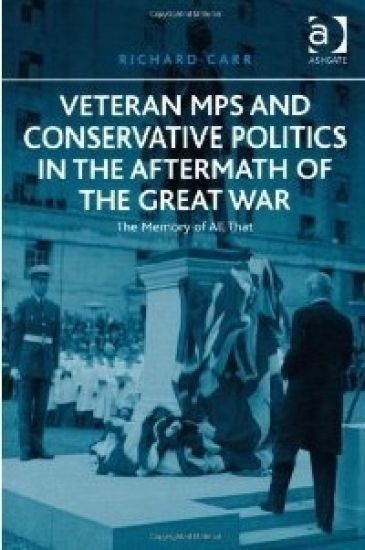
Veteran MPs and Conservative Politics in the Aftermath of the Great War
Richard Carr
Ashgate Publishing Limited
2013
sidottu
Between 1918 and 1939, 448 men who performed uniformed service in the First World War became Conservative MPs. This relatively high-profile cohort have been under-explored as a distinct body, yet a study of their experiences of the war and the ways in which they - and the Conservative Party - represented those experiences to the voting public reveals much about the political culture of Interwar Britain and the use of the Great War as political capital. Radicalised ex-servicemen have, thus far, been considered a rather continental phenomenon historiographically. And whilst attitudes to Hitler and Mussolini form part of this analysis, the study also explores why there were fewer such types in Britain. The Conservative Party, it will be shown, played a crucial part in such a process - with British politics serving as a contested space for survivors' interpretations of what the war should mean.
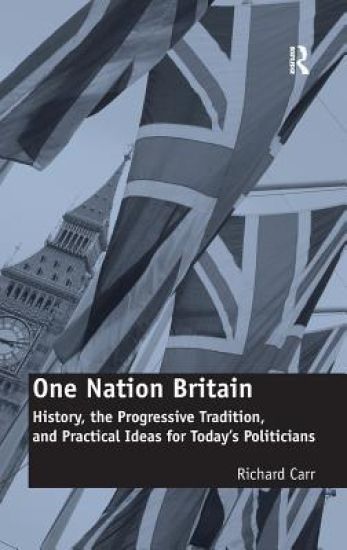
What is One Nation politics? What has it been, and what should be it be today? Since Ed Miliband’s speech at the 2012 Labour Party Conference these questions have been much asked, but not so often clearly answered. Outlining the historical context, and offering suggestions for contemporary thinkers, this comprehensive overview shows how all three major UK political parties have made a significant contribution to the One Nation agenda over the past century and a half. Re-asserting the One Nation tradition inherent in interventionist liberals like Keynes and Lloyd George, it encourages us to look beyond reformist high Tory politicians such as Benjamin Disraeli and sketches out precedents for current politicians in areas such as house building, local government, the living wage, a financial transaction tax, and the welfare state. Providing an accessible guide to the One Nation ideal, Richard Carr gives those of all political persuasions some food for thought whilst pointing the way for future policy making.

Spare yet evocative, the poems in ""Mister Martini"" pair explorations of a father-son relationship with haiku-like martini recipes. The martini becomes a daring metaphor for this relationship as it moves from the son's childhood to the father's death. Each poem is a strong drink in its own right, and together they form a potent narrative of alienation and love between a father and son struggling to communicate.From the book: Inventor - My father was an inventor of martinis. He acquired archaic languages, collected Renaissance textiles. But mostly he made martinis. He worked at night in a closed room. Martini chilled among purple crocuses, served with two drops of spring snow gathered from the petals.
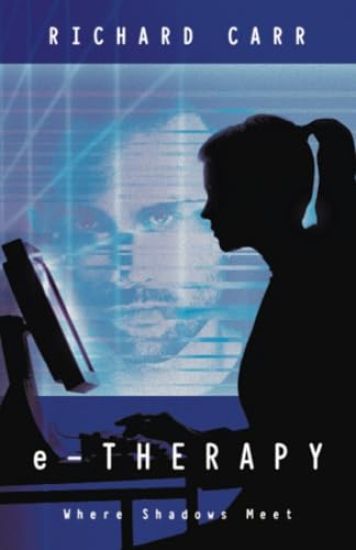
A shocking discovery that will turn her world upside down. Eileen Duet, a therapist, finds herself drawn into a forbidden online relationship that promises escape from her troubled marriage. But when she finally meets her mysterious lover in person, she's confronted with a devastating truth that threatens to shatter her life. Suddenly, the man who offered solace becomes a source of terror. Eileen finds herself trapped in a dangerous game of cat and mouse, where one wrong move could destroy her career, her reputation, and her sanity. Meanwhile, her sister Kelly harbors a dark secret, a desperate act of betrayal that could tear their family apart. As Eileen fights to protect herself and her loved ones, she must confront the lies she's told herself and the devastating consequences of her choices. A gripping tale of love, betrayal, and the secrets we keep, this novel will keep you on the edge of your seat until the very last page.
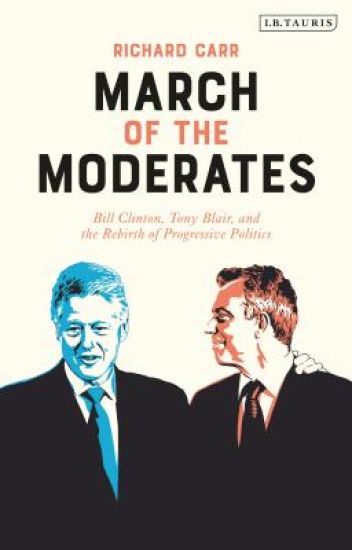
Anglo-American relations, the so-called ‘Special Relationship’, reached a new era with the rise of New Labour and the New Democrats in the late-1980s and early-1990s. Richard Carr reveals the untold story of the transatlantic ‘Third Way’ by analysing how Tony Blair and Bill Clinton won power and ultimately how they lost it. Using newly unearthed archives and interviews with key players, he investigates the relationship between the administrations and sheds new light on big events such as the Good Friday Agreement in Northern Ireland, the handover to George W. Bush, and the controversial Iraq War.