Kirjojen hintavertailu. Mukana 11 342 296 kirjaa ja 12 kauppaa.

Kirjahaku

Etsi kirjoja tekijän nimen, kirjan nimen tai ISBN:n perusteella.

12 kirjaa tekijältä Richard Delgado

Failed Revolutions

Failed Revolutions

Richard Delgado

Routledge
2019
sidottu
Forty years after school integration became the law of the land, African-American poverty, isolation, and despair are as deep as ever. Thirty years after the environmental revolution of the 1960s, our environment continues to deteriorate. Why have these and so many other hopeful revolutions failed? Focusing on the crucial discipline of the law,
Failed Revolutions

Failed Revolutions

Richard Delgado

Routledge
2020
nidottu
Focusing on the crucial discipline of the law, Failed Revolutions casts light on the many forces working against meaningful social change. It is a valuable reading for any citizen concerned with the possibility of social reform.
The Rodrigo Chronicles

The Rodrigo Chronicles

Richard Delgado

New York University Press
1995
sidottu
Dubbed a pioneer of critical race theory, Delgado offers a book of compelling conversations about race in America Richard Delgado is one of the most evocative and forceful voices writing on the subject of race and law in America today. The New York Times has described him as a pioneer of critical race theory, the bold and provocative movement that, according to the Times "will be influencing the practice of law for years to come." In The Rodrigo Chronicles, Delgado, adopting his trademark storytelling approach, casts aside the dense, dry language so commonly associated with legal writing and offers up a series of incisive and compelling conversations about race in America. Rodrigo, a brash and brilliant African-American law graduate has been living in Italy and has just arrived in the office of a professor when we meet him. Through the course of the book, the professor and he discuss the American racial scene, touching on such issues as the role of minorities in an age of global markets and competition, the black left, the rise of the black right, black crime, feminism, law reform, and the economics of racial discrimination. Expanding on one of the central themes of the critical race movement, namely that the law has an overwhelmingly white voice, Delgado here presents a radical and stunning thesis: it is not black, but white, crime that poses the most significant problem in modern American life.
The Coming Race War

The Coming Race War

Richard Delgado

New York University Press
1996
sidottu
In The Washington Post, Julius Lester praised Richard Delgado's The Rodrigo Chronicles: Conversations about America and Race as free of cant and ideology. . . . an excellent starting place for the national discussion about race we so desperately need. The New York Times has hailed Delgado as a pioneer in the study of race and law, and the Los Angeles Times has compared his storytelling style to Plato's Dialogues. In The Coming Race War?, Delgado turns his attention to the American racial landscape in the wake of the mid-term elections in 1994. Our political and racial topography has been radically altered. Affirmative action is being rolled back, immigrants continue to be targeted as the source of economic woes, and race is increasingly downplayed as a source of the nation's problems. Legal obstacles to racial equality have long been removed, we are told, so what's the problem? And yet, the plight of the urban poor grows worse. The number of young black men in prison continues to exceed those in college. Informal racial privilege remains entrenched and systemic. Where, asks Delgado in this new volume, will this lead? Enlisting his fictional counterpart, Rodrigo Crenshaw, to untangle the complexities of America's racial future, Delgado explores merit and affirmative action; the nature of empathy and, more commonly, false empathy; and the limitations of legal change. Warning of the dangers of depriving the underprivileged of all hope and opportunity, Delgado gives us a dark future in which an indignant white America casts aside, once and for all, the spirit of the civil rights movement, with disastrous results.
The Rodrigo Chronicles

The Rodrigo Chronicles

Richard Delgado

New York University Press
1996
pokkari
Dubbed a pioneer of critical race theory, Delgado offers a book of compelling conversations about race in America Richard Delgado is one of the most evocative and forceful voices writing on the subject of race and law in America today. The New York Times has described him as a pioneer of critical race theory, the bold and provocative movement that, according to the Times "will be influencing the practice of law for years to come." In The Rodrigo Chronicles, Delgado, adopting his trademark storytelling approach, casts aside the dense, dry language so commonly associated with legal writing and offers up a series of incisive and compelling conversations about race in America. Rodrigo, a brash and brilliant African-American law graduate has been living in Italy and has just arrived in the office of a professor when we meet him. Through the course of the book, the professor and he discuss the American racial scene, touching on such issues as the role of minorities in an age of global markets and competition, the black left, the rise of the black right, black crime, feminism, law reform, and the economics of racial discrimination. Expanding on one of the central themes of the critical race movement, namely that the law has an overwhelmingly white voice, Delgado here presents a radical and stunning thesis: it is not black, but white, crime that poses the most significant problem in modern American life.
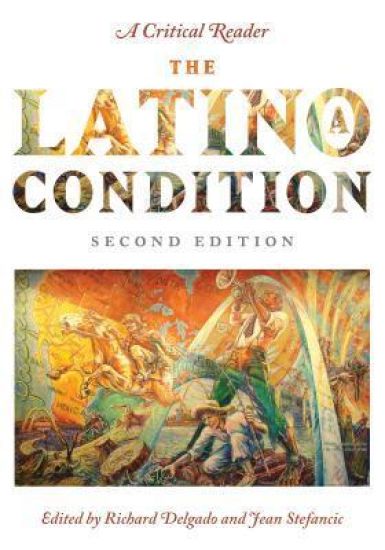
The Latino/a Condition

The Latino/a Condition

Richard Delgado

New York University Press
2010
sidottu
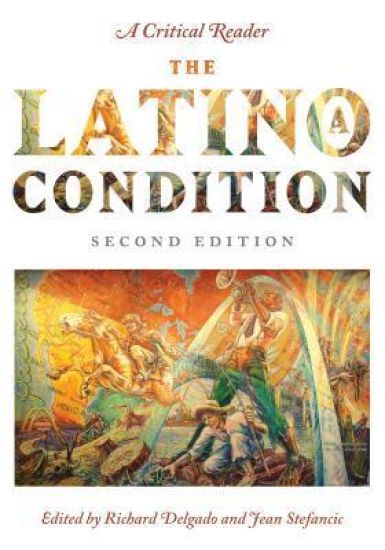
The second edition brings together new and classic Latino/a voices writing on questions of immigration, identity, history, law, and more In the last forty-five years, immigration reform has brought tens of millions of new immigrants from Latin American countries to the United States. Since critical race theory pioneers Richard Delgado and Jean Stefancic compiled the first edition of The Latino/a Condition in 1998, the population has continued to grow exponentially, while scholarship on Latinos/as has grown just as quickly. The second edition of The Latino/a Condition brings together a wide range of new and classic Latino and Latina voices from the fields of law, sociology, history, media studies, and politics to address questions such as: *Who exactly is a Latino? Who is Hispanic? Who is Chicano? *How did Spanish-speaking people come to live in the United States? *Is the Latino family a source of strength or oppression? What about Catholicism? *Should the United States try to control Latino immigration, and is this even possible? *What are the most common media stereotypes of Latino people? *Are Latinos white? What role does law play in the racial construction of the group? Collecting a wealth of perspectives on these and other issues central to the Latino/a experience, Delgado and Stefancic offer a broad portrait of Latino/a life in the United States at the beginning of the twenty-first century.
The Latino/a Condition

The Latino/a Condition

Richard Delgado

New York University Press
2010
pokkari
The second edition brings together new and classic Latino/a voices writing on questions of immigration, identity, history, law, and more In the last forty-five years, immigration reform has brought tens of millions of new immigrants from Latin American countries to the United States. Since critical race theory pioneers Richard Delgado and Jean Stefancic compiled the first edition of The Latino/a Condition in 1998, the population has continued to grow exponentially, while scholarship on Latinos/as has grown just as quickly. The second edition of The Latino/a Condition brings together a wide range of new and classic Latino and Latina voices from the fields of law, sociology, history, media studies, and politics to address questions such as: *Who exactly is a Latino? Who is Hispanic? Who is Chicano? *How did Spanish-speaking people come to live in the United States? *Is the Latino family a source of strength or oppression? What about Catholicism? *Should the United States try to control Latino immigration, and is this even possible? *What are the most common media stereotypes of Latino people? *Are Latinos white? What role does law play in the racial construction of the group? Collecting a wealth of perspectives on these and other issues central to the Latino/a experience, Delgado and Stefancic offer a broad portrait of Latino/a life in the United States at the beginning of the twenty-first century.
Critical White Studies

Critical White Studies

Richard Delgado

Temple University Press,U.S.
1997
pokkari
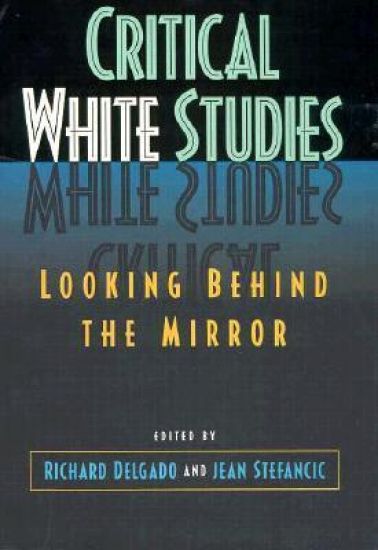
No longer content with accepting whiteness as the norm, critical scholars have turned their attention to whiteness itself. In Critical White Studies: Looking Behind the Mirror, numerous thinkers, including Toni Morrison, Eric Foner, Peggy McIntosh, Andrew Hacker, Ruth Frankenberg, John Howard Griffin, David Roediger, Kathleen Heal Cleaver, Noel Ignatiev, Cherrie Moraga, and Reginald Horsman, attack such questions as: *How was whiteness invented, and why? *How has the category whiteness changed over time? *Why did some immigrant groups, such as the Irish and Jews, start out as nonwhite and later became white? *Can some individual people be both white and nonwhite at different times, and what does it mean to \u0022pass for white\u0022? *At what point does pride in being white cross the line into white power or white supremacy? *What can whites concerned over racial inequity or white privilege do about it? Science and pseudoscience are presented side by side to demonstrate how our views on whiteness often reflect preconception, not fact. For example, most scientists hold that race is not a valid scientific category -- genetic differences between races are insignificant compared to those within them. Yet, the \u0022one drop\u0022 rule, whereby those with any nonwhite heritage are classified as nonwhite, persists even today. As the bell curve controversy shows, race concepts die hard, especially when power and prestige lie behind them. A sweeping portrait of the emerging field of whiteness studies, Critical White Studies presents, for the first time, the best work from sociology, law, history, cultural studies, and literature. Delgado and Stefancic expressly offer critical white studies as the next step in critical race theory. In focusing on whiteness, not only do they ask nonwhites to investigate more closely for what it means for others to be white, but also they invite whites to examine themselves more searchingly and to \u0022look behind the mirror.\u0022