Kirjojen hintavertailu. Mukana 11 244 527 kirjaa ja 12 kauppaa.

Kirjahaku

Etsi kirjoja tekijän nimen, kirjan nimen tai ISBN:n perusteella.

7 kirjaa tekijältä Richard Drake

The Revolutionary Mystique and Terrorism in Contemporary Italy
What drives terrorists to glorify violence? In The Revolutionary Mystique and Terrorism in Contemporary Italy, Richard Drake seeks to explain the origins of Italian terrorism and the role that intellectuals played in valorizing the use of violence for political or social ends. Drake argues that a combination of socioeconomic factors and the influence of intellectual elites led to a sanctioning of violence by revolutionary political groups in Italy between 1969 and 1988. Drake explores what motivated Italian terrorists on both the Left and the Right during some of the most violent decades in modern Italian history and how these terrorists perceived the modern world as something to be destroyed rather than reformed. In 1989, The Revolutionary Mystique and Terrorism in Contemporary Italy received the Howard R. Marraro Prize from the Society for Italian Historical Studies. It was awarded for the best book that year on Italian history. The book is reissued now with a new introduction for the light it might shed on current terrorist challenges. The Italians had success in combating terrorism. We might learn something from their example. The section of the book dealing with the Italian "superfascist" philosopher, Julius Evola, holds special interest today. Drake's original work takes on new significance in the light of Evola's recent surge of popularity for members of America's alt-right movement.
The Revolutionary Mystique and Terrorism in Contemporary Italy
What drives terrorists to glorify violence? In The Revolutionary Mystique and Terrorism in Contemporary Italy, Richard Drake seeks to explain the origins of Italian terrorism and the role that intellectuals played in valorizing the use of violence for political or social ends. Drake argues that a combination of socioeconomic factors and the influence of intellectual elites led to a sanctioning of violence by revolutionary political groups in Italy between 1969 and 1988. Drake explores what motivated Italian terrorists on both the Left and the Right during some of the most violent decades in modern Italian history and how these terrorists perceived the modern world as something to be destroyed rather than reformed. In 1989, The Revolutionary Mystique and Terrorism in Contemporary Italy received the Howard R. Marraro Prize from the Society for Italian Historical Studies. It was awarded for the best book that year on Italian history. The book is reissued now with a new introduction for the light it might shed on current terrorist challenges. The Italians had success in combating terrorism. We might learn something from their example. The section of the book dealing with the Italian "superfascist" philosopher, Julius Evola, holds special interest today. Drake's original work takes on new significance in the light of Evola's recent surge of popularity for members of America's alt-right movement.
The Education of an Anti-Imperialist

The Education of an Anti-Imperialist

Richard Drake

University of Wisconsin Press
2013
nidottu
Robert M. La Follette (1855–1925), the Republican senator from Wisconsin, is best known as a key architect of American Progressivism and as a fiery advocate for liberal politics in the domestic sphere. But ""Fighting Bob"" did not immediately come to a progressive stance on foreign affairs. In The Education of an Anti-Imperialist, Richard Drake follows La Follette's growth as a critic of America's wars and the policies that led to them. He began his political career with conventional Republican views of the era on foreign policy, avidly supporting the Spanish-American and Philippine-American Wars. La Follette's critique of empire emerged in 1910, during the first year of the Mexican Revolution, as he began to perceive a Washington–Wall Street alliance in the United States' dealings with Mexico. La Follette subsequently became Congress's foremost critic of Woodrow Wilson, fiercely opposing United States involvement in World War I. Denounced in the American press as the most dangerous man in the country, he became hated and vilified by many but beloved and admired by others. La Follette believed that financial imperialism and its necessary instrument, militarism, caused modern wars. He contended they were twin evils that would have ruinous consequences for the United States and its citizens in the twentieth century and beyond.
Apostles and Agitators

Apostles and Agitators

Richard Drake

Harvard University Press
2003
sidottu
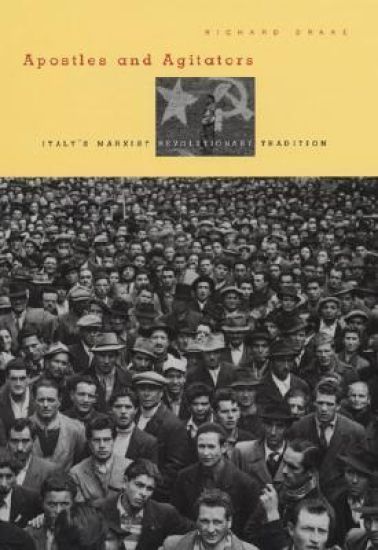
One of the most controversial questions in Italy today concerns the origins of the political terror that ravaged the country from 1969 to 1984, when the Red Brigades, a Marxist revolutionary organization, intimidated, maimed, and murdered on a wide scale.In this timely study of the ways in which an ideology of terror becomes rooted in society, Richard Drake explains the historical character of the revolutionary tradition to which so many ordinary Italians professed allegiance, examining its origins and internal tensions, the men who shaped it, and its impact and legacy in Italy. He illuminates the defining figures who grounded the revolutionary tradition, including Carlo Cafiero, Antonio Labriola, Benito Mussolini, and Antonio Gramsci, and explores the connections between the social disasters of Italy, particularly in the south, and the country's intellectual politics; the brand of "anarchist communism" that surfaced; and the role of violence in the ideology. Though arising from a legitimate sense of moral outrage at desperate conditions, the ideology failed to find the political institutions and ethical values that would end inequalities created by capitalism.In a chilling coda, Drake recounts the recent murders of the economists Massimo D'Antona and Marco Biagi by the new Red Brigades, whose Internet justification for the killings is steeped in the Marxist revolutionary tradition.
The Aldo Moro Murder Case

The Aldo Moro Murder Case

Richard Drake

Harvard University Press
1995
sidottu
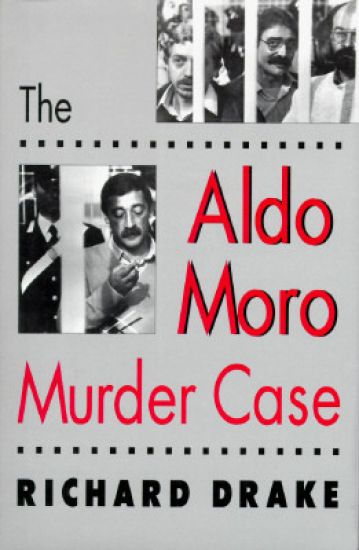
Aldo Moro’s kidnapping and violent death in 1978 shocked Italy as no other event has during the entire history of the Republic. It had much the same effect in Italy as the assassination of President John F. Kennedy had in the United States, with both cases giving rise to endless conspiracy theories. The dominant Christian Democratic leader for twenty years, Moro had embodied the country’s peculiar religious politics, its values as well as its practices. He was perceived as the most exemplary representative of the Catholic political tradition in Italy. The Red Brigades who killed him thought that in striking Moro they would cause the collapse of the capitalist establishment and clear the way for a Marxist-Leninist revolution.In his thorough account of the long and anguished quest for justice in the Moro murder case, Richard Drake provides a detailed portrait of the tragedy and its aftermath as complex symbols of a turbulent age in Italian history. Since Moro’s murder, documents from two parliamentary inquiries and four sets of trials explain the historical and political process and illuminate two enduring themes in Italian history. First, the records contain a wealth of examples bearing on the nation’s longstanding culture of ideological extremism and violence. Second, Moro’s story reveals much about the inner workings of democracy Italian style, including the roles of the United States and the Mafia. These insights are especially valuable today in understanding why the Italian establishment is in a state of collapse.The Moro case also explores the worldwide problem of terrorism. In great detail, the case reveals the mentality, the tactics, and the strategy of the Red Brigades and related groups. Moro’s fate has a universal poignancy, with aspects of a classical Greek tragedy. Drake provides a full historical account of how the Italian people have come to terms with this tragedy.
Charles Austin Beard

Charles Austin Beard

Richard Drake

Cornell University Press
2018
sidottu
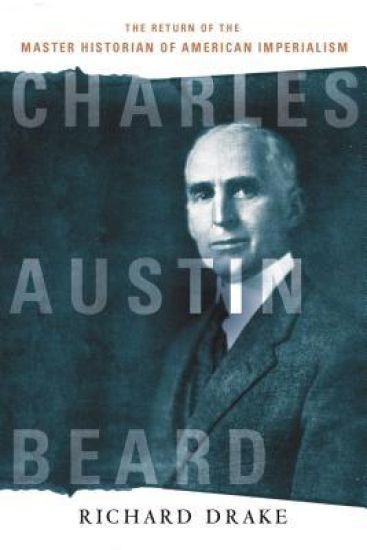
Richard Drake presents a new interpretation of Charles Austin Beard's life and work. The foremost American historian and a leading public intellectual in the first half of the twentieth century, Beard participated actively in the debates about American politics and foreign policy surrounding the two world wars. In a radical change of critical focus, Charles Austin Beard places the European dimension of Beard's thought at the center, correcting previous biographers' oversights and presenting a far more nuanced appreciation for Beard's life. Drake analyzes the stages of Beard's development as a historian and critic: his role as an intellectual leader in the Progressive movement, the support that he gave to the cause of American intervention in World War I, and his subsequent revisionist repudiation of Wilsonian ideals and embrace of non-interventionism in the lead-up to World War II. Charles Austin Beard shows that, as Americans tally the ruinous costs—both financial and moral—of nation-building and informal empire, the life and work of this prophet of history merit a thorough reexamination.
Charles Austin Beard

Charles Austin Beard

Richard Drake

CORNELL UNIVERSITY PRESS
2023
pokkari
Richard Drake presents a new interpretation of Charles Austin Beard's life and work. The foremost American historian and a leading public intellectual in the first half of the twentieth century, Beard participated actively in the debates about American politics and foreign policy surrounding the two world wars. In a radical change of critical focus, Charles Austin Beard places the European dimension of Beard's thought at the center, correcting previous biographers' oversights and presenting a far more nuanced appreciation for Beard's life. Drake analyzes the stages of Beard's development as a historian and critic: his role as an intellectual leader in the Progressive movement, the support that he gave to the cause of American intervention in World War I, and his subsequent revisionist repudiation of Wilsonian ideals and embrace of non-interventionism in the lead-up to World War II. Charles Austin Beard shows that, as Americans tally the ruinous costs—both financial and moral—of nation-building and informal empire, the life and work of this prophet of history merit a thorough reexamination.