Kirjojen hintavertailu. Mukana 11 342 296 kirjaa ja 12 kauppaa.

Kirjahaku

Etsi kirjoja tekijän nimen, kirjan nimen tai ISBN:n perusteella.

13 kirjaa tekijältä Richard Dutton

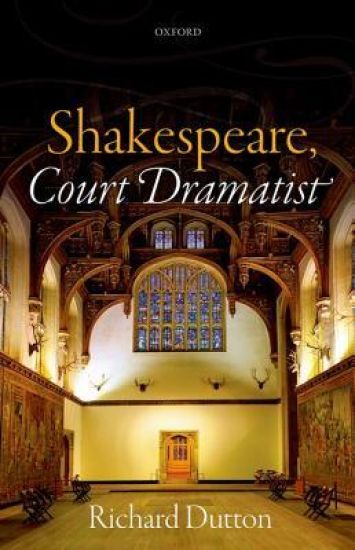
Shakespeare, Court Dramatist

Shakespeare, Court Dramatist

Richard Dutton

Oxford University Press
2016
sidottu
Shakespeare, Court Dramatist centres around the contention that the courts of both Elizabeth I and James I loomed much larger in Shakespeare's creative life than is usually appreciated. Richard Dutton argues that many, perhaps most, of Shakespeare's plays have survived in versions adapted for court presentation, where length was no object (and indeed encouraged) and rhetorical virtuosity was appreciated. The first half of the study examines the court's patronage of the theatre during Shakespeare's lifetime and the crucial role of its Masters of the Revels, who supervised all performances there (as well as censoring plays for public performance). Dutton examines the emergence of the Lord Chamberlain's Men and the King's Men, to whom Shakespeare was attached as their 'ordinary poet', and reviews what is known about the revision of plays in the early modern period. The second half of the study focuses in detail on six of Shakespeare's plays which exist in shorter, less polished texts as well as longer, more familiar ones: Henry VI Part II and III, Romeo and Juliet, Henry V, Hamlet, and The Merry Wives of Windsor. Shakespeare, Court Dramatist argues that they are not cut down from those familiar versions, but poorly-reported originals which Shakespeare revised for court performance into what we know best today. More localised revisions in such plays as Titus Andronicus, Richard II, and Henry IV Part II can also best be explained in this context. The court, Richard Dutton argues, is what made Shakespeare Shakespeare.
Mastering the Revels

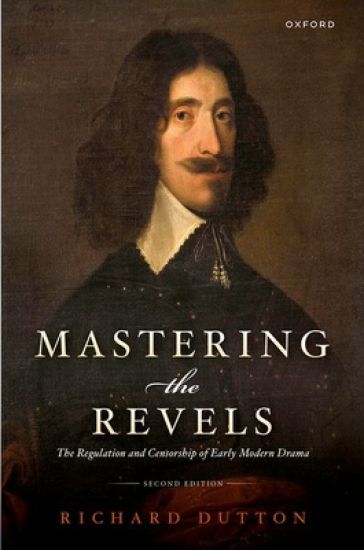
Mastering the Revels

Richard Dutton

Oxford University Press
2022
sidottu
Mastering the Revels traces the measures taken by the governments of Elizabeth I, James I, and Charles I to regulate the new phenomenon of fixed playhouses and resident playing companies in London, and to censor their plays. It focuses on the Masters of the Revels, whose primary function was to seek out theatrical entertainment for the court but whose role expanded to include oversight of the players and their playhouses. The book proceeds chronologically, tracking each of the Masters in the period--Edmund Tilney (served 1579-1610), Sir George Buc (1610-22), Sir John Astley (1622-3), and Sir Henry Herbert (1623-1642). Tilney was the first to receive a Special Commission giving him wide-ranging powers over the players. When Buc first became involved is examined here in detail, as is the parallel history of the Children of the Queen's Revels who between 1604 and 1608 staged some of the most scandalous plays of the era. Astley succeeded Buc, but soon sold the office to Herbert, who then served to the closing of the theatres. Manuscripts of plays censored by Tilney, Buc, and Herbert have survived and are examined in detail to assess their concerns. Large parts of Herbert's office-book have also survived, giving detailed insights into his professional life, including interactions with both the court and the players. It reveals the difficulties he faced negotiating recurrent popular pressure for war against Spain, resistance to Archbishop Laud's reforms of the church, and Henrietta Maria's problematic presence as a Catholic queen to Charles I.
Shakespeare, Court Dramatist

Shakespeare, Court Dramatist

Richard Dutton

Oxford University Press
2018
nidottu
Shakespeare, Court Dramatist centres around the contention that the courts of both Elizabeth I and James I loomed much larger in Shakespeare's creative life than is usually appreciated. Richard Dutton argues that many, perhaps most, of Shakespeare's plays have survived in versions adapted for court presentation, where length was no object (and indeed encouraged) and rhetorical virtuosity was appreciated. The first half of the study examines the court's patronage of the theatre during Shakespeare's lifetime and the crucial role of its Masters of the Revels, who supervised all performances there (as well as censoring plays for public performance). Dutton examines the emergence of the Lord Chamberlain's Men and the King's Men, to whom Shakespeare was attached as their 'ordinary poet', and reviews what is known about the revision of plays in the early modern period. The second half of the study focuses in detail on six of Shakespeare's plays which exist in shorter, less polished texts as well as longer, more familiar ones: Henry VI Part II and III, Romeo and Juliet, Henry V, Hamlet, and The Merry Wives of Windsor. Dutton argues that they are not cut down from those familiar versions, but poorly reported originals which Shakespeare revised for court performance into what we know best today. More localized revisions in such plays as Titus Andronicus, Richard II, and Henry IV Part II can also best be explained in this context. The court, Richard Dutton argues, is what made Shakespeare Shakespeare.
William Shakespeare

William Shakespeare

Richard Dutton

Palgrave Macmillan
1996
nidottu
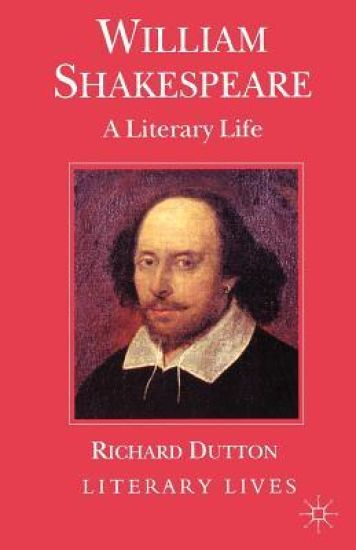
William Shakespeare is the best-known writer in the English-speaking world. Contrary to popular myth, we actually know more about him and his career than we do about most dramatists of his era - the fruits of three hundred years of fascinated research. Whilst we know less than we would like about Shakespeare's private life, we do have a far clearer picture of his professional career, and of the theatres and social structures with which he was involved. And yet the significance of what we know is fiercely contested and we are challenged by a host of contradictions. Elizabethan actors were often classed as vagabonds yet some were also servants to royalty who performed at court. All the roles in Shakespeare's plays were acted by men, yet he wrote strong roles for women from Lady Macbeth to Rosalind. So was Shakespeare a feminist before his time? Richard Dutton tackles these and other issues which keep Shakespeare, the most influential literary life in literary history, at the centre of our cultural life today.
Ben Jonson

Ben Jonson

Richard Dutton

Cambridge University Press
1983
sidottu
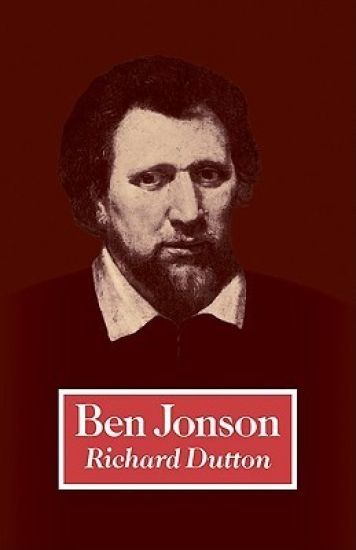
This book offers a critical assessment of the career of one of the most formidable figures of English literature, the most influential poet and dramatist of the early seventeenth century. Richard Dutton focuses on the greatest landmark of Jonson's career, the 1616 folio collection of his works with which he crowned his growing reputation as a man of letters, collecting together the majority of his most enduring works - including Every Man in his Humour, Volpone, The Alchemist; the tragedies Sejanus and Catiline; and the major masques and poems. The book relates these works (and another masterpiece, Bartholomew Fair, which belongs to the same period) to Jonson's tempestuous life and times, touching on such issues as his involvement with the Gunpowder Plot, his frequent confrontations with the political authorities, his emergence as Poet Laureate at Court and his often touchy relations with fellow authors like Shakespeare and Donne. But the principal aim throughout is to offer detailed critical analyses of Jonson's major works showing how, for all that they are rooted in the concerns of his own age, they are far more accessible and relevant to modern readers than is often assumed.
Ben Jonson

Ben Jonson

Richard Dutton

Cambridge University Press
1983
pokkari
This book offers a critical assessment of the career of one of the most formidable figures of English literature, the most influential poet and dramatist of the early seventeenth century. Richard Dutton focuses on the greatest landmark of Jonson's career, the 1616 folio collection of his works with which he crowned his growing reputation as a man of letters, collecting together the majority of his most enduring works - including Every Man in his Humour, Volpone, The Alchemist; the tragedies Sejanus and Catiline; and the major masques and poems. The book relates these works (and another masterpiece, Bartholomew Fair, which belongs to the same period) to Jonson's tempestuous life and times, touching on such issues as his involvement with the Gunpowder Plot, his frequent confrontations with the political authorities, his emergence as Poet Laureate at Court and his often touchy relations with fellow authors like Shakespeare and Donne. But the principal aim throughout is to offer detailed critical analyses of Jonson's major works showing how, for all that they are rooted in the concerns of his own age, they are far more accessible and relevant to modern readers than is often assumed.
Ben Jonson, Volpone and the Gunpowder Plot

Ben Jonson, Volpone and the Gunpowder Plot

Richard Dutton

Cambridge University Press
2008
sidottu
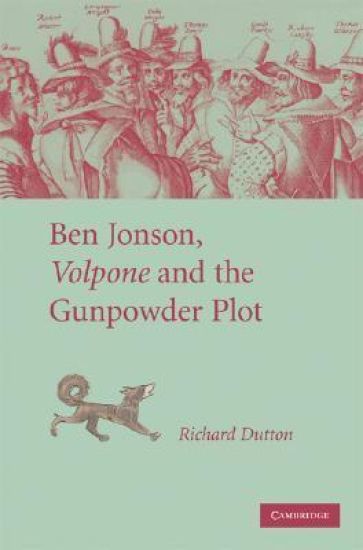
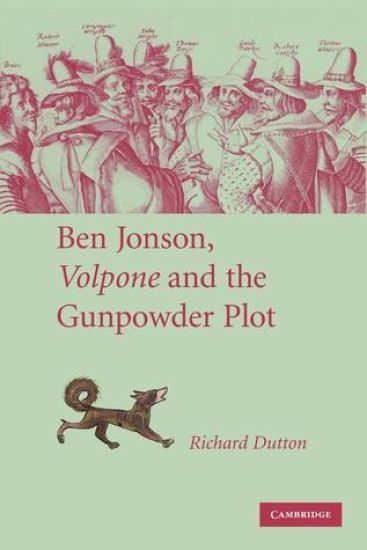
Ben Jonson's Volpone is the most widely taught and commonly performed English Renaissance play outside of Shakespeare. However, the dramatic circumstances of its writing are little known. Jonson wrote the play very shortly after the Gunpowder Plot in 1605, an event in which he was personally involved. This book argues that the play alludes to the plot as openly as censorship will allow, using the traditional form of the beast fable. As a Roman Catholic himself, Jonson shared in the repression suffered by his co-religionists in the wake of the Plot, and the play fiercely satirizes the man they chiefly blamed for this, Robert Cecil. The elaborate format which Jonson devised for the 1607 edition of Volpone, with a dedication, Epistle and numerous commendatory poems, is reproduced here photographically, allowing the reader to appreciate Jonson's covert meanings and to approach the text as those in 1607 might have done.
Ben Jonson

Ben Jonson

Richard Dutton

Routledge
1999
nidottu
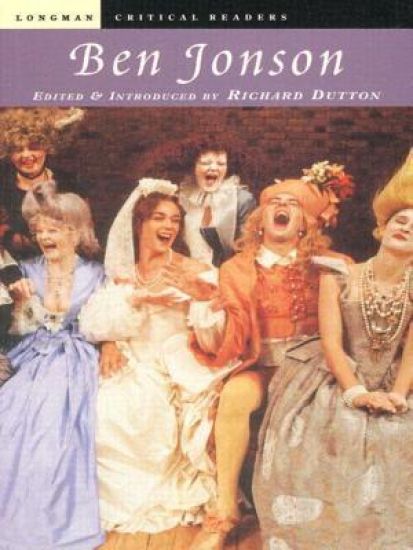
Interest in Ben Jonson is higher today than at any time since his death. This new collection offers detailed readings of all the major plays - Volpone, Epicene, The Alchemist and Bartholomew Fair - and the poems. It also provides significant insights into the court masques and the later plays which have only recently been rediscovered as genuinely engaging stage pieces.
Ben Jonson, Volpone and the Gunpowder Plot

Ben Jonson, Volpone and the Gunpowder Plot

Richard Dutton

Cambridge University Press
2012
pokkari
Ben Jonson's Volpone is the most widely taught and commonly performed English Renaissance play outside of Shakespeare. However, the dramatic circumstances of its writing are little known. Jonson wrote the play very shortly after the Gunpowder Plot in 1605, an event in which he was personally involved. This book argues that the play alludes to the plot as openly as censorship will allow, using the traditional form of the beast fable. As a Roman Catholic himself, Jonson shared in the repression suffered by his co-religionists in the wake of the Plot, and the play fiercely satirizes the man they chiefly blamed for this, Robert Cecil. The elaborate format which Jonson devised for the 1607 edition of Volpone, with a dedication, Epistle and numerous commendatory poems, is reproduced here photographically, allowing the reader to appreciate Jonson's covert meanings and to approach the text as those in 1607 might have done.
Shakespeare's Theatre: A History

Shakespeare's Theatre: A History

Richard Dutton

Wiley-Blackwell (an imprint of John Wiley Sons Ltd)
2018
sidottu
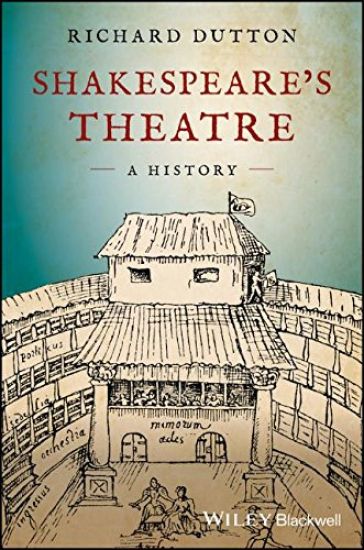
Shakespeare’s Theatre: A History examines the theatre spaces used by William Shakespeare, and explores these spaces in relation to the social and political framework of the Elizabethan era. The text journeys from the performing spaces of the provincial inns, guild halls and houses of the gentry of the Bard’s early career, to the purpose-built outdoor playhouses of London, including the Globe, the Theatre, and the Curtain, and the royal courts of Elizabeth and James I. The author also discusses the players for whom Shakespeare wrote, and the positioning—or dispositioning—of audience members in relation to the stage. Widely and deeply researched, this fascinating volume is the first to draw on the most recent archaeological work on the remains of the Rose and the Globe, as well as continuing publications from the Records of Early English Drama project. The book also explores the contentious view that the ‘plot’ of The Seven Deadly Sins (part II), provides unprecedented insight into the working practices of Shakespeare’s company and includes a complete and modernized version of the ‘plot’. Throughout, the author relates the practicalities of early modern playing to the evolving systems of aristocratic patronage and royal licensing within which they developed Insightful and engaging, Shakespeare’s Theatre is ideal reading for undergraduates, postgraduates, and scholars of literature and theatre studies.