Kirjojen hintavertailu. Mukana 11 342 296 kirjaa ja 12 kauppaa.

Kirjahaku

Etsi kirjoja tekijän nimen, kirjan nimen tai ISBN:n perusteella.

21 kirjaa tekijältä Richard Elliott

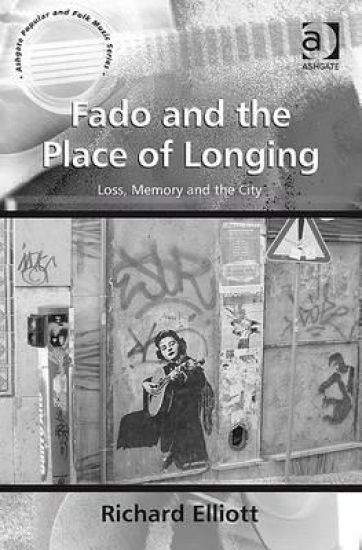
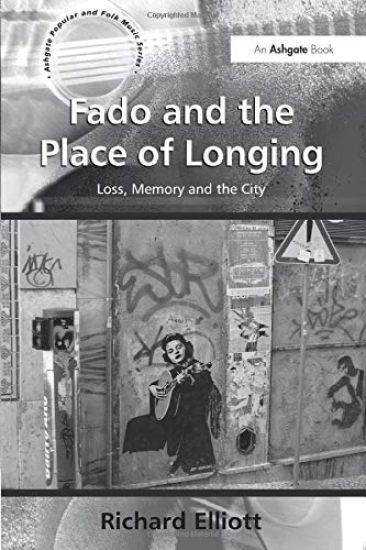
Fado and the Place of Longing

Fado and the Place of Longing

Richard Elliott

Ashgate Publishing Limited
2010
sidottu
Fado, often described as 'urban folk music', emerged from the streets of Lisbon in the mid-nineteenth century and went on to become Portugal's 'national' music during the twentieth. It is known for its strong emphasis on loss, memory and nostalgia within its song texts, which often refer to absent people and places. One of the main lyrical themes of fado is the city itself. Fado music has played a significant role in the interlacing of mythology, history, memory and regionalism in Portugal in the second half of the twentieth century. Richard Elliott considers the ways in which fado songs bear witness to the city of Lisbon, in relation to the construction and maintenance of the local. Elliott explores the ways in which fado acts as a cultural product reaffirming local identity via recourse to social memory and an imagined community, while also providing a distinctive cultural export for the dissemination of a 'remembered Portugal' on the global stage.
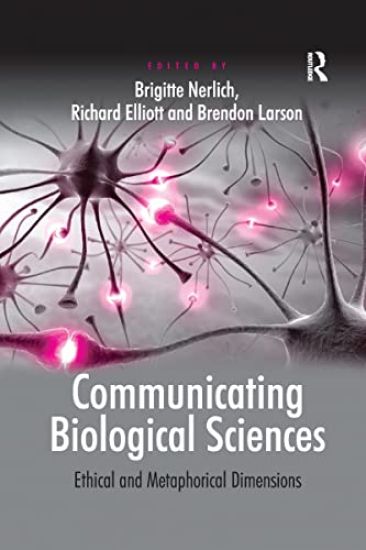
Communicating Biological Sciences

Communicating Biological Sciences

Richard Elliott

Ashgate Publishing Limited
2009
sidottu
Recent scandals in the biosciences have highlighted the perils of communicating science leading many observers to ask questions about the pressures on scientists and the media to hype-up claims of scientific breakthroughs. Journalists, science writers and scientists themselves have to report complex and rapidly-developing scientific issues to society, yet work within conceptual and temporal constraints that shape their communication. To date, there has been little reflection on the ethical implications of science writing and science communication in an era of rapid change. Communicating Biological Sciences discusses the 'ethics' of science communication in light of recent developments in biotechnology and biomedicine. It focuses on the role of metaphors in the creation of visions and the framing of scientific advances, as well as their impact on patterns of public acceptance and rejection, trust and scepticism. Its rigorous investigation will appeal not only to science writers and scientists, but also to scholars of sociology, science and technology studies, media and journalism.
Mental Health and Sport

Mental Health and Sport

Richard Elliott

TAYLOR FRANCIS LTD
2024
nidottu
The relationship between mental health and elite sport has found itself under more intense scrutiny in recent years. This has occurred as a result of the increasing number of elite athletes who have chosen to talk about the mental health challenges that they have faced during their careers. It is also reflective of an emerging body of academic work that seeks to make sense of the interplay that exists between mental health and elite sport. Mental Health and Sport: Supporting Elite Athletes is offered as a further contribution to that body of work; one that is designed to benefit practitioners who are already working with elite athletes, and those who aspire to do so. It does so by providing a foundational understanding of mental health, by introducing some of the challenges that elite athletes can face during their careers, and by making some practical recommendations that can be used to help support the mental health of elite athletes. Split into six substantive chapters that introduce key overarching issues relating to mental health and elite sport, and explore the implications for specific groups of athletes, Mental Health and Sport: Supporting Elite Athletes is an important reference for anybody who has an interest in better supporting the mental health of elite athletes at youth and/or senior levels.
Mental Health and Sport

Mental Health and Sport

Richard Elliott

TAYLOR FRANCIS LTD
2024
sidottu
The relationship between mental health and elite sport has found itself under more intense scrutiny in recent years. This has occurred as a result of the increasing number of elite athletes who have chosen to talk about the mental health challenges that they have faced during their careers. It is also reflective of an emerging body of academic work that seeks to make sense of the interplay that exists between mental health and elite sport. Mental Health and Sport: Supporting Elite Athletes is offered as a further contribution to that body of work; one that is designed to benefit practitioners who are already working with elite athletes, and those who aspire to do so. It does so by providing a foundational understanding of mental health, by introducing some of the challenges that elite athletes can face during their careers, and by making some practical recommendations that can be used to help support the mental health of elite athletes. Split into six substantive chapters that introduce key overarching issues relating to mental health and elite sport, and explore the implications for specific groups of athletes, Mental Health and Sport: Supporting Elite Athletes is an important reference for anybody who has an interest in better supporting the mental health of elite athletes at youth and/or senior levels.
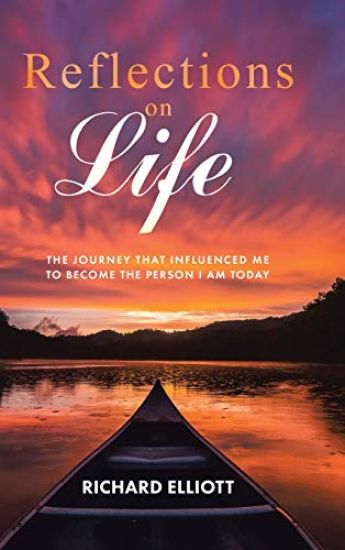
Reflections on Life

Reflections on Life

Richard Elliott

Christian Faith Publishing, Inc
2020
pokkari
In Reflections on Life, the author shares a journey, a very personal journey, that includes his struggle with addressing two provocative questions once lifted in prayer by St. Francis of Assisi: Who are you, oh God, and who am I? The reader will discover how the authors journey transformed him from a nonpracticing, nominal Christian to a committed follower of Christ whose faith grows stronger with each new day. This book is divided into two sections, each of which provides revealing insights on how the author ultimately found answers to the essential questions posed by St. Francis centuries ago.Section 1 (Who Am I?) offers a biographical background that focuses on both who and what helped the author deal with life's challenges and influenced him to develop a firmly grounded belief system. This belief system evolved from an I know all the answers and need no one perspective to one that acknowledged I do not have all the answers and am dependent on others to solve life's inevitable problems.Section 2 (Living a Christian Life is Not Easy: Spiritual Journey) focuses on the authors spiritual journey and how one must learn to give up some of their secular ways. Changing secular ways requires both a willingness to change and hard work. One must learn to forgive oneself and others, stop being judgmental, realize that it is not about them, and put God first in everything and know that God is always with them. This section shares the authors plan and model for success. Our life journeys provide countless challenges and endless opportunities. How we respond to what life brings our way will in large measure determine our ability to be successful in dealing with what we experience. May all who read Reflections on Life find something that supports them with their journey through this life.
Reflections on Life

Reflections on Life

Richard Elliott

Christian Faith Publishing, Inc
2020
sidottu
In Reflections on Life, the author shares a journey, a very personal journey, that includes his struggle with addressing two provocative questions once lifted in prayer by St. Francis of Assisi: Who are you, oh God, and who am I? The reader will discover how the authors journey transformed him from a nonpracticing, nominal Christian to a committed follower of Christ whose faith grows stronger with each new day. This book is divided into two sections, each of which provides revealing insights on how the author ultimately found answers to the essential questions posed by St. Francis centuries ago.Section 1 (Who Am I?) offers a biographical background that focuses on both who and what helped the author deal with lifes challenges and influenced him to develop a firmly grounded belief system. This belief system evolved from an I know all the answers and need no one perspective to one that acknowledged I do not have all the answers and am dependent on others to solve lifes inevitable problems.Section 2 (Living a Christian Life is Not Easy: Spiritual Journey) focuses on the authors spiritual journey and how one must learn to give up some of their secular ways. Changing secular ways requires both a willingness to change and hard work. One must learn to forgive oneself and others, stop being judgmental, realize that it is not about them, and put God first in everything and know that God is always with them. This section shares the authors plan and model for success. Our life journeys provide countless challenges and endless opportunities. How we respond to what life brings our way will in large measure determine our ability to be successful in dealing with what we experience. May all who read Reflections on Life find something that supports them with their journey through this life.
Fado and the Place of Longing

Fado and the Place of Longing

Richard Elliott

Routledge
2016
nidottu
Fado, often described as 'urban folk music', emerged from the streets of Lisbon in the mid-nineteenth century and went on to become Portugal's 'national' music during the twentieth. It is known for its strong emphasis on loss, memory and nostalgia within its song texts, which often refer to absent people and places. One of the main lyrical themes of fado is the city itself. Fado music has played a significant role in the interlacing of mythology, history, memory and regionalism in Portugal in the second half of the twentieth century. Richard Elliott considers the ways in which fado songs bear witness to the city of Lisbon, in relation to the construction and maintenance of the local. Elliott explores the ways in which fado acts as a cultural product reaffirming local identity via recourse to social memory and an imagined community, while also providing a distinctive cultural export for the dissemination of a 'remembered Portugal' on the global stage.
Communicating Biological Sciences

Communicating Biological Sciences

Richard Elliott

Routledge
2016
nidottu
Recent scandals in the biosciences have highlighted the perils of communicating science leading many observers to ask questions about the pressures on scientists and the media to hype-up claims of scientific breakthroughs. Journalists, science writers and scientists themselves have to report complex and rapidly-developing scientific issues to society, yet work within conceptual and temporal constraints that shape their communication. To date, there has been little reflection on the ethical implications of science writing and science communication in an era of rapid change. Communicating Biological Sciences discusses the 'ethics' of science communication in light of recent developments in biotechnology and biomedicine. It focuses on the role of metaphors in the creation of visions and the framing of scientific advances, as well as their impact on patterns of public acceptance and rejection, trust and scepticism. Its rigorous investigation will appeal not only to science writers and scientists, but also to scholars of sociology, science and technology studies, media and journalism.
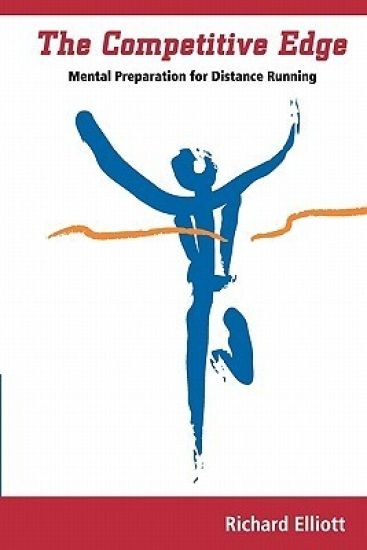
The Competitive Edge: Mental Preparation For Distance Running
The Competitive Edge explores the psychological factors that influence a distance runner's performance. The book is intended to help competitive runners get a handle on the 'inner game' of their sport and maximize their running potential. It covers such topics as: - the challenges posed by the psychological aspects of distance racing - the use of relaxation techniques to calm the body - the use of mental rehearsal to visualize and prepare for races - the care and feeding of a runner's 'emotional battery' - a discussion with top runners about the psychology of racing - the formulation of a mental training program
The Sound of Nonsense

The Sound of Nonsense

Richard Elliott

Bloomsbury Academic USA
2017
nidottu
In The Sound of Nonsense, Richard Elliott highlights the importance of sound in understanding the ‘nonsense’ of writers such as Lewis Carroll, Edward Lear, James Joyce and Mervyn Peake, before connecting this noisy writing to works which engage more directly with sound, including sound poetry, experimental music and pop. By emphasising sonic factors, Elliott makes new and fascinating connections between a wide range of artistic examples to ultimately build a case for the importance of sound in creating, maintaining and disrupting meaning.
The Sound of Nonsense

The Sound of Nonsense

Richard Elliott

Bloomsbury Academic USA
2017
sidottu
In The Sound of Nonsense, Richard Elliott highlights the importance of sound in understanding the ‘nonsense’ of writers such as Lewis Carroll, Edward Lear, James Joyce and Mervyn Peake, before connecting this noisy writing to works which engage more directly with sound, including sound poetry, experimental music and pop. By emphasising sonic factors, Elliott makes new and fascinating connections between a wide range of artistic examples to ultimately build a case for the importance of sound in creating, maintaining and disrupting meaning.
The Late Voice

The Late Voice

Richard Elliott

Bloomsbury Academic USA
2017
nidottu
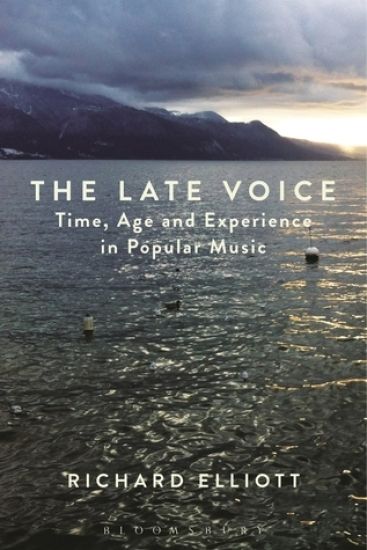
Popular music artists, as performers in the public eye, offer a privileged site for the witnessing and analysis of ageing and its mediation. The Late Voice undertakes such an analysis by considering issues of time, memory, innocence and experience in modern Anglophone popular song and the use by singers and songwriters of a 'late voice'. Lateness here refers to five primary issues: chronology (the stage in an artist's career); the vocal act (the ability to convincingly portray experience); afterlife (posthumous careers made possible by recorded sound); retrospection (how voices 'look back' or anticipate looking back); and the writing of age, experience, lateness and loss into song texts. There has been recent growth in research on ageing and the experience of later stages of life, focusing on physical health, lifestyle and psychology, with work in the latter field intersecting with the field of memory studies. The Late Voice seeks to connect age, experience and lateness with particular performers and performance traditions via the identification and analysis of a late voice in singers and songwriters of mid-late twentieth century popular music.
Various Artists' DJs do Guetto

Various Artists' DJs do Guetto

Richard Elliott

Bloomsbury Academic USA
2022
sidottu
Call it batida, kuduro, Afro house, Lisbon bass: anyone with a keen ear for contemporary developments in global electronic dance music can't fail to have noticed the rise in popularity and influence of Lisbon-based DJs such as DJ Marfox, DJ Nervoso and Nídia. These DJs and producers have brought the sound of the Lisbon projects to the wider world via international club nights, festival appearances, recordings and remix projects for a range of international artists.This book uses the 2006 compilation DJs do Guetto as a prism for exploring this music's aesthetics and its roots in Lusophone Africa, its evolution in the immigrant communities of Lisbon and its journey from there to the world. The story is one of encounters: between people, sounds, neighborhoods, technologies and cultural contexts. Drawing on reflections by DJ Marfox and others, the book establishes DJs do Guetto as a foundation stone not only for a burgeoning music scene, but also for a newfound sense of pride in a place and a community.
Various Artists' DJs do Guetto

Various Artists' DJs do Guetto

Richard Elliott

Bloomsbury Academic USA
2022
nidottu
Call it batida, kuduro, Afro house, Lisbon bass: anyone with a keen ear for contemporary developments in global electronic dance music can't fail to have noticed the rise in popularity and influence of Lisbon-based DJs such as DJ Marfox, DJ Nervoso and Nídia. These DJs and producers have brought the sound of the Lisbon projects to the wider world via international club nights, festival appearances, recordings and remix projects for a range of international artists.This book uses the 2006 compilation DJs do Guetto as a prism for exploring this music's aesthetics and its roots in Lusophone Africa, its evolution in the immigrant communities of Lisbon and its journey from there to the world. The story is one of encounters: between people, sounds, neighborhoods, technologies and cultural contexts. Drawing on reflections by DJ Marfox and others, the book establishes DJs do Guetto as a foundation stone not only for a burgeoning music scene, but also for a newfound sense of pride in a place and a community.
The Late Voice

The Late Voice

Richard Elliott

Bloomsbury Academic USA
2015
sidottu
Popular music artists, as performers in the public eye, offer a privileged site for the witnessing and analysis of ageing and its mediation. The Late Voice undertakes such an analysis by considering issues of time, memory, innocence and experience in modern Anglophone popular song and the use by singers and songwriters of a 'late voice'. Lateness here refers to five primary issues: chronology (the stage in an artist's career); the vocal act (the ability to convincingly portray experience); afterlife (posthumous careers made possible by recorded sound); retrospection (how voices 'look back' or anticipate looking back); and the writing of age, experience, lateness and loss into song texts. There has been recent growth in research on ageing and the experience of later stages of life, focusing on physical health, lifestyle and psychology, with work in the latter field intersecting with the field of memory studies. The Late Voice seeks to connect age, experience and lateness with particular performers and performance traditions via the identification and analysis of a late voice in singers and songwriters of mid-late twentieth century popular music.
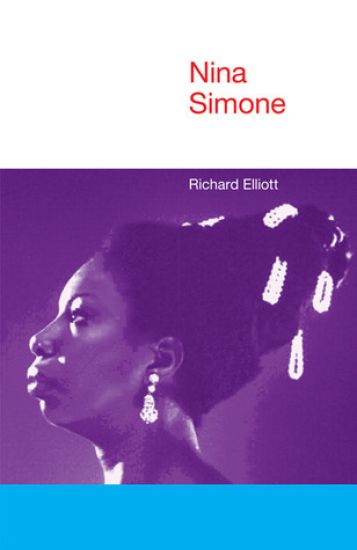
Nina Simone

Nina Simone

Richard Elliott

Equinox Publishing Ltd
2013
nidottu
Since her death in 2003, Nina Simone has continued to be revered as a cultural icon and role model for scores of fans and fellow musicians. Much of her fame derives from her association with the civil rights movement, for which she wrote such classic songs as 'Mississippi Goddam', 'Four Women' and 'Young, Gifted and Black'. The defiance and affirmation of such anthems was accompanied by an equal dedication to songs of melancholy, yearning and spiritual questing. Placing Simone and her music firmly within the socio-historical context of the 1960s, this book also argues for the importance of considering the artist's entire career and for paying greater attention to her music than is often the case in biographical accounts. Simone defied musical categories even as she fought against social ones and the result is a body of work that draws upon classical and jazz music, country blues, French chanson, gospel, protest songs, pop and rock tunes, turning genres and styles inside out in pursuit of what Simone called "black classical music". The book begins with a focus on the early part of Simone's career and a discussion of genre and style.Connecting its analysis to a discussion of social categorization (with particular regard to race), it argues that Simone's defiance of stylistic boundaries can be seen as a political act. From here, the focus shifts to Simone's self-written protest material, connecting it to her increasing involvement in the struggle for civil rights. The book also provides an in-depth account of Simone's 'possession' of material by writers such as Leonard Cohen, Bob Dylan, Sandy Denny and Judy Collins, while exploring the relationship between the personal and the political. In considering material from the Simone's lesser-known work from the 1970s to the 1990s, the study proposes a theory of the "late voice" in which issues of age, experience and memory are emphasised. The book concludes with a discussion of Simone's ongoing legacy.