Kirjojen hintavertailu. Mukana 11 342 296 kirjaa ja 12 kauppaa.

Kirjahaku

Etsi kirjoja tekijän nimen, kirjan nimen tai ISBN:n perusteella.

22 kirjaa tekijältä Richard Fortey

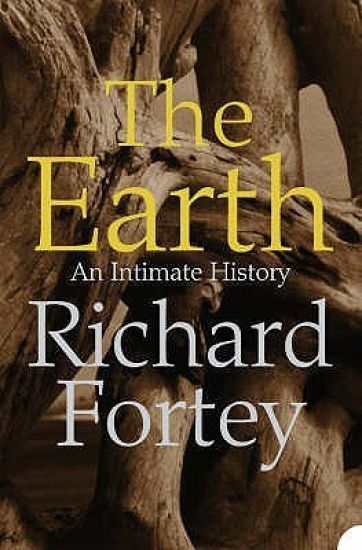
The Earth

The Earth

Richard Fortey

HARPERCOLLINS PUBLISHERS
2005
nidottu
The paperback of the Sunday Times bestseller that reveals how the earth became the shape it is today. This book will change the way you see the world – permanently. The face of the earth, criss-crossed by chains of mountains like the scars of old wounds, has changed constantly over billions of years. Its shape records a remote past of earthquakes, volcanos and continental drift, and the ongoing subtle shifts that bring our planet alive. Richard Fortey introduces us to the earth’s distinct character, revealing the life that it leads when humans aren’t watching. He follows the continual movement of seabeds, valleys, mountain ranges and ice caps and shows how everything – our culture, natural history, even the formation of our cities – has its roots in geology. In Richard Fortey’s hands, geology becomes vital and exhilarating and unmistakably informs our lives in the most intimate way.
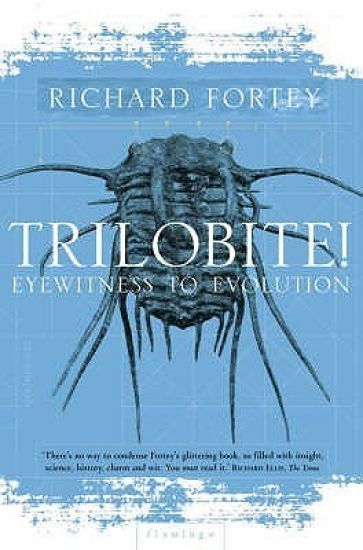
Trilobite!

Trilobite!

Richard Fortey

Harpercollins Publishers
2001
pokkari
This is is a trilobito-centric view of the world, unravelling the history of the crustacean-like animals which dominated the seas for three hundred million years. These arthropods witnessed continents move, they survived ice ages and volcanic eruptions, evolving and adapting to their environment.
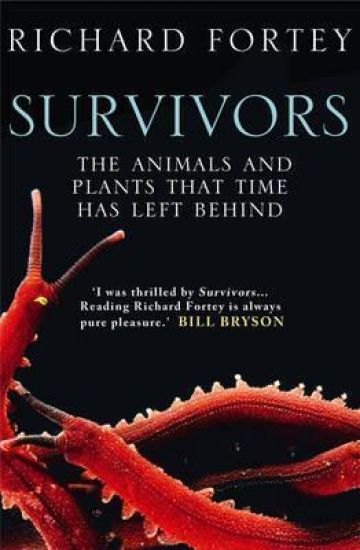
Survivors

Survivors

Richard Fortey

HARPERCOLLINS PUBLISHERS
2012
nidottu
An awe-inspiring journey through the eons and across the globe in search of visible traces of evolution in the living creatures that have survived from earlier times. In this groundbreaking book, prize-winning science writer Richard Fortey chronicles life’s history not through the fossil record, but through the stories of organisms that have survived, almost unchanged, through geological time. Fortey takes us on a journey to ancient worlds: on a moonlit beach in Delaware where the horseshoe crab shuffles its way through a violent romance, we catch a glimpse of life 450 million years ago. Along a stretch of Australian coastline, we bear witness to the sights and sounds that would have greeted a Precambrian dawn. And, in the dense rainforests of New Zealand, where the secretive velvet worm burrows into the rotting timber of the jungle floor, we marvel at a living fossil which has survived unchanged since before the break-up of Gondwana, the ancient supercontinent, over 150 million years ago. Written with Fortey’s customary sparkle and gusto, this wonderfully engrossing exploration of the world’s oldest flora and fauna brilliantly combines the best science writing about the origins of life with an explorer’s sense of adventure and a poet’s wonder at the natural world.
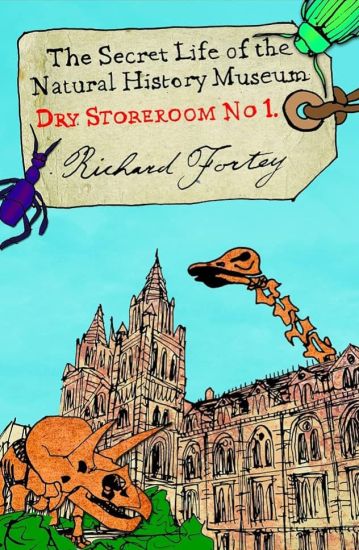
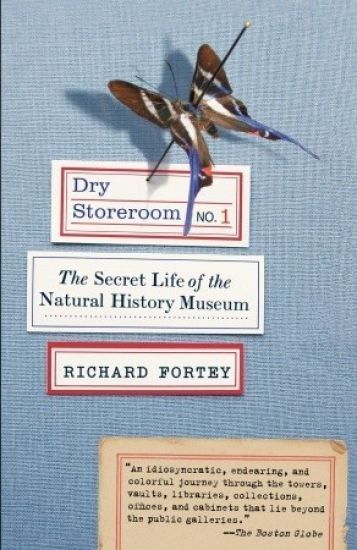
Dry Store Room No. 1

Dry Store Room No. 1

Richard Fortey

HARPERCOLLINS PUBLISHERS
2008
nidottu
‘Dry Store Room No. 1’ is an intimate biography of the Natural History Museum, celebrating the eccentric personalities who have peopled it and capturing the wonders of scientific endeavour, academic rigour and imagination. Behind the public façade of any great museum there lies a secret domain: one of unseen galleries, locked doors, priceless specimens and hidden lives.Through the stories of the numerous eccentric individuals whose long careers have left their mark on the study of evolutionary science, Richard Fortey, former senior paleaontologist at London's Natural History Museum, celebrates the pioneering work of the Museum from its inception to the present day. He delves into the feuds, affairs, scandals and skulduggery that have punctuated its long history, and formed a backdrop to extraordinary scientific endeavour from Darwin to the present day. He explores the staying power and adaptability of the Museum as it responds to changes wrought by advances in technology and molecular biology – 'spare' bones from an extinct giant bird suddenly become cutting-edge science with the new knowledge that DNA can be extracted from them, and ancient fish are tested with the latest equipment that is able to measure rises in pollution. 'Dry Store Room No.1’ is a fascinating and affectionate account of a hidden world of untold treasures, where every fragment tells a story about time past, by a scientist who combines rigorous professional learning with a gift for prose that sparkles with wit and literary sensibility.
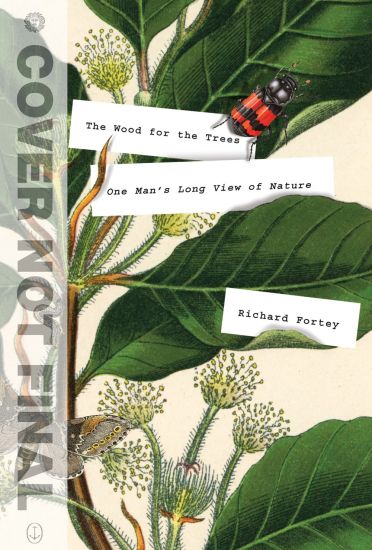
Wood for the Trees

Wood for the Trees

Richard Fortey

Harpercollins Publishers
2017
pokkari
From one of our greatest science writers, this biography of a beech-and-bluebell wood through diverse moods and changing seasons combines stunning natural history with the ancient history of the countryside to tell the full story of the British landscape.
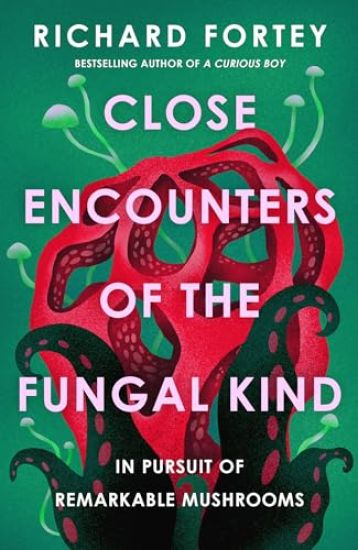
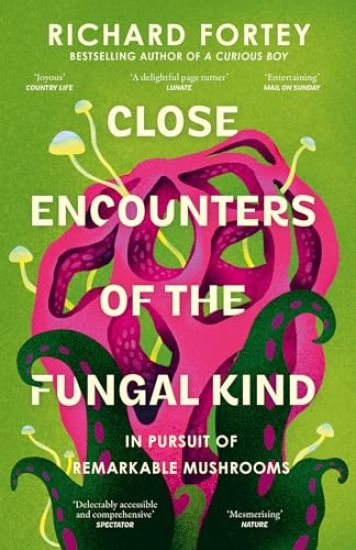
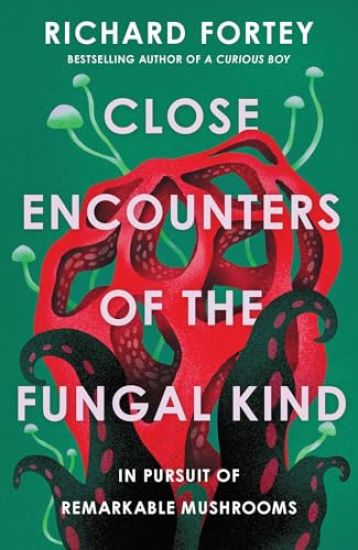
Close Encounters of the Fungal Kind

Close Encounters of the Fungal Kind

Richard Fortey

HARPERCOLLINS PUBLISHERS
2025
nidottu
‘A very enjoyable book that brilliantly blends science, insight and passion’ TRISTAN GOOLEY The secret world of fungi is another kingdom. They do things differently there. Diverse beyond our wildest imaginations, fungi don’t obey rules. They pop up unbidden and often dressed in curious reds and greens. They do not seem of this world, yet fungi underpin all the life around us: the ‘wood wide web’ links the trees by a subterranean telegraph; fungi eat the fallen trunks and leaves to recycle the nutrients that keep the wood alive; they feed a host of beetles and flies, which in turn feed birds and bats. Fungi produce the most expensive foods in the world but also offer the prospect of cheap protein for all; they cure disease, and they both cause disease and kill; they are the specialists to surpass all others; their diversity thrills and bewilders. Professor Richard Fortey has been a devoted field mycologist all his life. He has rejoiced in the exuberant variety and profusion of mushrooms since reading as a boy of nuns driven mad by ergot (a fungus). Drawing on decades of experience doing science in the woods and fields, Fortey starts with the perfect ‘fungus day’ – eating ceps in Piedmont. He introduces brown rotters and the white, earthstars and death caps; fungal annuals and perennials, dung lovers and parasites, even fungi that move through the trees like mycelial monkeys. We learn that the giant puffball produces more spores than there are known stars in the universe and fetid stinkhorns begin looking like arrivals from the planet Tharg. He tells of the fungus that turns flies into zombies, the ones that clean up metallic waste the delicious subterranean fungi truffe de Perigord, the delight of gourmets. Amongst these and many other ‘close encounters’ of a fungal kind, the book attempts to answer the questions: what are fungi? Why did their means of reproduction escape discovery for so long? What role do they play in the development of life? The vast kingdom of fungi is more diverse and species rich than plants or animals. Their glorious profusion has the starring role in this magical, deeply informed book which takes us from familiar places into strange worlds.
Dry Storeroom No. 1: Dry Storeroom No. 1: The Secret Life of the Natural History Museum
A remarkable behind-the-scenes look at the extraordinary people, meticulous research, and driving passions that make London's Natural History Museum one of the world's greatest institutions. In an elegant and illuminating narrative, Richard Fortey takes his readers to a place where only a few privileged scientists, curators, and research specialists have been--the hallowed halls that hold the permanent collection of the Natural History Museum. Replete with fossils, jewels, rare plants, and exotic species, Fortey's walk through offers an intimate view of many of the premiere scientific accomplishments of the nineteenth, twentieth, and twenty-first centuries. Like looking into the mind of mankind and all the fascinating discoveries, ideas, and accomplishments that reside there, Fortey's tour is utterly entertaining from first to last.
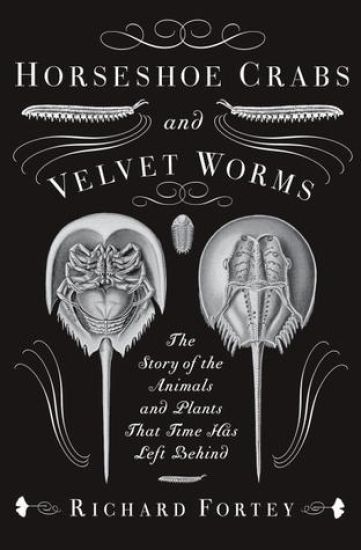
Horseshoe Crabs and Velvet Worms: The Story of the Animals and Plants That Time Has Left Behind
From one of the world's leading natural scientists and the acclaimed author of Trilobite , Life: A Natural History of Four Billion Years of Life on Earth and Dry Storeroom No. 1 comes a fascinating chronicle of life's history told not through the fossil record but through the stories of organisms that have survived, almost unchanged, throughout time. Evolution, it seems, has not completely obliterated its tracks as more advanced organisms have evolved; the history of life on earth is far older--and odder--than many of us realize. Scattered across the globe, these remarkable plants and animals continue to mark seminal events in geological time. From a moonlit beach in Delaware, where the hardy horseshoe crab shuffles its way to a frenzy of mass mating just as it did 450 million years ago, to the dense rainforests of New Zealand, where the elusive, unprepossessing velvet worm has burrowed deep into rotting timber since before the breakup of the ancient supercontinent, to a stretch of Australian coastline with stromatolite formations that bear witness to the Precambrian dawn, the existence of these survivors offers us a tantalizing glimpse of pivotal points in evolutionary history. These are not "living fossils" but rather a handful of tenacious creatures of days long gone. Written in buoyant, sparkling prose, Horseshoe Crabs and Velvet Worms is a marvelously captivating exploration of the world's old-timers combining the very best of science writing with an explorer's sense of adventure and wonder.
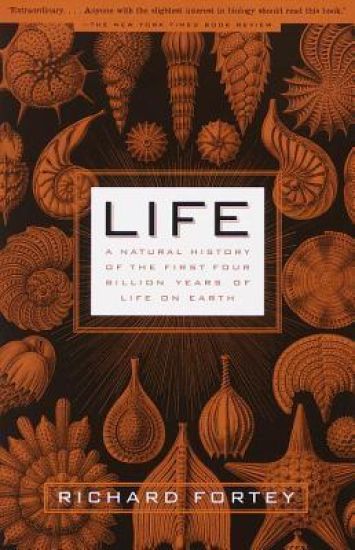
Life: A Natural History of the First Four Billion Years of Life on Earth
A New York Times Book Review Editors' Choice "Extraordinary. . . . Anyone with the slightest interest in biology should read this book."--The New York Times Book Review "A marvelous museum of the past four billion years on earth--capacious, jammed with treasures, full of learning and wide-eyed wonder."--The Boston Globe From its origins on the still-forming planet to the recent emergence of Homo sapiens--one of the world's leading paleontologists offers an absorbing account of how and why life on earth developed as it did. Interlacing the tale of his own adventures in the field with vivid descriptions of creatures who emerged and disappeared in the long march of geologic time, Richard Fortey sheds light upon a fascinating array of evolutionary wonders, mysteries, and debates. Brimming with wit, literary style, and the joy of discovery, this is an indispensable book that will delight the general reader and the scientist alike. "A drama bolder and more sweeping than Gone with the Wind . . . a pleasure to read."--Science "A beautifully written and structured work . . . packed with lucid expositions of science."--Natural History
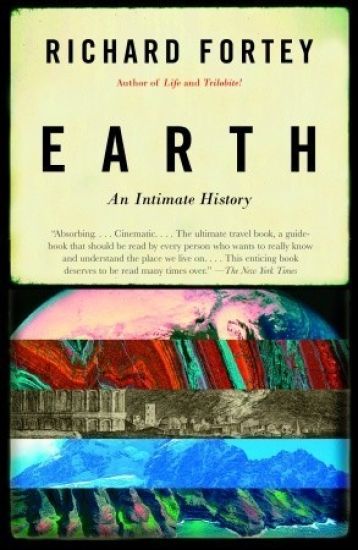
Earth: An Intimate History

Earth: An Intimate History

Richard Fortey

VINTAGE
2005
nidottu
The acclaimed author of Trilobite and Life takes us on a grand tour of the earth's physical past, showing how the history of plate tectonics is etched in the landscape around us. - "Absorbing.... Cinematic.... The ultimate travel book, a guidebook that should be read by every person who wants to really know and understand the place we live on." --The New York TimesBeginning with Mt. Vesuvius, whose eruption in Roman times helped spark the science of geology, and ending in a lab in the West of England where mathematical models and lab experiments replace direct observation, Richard Fortey tells us what the present says about ancient geologic processes. He shows how plate tectonics came to rule the geophysical landscape and how the evidence is written in the hills and in the stones. And in the process, he takes us on a wonderful journey around the globe to visit some of the most fascinating and intriguing spots on the planet.
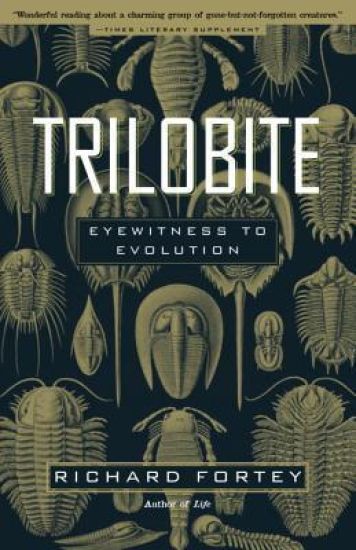
Trilobite: Eyewitness to Evolution
With Trilobite, Richard Fortey, paleontologist and author of the acclaimed Life, offers a marvelously written, smart and compelling, accessible and witty scientific narrative of the most ubiquitous of fossil creatures. Trilobites were shelled animals that lived in the oceans over five hundred million years ago. As bewilderingly diverse then as the beetle is today, they survived in the arctic or the tropics, were spiky or smooth, were large as lobsters or small as fleas. And because they flourished for three hundred million years, they can be used to glimpse a less evolved world of ancient continents and vanished oceans. Erudite and entertaining, this book is a uniquely exuberant homage to a fabulously singular species.
The Wood for the Trees: One Man's Long View of Nature
Award-winning scientist Richard Fortey, upon his retirement, purchased four acres of ancient woodland in the Chiltern Hills of Oxfordshire, England. The Wood for the Trees is the joyful, lyrical portrait of what he found there. Fortey leads us through the seasons over the course of a year, as he fells trees in winter, admires bluebells in spring, and hunts moths in June and mushrooms in September. Along the way he reconstructs the geology and history of the area, tracing the rich variety of plants, animals, and people who have shaped it, from Neolithic hunters to Tudor gentry to present-day Russian oligarchs. The result is evocative and illuminating: an exuberant biography of a small patch of land and the miraculous web of life that it sustains.
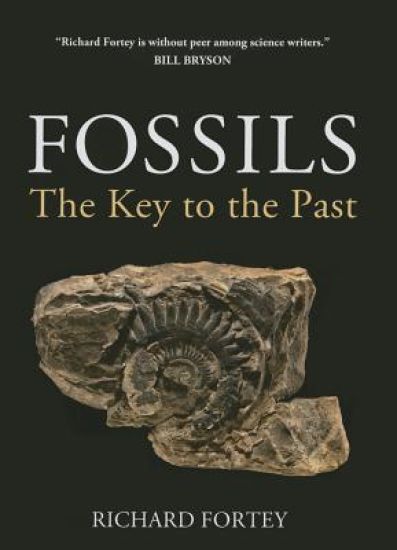
Fossils

Fossils

Richard Fortey

Cornell University Press
2015
pokkari
"Richard Fortey is without peer among science writers."—Bill BrysonIn his accessible introduction to the study and meaning of fossils, the world-renowned paleontologist Richard Fortey provides a comprehensive guide to all aspects of fossils and their use in reconstructing the history of life on Earth. Extensively illustrated in full color throughout, this fifth edition of Fossils includes the most recent advances in our understanding of the fossil record and the significance of new fossil finds.Fortey clearly explains what fossils are, how they form, how to identify them, and how they help us to understand Earth's geological past and the emergence of life. Drawing on all the latest research, including recent developments in molecular paleontology, he discusses evolution and extinction, the economic uses of fossil-derived products such as oil and coal, and offers practical advice for making a fossil collection. Fossils will appeal to everyone who shares an interest in the history of life on our planet.
Close Encounters of the Fungal Kind: In Pursuit of Remarkable Mushrooms
A magical, deeply informed book that takes us from familiar places into the strange world of fungi. The secret world of fungi is another kingdom. They do things differently there. Diverse beyond our wildest imaginations, fungi don't obey rules. They pop up unbidden and often dressed in curious reds and greens. They do not seem of this world, yet fungi underpin all the life around us: the "wood wide web" links the trees by a subterranean telegraph; fungi eat the fallen trunks and leaves to recycle the nutrients that keep the wood alive; they feed a host of beetles and flies, which in turn feed birds and bats. Fungi produce the most expensive foods in the world but also offer the prospect of cheap protein for all; they cure disease, and they both cause disease and kill; they are the specialists to surpass all others; their diversity thrills and bewilders. Professor Richard Fortey has been a devoted field mycologist all his life. He has rejoiced in the exuberant variety and profusion of mushrooms since reading as a boy of nuns driven mad by ergot (a fungus). Drawing on decades of experience, Fortey starts with the perfect "fungus day"--eating ceps in Piedmont. He introduces brown rotters, earthstars, and death caps; fungal annuals and perennials, dung lovers and parasites, even fungi that move through the trees like mycelial monkeys. We learn that the giant puffball produces more spores than there are known stars in the universe and fetid stinkhorns begin looking like arrivals from the planet Tharg. He tells of the fungus that turns flies into zombies, the ones that clean up metallic waste, and the delicious subterranean fungi truffe de Perigord, the delight of gourmets. Amongst these and many other "close encounters," Fortney attempts to answer the questions: what exactly are fungi? Why did their means of reproduction escape discovery for so long? What role do they play in the development of life? The vast kingdom of fungi is more diverse and species rich than plants or animals. By exploring their glorious profusion, Close Encounters of the Fungal Kind reveals so much about their world--and ours.
Hidden Landscape

Hidden Landscape

Richard Fortey

Vintage
2010
pokkari
Guides readers throughout the British Isles. This work states that Britain was once divided into two parts separated by an ocean, that Scottish malt whisky, Harris tweed, slate roofs and thatched cottages can be traced back to tumultuous events which took place many millions of years ago.
Der bewegte Planet

Der bewegte Planet

Richard Fortey

Spektrum Akademischer Verlag
2012
nidottu
Die Oberflache der Erde hat eine bewegte Geschichte hinter sich. So stabil uns manche grossraumigen Landschaftsstrukturen wie Gebirgszuge, Tiefebenen und Ozeane auch erscheinen mogen, so sehr hat sich das Antlitz der Erde doch im Laufe von Milliarden von Jahren immer wieder verandert. Und uberall trifft man auf die Spuren dieser unruhigen Vergangenheit. Richard Fortey ist ihr Chronist, und indem er uns an geologisch besonders interessante Statten fuhrt und deren Eigenheiten erlautert, lehrt er uns, das Wesen der Erde besser zu verstehen. Er zeigt, dass nicht nur die Gestalt der Erdoberflache, sondern auch die menschliche Kultur, die Naturgeschichte, ja sogar die Form unserer Stadte auf tieferen geologischen Prozessen beruhen. Die Reise beginnt an den Hangen des Vesuvs, wo Fortey die Geschichte dieser von Vulkanausbruchen gekennzeichneten Landschaft durch die Augen der Italiener des 15. Jahrhunderts, der Romer und - auf der Basis einzigartiger geologischer Befunde - der Menschen der Jungsteinzeit erzahlt. Und mit jeder neuen Geschichte, die er erzahlt, treten Verbindungen von der jungeren Vergangenheit zu langst vergessenen Zeiten zutage - bis tief hinab zu fernen geologischen Epochen, wenn er Plattenverschiebungen und die Bildung von alten Kontinenten und Meeren beschreibt. Nichts in diesem Buch scheint still zu stehen. Die Erdoberflache weitet sich und zieht sich wieder zusammen, Berge und Seen entstehen und vergehen, Kontinente driften umher und kollidieren. Unter Forteys kundiger Fuhrung erklimmen wir die Alpen, baden in den heissen Quellen Islands und tauchen hinab zum Meeresgrund. Wir erkunden die kahlen Felsen von Neufundland, klettern in bohmische Silberminen hinab, spazieren durch die uppigen Okosysteme von Hawaii, durchqueren die Salzebenen von Oman und schlendern am Andreas-Graben entlang. Forteys Beschreibungen der Schonheiten der Natur sind dabei so unvergesslich wie die besten Reiseberichte, seine Prosa ist so packend wie die eines Romanciers, und seine kristallklaren wissenschaftlichen Erklarungen sind faszinierend und oft uberraschend. Dieses wahrhaft tiefschurfende Buch wird Ihren Blick auf die Welt verandern - fur immer."