Kirjojen hintavertailu. Mukana 11 244 527 kirjaa ja 12 kauppaa.

Kirjahaku

Etsi kirjoja tekijän nimen, kirjan nimen tai ISBN:n perusteella.

10 kirjaa tekijältä Richard H. Bell

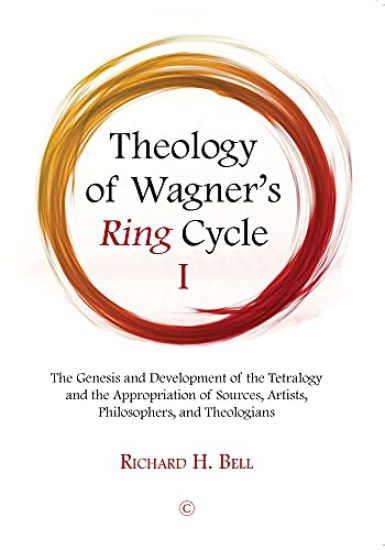
Theology of Wagner's Ring Cycle I

Theology of Wagner's Ring Cycle I

Richard H. Bell

James Clarke Co Ltd
2021
nidottu
Wagner's Ring is one of the greatest of all artworks of Western civilization, but what is it all about? The power and mystery of Wagner's creation was such that even he felt he stood before his work 'as though before some puzzle'. A clue to the Ring's greatness lies in its multiple avenues of self-disclosure and the corresponding plethora of interpretations that over the years has granted ample scope for directors, and will no doubt do so well into the distant future. One possible interpretation, which Richard Bell argues should be taken seriously, is the Ring as Christian theology. In this first of two volumes, Bell considers, among other things, how the composer's Christian interests may be detected in the 'forging' of his Ring, in his appropriation of sources (whether they be myths and sagas, writers, poets, or philosophers), and in works composed around the same time, especially his Jesus of Nazareth.
Theology of Wagner's Ring Cycle II

Theology of Wagner's Ring Cycle II

Richard H. Bell

James Clarke Co Ltd
2021
nidottu
Wagner's Ring addresses fundamental concerns that have faced humanity down the centuries, such as power and violence, love and death, freedom and fate. Further, the work seems particularly relevant today, addressing as it does the fresh debates around the created order, politics, gender, and sexuality. In this second of two volumes on the theology of the Ring, Richard Bell argues that Wagner's approach to these issues may open up new ways forward and offer a fresh perspective on some of the traditional questions of theology, such as sacrifice, redemption, and fundamental questions about God. A linchpin for Bell's approach is viewing the Ring in the light of the Jesus of Nazareth sketches, which, he argues, confirms that the artwork does indeed address questions of Christian theology, for those inside and outside the church.
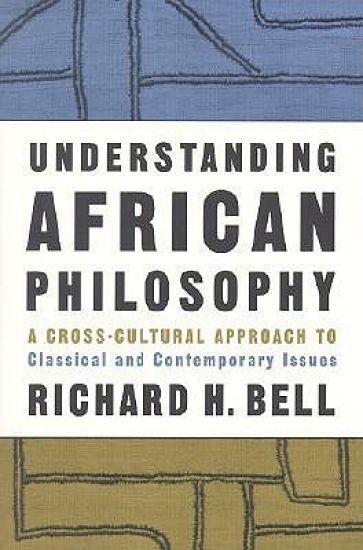
Understanding African Philosophy

Understanding African Philosophy

Richard H. Bell

Routledge
2002
sidottu
Understanding African Philosophy serves as a critical guide to some of the most important issues in modern African philosophy. Richard Bell introduces readers to the complexity of Africa, the legacy of colonialism, the challenges of post independence Africa, and other recent developments in African Philosophy. Chapters discuss the value of African oral and written texts for philosophy, concepts of negritude, African socialism, and race, as well as current discussions in international development ethics connected to poverty and human suffering. Two chapters are focused on moral issues related to community, justice, and civic responsibility. Bell's sensitivity to and engagement with the complications of cross-cultural understandings help non-African readers connect with African culture and thought.
Understanding African Philosophy

Understanding African Philosophy

Richard H. Bell

Routledge
2002
nidottu
Understanding African Philosophy serves as a critical guide to some of the most important issues in modern African philosophy. Richard Bell introduces readers to the complexity of Africa, the legacy of colonialism, the challenges of post independence Africa, and other recent developments in African Philosophy. Chapters discuss the value of African oral and written texts for philosophy, concepts of negritude, African socialism, and race, as well as current discussions in international development ethics connected to poverty and human suffering. Two chapters are focused on moral issues related to community, justice, and civic responsibility. Bell's sensitivity to and engagement with the complications of cross-cultural understandings help non-African readers connect with African culture and thought.
Simone Weil

Simone Weil

Richard H. Bell

Rowman Littlefield
1998
sidottu
Richard H. Bell analyzes the social and political thought of Simone Weil, paying particular attention to Weil's concept of justice as compassion. Bell describes the ways in which Weil's concept of justice stands in contrast with liberal 'rights-based' views of justice, and focuses upon central aspects of Weil's thought, including 'attention,' human suffering and 'affliction,' and the importance of 'a spiritual way of life' in reshaping the individual's role in civic life. Simone Weil: The Way of Justice as Compassion is a valuable addition to the scholarship on this important thinker and a necessary book for students and scholars of political theory and philosophical moral thought.
The Irrevocable Call of God

The Irrevocable Call of God

Richard H. Bell

Mohr Siebeck
2005
sidottu
Richard Bell examines the impact of Paul's life changing experience before Damascus on his theological understanding of Israel. The book considers the development of Paul's view concerning the election and salvation of Israel, paying special attention to 1 Thessalonians, Galatians and Romans. The author examines Paul's critique of Israel's religion in the light of traditional protestant approaches and the 'new perspective'. The work concludes by considering some contemporary issues relating to Israel in the light of Paul's theology.
Deliver Us from Evil

Deliver Us from Evil

Richard H. Bell

Mohr Siebeck
2007
sidottu
The New Testament idea of deliverance from the power of Satan has posed special problems and even acute embarrassment for interpreters since the Enlightenment. Often the Gospel exorcisms are rationalized or a demythologizing agenda is pursued which divorces redemption from the world in which we live.Richard H. Bell stresses that if the deliverance from Satan is understood within an appropriate understanding of myth, then it can lead not only to an enrichment of New Testament Theology but also to a deeper understanding of the world in which we find ourselves. A theory of myth is developed which does justice not only to the world of 'narrative' but also to the mysteries of the 'physical world'. This is done by building on the phenomenal distinction as introduced by Kant and further developed by Schopenhauer. The resulting theory of myth is then applied to two seemingly disparate examples of redemption from Satan found in the New Testament: first, the exorcisms of Jesus; secondly, the redemption of the human being from the power of Satan through the cross and resurrection of Christ as found in the Pauline tradition and in the letter to the Hebrews. Then the author makes an attempt to relate these two forms of redemption to each other and to draw some conclusions as to how these myths of deliverance from Satan can be considered true.