Kirjojen hintavertailu. Mukana 11 627 220 kirjaa ja 12 kauppaa.

Kirjahaku

Etsi kirjoja tekijän nimen, kirjan nimen tai ISBN:n perusteella.

4 kirjaa tekijältä Richard Haw

Engineering America

Engineering America

Richard Haw

Oxford University Press Inc
2020
sidottu
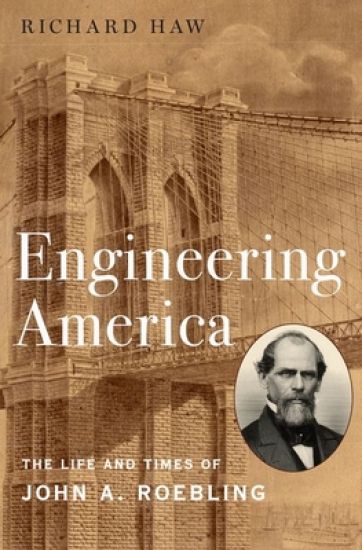
John Roebling was one of the nineteenth century's most brilliant engineers, ingenious inventors, successful manufacturers, and fascinating personalities. Raised in a German backwater amid the war-torn chaos of the Napoleonic Wars, he immigrated to the US in 1831, where he became wealthy and acclaimed, eventually receiving a carte-blanche contract to build one of the nineteenth century's most stupendous and daring works of engineering: a gigantic suspension bridge to span the East River between New York and Brooklyn. In between, he thought, wrote, and worked tirelessly. He dug canals and surveyed railroads; he planned communities and founded new industries. Horace Greeley called him "a model immigrant"; generations later, F. Scott Fitzgerald worked on a script for the movie version of his life. Like his finest creations, Roebling was held together by the delicate balance of countervailing forces. On the surface, his life was exemplary and his accomplishments legion. As an immigrant and employer, he was respected throughout the world. As an engineer, his works profoundly altered the physical landscape of America. He was a voracious reader, a fervent abolitionist, and an engaged social commentator. His understanding of the natural world however, bordered on the occult and his opinions about medicine are best described as medieval. For a man of science and great self-certainty, he was also remarkably quick to seize on a whole host of fads and foolish trends. Yet Roebling held these strands together. Throughout his life, he believed in the moral application of science and technology, that bridges-along with other great works of connection, the Atlantic Cable, the Transcontinental Railroad-could help bring people together, erase divisions, and heal wounds. Like Walt Whitman, Roebling was deeply committed to the creation of a more perfect union, forged from the raw materials of the continent. John Roebling was a complex, deeply divided yet undoubtedly influential figure, and this biography illuminates not only his works but also the world of nineteenth-century America. Roebling's engineering feats are well known, but the man himself is not; for alongside the drama of large scale construction lies an equally rich drama of intellectual and social development and crisis, one that mirrored and reflected the great forces, trials, and failures of nineteenth century America.
Art of the Brooklyn Bridge

Art of the Brooklyn Bridge

Richard Haw

Routledge
2008
sidottu
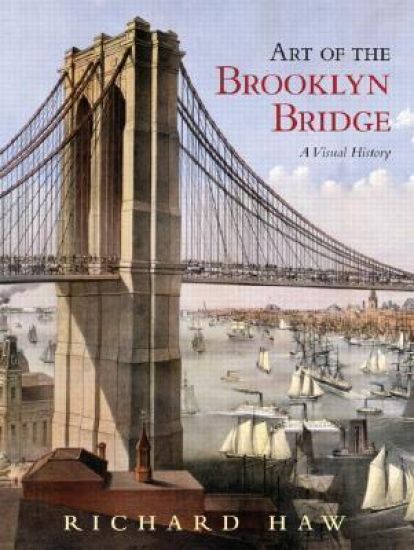
The Brooklyn Bridge is a pre-eminent global icon. It is the world’s most famous and beloved bridge, a "must-see" tourist hotspot, and a vital fact of New York life. For almost a hundred and forty years it has inspired artists of all descriptions, fueling a constant stream of paintings, photographs, lithographs, etchings, advertising copy, movies, and book, magazine, and LP covers. In consequence, the bridge may have the richest visual history of any man-made object, so much so, in fact, that almost no major American artist has failed to pay homage to the span in some form or other. Oddly, however, there are no books currently available that chart and discuss the bridge’s visual history or its role in the development of American (or Western) art. This monograph aims to correct that, providing a full visual record of the bridge from the origins of its conception to the present day. It is a celebration of the bridge’s glorious visual heritage timed to appear when the city will celebrate the span’s 125th birthday.
The Brooklyn Bridge

The Brooklyn Bridge

Richard Haw

Rutgers University Press
2008
nidottu
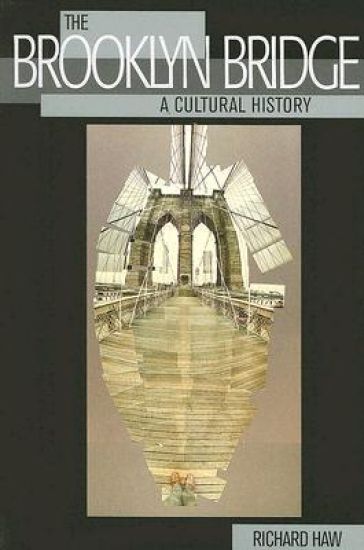
Hailed by some as the Eighth Wonder of the World when it opened in 1883, the Brooklyn Bridge is one of the world’s most recognizable and beloved icons. For over one hundred years it has excited and fascinated with stories of ingenuity and heroism, and it has been endorsed as a flawless symbol of municipal improvement and a prime emblem of American technological progress. Despite its impressive physical presence, however, Brooklyn’s grand old bridge is much more than a testament of engineering and architectural achievement. As Richard Haw shows in this first of its kind cultural history, the Brooklyn Bridge owes as much to the imagination of the public as it does to the historical events and technical prowess that were integral to its construction. Bringing together more than sixty images of the bridge that, over the years, have graced postcards, magazine covers, and book jackets and appeared in advertisements, cartoons, films, and photographs, Haw traces the diverse and sometimes jarring ways in which this majestic structure has been received, adopted, and interpreted as an American idea. Haw’s account is not a history of how the bridge was made, but rather of what people have made of the Brooklyn Bridge—in film, music, literature, art, and politics—from its opening ceremonies to the blackout of 2003. Classic accounts from such writers and artists as H. G. Wells, Charles Reznikoff, Hart Crane, Lewis Mumford, Joseph Pennell, Walker Evans, and Georgia O’Keeffe, among many others, present the bridge as a deserted, purely aestheticized romantic ideal, while others, including Henry James, Joseph Stella, Yun Gee, Ernest Poole, Alfred Kazin, Paul Auster, and Don DeLillo, offer a counter-narrative as they question not only the role of the bridge in American society, but its function as a profoundly public, communal place. Also included are never-before-published photographs by William Gedney and a discussion of Alexis Rockman’s provocative new mural Manifest Destiny. Drawing on hundreds of cultural artifacts, from the poignant, to the intellectual, to the downright quirky, The Brooklyn Bridge sheds new light on topics such as ethnic and foreign responses to America, nationalism, memory, parade culture, commemoration, popular culture, and post-9/11 America icons. In the end, we realize that this impressive span is as culturally remarkable today as it was technologically and physically astounding in the nineteenth century.
Leon Bibel

Leon Bibel

Richard Haw

RUTGERS UNIVERSITY PRESS
2025
sidottu
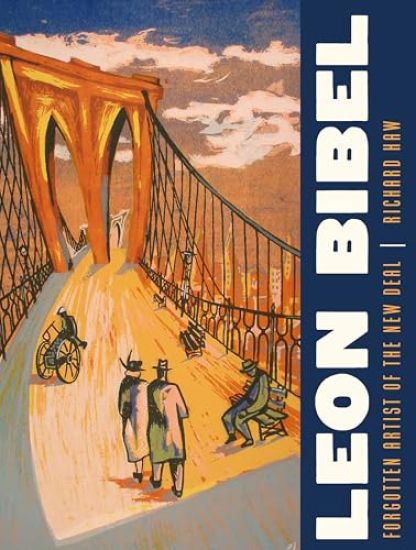
Leon Bibel (1913–1995) was a prolific modern American artist who painted, printed, stamped, etched, sketched, and carved. He produced pieces that ranged from social realism to dreamy expressionism and was an aesthetic experimentalist, never working for too long in any medium or style. And despite Bibel's obvious talent, his work would have languished in obscurity were it not for the New Deal programs like the Federal Art Project and Public Works of Art Project. Leon Bibel, the first biography of this eclectic artist, recounts his life from his birth in Szczebrzeszyn, Poland, in 1913, to his death in New Jersey in 1995. After immigrating to the United States in the 1920s, Bibel came of age during the Great Depression, when New Deal agencies recognized his abilities and supported his artistic endeavors. Working-class artists faced challenges after these programs folded, and Bibel would later spend twenty years as a New Jersey chicken farmer before resurrecting his art career in the 1960s. Historian Richard Haw shows how Bibel's life was defined by the New Deal, his visionary artwork shaped by the era's commitment to social and economic justice. With reproductions of more than 240 of Bibel's works, most in vivid color, this book reveals how he depicted everything from the trauma of unemployment to the dignity of work, from the horrors of lynching to the pleasures of everyday life.