Kirjojen hintavertailu. Mukana 12 459 402 kirjaa ja 12 kauppaa.

Kirjahaku

Etsi kirjoja tekijän nimen, kirjan nimen tai ISBN:n perusteella.

12 kirjaa tekijältä Richard J. Smith

Negotiating Environment and Science

Negotiating Environment and Science

Richard J. Smith

Focal Press
2012
nidottu
In this thought-provoking new book, career U.S. State Department negotiator Richard J. Smith offers readers unprecedented access to the details about some of the most complex and politically charged international agreements of the late and immediate post Cold War era. During his nine years as Principal Deputy Assistant Secretary in the Bureau of Oceans and International Environmental and Scientific Affairs, Smith led U.S. negotiations on many significant international agreements. In Negotiating Environment and Science, Smith presents first-hand, in-depth accounts of eight of the most high-profile negotiations in which he was directly involved. The negotiations Smith covers are wide-ranging and include the London agreement to amend the Montreal Protocol on Substances that Deplete the Ozone Layer, the international space station agreement, the U.S.-Soviet (eventually, U.S.-Russian) agreement on scientific cooperation, the U.S.-Canada acid rain agreement, the negotiations in Sofia, Bulgaria that established a first link between human rights and the environment, and a contentious confrontation with Japan over driftnet fishing. Smith chronicles the development of these negotiations, the challenges that emerged (as much within the U.S. delegations as with the foreign partners), and the strategies that led to substantive treaties. Smith infuses his narrative with unique historical insight as well as astute observations that can guide U.S. strategies toward productive international agreements in the future. His book also highlights the shift in diplomatic focus over the past 25 years from arms control and other security-related agreements to international and trans-boundary agreements that address global environmental threats and promote cooperative approaches in science and technology. Written for an audience with a general interest in environmental issues as well as international relations, Negotiating Environment and Science will also be an important resource for historians, political scientists, and students in international law and diplomacy.
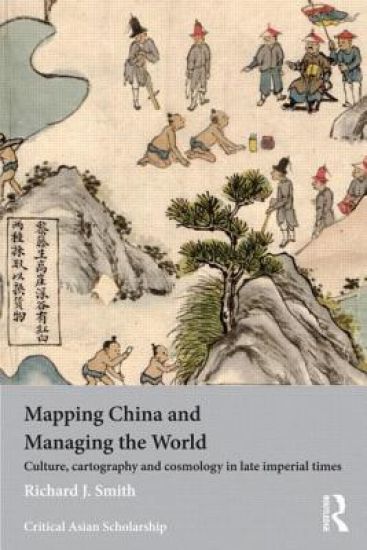
Mapping China and Managing the World

Mapping China and Managing the World

Richard J. Smith

Routledge
2012
sidottu
From the founding of the Qin dynasty in 221 BCE to the present, the Chinese have been preoccupied with the concept of order (zhi). This cultural preoccupation has found expression not only in China’s highly refined bureaucratic institutions and methods of social and economic organization but also in Chinese philosophy, religious and secular ritual, and a number of comprehensive systems for classifying every form of human achievement, as well as all natural and supernatural phenomena. Richard J. Smith’s Mapping China and Managing the World focuses on several crucial devices employed by the Chinese for understanding and ordering their vast and variegated world, which they saw as encompassing "all under Heaven." The book begins with discussions of how the ancient work known as the Yijing (Classic of Changes) and maps of "the world" became two prominent means by which the Chinese in imperial times (221 BCE to 1912) managed space and time. Smith goes on to show how ritual (li) served as a powerful tool for overcoming disorder, structuring Chinese society, and maintaining dynastic legitimacy. He then develops the idea that just as the Chinese classics and histories ordered the past, and ritual ordered the present, so divination ordered the future. The book concludes by emphasizing the enduring relevance of the Yijing in Chinese intellectual and cultural life as well as its place in the history of Sino-foreign interactions. This selection of essays by one of the foremost scholars of Chinese intellectual and cultural history will be welcomed by Chinese and East Asian historians, as well as those interested more broadly in the cultures of, and interactions between, China and East Asia.
Mapping China and Managing the World

Mapping China and Managing the World

Richard J. Smith

Routledge
2012
nidottu
From the founding of the Qin dynasty in 221 BCE to the present, the Chinese have been preoccupied with the concept of order (zhi). This cultural preoccupation has found expression not only in China’s highly refined bureaucratic institutions and methods of social and economic organization but also in Chinese philosophy, religious and secular ritual, and a number of comprehensive systems for classifying every form of human achievement, as well as all natural and supernatural phenomena. Richard J. Smith’s Mapping China and Managing the World focuses on several crucial devices employed by the Chinese for understanding and ordering their vast and variegated world, which they saw as encompassing "all under Heaven." The book begins with discussions of how the ancient work known as the Yijing (Classic of Changes) and maps of "the world" became two prominent means by which the Chinese in imperial times (221 BCE to 1912) managed space and time. Smith goes on to show how ritual (li) served as a powerful tool for overcoming disorder, structuring Chinese society, and maintaining dynastic legitimacy. He then develops the idea that just as the Chinese classics and histories ordered the past, and ritual ordered the present, so divination ordered the future. The book concludes by emphasizing the enduring relevance of the Yijing in Chinese intellectual and cultural life as well as its place in the history of Sino-foreign interactions. This selection of essays by one of the foremost scholars of Chinese intellectual and cultural history will be welcomed by Chinese and East Asian historians, as well as those interested more broadly in the cultures of, and interactions between, China and East Asia.
The I Ching

The I Ching

Richard J. Smith

Princeton University Press
2012
sidottu
The I Ching originated in China as a divination manual more than three thousand years ago. In 136 BCE the emperor declared it a Confucian classic, and in the centuries that followed, this work had a profound influence on the philosophy, religion, art, literature, politics, science, technology, and medicine of various cultures throughout East Asia. Jesuit missionaries brought knowledge of the I Ching to Europe in the seventeenth century, and the American counterculture embraced it in the 1960s. Here Richard Smith tells the extraordinary story of how this cryptic and once obscure book became one of the most widely read and extensively analyzed texts in all of world literature. In this concise history, Smith traces the evolution of the I Ching in China and throughout the world, explaining its complex structure, its manifold uses in different cultures, and its enduring appeal. He shows how the indigenous beliefs and customs of Japan, Korea, Vietnam, and Tibet "domesticated" the text, and he reflects on whether this Chinese classic can be compared to religious books such as the Bible or the Qur'an. Smith also looks at how the I Ching came to be published in dozens of languages, providing insight and inspiration to millions worldwide--including ardent admirers in the West such as Leibniz, Carl Jung, Philip K. Dick, Allen Ginsberg, Hermann Hesse, Bob Dylan, Jorge Luis Borges, and I. M. Pei. Smith offers an unparalleled biography of the most revered book in China's entire cultural tradition, and he shows us how this enigmatic ancient classic has become a truly global phenomenon.
Fathoming the Cosmos and Ordering the World

Fathoming the Cosmos and Ordering the World

Richard J. Smith

University of Virginia Press
2018
nidottu
Fathoming the Cosmos and Ordering the World is the first full-length study in any Western language of the development of the Yijing in China from earliest times to the present. Drawing on the most recent scholarship in both Asian and Western languages, Richard J. Smith offers a fresh perspective on virtually every aspect of Yijing theory and practice for some three thousand years. Smith introduces the reader to the major works, debates, and schools of interpretation surrounding this ancient text, and he shows not only how the Book of Changes was used in China as a book of divination but also how it served as a source of philosophical, psychological, literary, and artistic inspiration. Among its major contributions, this study reveals with many vivid examples the richness, diversity, vitality, and complexity of traditional Chinese thought. In the process, it deconstructs a number of time-honored interpretive binaries that have adversely affected our understanding of the Yijing—most notably the sharp distinction between the ""school of images and numbers"" (xiangshu) and the ""school of meanings and principles"" (yili). The book also demonstrates that, contrary to prevailing opinion among Western scholars, the rise of ""evidential research"" (kaozheng xue) in late imperial China did not necessarily mean the decline of Chinese cosmology. Smith’s study reveals a far more nuanced intellectual outlook on the part of even the most dedicated kaozheng scholars, as well as the remarkable persistence of Chinese ""correlative"" thinking to this very day. Finally, by exploring the fascinating modern history of the Yijing, Fathoming the Cosmos and Ordering the World attests to the tenacity, flexibility, and continuing relevance of this most remarkable Chinese classic.
The Qing Dynasty and Traditional Chinese Culture

The Qing Dynasty and Traditional Chinese Culture

Richard J. Smith

Rowman Littlefield
2015
sidottu
The Qing dynasty (1636–1912)—a crucial bridge between “traditional” and “modern” China—was remarkable for its expansiveness and cultural sophistication. This engaging and insightful history of Qing political, social, and cultural life traces the complex interaction between the Inner Asian traditions of the Manchus, who conquered China in 1644, and indigenous Chinese cultural traditions. Noted historian Richard J. Smith argues that the pragmatic Qing emperors presented a “Chinese” face to their subjects who lived south of the Great Wall and other ethnic faces (particularly Manchu, Mongolian, Central Asian, and Tibetan) to subjects in other parts of their vast multicultural empire. They were attracted by many aspects of Chinese culture, but far from being completely “sinicized” as many scholars argue, they were also proud of their own cultural traditions and interested in other cultures as well. Setting Qing dynasty culture in historical and global perspective, Smith shows how the Chinese of the era viewed the world; how their outlook was expressed in their institutions, material culture, and customs; and how China’s preoccupation with order, unity, and harmony contributed to the civilization’s remarkable cohesiveness and continuity. Nuanced and wide-ranging, his authoritative book provides an essential introduction to late imperial Chinese culture and society.
The Qing Dynasty and Traditional Chinese Culture

The Qing Dynasty and Traditional Chinese Culture

Richard J. Smith

Rowman Littlefield
2015
nidottu
The Qing dynasty (1636–1912)—a crucial bridge between “traditional” and “modern” China—was remarkable for its expansiveness and cultural sophistication. This engaging and insightful history of Qing political, social, and cultural life traces the complex interaction between the Inner Asian traditions of the Manchus, who conquered China in 1644, and indigenous Chinese cultural traditions. Noted historian Richard J. Smith argues that the pragmatic Qing emperors presented a “Chinese” face to their subjects who lived south of the Great Wall and other ethnic faces (particularly Manchu, Mongolian, Central Asian, and Tibetan) to subjects in other parts of their vast multicultural empire. They were attracted by many aspects of Chinese culture, but far from being completely “sinicized” as many scholars argue, they were also proud of their own cultural traditions and interested in other cultures as well. Setting Qing dynasty culture in historical and global perspective, Smith shows how the Chinese of the era viewed the world; how their outlook was expressed in their institutions, material culture, and customs; and how China’s preoccupation with order, unity, and harmony contributed to the civilization’s remarkable cohesiveness and continuity. Nuanced and wide-ranging, his authoritative book provides an essential introduction to late imperial Chinese culture and society.
Flash Flood

Flash Flood

Richard J. Smith

Independently Published
2018
nidottu
Over time, the Roman Empire grew ever larger, encompassing most of what is now Europe and large parts of the Middle East. Peoples from those countries were assimilated into the Empire as Roman citizens. Their resources further enriched and strengthened the Empire. A significant addition to the Roman army were Germans who proved to be more than capable as soldiers and officers. However, the Empire reached a peak and the resources that had been utilized and shared throughout, declined to the point that those outside of Italy, began to suffer from poor or insufficient distribution of supplies including grain and other staples.Once, proudly loyal to the Roman Empire, the Germans grew angry at the lack of promised and necessary provisions. Finally, their leader, General Alaric, gathered an army and marched confidently into Italy and then to Rome.Upon reaching Rome, they established a siege. In time, the gates opened, and the Germans entered.Under strict orders, no peoples or buildings were to be harmed, and it was strictly enforced. They took only what had been promised, whether, gold, jewels, food, seeds, armaments, or cloth. Then, they returned to Germany.The Empire would never be the same.
Negotiating Environment and Science

Negotiating Environment and Science

Richard J. Smith

Resources for the Future Press (RFF Press)
2009
sidottu
In this thought-provoking new book, career U.S. State Department negotiator Richard J. Smith offers readers unprecedented access to the details about some of the most complex and politically charged international agreements of the late and immediate post Cold War era. During his nine years as Principal Deputy Assistant Secretary in the Bureau of Oceans and International Environmental and Scientific Affairs, Smith led U.S. negotiations on many significant international agreements. In Negotiating Environment and Science, Smith presents first-hand, in-depth accounts of eight of the most high-profile negotiations in which he was directly involved. The negotiations Smith covers are wide-ranging and include the London agreement to amend the Montreal Protocol on Substances that Deplete the Ozone Layer, the international space station agreement, the U.S.-Soviet (eventually, U.S.-Russian) agreement on scientific cooperation, the U.S.-Canada acid rain agreement, the negotiations in Sofia, Bulgaria that established a first link between human rights and the environment, and a contentious confrontation with Japan over driftnet fishing. Smith chronicles the development of these negotiations, the challenges that emerged (as much within the U.S. delegations as with the foreign partners), and the strategies that led to substantive treaties. Smith infuses his narrative with unique historical insight as well as astute observations that can guide U.S. strategies toward productive international agreements in the future. His book also highlights the shift in diplomatic focus over the past 25 years from arms control and other security-related agreements to international and trans-boundary agreements that address global environmental threats and promote cooperative approaches in science and technology. Written for an audience with a general interest in environmental issues as well as international relations, Negotiating Environment and Science will also be an important resource for historians, political scientists, and students in international law and diplomacy.
Robert Hart and China’s Early Modernization

Robert Hart and China’s Early Modernization

Robert Hart; Richard J. Smith; John King Fairbank; Katherine F. Bruner

Harvard University Press
1991
sidottu
As the Ch’ing government’s Inspector General of the Maritime Customs Service, Robert Hart was the most influential Westerner in China for half a century. These journal entries continue the sequence begun in Entering China’s Service and cover the years when Hart was setting up Customs procedures, establishing a modus operandi with the Ch’ing bureaucracy, and inspecting the treaty ports. They culminate in Hart’s return visit to Europe with the Pin-ch’un Mission and his marriage in Northern Ireland.Richard Smith, John King Fairbank, and Katherine Bruner interleave the segments of Hart’s journals with lively narratives describing the contemporary Chinese scene and recounting Hart’s responses to the many challenges of establishing a Western-style organization within a Chinese milieu.
Crash Course in Library Services to People with Disabilities

Crash Course in Library Services to People with Disabilities

Ann Roberts; Richard J. Smith

Libraries Unlimited Inc
2010
nidottu
This book helps libraries identify and implement new ways to serve their physically or mentally disabled patients.Authors Ann Roberts and Dr. Richard Smith work at the state level with persons with disabilities. They find that very few librarians feel comfortable with providing services addressed to the needs of the disabled, yet those who do offer services and programs other libraries can adopt and adapt. Crash Course in Library Services to People with Disabilities will help librarians get up to speed in understanding disabled persons and what they can do to make library premises and holdings more accessible to them. It provides basic information on the different types of mental and physical disabilities a librarian might encounter, then offers a range of exemplary policies, services, and programs for people with disabilities—efforts that are in place and working across the country.Provides assessment tools that help libraries gauge their ability to meet the needs of disabled patronsIncludes a comprehensive index