Kirjojen hintavertailu. Mukana 12 390 323 kirjaa ja 12 kauppaa.

Kirjahaku

Etsi kirjoja tekijän nimen, kirjan nimen tai ISBN:n perusteella.

5 kirjaa tekijältä Richard L. Velkley

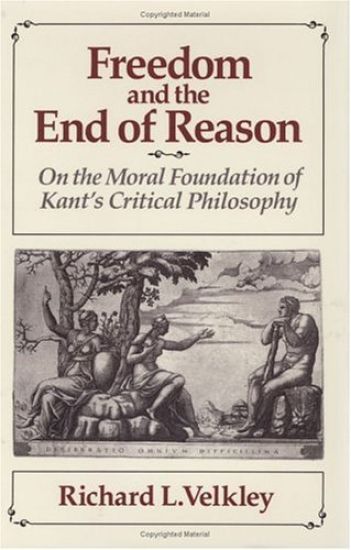
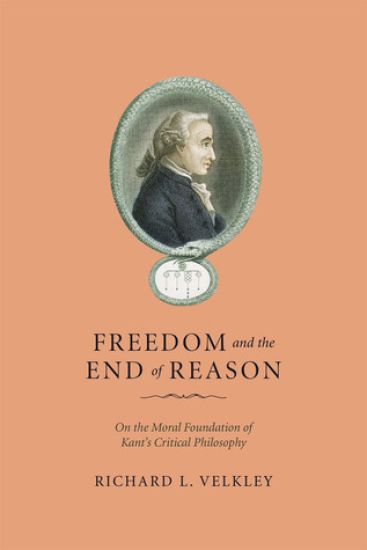
Freedom and the End of Reason

Freedom and the End of Reason

Richard L. Velkley

University of Chicago Press
2014
nidottu
In Freedom and the End of Reason, Richard L. Velkley offers an influential interpretation of the central issue of Kant's philosophy and an evaluation of its position within modern philosophy's larger history. He persuasively argues that the whole of Kantianism - not merely the Second Critique - focuses on a "critique of practical reason" and is a response to a problem that Kant saw as intrinsic to reason itself: the teleological problem of its goodness. Reconstructing the influence of Rousseau on Kant's thought, Velkley demonstrates that the relationship between speculative philosophy and practical philosophy in Kant is far more intimate than generally has been perceived. By stressing a Rousseau-inspired notion of reason as a provider of practical ends, he is able to offer an unusually complete account of Kant's idea of moral culture.
Heidegger, Strauss, and the Premises of Philosophy

Heidegger, Strauss, and the Premises of Philosophy

Richard L. Velkley

University of Chicago Press
2014
nidottu
In this groundbreaking work, Richard L. Velkley examines the complex philosophical relationship between Martin Heidegger and Leo Strauss. Velkley argues that both thinkers provide searching analyses of the philosophical tradition's origins in radical questioning. For Heidegger and Strauss, the recovery of the original premises of philosophy cannot be separated from rethinking the very possibility of genuine philosophizing. Common views of the influence of Heidegger's thought on Strauss suggest that, after being inspired early on by Heidegger's dismantling of the philosophical tradition, Strauss took a wholly separate path, rejecting modernity and pursuing instead a renewal of Socratic political philosophy. Velkley rejects this reading and maintains that Strauss' engagement with the challenges posed by Heidegger - as well as by modern philosophy in general - formed a crucial and enduring framework for his lifelong philosophical project. More than an intellectual biography or a mere charting of influence, Heidegger, Strauss, and the Premises of Philosophy is a profound consideration of these two philosophers' reflections on the roots, meaning, and fate of Western rationalism.
Heidegger, Strauss, and the Premises of Philosophy

Heidegger, Strauss, and the Premises of Philosophy

Richard L. Velkley

University of Chicago Press
2011
sidottu
In this groundbreaking work, Richard L. Velkley examines the complex philosophical relationship between Martin Heidegger and Leo Strauss. Velkley argues that both thinkers provide searching analyses of the philosophical tradition's origins in radical questioning. For Heidegger and Strauss, the recovery of the original premises of philosophy cannot be separated from rethinking the very possibility of genuine philosophizing. Common views of the influence of Heidegger's thought on Strauss suggest that, after being inspired early on by Heidegger's dismantling of the philosophical tradition, Strauss took a wholly separate path, spurning modernity and pursuing instead a renewal of Socratic political philosophy. Velkley rejects this reading and maintains that Strauss' engagement with the challenges posed by Heidegger - as well as by modern philosophy in general - formed a crucial and enduring framework for his lifelong philosophical project. More than an intellectual biography or a mere charting of influence, "Heidegger, Strauss, and the Premises of Philosophy" is a profound consideration of these two philosophers' reflections on the roots, meaning, and fate of Western rationalism.
Being after Rousseau

Being after Rousseau

Richard L. Velkley

University of Chicago Press
2002
sidottu
In Being after Rousseau, Richard L. Velkley presents Jean-Jacques Rousseau as the founder of a modern European tradition of reflection on the relation of philosophy to culture - a reflection that calls both into question. Tracing this tradition from Rousseau to Immanuel Kant, Friedrich Schelling, and Martin Heidegger, Velkley shows late modern philosophy as a series of ultimately unsuccessful attempts to resolve the dichotomies between nature and society, culture and civilization, and philosophy and society that Rousseau brought to the fore. The Rousseauian tradition begins, for Velkley, with Rousseau's criticism of modern political philosophy. Although the German Idealists such as Schelling accepted much of Rousseau's critique, they believed, unlike Rousseau, that human wholeness could be attained at the level of society and history. Heidegger and Nietzsche questioned this claim, but followed both Rousseau and the Idealists in their vision of the philosopher-poet striving to recover an original wholeness that the history of reason has distorted.
Freedom and the End of Reason

Freedom and the End of Reason

Richard L. Velkley

University of Chicago Press
1989
sidottu
In Freedom and the End of Reason, Richard L. Velkley offers an influential interpretation of the central issue of Kant's philosophy and an evaluation of its position within modern philosophy's larger history. He persuasively argues that the whole of Kantianism-not merely the Second Critique-focuses on a "critique of practical reason" and is a response to a problem that Kant saw as intrinsic to reason itself: the teleological problem of its goodness. Reconstructing the influence of Rousseau on Kant's thought, Velkley demonstrates that the relationship between speculative philosophy and practical philosophy in Kant is far more intimate than generally has been perceived. By stressing a Rousseau-inspired notion of reason as a provider of practical ends, he is able to offer an unusually complete account of Kant's idea of moral culture.