Kirjojen hintavertailu. Mukana 11 244 527 kirjaa ja 12 kauppaa.

Kirjahaku

Etsi kirjoja tekijän nimen, kirjan nimen tai ISBN:n perusteella.

9 kirjaa tekijältä Richard Lane

The Big Humanities

The Big Humanities

Richard Lane

Routledge
2016
sidottu
This book provides an accessible introduction to, and overview of, the digital humanities, one of the fastest growing areas of literary studies. Lane takes a unique approach by focusing on the technologies and the new environment in which the digital humanities largely takes place: the digital laboratory. The book provides a brief history of DH, explores and explains the methodologies of past and current DH projects, and offers resources such as detailed case studies and bibliographies. Further, the focus on the digital laboratory space reveals affiliations with the types of research that have traditionally taken place in the sciences, as well as convergences with other fast-growing research spaces, namely innovation labs, fabrication labs, maker spaces, digital media labs, and change labs. The volume highlights the profound transformation of literary studies that is underway, one in which the adoption of powerful technology – and concomitantly being situated within a laboratory environment – is leading to an important re-engagement in the arts and humanities, and a renewed understanding of literary studies in the digital age, as well as a return to large-scale financial investment in humanistic research. It will be useful to students and teachers, as well as administrators and managers in charge of research infrastructure and funding decisions who need an accessible overview of this technological transformation in the humanities. Combining useful detail and an overview of the field, the book will offers accessible entry into this rapidly growing field.

The Big Humanities

The Big Humanities

Richard Lane

Routledge
2016
nidottu
This book provides an accessible introduction to, and overview of, the digital humanities, one of the fastest growing areas of literary studies. Lane takes a unique approach by focusing on the technologies and the new environment in which the digital humanities largely takes place: the digital laboratory. The book provides a brief history of DH, explores and explains the methodologies of past and current DH projects, and offers resources such as detailed case studies and bibliographies. Further, the focus on the digital laboratory space reveals affiliations with the types of research that have traditionally taken place in the sciences, as well as convergences with other fast-growing research spaces, namely innovation labs, fabrication labs, maker spaces, digital media labs, and change labs. The volume highlights the profound transformation of literary studies that is underway, one in which the adoption of powerful technology – and concomitantly being situated within a laboratory environment – is leading to an important re-engagement in the arts and humanities, and a renewed understanding of literary studies in the digital age, as well as a return to large-scale financial investment in humanistic research. It will be useful to students and teachers, as well as administrators and managers in charge of research infrastructure and funding decisions who need an accessible overview of this technological transformation in the humanities. Combining useful detail and an overview of the field, the book will offers accessible entry into this rapidly growing field.
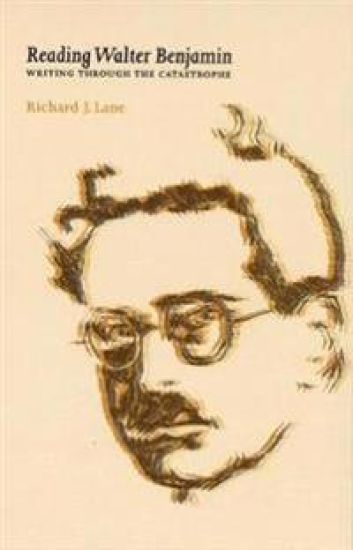
Reading Walter Benjamin

Reading Walter Benjamin

Richard Lane

Manchester University Press
2005
nidottu
'Reading Walter Benjamin' explores the persistence of absolute in Benjamin's work by sketching-out the relationship between philosphy and theology apparent in his diverse writings, from the early youth-movement essays to the later books, essays and fragments.The book examines Benjamin from two main perspectives: a history-of-ideas approach situating Benjamin in relation to the new German-Jewish thinking at the turn of the twentieth-century, as well as the German youth movements, Surrealism and the 'Georgekreis'; and a conceptual approach examining more critical issues in relation to Benjamin and Kant, modern aesthetics and narrative order.Chapters cover: 'Kulturpessimismus' and the new thinking; metaphysics of youth: Wyneken and 'Rausch'; history: surreal Messianism; Goethe and the 'Georgekreis'; Kant's experience; casting the work of art; disrupting textual order; and exile and the time of crisis. The book uses new translations of Benjamin's essays, fragments and his 'Arcades Project', and makes substantial reference to previously untranslated material.Lane’s text allows the non-specialist entry into complex areas of critical theory, simultaneously offering original readings of Benjamin and twentieth-century arts and literature.
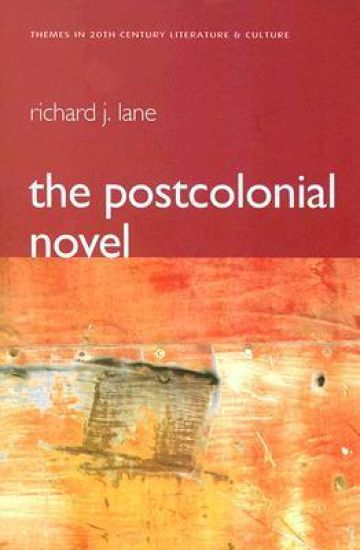
The Postcolonial Novel

The Postcolonial Novel

Richard Lane

Polity Press
2006
nidottu
A concise introduction to a core and popular area of literary studies.Provides extended case studies which survey and summarise key critical debates and as such are invaluable for teaching.Places the emphasis on the text first and theory second, thus providing a unique and much needed approach to postcolonial literature, which in the past has been maligned for being theory driven.Takes an historical approach, thus covering a good range of texts that have generated lots of critical discussion and evaluative materials.Written clearly for an undergraduate reader, with introductory overviews at the start of each chapter.
Swashbuckling

Swashbuckling

Richard Lane

Limelight Editions
1999
pokkari
(Limelight). The ultimate guide to stage fighting technique and basic swordplay, this book covers everything an actor must do to give a dynamic and convincing performance as a stage combatant. " This book] is more than a manual... A necessity Richard Lane's concepts are vital...'Why' and 'When' are explained and make 'How' easier to understand and execute...Read this, pay heed and you will avoid sin and suffering...I raise my sword on high and salute you, Richard. Well done " Oscar F. Kolombatovich, former Fencing Master, Metropolitan Opera, New York, and Executive Secretary, Historical Fencing Society
Last Stand at Le Paradis

Last Stand at Le Paradis

Richard Lane

PEN SWORD BOOKS LTD
2023
nidottu
In early September 1939, the 2nd Battalion Royal Norfolk Regiment were one of the first complete infantry units of the BEF to land in France. The first months of World War Two were relatively quiet but after deploying to the Maginot Line sector during January 1940 they came into contact with those Germans manning the West Wall or Seigfried Line. A patrol led by Captain Peter Barclay entered German territory and was attacked. As a result, the first decorations of the war were awarded. Barclay received the Military Cross and Lance-Corporal Davis the Military Medal while the remaining members of the patrol were mentioned in despatches. Two days later, the battalion suffered a tragic first when Lieutenant Patrick Everitt was mortally wounded while leading a daylight patrol. Everitt was the first British officer to be killed in action in the Second World War. When the Germans launched their offensive on 10 May, the BEF advanced to the River Dyle in Belgium. Within days the Allied Armies had been forced onto the back foot by the speed and ferocity of the German breakthrough. The Norfolks withdrew to the River Escaut where the BEF was to make a stand. On 21 May, the Company Sergeant Major George Gristock courageously destroyed some German machine-gun posts and won a posthumous Victoria Cross. As the Allies withdrew towards the Channel, the Norfolks were ordered to defend a section of the Canal Line between Bthune and Le Cornet Malo. Already down to around half strength, the Norfolks held their sector from 24 to 27 May. By the time the order was issued for them to withdraw, it was too late, Battalion HQ at Duries Farm, Le Paradis was surrounded and they had no alternative but to surrender, although C Company held out until the following morning. After the surrender, ninety-nine men of the Battalion were marched to a paddock where they were machine-gunned in cold blood by their SS captors. Miraculously, two men survived and were instrumental in bringing the SS officer responsible, Fritz Knoechlien, to justice after the war. When the remnants of the battalion reassembled in England, its strength was just five officers and 134 other ranks. The remainder had either been killed or captured as POWs.
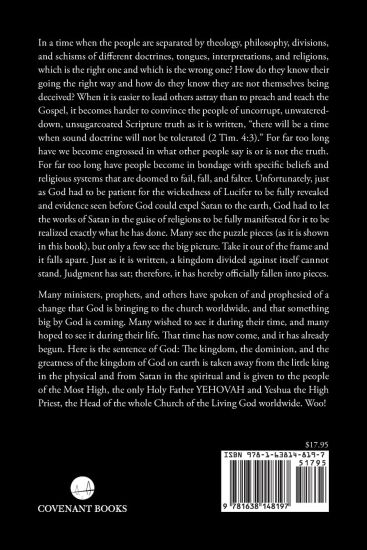
Declaration of Independence of the People of God
In a time when the people are separated by theology, philosophy, divisions, and schisms of different doctrines, tongues, interpretations, and religions, which is the right one and which is the wrong one? How do they know their going the right way and how do they know they are not themselves being deceived? When it is easier to lead others astray than to preach and teach the Gospel, it becomes harder to convince the people of uncorrupt, unwatered-down, unsugarcoated Scripture truth as it is written, "there will be a time when sound doctrine will not be tolerated (2 Tim. 4:3)." For far too long have we become engrossed in what other people say is or is not the truth. For far too long have people become in bondage with specific beliefs and religious systems that are doomed to fail, fall, and falter. Unfortunately, just as God had to be patient for the wickedness of Lucifer to be fully revealed and evidence seen before God could expel Satan to the earth, God had to let the works of Satan in the guise of religions to be fully manifested for it to be realized exactly what he has done. Many see the puzzle pieces (as it is shown in this book), but only a few see the big picture. Take it out of the frame and it falls apart. Just as it is written, a kingdom divided against itself cannot stand. Judgment has sat; therefore, it has hereby officially fallen into pieces.Many ministers, prophets, and others have spoken of and prophesied of a change that God is bringing to the church worldwide, and that something big by God is coming. Many wished to see it during their time, and many hoped to see it during their life. That time has now come, and it has already begun. Here is the sentence of God: The kingdom, the dominion, and the greatness of the kingdom of God on earth is taken away from the little king in the physical and from Satan in the spiritual and is given to the people of the Most High, the only Holy Father Yehovah and Yeshua the High Priest, the Head of the whole Church of the Living God worldwide. Woo
Yeshua

Yeshua

Richard Lane

Covenant Books
2020
pokkari
This book is the most complete and informed way to give you the "children's bread" and our instruments of spiritual warfare and inner healing. In this is listed as many ways of combating devils as is possible and how to deal with these from a personal level to a long distance level in every operation and every way they try to muster. This book is designed to let you pinpoint the area of where you need help, whether it's in self-deliverance or delivering others by God through you in many areas most applicable. This is for all believers from beginners to seasoned veterans of spiritual warfare; for all apostles, bishops, deacons, prophets, evangelists, pastors, teachers, and the congregations of the saints; and to all whom are called to be soldiers of Yeshua. If you're not a believer and you have asked God for help as your last ditch effort, and in return, you had promised to follow Him and give yourself to He who is without "religion" being forced upon you, this book is for you too, as well as those who have demonic activity who don't know where to go or who to turn to, especially without feeling shunned, ashamed, or disfellowshipped.
Last Stand at Le Paradis

Last Stand at Le Paradis

Richard Lane

Pen Sword Military
2009
sidottu
In early September 1939, the 2nd Battalion Royal Norfolk Regiment were one of the first complete infantry units of the BEF to land in France.The first months of World War Two were relatively quiet but after deploying to the Maginot Line sector during January 1940 they came into contact with those Germans manning the West Wall or Seigfried Line. A patrol led by Captain Peter Barclay entered German territory and was attacked. As a result, the first decorations of the war were awarded. Barclay received the Military Cross and Lance-Corporal Davis the Military Medal while the remaining members of the patrol were mentioned in despatches.Two days later, the battalion suffered a tragic first when Lieutenant Patrick Everitt was mortally wounded while leading a daylight patrol. Everitt was the first British officer to be killed in action in the Second World War.When the Germans launched their offensive on 10 May, the BEF advanced to the River Dyle in Belgium. Within days the Allied Armies had been forced onto the back foot by the speed and ferocity of the German breakthrough. The Norfolks withdrew to the River Escaut where the BEF was to make a stand. On 21 May, the Company Sergeant Major George Gristock courageously destroyed some German machine-gun posts and won a posthumous Victoria Cross.As the Allies withdrew towards the Channel, the Norfolks were ordered to defend a section of the Canal Line between Bethune and Le Cornet Malo. Already down to around half strength, the Norfolks held their sector from 24 to 27 May. By the time the order was issued for them to withdraw, it was too late, Battalion HQ at Duries Farm, Le Paradis was surrounded and they had no alternative but to surrender, although 'C' Company held out until the following morning.After the surrender, ninety-nine men of the Battalion were marched to a paddock where they were machine-gunned in cold blood by their SS captors. Miraculously, two men survived and were instrumental in bringing the SS officer responsible, Fritz Knoechlien, to justice after the war.When the remnants of the battalion reassembled in England, its strength was just five officers and 134 other ranks. The remainder had either been killed or captured as POWs.