Kirjojen hintavertailu. Mukana 11 699 587 kirjaa ja 12 kauppaa.

Kirjahaku

Etsi kirjoja tekijän nimen, kirjan nimen tai ISBN:n perusteella.

3 kirjaa tekijältä Richard Lee Turits

Foundations of Despotism

Foundations of Despotism

Richard Lee Turits

Stanford University Press
2004
pokkari
This book explores the history of the Dominican Republic as it evolved from the first European colony in the Americas into a modern nation under the rule of Rafael Trujillo. It investigates the social foundations of Trujillo's exceptionally enduring and brutal dictatorship (1930-1961) and, more broadly, the way power is sustained in such non-democratic regimes. The author reveals how the seemingly unilateral imposition of power by Trujillo in fact depended on the regime's mediation of profound social and economic transformations, especially through agrarian policies that assisted the nation's large independent peasantry. By promoting an alternative modernity that sustained peasants' free access to land during a period of economic growth, the regime secured peasant support as well as backing from certain elite sectors. This book thus elucidates for the first time the hidden foundations of the Trujillo regime.
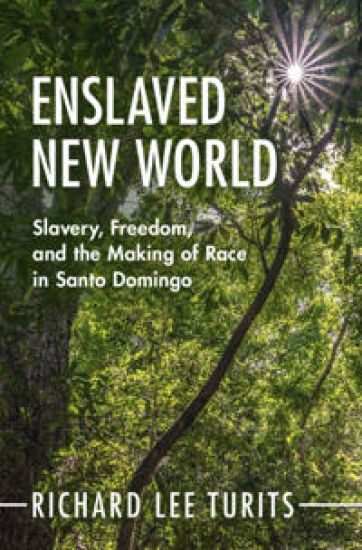
Enslaved New World

Enslaved New World

Richard Lee Turits

Cambridge University Press
2026
pokkari
Enslaved New World illuminates sixteenth-century Santo Domingo as the site of the Americas' earliest plantation and slave society and the first place where slavery became limited to people of African descent. Yet Santo Domingo was also home, Turits shows, to widespread continual flight from bondage and an ecology providing escapees with relatively easy refuge. This transformed the colony into a land in which predominantly self-emancipated Black people became the largest population group by the late seventeenth century, 150 years before slavery's abolition. Afterwards, slavery and legal racial hierarchy persisted, but the White elite often remained too poor and weak to overcome resistance and competing constructs of status and color emerged. By focusing on Santo Domingo's understudied African-descended majority population within novel frameworks, Turits opens up new understandings of Dominican history, slavery's racialization, race and racism's historical contingency, and an extraordinarily successful Afro-American trajectory of resistance.
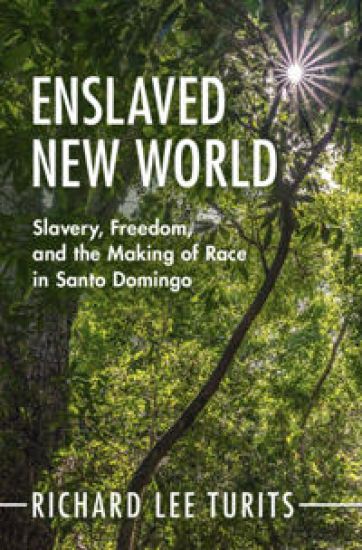
Enslaved New World

Enslaved New World

Richard Lee Turits

Cambridge University Press
2026
sidottu
Enslaved New World illuminates sixteenth-century Santo Domingo as the site of the Americas' earliest plantation and slave society and the first place where slavery became limited to people of African descent. Yet Santo Domingo was also home, Turits shows, to widespread continual flight from bondage and an ecology providing escapees with relatively easy refuge. This transformed the colony into a land in which predominantly self-emancipated Black people became the largest population group by the late seventeenth century, 150 years before slavery's abolition. Afterwards, slavery and legal racial hierarchy persisted, but the White elite often remained too poor and weak to overcome resistance and competing constructs of status and color emerged. By focusing on Santo Domingo's understudied African-descended majority population within novel frameworks, Turits opens up new understandings of Dominican history, slavery's racialization, race and racism's historical contingency, and an extraordinarily successful Afro-American trajectory of resistance.