Kirjojen hintavertailu. Mukana 11 627 220 kirjaa ja 12 kauppaa.

Kirjahaku

Etsi kirjoja tekijän nimen, kirjan nimen tai ISBN:n perusteella.

10 kirjaa tekijältä Richard Long

Richard Long

Richard Long

Richard Long

THAMES HUDSON LTD
2021
sidottu
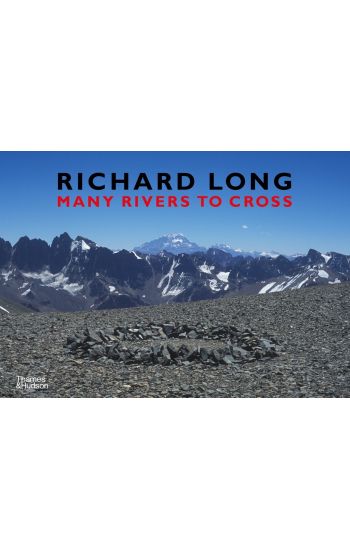
Richard Long has been at the forefront of land art for more than half a century. A pioneer of conceptual practices in the 1960s, his expanded approach to sculpture has consistently taken the medium out of the studio into the natural world and around the globe, using time, space, distance, navigation, perception, the elements and the geological forces that have shaped the landscape around us as both his tools and his vocabulary. Many Rivers to Cross is a thorough overview of Long's career, selected by the artist himself and spanning the late 1960s to the present day. It covers his practice in all its forms – walks, photographs, text works, large installations, mud works and drawings, including some early unpublished works as well as many seminal and celebrated projects. A number of short ‘back stories’ written by Long not only provide insight into the context and creation of key works, but also evoke the sense of freedom and adventure of an epic journey across foreign landscapes. Texts include a recent conversation between Long and internationally acclaimed composer and musician Nitin Sawhney; a dialogue about the recreation of Muddy Water Circle (1994) at Frieze Masters in London with Lisson Gallery in 2013; and a discussion with curator Alkistis Dimaki on the occasion of the presentation of Athens Slate Line at the Acropolis, Athens, in summer 2020. The book also includes documentation of works presented internationally in museums and galleries. Using earth, rocks, sticks and other natural materials and forces ranging from water and gravity to clouds and constellations of stars, over the course of his distinguished career Long has represented the primal relationship between humankind, art and the landscape. In a modern, post-industrial, digital world, his poetic and often profound practice is a poignant reminder of the origins of life, of human development and civilization, and of the fundamental, primordial drive to create.
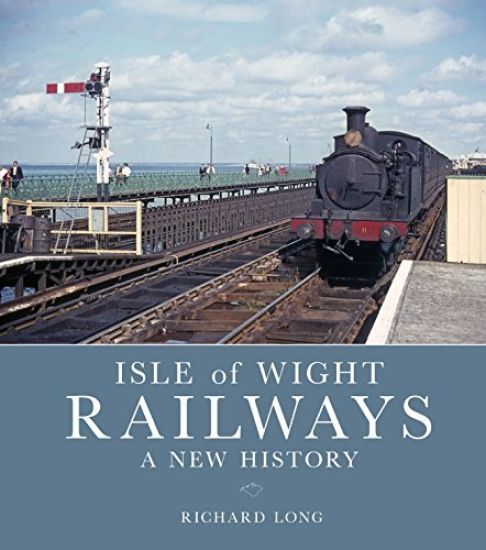
Isle of Wight Railways: A New History

Isle of Wight Railways: A New History

Richard Long

Ian Allan Publishing
2015
sidottu
The Isle of Wight railways are a popular subject among railway enthusiasts. Although the network reached a maximum extent of only 55 miles and always struggled to be profitable, the special character of the island's railways are fondly remembered by many. In this new history of the Isle of Wight's railways, the author has researched original historical documents to produce a fresh account of the development of the network. As in the rest of Victorian Britain, numerous independent companies scrambled to build their lines but often with little chance of making a profit in underdeveloped areas. Despite the island's small size the first two railways - the Cowes & Newport Railway which opened in 1862 and the Isle of Wight Railway which opened in 1864 from Ryde to Shanklin, then Ventnor in 1864 - were physically isolated from each other until the opening of the Ryde & Newport Railway in 1875. The companies on the island later changed to the Isle of Wight Railway, the Isle of Wight Central Railway and the Freshwater, Yarmouth & Newport Railway, and the Isle of Wight retained much of its independent character even after Grouping under the Southern Railway in 1923.However, a lack of investment and declining traffic led to closures in the 1950s and 1960s, although the line from Ryde to Shanklin was electrified and saved and the heritage Isle of Wight Steam Railway operates a section of the line from Smallbrook Junction to Wootton. The first part of this book concentrates on the author's new history of the development of the railways on the Isle of Wight and the second part presents colour photographs of the line in the last years of operation up to 1966. The colour photographs will be predominantly previously unpublished from Mark Warburton and other collections.
The Book of Paul

The Book of Paul

Richard Long

Independently Published
2019
nidottu
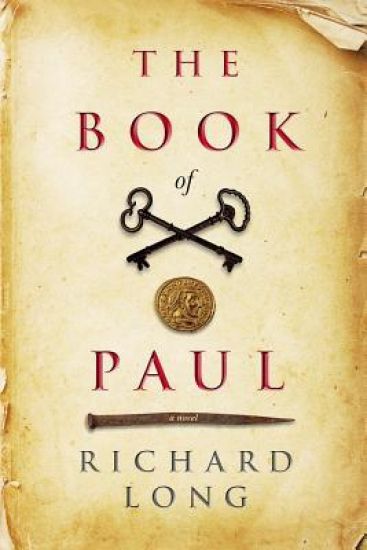
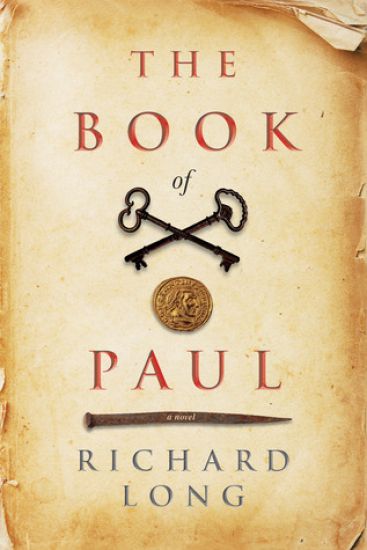
In the rubble-strewn wasteland of Alphabet City, a squalid tenement conceals a treasure "beyond all imagining"- an immaculately preserved, fifth century codex. The sole repository of ancient Hermetic lore, it contains the alchemical rituals for transforming thought into substance, transmuting matter at will...and attaining eternal life.When Rose, an East Village tattoo artist has a torrid encounter with Martin, a battle-hardened loner, they discover they are unwitting pawns on opposing sides of a battle that has shaped the course of human history. At the center of the conflict is Paul, the villainous overlord of an underground feudal society, who guards the book's occult secrets in preparation for the fulfillment of an apocalyptic prophecy. The action is relentless as Rose and Martin fight to escape Paul's clutches and Martin's destiny as the chosen recipient of Paul's sinister legacy. Science and magic, mythology and technology converge in a monumental battle where the stakes couldn't be higher: control of the ultimate power in the universe-the Maelstrom.
The Palestinians and British Perfidy

The Palestinians and British Perfidy

Richard Long

Sussex Academic Press
2017
sidottu
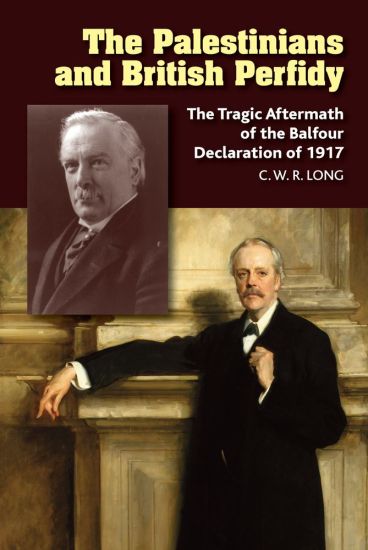
Ottoman Turkeys decision to ally with Germany in the First World War led directly to the British (and French) conquest of the Middle East and sealed the fate of Palestine. In a monstrous betrayal of its people, 93 percent of them Arab, the November 1917 Balfour Declaration withheld the independence they rightly anticipated and for strategic reasons earmarked Palestine as a National Home for the Jewish People. Ronald Storrs, a British Foreign and Colonial Office official, remarked that The U.K. proposed to hand (Palestine), without consulting the occupants, to a third party; and what sort of third party! The result was the foundation of Israel in 1948. Through ethnic cleansing and massacre the new state drove out helpless Palestinian victims of Perfidious Albion, in whom London at no stage showed the slightest interest. They were condemned to seventy years in refugee camps or to second-class citizenship of Israel as, in the words of an Israeli Foreign Minister, the land-grab state was born in sin. Credit for this shameful act is generally given to the Zionist supporters of Theodore Hertzl. But Britain cleared the way by expelling the Mufti of Jerusalem, the Palestinians only leader, providing the Zionists, who extraordinarily made concurrent overtures to Hitler and Mussolini, with military training in Britains Second World War campaigns in Iraq and Syria. Itself ejected by its ungrateful protege, Britain lost all the aims of its Declaration (no base to guard the Suez Canal, no Haifa port, no railway to Iraq and no oil pipeline) and all its prestige in the Arab World.
The Palestinians and British Perfidy

The Palestinians and British Perfidy

Richard Long

Sussex Academic Press
2019
nidottu
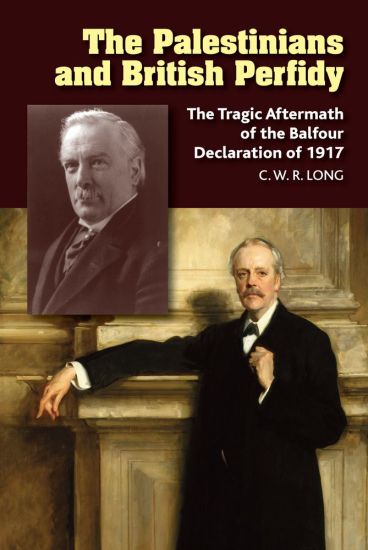
Ottoman Turkeys decision to ally with Germany in the First World War led directly to the British (and French) conquest of the Middle East and sealed the fate of Palestine. In a monstrous betrayal of its people, 93 percent of them Arab, the November 1917 Balfour Declaration withheld the independence they rightly anticipated and for strategic reasons earmarked Palestine as a National Home for the Jewish People. Ronald Storrs, a British Foreign and Colonial Office official, remarked that The U.K. proposed to hand (Palestine), without consulting the occupants, to a third party; and what sort of third party! The result was the foundation of Israel in 1948. Through ethnic cleansing and massacre the new state drove out helpless Palestinian victims of Perfidious Albion, in whom London at no stage showed the slightest interest. They were condemned to seventy years in refugee camps or to second-class citizenship of Israel as, in the words of an Israeli Foreign Minister, the land-grab state was born in sin. Credit for this shameful act is generally given to the Zionist supporters of Theodore Hertzl. But Britain cleared the way by expelling the Mufti of Jerusalem, the Palestinians only leader, providing the Zionists, who extraordinarily made concurrent overtures to Hitler and Mussolini, with military training in Britains Second World War campaigns in Iraq and Syria. Itself ejected by its ungrateful protege, Britain lost all the aims of its Declaration (no base to guard the Suez Canal, no Haifa port, no railway to Iraq and no oil pipeline) and all its prestige in the Arab World.