Kirjojen hintavertailu. Mukana 11 342 296 kirjaa ja 12 kauppaa.

Kirjahaku

Etsi kirjoja tekijän nimen, kirjan nimen tai ISBN:n perusteella.

33 kirjaa tekijältä Richard Mabey

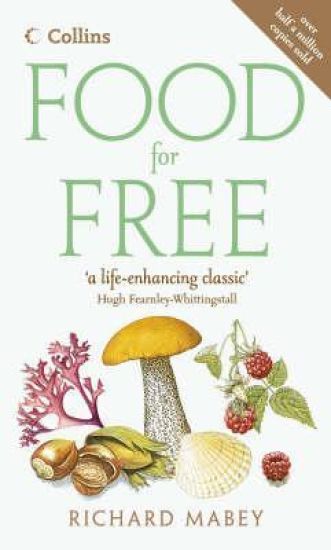
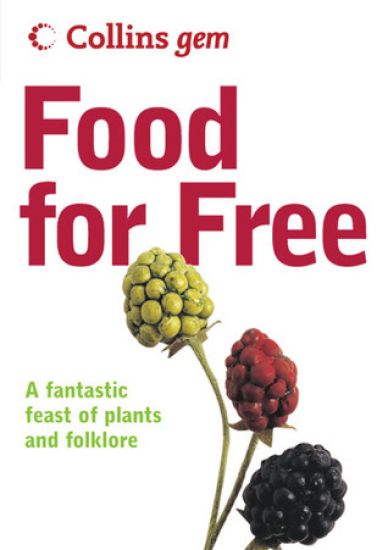
Food For Free

Food For Free

Richard Mabey

Collins
2004
nidottu
The ideal portable companion, the world-renowned Collins Gem series returns with a fresh new look and updated material. This is the perfect pocket guide for aspiring foragers. Over 100 edible plants are listed, fully illustrated and described, together with recipes and other fascinating details on their use throughout the ages. Practical advice on how to pick along with information on countryside laws and regulations on picking wild plants helps you to plan your foray with a feast in mind. This is the ideal book for both nature lovers and cooks keen to enjoy what the countryside has to offer.
Food for Free

Food for Free

Richard Mabey

Harpercollins Publishers
2007
pokkari
A complete guide to help you safely identify edible species that grow around us, together with detailed artworks, field identification notes and recipes.
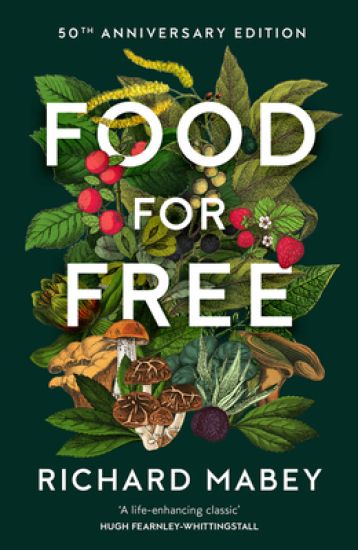
Food for Free

Food for Free

Richard Mabey

HARPERCOLLINS PUBLISHERS
2022
sidottu
This fully updated special edition of the classic complete guide to the edible species that grow around us includes a new foreword from the author and a plate section with identification guides for all major species. Originally published in 1972, Richard Mabey’s classic foraging guide has never been out of print since. Food for Free is a complete guide to help you safely identify edible species that grow around us, together with detailed field identification notes and recipes. In this stunning 50th anniversary edition, Richard Mabey’s updated text is accompanied by a wealth of practical information on identifying, collecting, cooking and preparing, as well as history and folklore. Informative illustrations of key species by expert botanical artists are included in a colour plate section. Beautifully written and produced in a new, readable format, Food for Free will inspire us to be more self-sufficient and make use of the natural resources around us to enhance our lives.
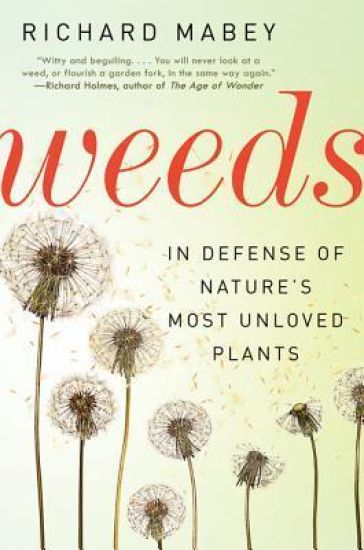
Weeds: In Defense of Nature's Most Unloved Plants
" A] witty and beguiling meditation on weeds and their wily ways....You will never look at a weed, or flourish a garden fork, in the same way again."--Richard Holmes, author of The Age of Wonder"In this fascinating, richly detailed book, Richard Mabey gives weeds their full due."--Carl Zimmer, author of EvolutionRichard Mabey, Great Britain's Britain's "greatest living nature writer" (London Times), has written a stirring and passionate defense of nature's most unloved plants. Weeds is a fascinating, eye-opening, and vastly entertaining appreciation of the natural world's unappreciated wildflowers that will appeal to fans of David Attenborough, Robert Sullivan's Rats, Amy Stewart's Wicked Plants, and to armchair gardeners, horticulturists, green-thumbs, all those who stop to smell the flowers.
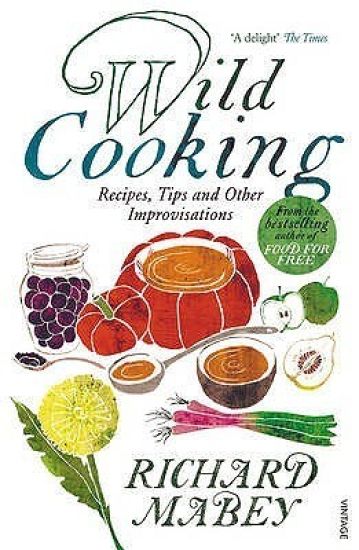
Wild Cooking

Wild Cooking

Richard Mabey

Vintage
2009
pokkari
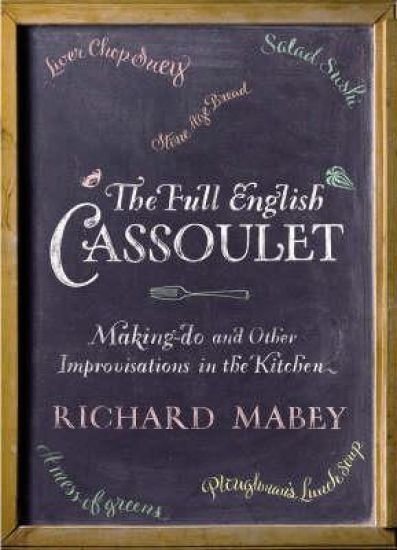
Whether creating a cassoulet which uses English ingredients, making bread from chestnuts or slow-cooking a Peking duck in front of an ancient fan heater, this book encourages us to be daring and imaginative in our cooking and our approach to food.
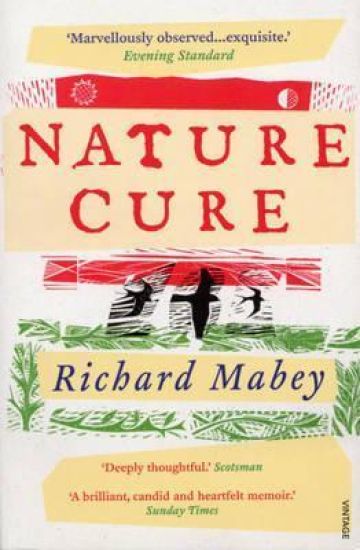
Nature Cure

Nature Cure

Richard Mabey

Vintage
2008
pokkari
'Britain's greatest living nature writer' The TimesRediscover the extraodinary power of nature and the British wilderness, from award-winning naturalist and author Richard MabeyIn the last year of the old millennium, Richard Mabey, Britain's foremost nature writer, fell into a severe depression.
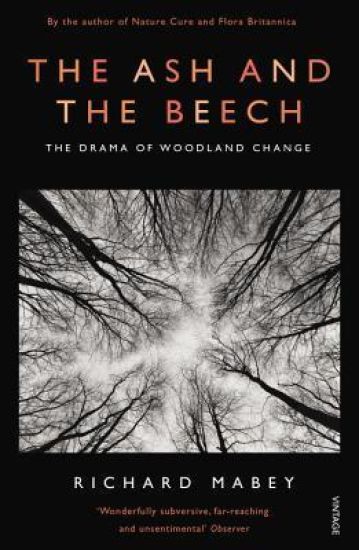
Ash and The Beech

Ash and The Beech

Richard Mabey

Vintage
2013
pokkari
From ash die-back to the Great Storm of 1987, our much-loved woodlands seem to be under constant threat from a procession of natural challenges. The author reveals how we have appropriated and humanised trees, turning them into arboreal pets. She argues that respecting trees' independence may be the wisest response to their current crises.
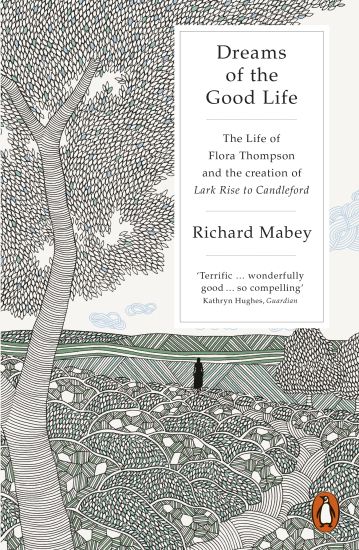
Dreams of the Good Life

Dreams of the Good Life

Richard Mabey

Penguin Books Ltd
2015
pokkari
While the Lark Rise to Candleford trilogy, Flora Thompson's much-loved portrait of life in the English countryside, has inspired a hit television series, relatively little is known about the author herself. In this highly original book, bestselling biographer and nature writer Richard Mabey sympathetically retraces her life and her transformation from a post-office clerk who left school at fourteen to a sophisticated professional writer. Revealing how a formidable imagination can arise from the humblest of beginnings, Dreams of the Good Life paints a poignant, unforgettable portrait of a working-class woman writer's struggle for creative expression.
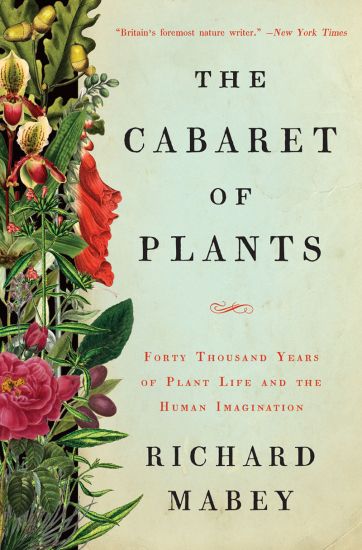
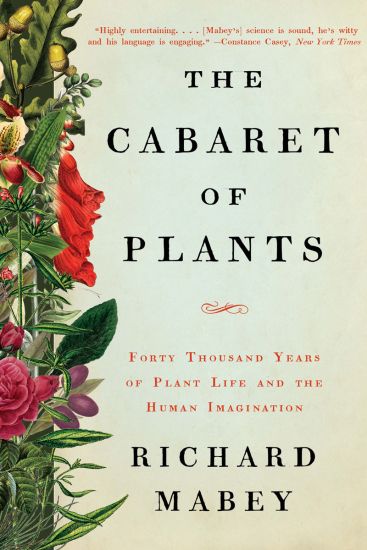
The Cabaret of Plants: Forty Thousand Years of Plant Life and the Human Imagination
The Cabaret of Plants is a masterful, globe-trotting exploration of the relationship between humans and the kingdom of plants by the renowned naturalist Richard Mabey.A rich, sweeping, and wonderfully readable work of botanical history, The Cabaret of Plants explores dozens of plant species that for millennia have challenged our imaginations, awoken our wonder, and upturned our ideas about history, science, beauty, and belief. Going back to the beginnings of human history, Mabey shows how flowers, trees, and plants have been central to human experience not just as sources of food and medicine but as objects of worship, actors in creation myths, and symbols of war and peace, life and death.Writing in a celebrated style that the Economist calls "delightful and casually learned," Mabey takes readers from the Himalayas to Madagascar to the Amazon to our own backyards. He ranges through the work of writers, artists, and scientists such as da Vinci, Keats, Darwin, and van Gogh and across nearly 40,000 years of human history: Ice Age images of plant life in ancient cave art and the earliest representations of the Garden of Eden; Newton's apple and gravity, Priestley's sprig of mint and photosynthesis, and Wordsworth's daffodils; the history of cultivated plants such as maize, ginseng, and cotton; and the ways the sturdy oak became the symbol of British nationhood and the giant sequoia came to epitomize the spirit of America.Complemented by dozens of full-color illustrations, The Cabaret of Plants is the magnum opus of a great naturalist and an extraordinary exploration of the deeply interwined history of humans and the natural world.
The Cabaret of Plants: Forty Thousand Years of Plant Life and the Human Imagination
The Cabaret of Plants is a masterful, globe-trotting exploration of the relationship between humans and the kingdom of plants by the renowned naturalist Richard Mabey.A rich, sweeping, and wonderfully readable work of botanical history, The Cabaret of Plants explores dozens of plant species that for millennia have challenged our imaginations, awoken our wonder, and upturned our ideas about history, science, beauty, and belief. Going back to the beginnings of human history, Mabey shows how flowers, trees, and plants have been central to human experience not just as sources of food and medicine but as objects of worship, actors in creation myths, and symbols of war and peace, life and death.Writing in a celebrated style that the Economist calls "delightful and casually learned," Mabey takes readers from the Himalayas to Madagascar to the Amazon to our own backyards. He ranges through the work of writers, artists, and scientists such as da Vinci, Keats, Darwin, and van Gogh and across nearly 40,000 years of human history: Ice Age images of plant life in ancient cave art and the earliest representations of the Garden of Eden; Newton's apple and gravity, Priestley's sprig of mint and photosynthesis, and Wordsworth's daffodils; the history of cultivated plants such as maize, ginseng, and cotton; and the ways the sturdy oak became the symbol of British nationhood and the giant sequoia came to epitomize the spirit of America.Complemented by dozens of full-color illustrations, The Cabaret of Plants is the magnum opus of a great naturalist and an extraordinary exploration of the deeply interwined history of humans and the natural world.
Full English Cassoulet

Full English Cassoulet

Richard Mabey

Vintage Publishing
2008
sidottu
the outer limit is making leather out of apples);* 'Cooking against the grain' - if we didn't have access to wheat, what could we make with nuts?* How to deal with gluts - those autumn mountains of beans and courgettes;* Making-do the wartime way - canny tricks his mother taught him;
Gilbert White

Gilbert White

Richard Mabey

University of Virginia Press
2007
nidottu
With more than two hundred editions, Gilbert White’s The Natural History of Selborne is one of the most published books in the English language. An environmental study of the eighteenth-century Hampshire parish where White was born and later served as curate, the book is distinguished by the author’s meticulous observations of plant and animal life-the ""minute particulars""-and his uncanny sense of their interdependence. His book is both the definitive expression of the English love for countryside and a cornerstone of all environmental writing.In this Whitbread Prize-winning biography, Richard Mabey-whom the Times has called ""Britain’s foremost nature writer""-looks at the life from which the celebrated work grew. This is not an easy task. Although White’s findings did not go unnoticed in his own time (much of the Selborne book’s contents are in fact letters to Thomas Pennant, one of the era’s leading zoologists), relatively little is known about this minor clergyman, who made twenty pounds a year and rarely ventured outside his parish. Mabey visits not only the public and private records but the environs of Selborne, which survive to this day and are remarkably unchanged. A portrait of exceptional detail emerges, and we begin to see very clearly this singular man whose superb scientific eye was complemented by a patient curiosity (he valued observing over collecting) and an emotional investment in his work that still speaks to us. White typifies the eclectic but intense engagement that has nearly vanished in our era of scientific specialization. We recognize in his work a crucial shift in the human perception of nature-as something benign rather than as an adversary.The first U.S. edition of this classic biography coincides with a new BBC documentary on Gilbert White, for which Mabey is a featured commentator. These are only the latest reminders of the fascination White’s book has exercised upon readers for two centuries.
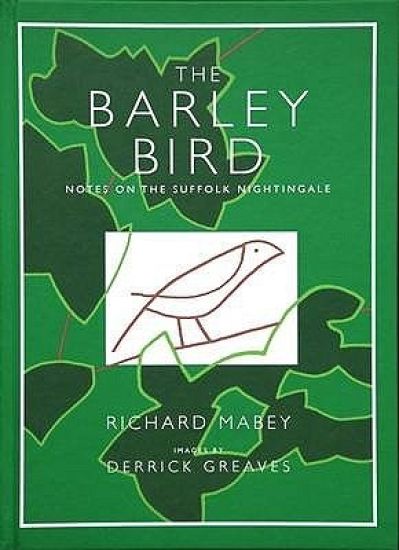
The Barley Bird

The Barley Bird

Richard Mabey

Full Circle Editions Ltd
2010
sidottu
First prize winner in the Nature and Placecategory of the 2010 EDP/Jarrolds East Anglian Book Awards"So vividly written you can almost hear the song of these rare birds" - Kate Kellaway, The GuardianRichard Mabey, described as "Britain's greatest living nature writer", explores the nightingale's links with Suffolk culture and landscape, and traces the bird’s course through myth, lore and tradition. He plumbs his subject for its fascinating literary and historical references, and opens the reader's ears to the bird itself and its extraordinary song, a hymn to survival. New images by Derrick Greaves accompany the text.
The Unofficial Countryside

The Unofficial Countryside

Richard Mabey

Little Toller Books
2010
nidottu
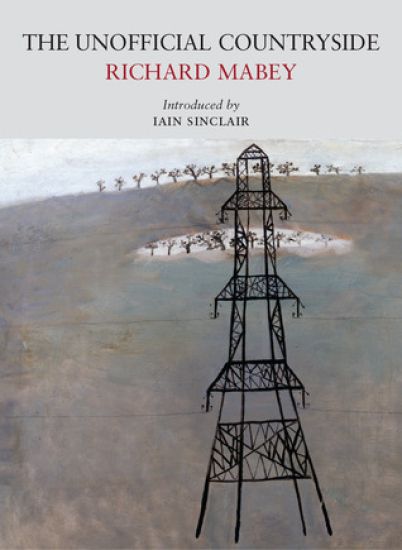
During the early 1970s Richard Mabey set about mapping his unofficial countryside. He walked crumbling city docks and overgrown bomb sites, navigating inner city canals and car parks, exploring sewage works, gravel pits, rubbish tips. What he discovered runs deeper than a natural history of our suburbs and cities. The Unofficial Countryside prescribes another way of seeing, another way of experiencing nature in our daily lives. Wild flowers glimpsed from a commuter train. A kestrel hawking above a public park. Enchanter's nightshade growing through pavement cracks. Fox cubs playing on a motorway's scrubby fringe. There is a scarcely a nook in our urban landscape incapable of supporting life. It is an inspiration to find this abundance, to discover how plants, birds, mammals and insects flourish against the odds in the most obscure and surprising places.
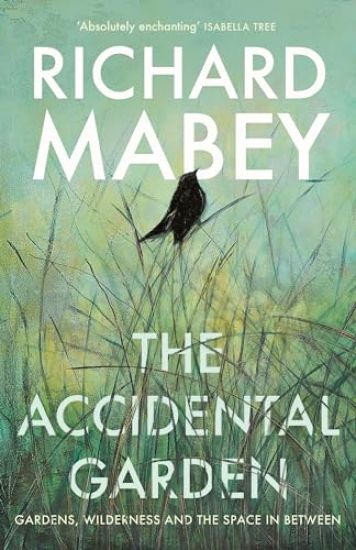
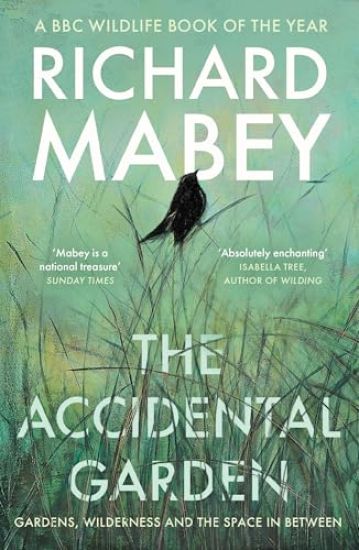
The Accidental Garden: Gardens, Wilderness, and the Space in Between
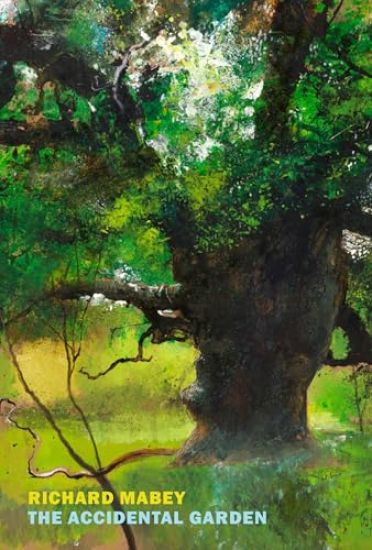
One of Britain's greatest nature writers blends horticulture with philosophy in this intimate memoir about gardening, rewilding, and a path forward amid climate change. What is a garden? Is it an arena for the display of human mastery or might it be something less determined, more generous? These are questions that Richard Mabey, arguably England's greatest nature writer, considers in his new book, The Accidental Garden. From the pressing surrounds of the inventive, half-wild garden that Mabey, an instinctive rewilder, and his partner Polly, a determined grower, have shared for two decades, Mabey weighs past hopes and visions against the environmental emergency of the present. In beeches and bush crickets he sees proof of adaptation and survival; in commons and meadows he finds natural processes still at work. A wise and witty stylist, Mabey locates in his small patch of the planet a place to test assumptions and to observe how myriad species establish common ground.
Turned Out Nice Again

Turned Out Nice Again

Richard Mabey

Profile Books Ltd
2019
pokkari
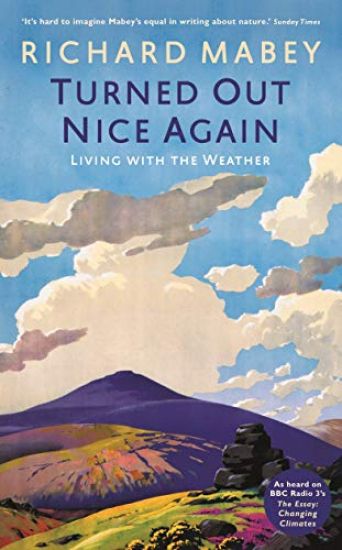
In his trademark style, Richard Mabey weaves together science, art and memoirs (including his own) to show the weather's impact on our culture and national psyche. He rambles through the myths of Golden Summers and our persistent state of denial about the winter; the Impressionists' love affair with London smog, seasonal affective disorder (SAD - do we all get it?) and the mysteries of storm migraines; herrings falling like hail in Norfolk and Saharan dust reddening south-coast cars; moonbows, dog-suns, fog-mirages and Constable's clouds; the fact that English has more words for rain than Inuit has for snow; the curious eccentricity of country clothing and the mathematical behaviour of umbrella sales. We should never apologise for our obsession with the weather. It is one of the most profound influences on the way we live, and something we all experience in common. No wonder it's the natural subject for a greeting between total strangers: 'Turned out nice again.'
The Accidental Garden

The Accidental Garden

Richard Mabey

Profile Books Ltd
2024
sidottu
SHORTLISTED FOR THE RICHARD JEFFRIES AWARD A WATERSTONES BEST NATURE WRITING BOOK OF 2024 PICK A BBC WILDLIFE BOOK OF THE YEAR 2024 'Delightful ... Mabey is the doyen of UK nature writing' New Statesman 'Both instructive and exciting, often ecstatic... Mabey is a great, pioneering nature writer' Irish Times 'Our greatest nature writer' New Scientist We regard gardens as our personal dominions, where we can create whatever worlds we desire. But they are also occupied by myriads of other organisms, all with their own lives to lead. The conflict between these two power bases, Richard Mabey suggests, is a microcosm of what is happening in the larger world. Rooted in the daily dramas of his own Norfolk garden, Mabey offers a different scenario, where nature becomes an equal partner, a 'gardener' itself. Against a background of disordered seasons he watches his 'accidental' garden reorganising itself. Ants sow cowslip seeds in the parched grass. Moorhens take to nesting in trees. A spectacular self-seeded rose springs up in the gravel. The garden becomes a place of cultural and ecological fusion, and perhaps a metaphor for the troubled planet. This is vintage Mabey - maverick, intensely observed, and written with an unquenchable sense of wonder.