Kirjojen hintavertailu. Mukana 11 627 220 kirjaa ja 12 kauppaa.

Kirjahaku

Etsi kirjoja tekijän nimen, kirjan nimen tai ISBN:n perusteella.

5 kirjaa tekijältä Richard Manning

Grassland: The History, Biology, Politics and Promise of the American Prairie
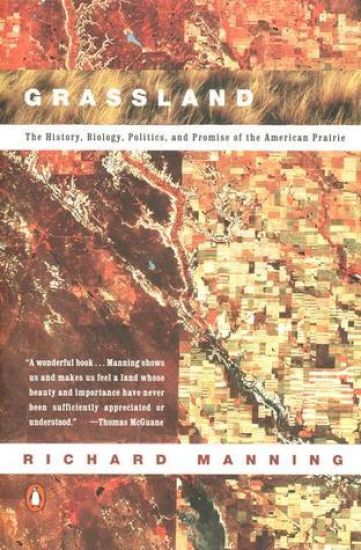
More than forty percent of our country was once open prairie, grassland that extended from Missouri to Montana. Taking a critical look at this little-understood biome, award-winning journalist Richard Manning urges the reclamation of this land, showing how the grass is not only our last connection to the natural world, but also a vital link to our own prehistoric roots, our history, and our culture. Framing his book with the story of the remarkable elk, whose mysterious wanderings seem to reclaim his ancestral plains, Manning traces the expansion of America into what was then viewed as the American desert and considers our attempts over the last two hundred years to control unpredictable land through plowing, grazing, and landscaping. He introduces botanists and biologists who are restoring native grasses, literally follows the first herd of buffalo restored to the wild prairie, and even visits Ted Turner's progressive--and controversial--Montana ranch. In an exploration of the grasslands that is both sweeping and intimate, Manning shows us how we can successfully inhabit this and all landscapes.
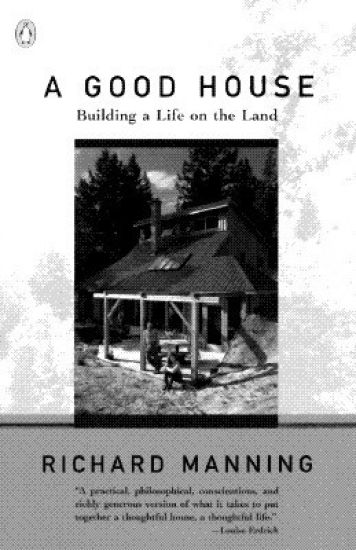
A Good House: Building a Life on the Land

A Good House: Building a Life on the Land

Richard Manning

PENGUIN BOOKS
1994
nidottu
A Good House is a chronicle of the year in which Manning set out to build his house and rebuild his life. Combining entertaining tales of the cast of characters who helped him build; practical information about wiring, roofing, and plumbing; and meditations on the struggle to integrate environmental and spiritual values into everyday life, this is a book about creating a solid foundation and building up from there--in a hosue, in a family, in living a good life.
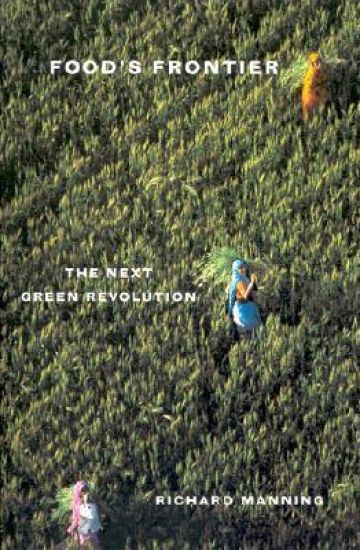
Food’s Frontier

Food’s Frontier

Richard Manning

University of California Press
2001
pokkari
"Food's Frontier" provides a survey of pioneering agricultural research projects underway in Ethiopia, Zimbabwe, Uganda, India, China, Chile, Brazil, Mexico, and Peru by a writer both well-grounded technically and sensitive to social and cultural issues. The book starts from the premise that the 'Green Revolution' which averted mass starvation a generation ago is not a long-term solution to global food needs and has created its own very serious problems. Based on increasing yields by extensive use of pesticides, chemical fertilizers, and monoculture - agribusiness-style production of single crops - this approach has poisoned both land and farm workers, encouraged new strains of pests that are resistant to ever-increasing amounts of pesticides, and killed the fertility of land by growing single crops rather than rotating crops that can replenish nutrients in the soil. Solutions to these problems are coming from a reexamination of ancient methods of agriculture that have allowed small-scale productivity over many generations. Research in the developing world, based on alternative methods and philosophies, indigenous knowledge, and native crops, joined with cutting edge technology, offer hope for a more lasting solution to the world's increasing food needs.
Rewilding the West

Rewilding the West

Richard Manning

University of California Press
2011
pokkari
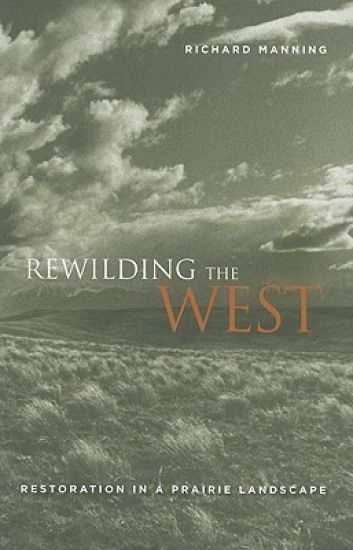
'The most destructive force in the American West is its commanding views, because they foster the illusion that we command', begins Richard Manning's vivid, anecdotally driven account of the American plains from native occupation through the unraveling of the American enterprise to today. As he tells the story of this once rich, now mostly empty landscape, Manning also describes a grand vision for ecological restoration, currently being set in motion, that would establish a prairie preserve larger than Yellowstone National Park, flush with wild bison, elk, bears, and wolves. Taking us to an isolated stretch of central Montana along the upper Missouri River, Manning peels back the layers of history and discovers how key elements of the American story - conservation, the New Deal, progressivism, the yeoman myth, and the idea of private property - have collided with and shaped this incomparable landscape. An account of great loss, "Rewilding the West" also holds out the promise of resurrection - but rather than remake the plains once again, Manning proposes that we now find the wisdom to let the prairies remake us.
Against the Grain: How Agriculture Has Hijacked Civilization
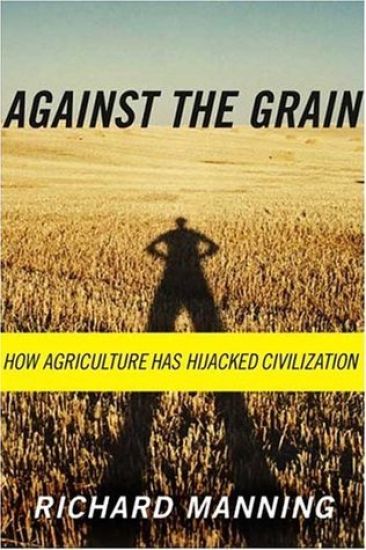
In this provocative, wide-ranging book, Against the Grain, Richard Manning offers a dramatically revisionist view of recent human evolution, beginning with the vast increase in brain size that set us apart from our primate relatives and brought an accompanying increase in our need for nourishment. For 290,000 years, we managed to meet that need as hunter-gatherers, a state in which Manning believes we were at our most human: at our smartest, strongest, most sensually alive. But our reliance on food made a secure supply deeply attractive, and eventually we embarked upon the agricultural experiment that has been the history of our past 10,000 years. The evolutionary road is littered with failed experiments, however, and Manning suggests that agriculture as we have practiced it runs against both our grain and nature's. Drawing on the work of anthropologists, biologists, archaeologists, and philosophers, along with his own travels, he argues that not only our ecological ills-overpopulation, erosion, pollution-but our social and emotional malaise are rooted in the devil's bargain we made in our not-so-distant past. And he offers personal, achievable ways we might re-contour the path we have taken to resurrect what is most sustainable and sustaining in our own nature and the planet's.