Kirjojen hintavertailu. Mukana 12 366 961 kirjaa ja 12 kauppaa.

Kirjahaku

Etsi kirjoja tekijän nimen, kirjan nimen tai ISBN:n perusteella.

7 kirjaa tekijältä Richard Marshall

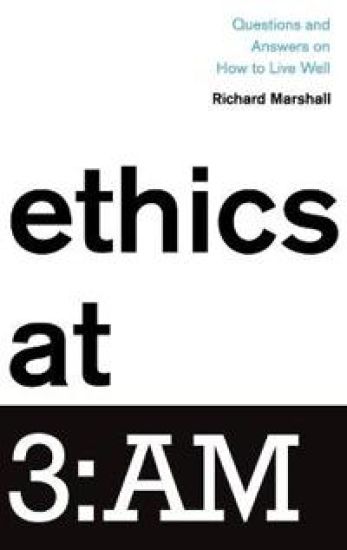
Ethics at 3:AM

Ethics at 3:AM

Richard Marshall

Oxford University Press Inc
2017
sidottu
What do ethicists and moral philosophers really think about? What are the most pressing concerns in the discipline today? This collection of interviews with a range of interesting and original thinkers in the field provides a snapshot of contemporary ethics in all its complexity and nuance. It contains 26 probing interviews conducted by Richard Marshall of the cultural magazine 3AM, each consisting of a carefully condensed version of the interview, preceded by a brief biography of the interview subject. Marshall's questions are deeply knowledgeable while always accessible to the layperson, and the interviewees respond in kind with rich and opinionated responses. The result is a deeply engaging entrée into the state of ethics today.
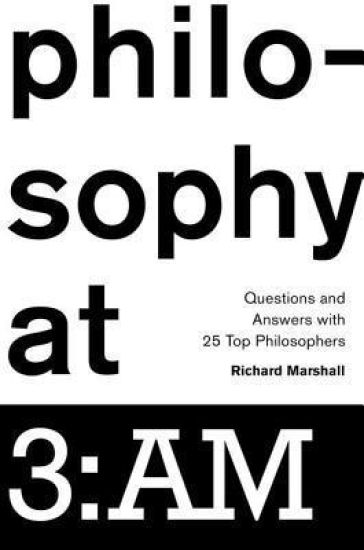
Philosophy at 3:AM

Philosophy at 3:AM

Richard Marshall

Oxford University Press Inc
2014
sidottu
The appeal of philosophy has always been its willingness to speak to those pressing questions that haunt us as we make our way through life. What is truth? Could we think without language? Is materialism everything? But in recent years, philosophy has been largely absent from mainstream cultural commentary. Many have come to believe that the field is excessively technical and inward-looking and that it has little to offer outsiders. The 25 interviews collected in this volume, all taken from a series of online interviews with leading philosophers published by the cultural magazine 3ammagazine.com, were carried out with the aim of confronting widespread ignorance about contemporary philosophy. Interviewer Richard Marshall's informed and enthusiastic questions help his subjects explain the meaning of their work in a way that is accessible to non-specialists. Contemporary philosophical issues are presented through engaging but serious dialogues that, taken together, offer a glimpse into key debates across the discipline. Alongside metaphysics, philosophy of mind, epistemology, logic, philosophy of science, philosophy of language, political philosophy and ethics, discussed here are feminist philosophy, continental philosophy, pragmatism, philosophy of religion, experimental philosophy, bioethics, animal rights, and legal philosophy. Connections between philosophy and fields such as psychology, cognitive science, and theology are likewise examined. Marshall interviews philosophers both established and up-and coming. Engaging, thoughtful and thought-provoking, inviting anyone with a hunger for philosophical questions and answers to join in, Philosophy at 3:AM shows that contemporary philosophy can be relevant -- and even fun.
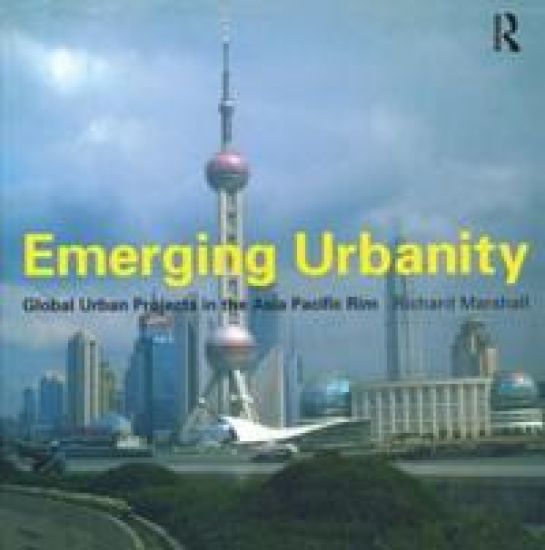
Emerging Urbanity

Emerging Urbanity

Richard Marshall

Routledge
2002
nidottu
Discussions on the global economy focus on the hyper-mobility of capital, the possibility of instantaneous transmission of information and money around the globe, the centrality of information outputs to our economic systems and emphasise the neutralisation of geography and of places. What is ignored, however, is that even the most advanced information industries need a material infrastructure of buildings and work processes, and considerable agglomeration, in order to operate in global markets. Further, the globalisation of economic activity has brought with it not only a vast dispersal of offices and factories, but also a growing importance of central functions to manage and coordinate such worldwide networks of activities. The development of global urban projects is one manifestation of this move towards centrality in urban situations. These large-scale urban projects are the result of governments' seeking competitive advantage in the global economy. They are critical components of a nation's global infrastructure. In the booming economies of the Asia Pacific Rim prior to the Asian Economic Crisis these urban developments were seen as key components of national economic policies. In their making they require a conscious effort to arrange material infrastructure and reinforce that there is a role for urban design in this making. Emerging Urbanity is an exploration of this role in nine global urban projects in the Asia Pacific Rim.
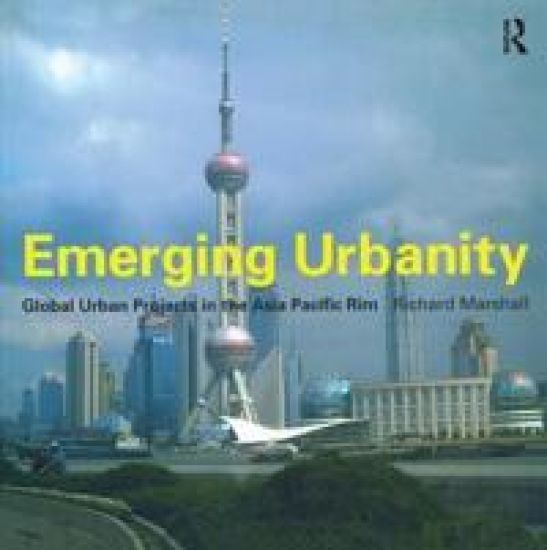
Emerging Urbanity

Emerging Urbanity

Richard Marshall

Routledge
2017
sidottu
Discussions on the global economy focus on the hyper-mobility of capital, the possibility of instantaneous transmission of information and money around the globe, the centrality of information outputs to our economic systems and emphasise the neutralisation of geography and of places. What is ignored, however, is that even the most advanced information industries need a material infrastructure of buildings and work processes, and considerable agglomeration, in order to operate in global markets. Further, the globalisation of economic activity has brought with it not only a vast dispersal of offices and factories, but also a growing importance of central functions to manage and coordinate such worldwide networks of activities. The development of global urban projects is one manifestation of this move towards centrality in urban situations. These large-scale urban projects are the result of governments' seeking competitive advantage in the global economy. They are critical components of a nation's global infrastructure. In the booming economies of the Asia Pacific Rim prior to the Asian Economic Crisis these urban developments were seen as key components of national economic policies. In their making they require a conscious effort to arrange material infrastructure and reinforce that there is a role for urban design in this making. Emerging Urbanity is an exploration of this role in nine global urban projects in the Asia Pacific Rim.
A Practical Guide to Estate Administration and Crypto Assets
Crypto Assets are pushing the boundaries of the law across multiple jurisdictions in a number of ways. This is particularly the case in administering such assets as part of the estate of a deceased individual.Due to the technology which underpins Crypto Assets, their decentralised nature and the volatile market conditions within which they operate, there are a plethora of issues and nuanced difficulties that can arise in dealing with Crypto Assets as part of an estate administration.This book aims to provide an examination of the application of the current law to Crypto Assets, a practical analysis of the Blockchain technology that sits behind Crypto Assets, a breakdown of the different types of Crypto Assets that may be held on death, and an explanation of the practical considerations required in locating, identifying and accessing Crypto Assets during the administration of an estate. With a summary of the tax implications for estates holding Crypto Assets and a consideration of the AML and compliance issues in dealing with these assets, this book is designed to be a go to handbook for all Probate Practitioners practicing in England and Wales faced with the prospect of dealing with Crypto Assets in an estate administration.ABOUT THE AUTHORRichard Marshall is a Private Client Solicitor with over 10 years' experience in advising clients about Wills, Succession and Inheritance Tax Planning, Trusts and Estate Administration. Having taken a keen interest in Blockchain technology and Cryptocurrency since 2016, Richard now advices clients on the key considerations about leaving Crypto Assets on death, the difficulties in balancing Private Key security during lifetime with accessibility on death, and the tax treatment of Crypto Assets on death, as well as advising Personal Representatives about the practical and technical issues associated with administering Crypto Assets and the risks involved for the estate.Richard has delivered training nationally on the topic of administering Crypto Assets as part of an estate administration and is due to speak at an international conference on the difficulties of dealing with NFTs on death.CONTENTSPart One - Back to BasicsChapter One - Digital v CryptoChapter Two - Blockchain TechnologyChapter Three - Wallets, Devices and PasskeysPart Two - Crypto AssetsChapter Four - Crypto Currencies and TokensChapter Five - NFTsChapter Six - Decentralised Autonomous Organisations (DAOs)Chapter Seven - GamesChapter Eight - AirdropsPart Three - Administering Crypto AssetsChapter Nine - Accessing the AssetsChapter Ten - Securing the AssetsChapter Eleven - Maximising the AssetsChapter Twelve - Recovering the AssetsChapter Thirteen - Valuing the AssetsChapter Fourteen - Taxation of the AssetsChapter Fifteen - Situs of Crypto AssetsChapter Sixteen - Distributing the AssetsChapter Seventeen - Donatio Mortis CausaChapter Eighteen - TrustsChapter Nineteen - AML and ComplianceChapter Twenty - Future of Crypto