Kirjojen hintavertailu. Mukana 11 244 527 kirjaa ja 12 kauppaa.

Kirjahaku

Etsi kirjoja tekijän nimen, kirjan nimen tai ISBN:n perusteella.

16 kirjaa tekijältä Richard Muir

Political Geography

Political Geography

Richard Muir

Red Globe Press
1997
nidottu
An entirely new text for students of political geography following in the footsteps of the author's highly successful Modern Political Geography. Unlike other texts in this field it takes a broad and inclusive view of its subject matter, a pluralist and humanistic approach, and combines coverage of theory and empirical developments drawn from a wide range of countries throughout.
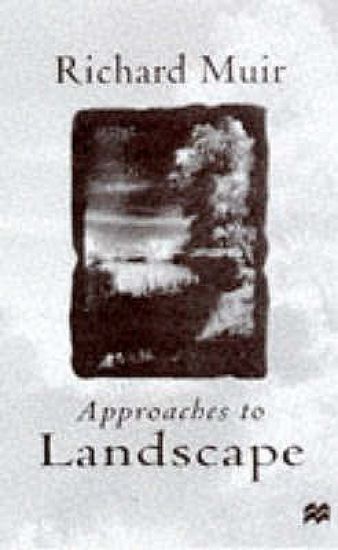
Approaches to Landscape

Approaches to Landscape

Richard Muir

Red Globe Press
1999
nidottu
Approaches to Landscape introduces and explores the main perspectives in this increasingly popular field of study. Written in an accessible style and illustrated throughout with relevant photographs, maps and diagrams, it provides a comprehensive review of the literature and key concepts for Landscape Studies.
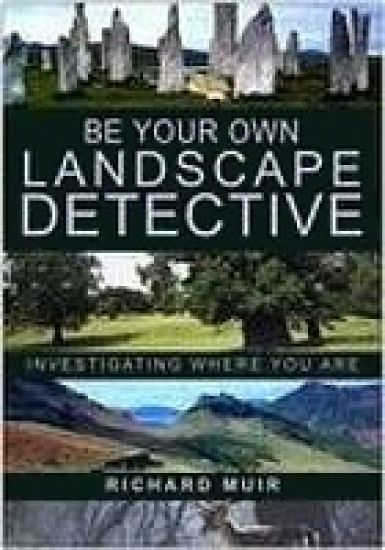
Be Your Own Landscape Detective

Be Your Own Landscape Detective

Richard Muir

The History Press Ltd
2007
sidottu
Landscape history uses clues in the everyday landscape - buildings, roads, fields, hedges - together with maps and documents to find out how the landscape was organised in the past and how it developed into the modern day. Reconstruction of the past is not a difficult task, and with Richard Muir as the expert guide the reader is soon brought face to face with a dazzling array of historical clues quite literally under his feet. Both accessible and informative, this guide from the leading popular writer on the history of the landscape demonstrates that the scenery of countryside and suburb can be read like a book. It also exposes many of the popular myths that have grown up around the landscape such as the Black Death being responsible for the depopulation of the countryside, and old woods being the last relics of the ancient wild wood that once covered all of the country. "Where You Are" is all-embracing in its approach and contains a vast wealth of information. There is no comparable guide to reading the landscape and Richard Muir has created a format that the general reader with an interest in understanding the history that lies all around us will find inspiring.
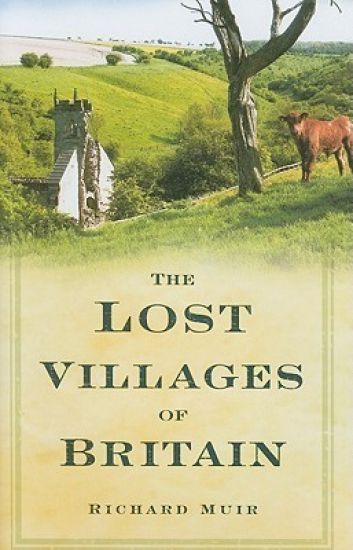
The Lost Villages of Britain

The Lost Villages of Britain

Richard Muir

The History Press Ltd
2009
nidottu
In an age when building developments seem to be advancing on every small plot of unspolit countryside, it seems hard to imagine times when well-established settlements were declining and dying. Such times certainly did exist, and thousands of villages have perished. All the evidence is that villages can be lost and that a period of widespread abandonment might well return. Deserted settlement sites are all around us and all British people will live within very few miles of an example. Most of the settlements perished in the medieval period, when the dwellings were flimsy and prone to decay. Empty houses only stand at the relatively recent settlements, like failed quarry villages. In several of the more evocative cases, a ruined church presides over the deserted site.
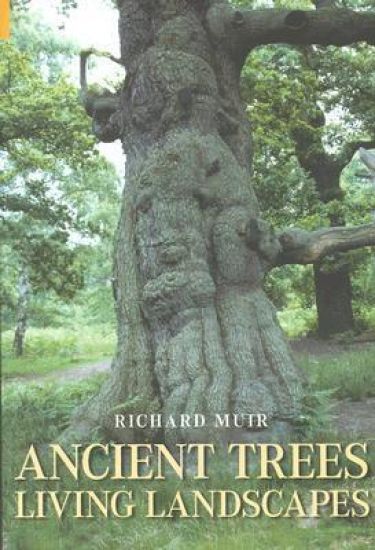
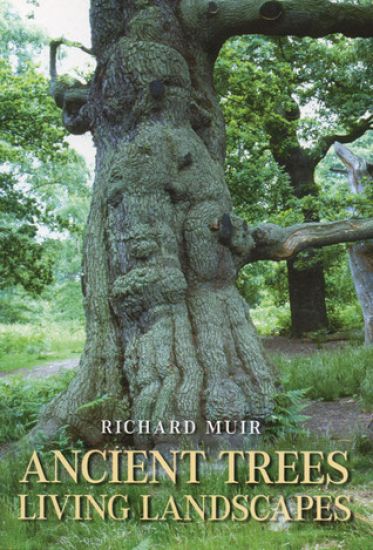
Ancient Trees, Living Landscapes

Ancient Trees, Living Landscapes

Richard Muir

The History Press Ltd
2005
sidottu
Over the last 25 years archaeologists and historians have been increasingly aware of the importance of woodland in the developing British landscape. No one has devoted more research to this subject then Richard Muir. In this magisterial study, matched by numerous informative and evocative illustrations, the author begins by disposing of the myth that in prehistoric times Britain was swathed in a virtually impenetrable wildwood. In fact, from the earliest times woodland has been manipulated and transformed. The author first looks at landmark trees, then examines ancient trees and hedgerows before charting the early development of trees in the park and then later parkland and forestry. He describes too the life of the men of the forest over the centuries and probes the important subject of 'Woodlands of the Mind'.
Ancient Trees, Living Landscapes

Ancient Trees, Living Landscapes

Richard Muir

The History Press Ltd
2002
nidottu
Over the last 25 years, archaeologists and historians have been increasingly aware of the importance of woodland in the developing British landscape – in particular, how trees have been a vital component of the living cultural landscape. Ancient Trees, Living Landscapes begins by questioning the myth that in prehistoric times Britain was swathed in a virtually impenetrable wildwood. In fact, from the earliest times woodland has been manipulated and transformed. The author then looks at Britain’s great ‘landmark trees’, before examining the function of ancient trees and hedgerows in the landscape. The Middle Ages saw the multiplication of deer parks, with the special management needed to feed and shelter deer and to give cover to stalkers. These, with their lawns, groves and pollard-studded pastures, greatly influenced the great landscape parks of the eighteenth century, developed by Repton and Lancelot Brown. There are, too, important chapters on the life and work of the Men of the Forest, and on Woodlands of the Mind – the all-important symbolism of trees as well as their utilitarian function in Britain’s landscape. Throughout the book Richard Muir, who describes himself as ‘a Dalesman by birth, a Scot by inclination’, gives equal weight to the evidence from the north of Britain, whereas earlier writers have concentrated on the south. In an age when institutional interests are increasingly pervasive, he stresses the importance of the work of the individual researcher and amateur enthusiast.
Woods, Hedges and Leafy Lanes

Woods, Hedges and Leafy Lanes

Richard Muir

The History Press Ltd
2008
nidottu
The landscapes of Britain have been shaped by hundreds of generations, moulding the countryside to fit with their own ideals, through the planting of hedgerows and wooded pastures. This type of scenery has been long in the making, with new additions and flourishes being added every century, yet in today's modern world it is rapidly being transplanted by concrete and tarmac. This absorbing new book unravels the history of these landscapes.
Nidderdale

Nidderdale

Richard Muir

The History Press Ltd
2010
nidottu
This is the story of the shaping, over several millennia, of a valley community of the Yorkshire Dales. The valley is Nidderdale, a brooding and watery place which takes its name from the Celtic/Danish for valley of the brilliant or sparkling water. Here, a simple sufficiency flourished over time, influences by English and Scandinavian settlers. New masters, technologies and regulations led to the development of a distinctive dialect and sulture. Yet, in the space of a few decades this cultural edifice has been utterly demolished. This book demonstrates the multi-layered nature of cultural revolution, celebrating the complexity of social advancement. Furthermore, it laments the lost indigenous culture of the Dales. With use of literary passages to portray life in former times, it is a book that evokes history.The use of infra-red photography produces unsettling, timeless illustrations that complement the sense of loss depicted. This guide to the history underlying the individuality of a people and to the landscape history of their homeland is unique to Nidderdale, although similar stories could be told of lost cultures across Britain. This powerful evocation from a leading popular author on landscape history presents an insightful and significant elegy of the past.
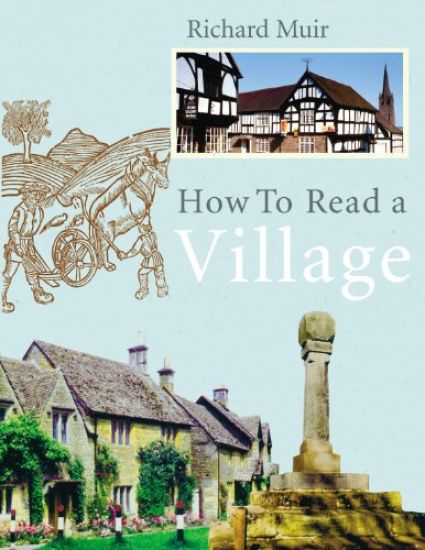
How To Read A Village

How To Read A Village

Richard Muir

Ebury Publishing
2007
pokkari
Drawing on dozens of real villages as examples, the author, an expert on the landscape, matches up popular images and perceptions with the realities of old village life and history. Covering the whole of Britain, he also points out key regional differences - for example, why villages in Scotland follow a different pattern to villages in England.
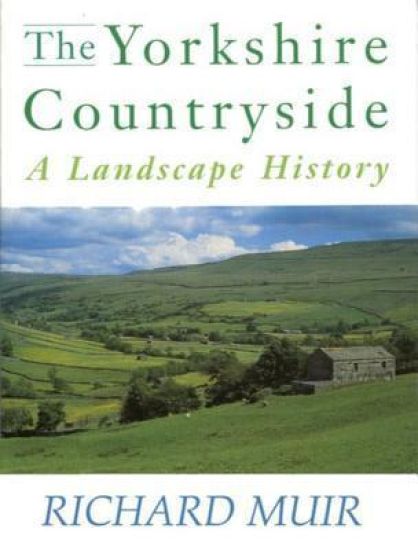
The Yorkshire Countryside

The Yorkshire Countryside

Richard Muir

Keele University Press
1997
nidottu
Yorkshire summons up a distinct mental image in the minds of outsiders - whether of wind-lashed moorland, smoking chimneys or tough, blunt people. This illustrated survey of the changing rural landscapes of the region shows how the quality of 'Yorkshireness' varies greatly between one area and another. Moving chronologically from the Mesolithic period through to the post-medieval era of enclosure and industrialization, it allows the reader to mentally reconstruct the successive landscapes as they appeared and evolved through generations. The key elements - settlement patterns, strongholds, church and vernacular architecture, field systems and communications - are all considered in this fascinating history of one of England's best-known regions.
Seng 466

Seng 466

Richard Muir

LAP Lambert Academic Publishing
2019
pokkari
The purpose of this project was to develop a remote controlled hovercraft. This project was completed in fulfillment of the requirements fo SENG 466: Software for Embedded and Mechatronics Systems. This project builds on the work completed in Project 1: Prototype Base Station and Remote Station and is the second milestone towards the course goal of building an autonomous hovercraft. The final deliverable must be capable of handling a payload of 1.5kg and must consume no more than 35W of power for its lifting system. Using the air ow generated by propellors, the hovercraft will be lifted by the air captured inside a skirt underneath. The project con- sists of a base station and a remote station, and the hovercraft is controlled by a Playstion 3 gamepad connected to the base station that wirelessly communicates with the remote station onboard the hovercraft.