Kirjojen hintavertailu. Mukana 11 717 486 kirjaa ja 12 kauppaa.

Kirjahaku

Etsi kirjoja tekijän nimen, kirjan nimen tai ISBN:n perusteella.

10 kirjaa tekijältä Richard Munson

From Edison to Enron

From Edison to Enron

Richard Munson

Praeger Publishers Inc
2005
sidottu
The blackout of 2003 illuminated just how dependent America is on electricity. It was not just that some 50 million people in eight states and Ontario were cut off from their televisions, microwaves, ATMs, and email. Without the electrical juice to keep their sockets alive, factory managers were forced to close production lines, city managers shut down water deliveries, grocery store clerks watched their frozen inventory slowly melt away. Economists estimated that the blackout cost Americans $5 billion even as energy analysts were predicting that a similar blackout could happen again. The catastrophe forced us to marvel at the unusual ability of sub-microscopic particles to move like waves inside a wire and cause bulbs to glow. It highlighted the complex requirements for managing the massive generators, transformers, transmission lines, and switch boxes needed to tap and deliver flowing electrons. It encouraged us to recognize the profound impact of electricity on all aspects of commerce and culture.Such events as the blackout, the Enron debacle, and the California brownouts also reveal the cracks in a 100-year-old industry structure that have been building ever since Thomas Edison, George Westinghouse, and their contemporaries first managed to harness electricity and make it available to the masses, and tycoons, such as Sam Insull and George Norris, began to concentrate financial control and political influence. From Edison to Enron traces the controversial history of this $210 billion industry—the nation's largest—showcasing the key individuals, technological innovations, corporate machinations, and political battles that have been waged over its domination. Munson maintains that today's technological and regulatory infrastructure, as a function of its history, is a relic that has long outlived its usefulness; he points out that two-thirds of the fuel burned to generate electricity is lost, that Americans pay roughly $100 billion too much each year for heat and power, and that environmentally unfriendly generators are the nation's largest polluters. Meanwhile, innovations in technology and business models are being blocked by entrenched monopolies. Ultimately, Munson argues that current policies and practices, including those favored by the Bush Administration, are preventing entrepreneurs from producing more efficient, healthy, and sustainable power supplies. Moreover, he presents an agenda for business and policy reforms that will stimulate economic development in the United States and around the world.
From Edison to Enron

From Edison to Enron

Richard Munson

Praeger Publishers Inc
2005
nidottu
The blackout of 2003 illuminated just how dependent America is on electricity. It was not just that some 50 million people in eight states and Ontario were cut off from their televisions, microwaves, ATMs, and email. Without the electrical juice to keep their sockets alive, factory managers were forced to close production lines, city managers shut down water deliveries, grocery store clerks watched their frozen inventory slowly melt away. Economists estimated that the blackout cost Americans $5 billion even as energy analysts were predicting that a similar blackout could happen again. The catastrophe forced us to marvel at the unusual ability of sub-microscopic particles to move like waves inside a wire and cause bulbs to glow. It highlighted the complex requirements for managing the massive generators, transformers, transmission lines, and switch boxes needed to tap and deliver flowing electrons. It encouraged us to recognize the profound impact of electricity on all aspects of commerce and culture. Such events as the blackout, the Enron debacle, and the California brownouts also reveal the cracks in a 100-year-old industry structure that have been building ever since Thomas Edison, George Westinghouse, and their contemporaries first managed to harness electricity and make it available to the masses, and tycoons, such as Sam Insull and George Norris, began to concentrate financial control and political influence. From Edison to Enron traces the controversial history of this $210 billion industry—the nation's largest—showcasing the key individuals, technological innovations, corporate machinations, and political battles that have been waged over its domination. Munson maintains that today's technological and regulatory infrastructure, as a function of its history, is a relic that has long outlived its usefulness; he points out that two-thirds of the fuel burned to generate electricity is lost, that Americans pay roughly $100 billion too much each year for heat and power, and that environmentally unfriendly generators are the nation's largest polluters. Meanwhile, innovations in technology and business models are being blocked by entrenched monopolies. Ultimately, Munson argues that current policies and practices, including those favored by the Bush Administration, are preventing entrepreneurs from producing more efficient, healthy, and sustainable power supplies. Moreover, he presents an agenda for business and policy reforms that will stimulate economic development in the United States and around the world.
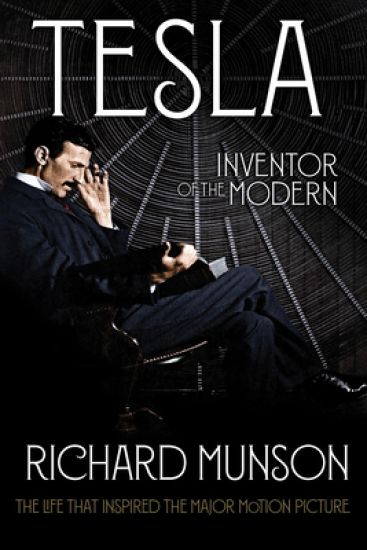
Tesla

Tesla

Richard Munson

WW Norton Co
2019
nidottu
Nikola Tesla, a Serbian-American, invented the radio, the induction motor, the neon lamp and the remote control. His breakthrough came in alternating current, which pitted him against Thomas Edison’s direct current empire and bitter patent battles ensued. But Tesla’s technology was superior and he prevailed. He had no business sense, could not capitalise on this success and his most advanced ideas were unrecognised for decades. Tesla’s personal life was magnificently bizarre. Strikingly handsome, he was germophobic and never shook hands. He required nine napkins when he sat down to dinner. In later years he ate only white food and conversed with the pigeons in Bryant Park. This authoritative and highly readable biography takes account of all phases of this remarkable life.
Ingenious

Ingenious

Richard Munson

WW NORTON CO
2024
sidottu
Benjamin Franklin was one of the preeminent scientists of his time. Driven by curiosity, he conducted cutting-edge research on electricity, heat, ocean currents, weather patterns, chemical bonds, and plants. But today, Franklin is remembered more for his political prowess and diplomatic achievements than his scientific creativity. In Ingenious, Richard Munson recovers this vital part of Franklin’s story, reveals his modern relevance and offers a compelling portrait of a shrewd experimenter, clever innovator and visionary physicist whose fame opened doors to negotiate French support and funding for American independence. Munson’s riveting narrative explores how science underpins Franklin’s entire story—from tradesman to inventor to nation-founder.
Education Incorporated

Education Incorporated

Richard Munson

Praeger Publishers Inc
1988
sidottu
Education Incorporated identifies ways education and business can work together to build a strong economy. While recognizing that schools and companies have different roles to play in the public arena, the focus is on what happens when their interests overlap. Describing formal and informal programs already underway, the book suggests specific actions to use existing resources and talents cooperatively. It also shows what government can do to promote collaborations between these sectors. Specific papers discuss ways in which education can find new uses for its buildings and resources, develop and expand training services to develop workforce potential, make use of research capacity and faculty expertise for business applications, and create flexible funding strategies to support their services to business and industry.
Ingenious: A Biography of Benjamin Franklin, Scientist
Benjamin Franklin was one of the preeminent scientists of his time. Driven by curiosity, he conducted cutting-edge research on electricity, heat, ocean currents, weather patterns, chemical bonds, and plants. But today, Franklin is remembered more for his political prowess and diplomatic achievements than his scientific creativity.In this incisive and rich account of Benjamin Franklin's life and career, Richard Munson recovers this vital part of Franklin's story, reveals his modern relevance, and offers a compelling portrait of a shrewd experimenter, clever innovator, and visionary physicist whose fame opened doors to negotiate French support and funding for American independence.Munson's riveting narrative explores how science underpins Franklin's entire story--from tradesman to inventor to nation-founder--and argues that Franklin's political life cannot be understood without giving proper credit to his scientific accomplishments.
Power Corrupts

Power Corrupts

Richard Munson

BLOOMSBURY PUBLISHING PLC
2025
sidottu
Power Corrupts explains the recent rise of racketeering and bribery by utilities seeking billion-dollar bailouts for dirty and uneconomic power plants. This corruption within America’s utility industry has become the biggest barrier to tackling global warming and advancing greener solutions.
Tech to Table

Tech to Table

Richard Munson

Island Press
2021
sidottu
Imagine eating a burger grown in a laboratory, a strawberry picked by a robot, or a pastry created with a 3-D printer. You would never taste the difference, but these technologies might just save your health and the planet’s. Today, landmark advances in computing, engineering, and medicine are driving solutions to the biggest problems created by industrialized food. Tech to Table introduces readers to twenty-five of the most creative entrepreneurs advancing these solutions. They come from various places and professions, identities and backgrounds. But they share an outsider’s perspective and an idealistic, sometimes aggressive, ambition to rethink the food system. Reinvention is desperately needed. Under Big Ag, pollution, climate change, animal cruelty, hunger, and obesity have festered, and despite decades of effort, organic farming accounts for less than one percent of US croplands. Entrepreneurs represent a new path, one where disruptive technology helps people and the environment. These innovations include supplements to lower the methane in cattle belches, drones that monitor irrigation levels in crops, urban warehouses that grow produce year-round, and more. The pace and breadth of change is astonishing, as investors pump billions of dollars into ag-innovation. Startups are attracting capital and building markets, with the potential to upend conventional agribusiness’s stranglehold on the food system. Not every invention will prosper long-term, but each marks a fundamental change in our approach to feeding a growing population—sustainably. A revolution in how we grow and eat food is brewing. Munson’s deftly crafted profiles offer a fascinating preview of the coming future of food.
Tesla: tajny i sekrety velikogo izobretatelja
Opirajas na pisma, tekhnicheskie zametki i drugie dokumenty, avtor vossozdaet ne tolko istoriju vydajuschikhsja dostizhenij Nikoly Tesly, no i ego neobychnuju lichnuju zhizn. Chitateli uznajut o privychkakh genija - strannogo i poroj naivnogo cheloveka, kotoryj, nesmotrja na svoi blestjaschie idei, chasto ne mog najti put k kommercheskomu uspekhu, chtoby obespechit sebe bezbednoe suschestvovanie. Eta kniga - ne prosto biografija, a glubokoe issledovanie vnutrennego mira cheloveka, operedivshego svoe vremja. Stav avtorom pervykh proektov mnogikh privychnykh nam veschej - robotov, pultov distantsionnogo upravlenija, asinkhronnykh dvigatelej, sovremennykh tekhnologij mobilnoj svjazi i interneta, - kak chelovek on ostavalsja v teni svoikh sobstvennykh izobretenij. Uznajte, kakim obrazom genij i ekstsentrichnost perepletalis v zhizni N. Tesly, i kak ego nasledie prodolzhaet vdokhnovljat novoe pokolenie izobretatelej i mechtatelej. Perevodchik: Bavin Sergej Pavlovich