Kirjojen hintavertailu. Mukana 11 342 296 kirjaa ja 12 kauppaa.

Kirjahaku

Etsi kirjoja tekijän nimen, kirjan nimen tai ISBN:n perusteella.

9 kirjaa tekijältä Richard Oram

Domination and Lordship

Domination and Lordship

Richard Oram

Edinburgh University Press
2011
sidottu
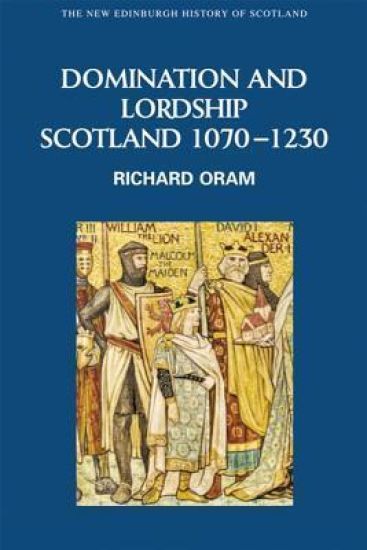
This volume centres upon the era conventionally labelled the 'Making of the kingdom', or the 'Anglo-Norman' era in Scottish history. It seeks a balance between traditional historiographical concentration on the 'feudalisation' of Scottish society as part of the wholesale importation of alien cultural traditions by a 'modernising' monarchy and more recent emphasis on the continuing vitality and centrality of Gaelic culture and traditions within the twelfth- and early thirteenth-century kingdom. Part I explores the transition from the Gaelic kingship of Alba into the hybridised medieval state and traces Scotland's role as both dominated and dominator. It examines the redefinition of relationships with England, Gaelic magnates within Scotland's traditional territorial heartland and with autonomous/independent mainland and insular powers. These interrelationships form the central theme of an exploration of the struggle for political domination of the northern mainland of Britain and the adjacent islands, the mechanisms through which that domination was projected and expressed, and the manner of its expression. Part II is a thematic exploration of central aspects of the society and culture of late eleventh- to early thirteenth-century Scotland which gave character and substance to the emerging kingdom. It considers the evolutionary growth of Scottish economic structures, changes in the management of land-based resources, and the manner in which secular power and authority were acquired and exercised. These themes are developed in discussions of the emergence of urban communities and in the creation of a new noble class in the twelfth century. Religion is examined both in terms of the development of the Church as an institution and through the religious experience of the lay population.
Domination and Lordship

Domination and Lordship

Richard Oram

Edinburgh University Press
2011
nidottu
This volume centres upon the era conventionally labelled the 'Making of the kingdom', or the 'Anglo-Norman' era in Scottish history. It seeks a balance between traditional historiographical concentration on the 'feudalisation' of Scottish society as part of the wholesale importation of alien cultural traditions by a 'modernising' monarchy and more recent emphasis on the continuing vitality and centrality of Gaelic culture and traditions within the twelfth- and early thirteenth-century kingdom. Part I explores the transition from the Gaelic kingship of Alba into the hybridised medieval state and traces Scotland's role as both dominated and dominator. It examines the redefinition of relationships with England, Gaelic magnates within Scotland's traditional territorial heartland and with autonomous/independent mainland and insular powers. These interrelationships form the central theme of an exploration of the struggle for political domination of the northern mainland of Britain and the adjacent islands, the mechanisms through which that domination was projected and expressed, and the manner of its expression. Part II is a thematic exploration of central aspects of the society and culture of late eleventh- to early thirteenth-century Scotland which gave character and substance to the emerging kingdom. It considers the evolutionary growth of Scottish economic structures, changes in the management of land-based resources, and the manner in which secular power and authority were acquired and exercised. These themes are developed in discussions of the emergence of urban communities and in the creation of a new noble class in the twelfth century. Religion is examined both in terms of the development of the Church as an institution and through the religious experience of the lay population.
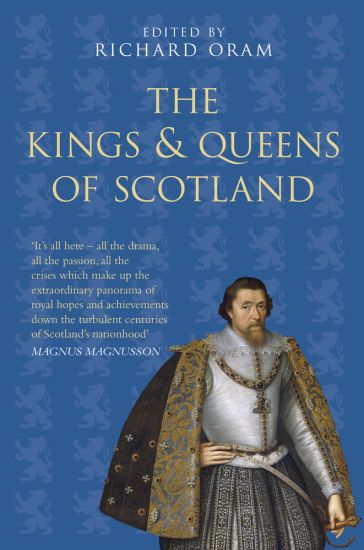
The Kings and Queens of Scotland: Classic Histories Series
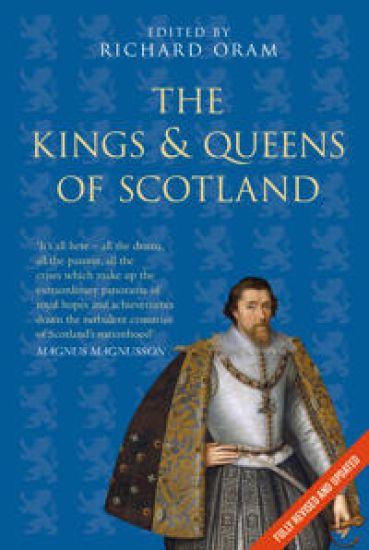
The history of the Scottish monarchy is a long tale of triumph over adversity, characterised by the personal achievements of remarkable rulers who transformed their fragile kingdom into the master of northern Britain. The Kings and Queens of Scotland charts that process, from the earliest Scots and Pictish kings of around ad 400 through to the union of parliaments in 1707, tracing it through the lives of the men and women whose ambitions drove it forward on the often rocky path from its semi-mythical foundations to its integration into the Stewart kingdom of Great Britain.It is a route waymarked with such towering personalities as Macbeth, Robert the Bruce and Mary Queen of Scots, but directed also by a host of less well-known figures such as David I, who extended his kingdom almost to the gates of York, and James IV, builder of the finest navy in northern Europe. Their will and ambition, successes and failures not only shaped modern Scotland, but have left their mark throughout the British Isles and the wider world.
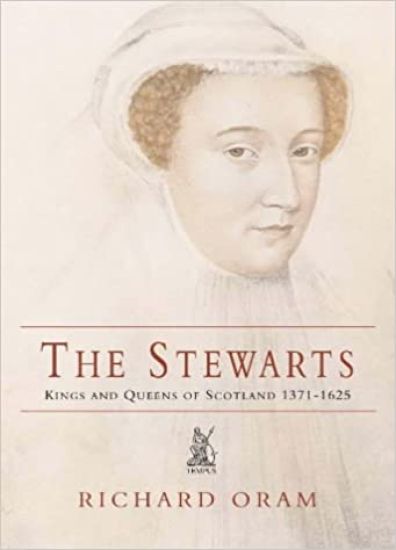
The Stewarts

The Stewarts

Richard Oram

The History Press Ltd
1997
nidottu
This is an accessible, illustrated history of the Stewart royal family, kings and queens of the Scots from Robert II (1371-90) to James VI (1567-1625), the last Stewart monarch to really know and understand the Scots.
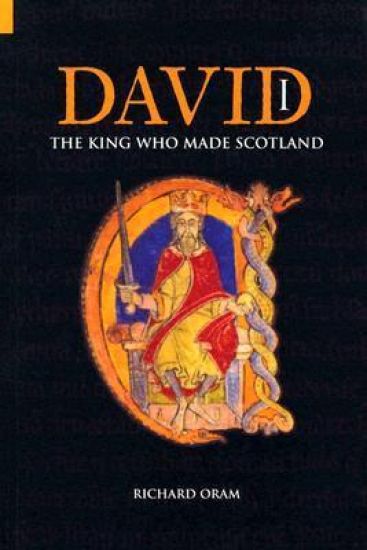
David I

David I

Richard Oram

The History Press Ltd
1999
nidottu
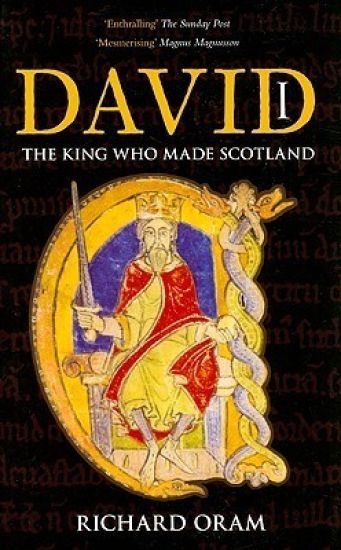
Few kings deserve more than David I the reputation as ‘maker’ of his kingdom. Although overshadowed in popular memory by his descendant, the later ‘saviour’ of Scotland, Robert Bruce, it was David who laid the foundations of the medieval Scottish monarchy and set in train the changes that created the kingdom that vied with England for mastery of the British Isles. In a reign spanning nearly three decades, David moved his kingdom from the periphery towards the heart of European civilisation.
David I

David I

Richard Oram

The History Press Ltd
2008
nidottu
Few kings deserve more than David I the reputation as ‘maker’ of his kingdom. Although overshadowed in popular memory by his descendant, the later ‘saviour’ of Scotland, Robert Bruce, it was David who laid the foundations of the medieval Scottish monarchy and set in train the changes that created the kingdom that vied with England for mastery of the British Isles. In a reign spanning nearly three decades, David moved his kingdom from the periphery towards the heart of European civilisation.
Kings and Queens of Scotland

Kings and Queens of Scotland

Richard Oram

THE HISTORY PRESS LTD
2024
pokkari
The history of the Scottish monarchy is a long tale of triumph over adversity, characterised by the personal achievements of remarkable rulers who transformed their fragile kingdom into the master of northern Britain. The Kings and Queens of Scotland charts that process, from the earliest Scots and Pictish kings of around ad 400 through to the union of parliaments in 1707, tracing it through the lives of the men and women whose ambitions drove it forward on the often rocky path from its semi-mythical foundations to its integration into the Stewart kingdom of Great Britain.It is a route waymarked with such towering personalities as Macbeth, Robert the Bruce and Mary Queen of Scots, but directed also by a host of less well-known figures such as David I, who extended his kingdom almost to the gates of York, and James IV, builder of the finest navy in northern Europe. Their will and ambition, successes and failures not only shaped modern Scotland, but have left their mark throughout the British Isles and the wider world.