

Kirjahaku
Etsi kirjoja tekijän nimen, kirjan nimen tai ISBN:n perusteella.
42 kirjaa tekijältä Richard Paul


The Thinker's Guide to Ethical Reasoning
Richard Paul; Linda Elder
Foundation for Critical Thinking
2013
nidottu

Writing is essential to learning. One cannot be educated and yet unable to communicate one's ideas in written form. But, learning to write can occur only through a process of cultivation requiring intellectual discipline. As with any set of complex skills, there are fundamentals of writing that must be internalized and then applied using one's thinking. This guide focuses on the most important of those fundamentals.

The Nature and Functions of Critical & Creative Thinking
Richard Paul; Linda Elder
Foundation for Critical Thinking
2012
nidottu
The relationship between criticality and creativity is commonly misunderstood. Critical and creative thought are both achievements of thought. Creativity masters a process of making or producing, criticality a process of assessing or judging. The very definition of the word "creative" implies a critical component (e.g., "having or showing imagination and artistic or intellectual inventiveness"). When engaged in high-quality thought, the mind must simultaneously produce and assess, both generate and judge the products it fabricates. In short, sound thinking requires both imagination and intellectual standards. Throughout this guide we elaborate on the essential idea that intellectual discipline and rigor are at home with originality and productivity, and also that these supposed poles of thinking (critical and creative thought) are inseparable aspects of excellence of thought. Whether we are dealing with the most mundane intellectual acts of the mind or those of the most imaginative artist or thinker, the creative and the critical are interwoven. It is the nature of the mind to create thoughts, though the quality of that creation varies enormously from person to person, as well as from thought to thought. Achieving quality requires standards of quality - and hence, criticality. We believe that creative thinking, especially, must be demystified and brought down to earth. For this reason, we deal with it in this guide not only in terms of its highest manifestation (in the work of geniuses), but also in its most humble manifestations (in everyday perception and thought). There are ways to teach simultaneously for both creative and critical thinking. To do so requires that we focus on these terms in practical, everyday contexts, that we keep their central meanings in mind, that we seek insight into how they overlap and interact with one another. When we understand critical and creative thought truly and deeply, we recognize them a

The Thinker's Guide to Fallacies
Richard Paul; Linda Elder
Foundation for Critical Thinking
2012
nidottu
An original approach to the identification of fallacies focusing on their relationship to human self deception, mental trickery, and manipulation. Introduces the concept of fallacies and details 44 foul ways to win an argument.

A Guide for Educators to Critical Thinking Competency Standards
Richard Paul; Linda Elder
Foundation for Critical Thinking
2007
nidottu
As a supplement to other volumes in the Thinker's Guide Library, this book provides a framework by which to assess the integration of critical thinking into an educational system The critical thinking competency standards articulated in this guide serve as a resource for teachers, curriculum designers, administrators and accrediting bodies.

The Thinker's Guide to Socratic Questioning
Richard Paul; Linda Elder
Foundation for Critical Thinking
2016
nidottu

The International Critical Thinking Reading and Writing Test
Richard Paul; Linda Elder
Foundation for Critical Thinking
2012
nidottu

The Thinker's Guide to Engineering Reasoning
Richard Paul; Robert Niewoehner; Linda Elder
Foundation for Critical Thinking
2013
nidottu
The Thinker's Guide to Engineering Reasoningapplies critical thinking concepts to the field of engineering. Students and professionals across engineering will find their analytical abilities enhanced by the engaging authoritative framework set forth by Richard Paul and Linda Elder. For engineers to properly reason through engineering projects requires strong analytic skills. The best engineers are clear about their purposes, gather sufficient information, and develop innovations. This requires critical reasoning and this guide offers tools essential to this process. As part of the Thinker's Guide Library, this book advances the mission of the Foundation for Critical Thinking to promote fairminded critical societies through cultivating essential intellectual abilities and virtues within every field of study across the world.

A Critical Thinker's Guide to Educational Fads
Richard Paul; Linda Elder
Foundation for Critical Thinking
2007
nidottu
This volume of the Thinker's Guide Library uncovers current well-intentioned educational trends (such as No Child Left Behind and Common Core) that inefficiently fragment energy and resources in our K-12 education systems. Critiquing the basic idea behind each of these fads illuminates their real motivations and provides for holistic use.
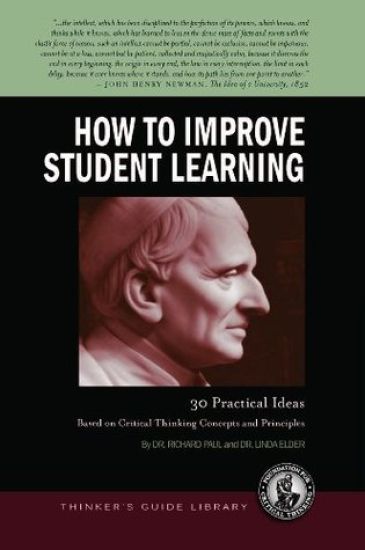
How to Improve Student Learning
Richard Paul; Linda Elder
Foundation for Critical Thinking
2014
nidottu
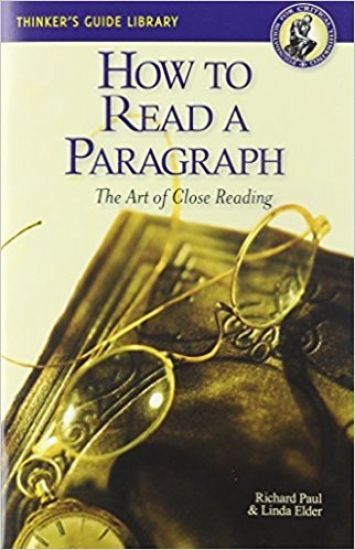
This handbook teaches students to read for deep understanding, properly analyze and assess what they read, and reason within the logic of an author. As part of the Thinker's Guide Library, this guide includes activities for students to work through in developing close reading skills using the tools of critical thinking.

The Thinker's Guide to Scientific Thinking
Richard Paul; Linda Elder
Foundation for Critical Thinking
2015
nidottu
The Thinker's Guide to Scientific Thinking focuses on developing the intellectual skills inherent in the well-cultivated practice of every area of scientific research and study. It helps students and practicing scientists come to reason within the logic of science and to see the field as a cohesive whole. From astronomers to zoologists and physicists to chemists, skilled scientists use careful analysis to question data, test theories, draw logical conclusions, and propose feasible solutions. Students in science courses, and scientists themselves will find their analytical abilities enhanced by the engaging framework of inquiry set forth by Richard Paul and Linda Elder in this guide. As part of the Thinker's Guide Library, this book advances the mission of the Foundation for Critical Thinking to promote fairminded critical societies through cultivating essential intellectual abilities and virtues across every field of study across world.

Critical Thinking: Tools for Taking Charge of Your Learning and Your Life
Richard Paul; Linda Elder
PEARSON EDUCATION LIMITED
2013
pokkari

Critical Thinking Pearson New International Edition, plus MyStudentSuccessLab without eText
Richard Paul; Linda Elder
Pearson Education Limited
2013
muu
For Student Success and Career Development, or Critical Thinking courses. Written by two of the leading experts in the field, this book's approach to critical thinking is as a process for taking charge of and responsibility for one's thinking. Based in theory developed over the last 30 years, it focuses on an integrated, comprehensive concept of critical thinking that is both substantive and practical; it fosters the development of basic intellectual skills students need to think through content in any class, subject, or discipline, as well as through any problem or issue they face. Simply stated, this text offers students the intellectual tools they need for lifelong learning, and rational, conscientious living. In this edition, several advanced chapters were eliminated, many diagrams have been added or enhanced, and the glossary of critical thinking terms has been more strongly developed. TECHNOLOGY OFFERING: MyStudentSuccessLab is available with this book upon request. It is an online solution designed to help students 'Start strong, Finish stronger' by building skills for ongoing personal and professional development. Go to http://mystudentsuccesslab.com/mssl3 for a Point and Click DEMO of the Time Management module.

The Space Age began just as the struggle for civil rights forced Americans to confront the long and bitter legacy of slavery, discrimination, and violence against African Americans. Presidents John F. Kennedy and Lyndon Johnson utilized the space program as an agent for social change, using federal equal employment opportunity laws to open workplaces at NASA and NASA contractors to African Americans while creating thousands of research and technology jobs in the Deep South to ameliorate poverty. We Could Not Fail tells the inspiring, largely unknown story of how shooting for the stars helped to overcome segregation on earth.Richard Paul and Steven Moss profile ten pioneer African American space workers whose stories illustrate the role NASA and the space program played in promoting civil rights. They recount how these technicians, mathematicians, engineers, and an astronaut candidate surmounted barriers to move, in some cases literally, from the cotton fields to the launching pad. The authors vividly describe what it was like to be the sole African American in a NASA work group and how these brave and determined men also helped to transform Southern society by integrating colleges, patenting new inventions, holding elective office, and reviving and governing defunct towns. Adding new names to the roster of civil rights heroes and a new chapter to the story of space exploration, We Could Not Fail demonstrates how African Americans broke the color barrier by competing successfully at the highest level of American intellectual and technological achievement.
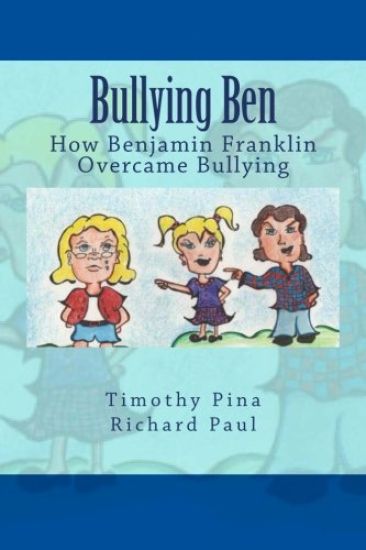
Bullying Ben: How Benjamin Franklin Overcame Bullying
Richard Paul; Timothy Pina
Createspace Independent Publishing Platform
2013
nidottu

The Miniature Guide to Critical Thinking Concepts and Tools
Richard Paul; Linda Elder
Rowman Littlefield Publishers
2019
nidottu
This powerful book introduces core critical thinking concepts and principles as an empowering problem-solving framework for every profession, course of study, and indeed every area of life. The Miniature Guide to Critical Thinking Concepts and Tools distills the groundbreaking work of Richard Paul and Linda Elder, targeting how to deconstruct thinking through the elements of reasoning and how to assess the quality of our thinking. The eighth edition of this guide further details the foundations of critical thinking and how they can be applied in instruction to improve teaching and learning at all levels; it also reveals how we can learn to identify and avoid egocentric and sociocentric thought, which lead to close-mindedness, self-deception, arrogance, hypocrisy, greed, selfishness, herd mentality, prejudice, and the like. With more than half a million copies sold, Richard Paul and Linda Elder’s bestselling book in the Thinker’s Guide Library is used in secondary and higher education courses and professional development seminars across the globe. In a world of conflicting information and clashing ideologies, this guide clears a path for advancing fairminded critical societies.