Kirjojen hintavertailu. Mukana 11 244 527 kirjaa ja 12 kauppaa.

Kirjahaku

Etsi kirjoja tekijän nimen, kirjan nimen tai ISBN:n perusteella.

8 kirjaa tekijältä Richard Reeves

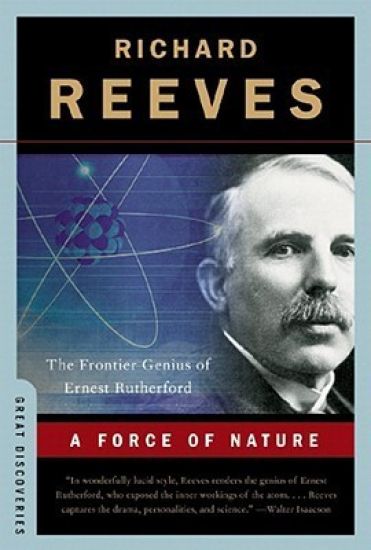
A Force of Nature

A Force of Nature

Richard Reeves

WW Norton Co
2008
nidottu
Born in colonial New Zealand, Ernest Rutherford grew up on the frontier—a different world from Cambridge, to which he won a scholarship at the age of twenty-four. His work revolutionized modern physics. Among his discoveries were the orbital structure of the atom and the concept of the "half-life" of radioactive materials. Rutherford and the young men working under him were the first to split the atom, unlocking tremendous forces—forces, as Rutherford himself predicted, that would bring us the atomic bomb. In Richard Reeves's hands, Rutherford comes alive, a ruddy, genial man and a pivotal figure in scientific history.
President Kennedy

President Kennedy

Richard Reeves

Pocket Books
1994
nidottu
President Kennedy is the compelling, dramatic history of JFK's thousand days in office. It illuminates the presidential center of power by providing an indepth look at the day-by-day decisions and dilemmas of the thirty-fifth president as he faced everything from the threat of nuclear war abroad to racial unrest at home. A narrative that leaves us not only with a new understanding of Kennedy as President, but also with a new understanding of what it means to be President (The New York Times).
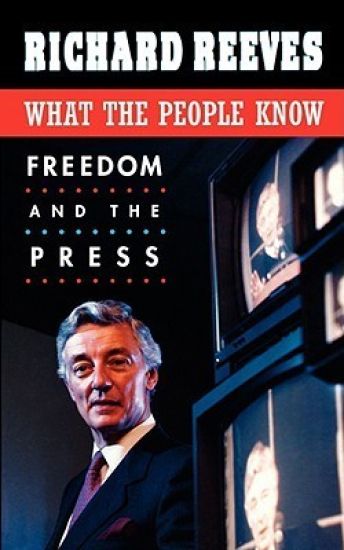
What the People Know

What the People Know

Richard Reeves

Harvard University Press
1999
nidottu
The power and status of the press in America reached new heights after spectacular reporting triumphs in the segregated South, in Vietnam, and in Washington during the Watergate years. Then new technologies created instantaneous global reporting which left the government unable to control the flow of information to the nation. The press thus became a formidable rival in critical struggles to control what the people know and when they know it. But that was more power than the press could handle--and journalism crashed toward new lows in public esteem and public purpose.The dazzling new technologies, profit-driven owners, and celebrated editors, reporters, and broadcasters made it possible to bypass older values and standards of journalism. Journalists reveled in lusty pursuit after the power of politics, the profits of entertainment and trespass into privacy. Richard Reeves was there at the rise and at the fall, beginning as a small-town editor, becoming the chief political correspondent of the New York Times and then a best-selling author and award-winning documentary filmmaker. He tells the story of a tribe that lost its way. From the Pony Express to the Internet, he chronicles what happened to the press as America accelerated into uncertainty, arguing that to survive, the press must go back to doing what it was hired to do long ago: stand as outsiders watching government and politics on behalf of a free people busy with their own affairs.
Happy Mondays

Happy Mondays

Richard Reeves

Perseus Books
2002
pokkari
You can't be good unless you love it. Happy Mondays presents a groundbreaking challenge to anti-work rhetoric. It argues that work need not be stressful, demolishes the arguments for "work-life balance," and shows you how to approach work not merely as an economic necessity but as something that will enhance your life.
Dream Hoarders

Dream Hoarders

Richard Reeves

Brookings Institution
2018
pokkari
Dream Hoarders sparked a national conversation on the dangerous separation between the upper middle class and everyone else. Now in paperback and newly updated for the age of Trump, Brookings Institution senior fellow Richard Reeves is continuing to challenge the class system in America.In America, everyone knows that the top 1 percent are the villains. The rest of us, the 99 percent—we are the good guys. Not so, argues Reeves. The real class divide is not between the upper class and the upper middle class: it is between the upper middle class and everyone else.The separation of the upper middle class from everyone else is both economic and social, and the practice of “opportunity hoarding”—gaining exclusive access to scarce resources—is especially prevalent among parents who want to perpetuate privilege to the benefit of their children. While many families believe this is just good parenting, it is actually hurting others by reducing their chances of securing these opportunities. There is a glass floor created for each affluent child helped by his or her wealthy, stable family. That glass floor is a glass ceiling for another child.Throughout Dream Hoarders, Reeves explores the creation and perpetuation of opportunity hoarding, and what should be done to stop it, including controversial solutions such as ending legacy admissions to school. He offers specific steps toward reducing inequality and asks the upper middle class to pay for it.Convinced of their merit, members of the upper middle class believes they are entitled to those tax breaks and hoarded opportunities. After all, they aren't the 1 percent. The national obsession with the super rich allows the upper middle class to convince themselves that they are just like the rest of America. In Dream Hoarders, Reeves argues that in many ways, they are worse, and that changes in policy and social conscience are the only way to fix the broken system.
Of Boys and Men

Of Boys and Men

Richard Reeves

ROWMAN LITTLEFIELD
2022
sidottu
A positive vision for masculinity in a postfeminist worldBoys and men are struggling. Profound economic and social changes of recent decades have many losing ground in the classroom, the workplace, and in the family. While the lives of women have changed, the lives of many men have remained the same or even worsened. Our attitudes, our institutions, and our laws have failed to keep up. Conservative and progressive politicians, mired in their own ideological warfare, fail to provide thoughtful solutions. The father of three sons, a journalist, and a Brookings Institution scholar, Richard V. Reeves has spent twenty-five years worrying about boys both at home and work. His new book, Of Boys and Men, tackles the complex and urgent crisis of boyhood and manhood. Reeves looks at the structural challenges that face boys and men and offers fresh and innovative solutions that turn the page on the corrosive narrative that plagues this issue. Of Boys and Men argues that helping the other half of society does not mean giving up on the ideal of gender equality.
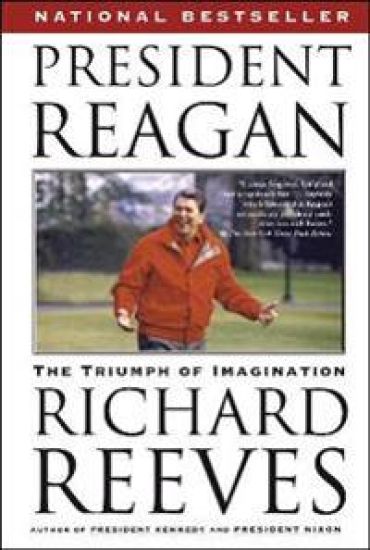
President Reagan

President Reagan

Richard Reeves

Simon Schuster
2007
pokkari
The presidential historian author of President Nixon and President Kennedy profiles the late fortieth president as one of the nation's most effective postwar leaders, evaluating the administrative goals Reagan set while tracing his use of covert warfare and morality tactics to transform the world. Reprint. 50,000 first printing.
Daring Young Men

Daring Young Men

Richard Reeves

Simon Schuster
2011
pokkari
In the early hours of June 26, 1948, phones began ringing across America, waking up the airmen of World War II—pilots, navigators, and mechanics—who were finally beginning normal lives with new houses, new jobs, new wives, and new babies. Some were given just forty-eight hours to report to local military bases. The president, Harry S. Truman, was recalling them to active duty to try to save the desperate people of the western sectors of Berlin, the enemy capital many of them had bombed to rubble only three years before. Soviet dictator Joseph Stalin had ordered a blockade of the city, isolating the people of West Berlin, using hundreds of thousands of Red Army soldiers to close off all land and water access to the city. He was gambling that he could drive out the small detachments of American, British, and French occupation troops, because their only option was to stay and watch Berliners starve—or retaliate by starting World War III. The situation was impossible, Truman was told by his national security advisers, including the Joint Chiefs of Staff. His answer: "We stay in Berlin. Period." That was when the phones started ringing and local police began banging on doors to deliver telegrams to the vets. Drawing on service records and hundreds of interviews in the United States, Germany, and Great Britain, Reeves tells the stories of these civilian airmen, the successors to Stephen Ambrose’s "Citizen Soldiers," ordinary Americans again called to extraordinary tasks. They did the impossible, living in barns and muddy tents, flying over Soviet-occupied territory day and night, trying to stay awake, making it up as they went along and ignoring Russian fighters and occasional anti-aircraft fire trying to drive them to hostile ground. The Berlin Airlift changed the world. It ended when Stalin backed down and lifted the blockade, but only after the bravery and sense of duty of those young heroes had bought the Allies enough time to create a new West Germany and sign the mutual defense agreement that created NATO, the North Atlantic Treaty Organization. And then they went home again. Some of them forgot where they had parked their cars after they got the call.