Kirjojen hintavertailu. Mukana 11 244 527 kirjaa ja 12 kauppaa.

Kirjahaku

Etsi kirjoja tekijän nimen, kirjan nimen tai ISBN:n perusteella.

25 kirjaa tekijältä Richard Shaw

How, When and Why did Bede Write his Ecclesiastical History?
Bede’s Ecclesiastical History is our main source for early Christian Anglo-Saxon England, but how was it written? When? And why? Scholars have spent much of the last half century investigating the latter question – the ‘why’. This new study is the first to systematically consider the ‘how’ and the ‘when’. Richard Shaw shows that rather than producing the History at a single point in 731, Bede was working on it for as much as twenty years, from c. 715 to just before his death in 735. Unpacking and extending the period of composition of Bede’s best-known book makes sense of the complicated and contradictory evidence for its purposes. The work did not have one context, but several, each with its own distinct constructed audiences. Thus, the History was not written for a single purpose to the exclusion of all others. Nor was it simply written for a variety of reasons. It was written over time – quite a lot of time – and as the world changed during that time, so too did Bede’s reasons for writing, the intentions he sought to pursue – and the patrons he hoped to please or to placate.
The Gregorian Mission to Kent in Bede's Ecclesiastical History
Historians have long relied on Bede’s Ecclesiastical History for their narrative of early Christian Anglo-Saxon England, but what material lay behind Bede’s own narrative? What were his sources and how reliable were they? How much was based on contemporary material? How much on later evidence? What was rhetoric? What represents his own agendas, deductions or even inventions? This book represents the first systematic attempt to answer these questions for Bede’s History, taking as a test case the coherent narrative of the Gregorian mission and the early Church in Kent. Through this critique, it becomes possible, for the first time, to catalogue Bede’s sources and assess their origins, provenance and value – even reconstructing the original shape of many that are now lost. The striking paucity of his primary sources for the period emerges clearly. This study explains the reason why this was the case. At the same time, Bede is shown to have had access to a greater variety of texts, especially documentary, than has previously been realised.This volume thus reveals Bede the historian at work, with implications for understanding his monastery, library and intellectual milieu together with the world in which he lived and worked. It also showcases what can be achieved using a similar methodology for the rest of the Ecclesiastical History and for other contemporary works.Most importantly, thanks to this study, it is now feasible – indeed necessary – for subsequent historians to base their reconstructions of the events of c.600 not on Bede but on his sources. As a result, this book lays the foundations for future work on the conversion of Anglo-Saxon England and offers the prospect of replacing and not merely refining Bede’s narrative of the history of early Christian Kent.
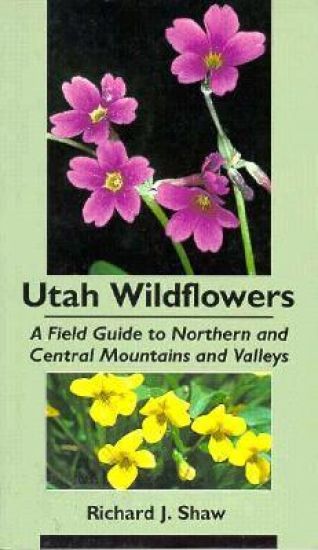
Utah Wildflowers

Utah Wildflowers

Richard Shaw

Utah State University Press
1995
nidottu
A visual guide to the wild-flowers that inhabit the mountains and valleys of northern and central Utah every spring and summer. A must for the hiker, biker, or lover of the outdoors. Includes over 100 full-colour photographs.
How, When and Why did Bede Write his Ecclesiastical History?
Bede’s Ecclesiastical History is our main source for early Christian Anglo-Saxon England, but how was it written? When? And why? Scholars have spent much of the last half century investigating the latter question – the ‘why’. This new study is the first to systematically consider the ‘how’ and the ‘when’. Richard Shaw shows that rather than producing the History at a single point in 731, Bede was working on it for as much as twenty years, from c. 715 to just before his death in 735. Unpacking and extending the period of composition of Bede’s best-known book makes sense of the complicated and contradictory evidence for its purposes. The work did not have one context, but several, each with its own distinct constructed audiences. Thus, the History was not written for a single purpose to the exclusion of all others. Nor was it simply written for a variety of reasons. It was written over time – quite a lot of time – and as the world changed during that time, so too did Bede’s reasons for writing, the intentions he sought to pursue – and the patrons he hoped to please or to placate.
The Gregorian Mission to Kent in Bede's Ecclesiastical History
Historians have long relied on Bede’s Ecclesiastical History for their narrative of early Christian Anglo-Saxon England, but what material lay behind Bede’s own narrative? What were his sources and how reliable were they? How much was based on contemporary material? How much on later evidence? What was rhetoric? What represents his own agendas, deductions or even inventions? This book represents the first systematic attempt to answer these questions for Bede’s History, taking as a test case the coherent narrative of the Gregorian mission and the early Church in Kent. Through this critique, it becomes possible, for the first time, to catalogue Bede’s sources and assess their origins, provenance and value – even reconstructing the original shape of many that are now lost. The striking paucity of his primary sources for the period emerges clearly. This study explains the reason why this was the case. At the same time, Bede is shown to have had access to a greater variety of texts, especially documentary, than has previously been realised.This volume thus reveals Bede the historian at work, with implications for understanding his monastery, library and intellectual milieu together with the world in which he lived and worked. It also showcases what can be achieved using a similar methodology for the rest of the Ecclesiastical History and for other contemporary works.Most importantly, thanks to this study, it is now feasible – indeed necessary – for subsequent historians to base their reconstructions of the events of c.600 not on Bede but on his sources. As a result, this book lays the foundations for future work on the conversion of Anglo-Saxon England and offers the prospect of replacing and not merely refining Bede’s narrative of the history of early Christian Kent.
John Dubois

John Dubois

Richard Shaw

Wipf Stock Publishers
2018
pokkari
St. Elizabeth Seton called him ""The Pope""; his students dubbed him ""Little Bonaparte."" To Pope Gregory XVI he was ""my most particular friend""; while his own Bishop charged him with acting as a ""Bishop"" rather than as parish priest. The man was Father John Dubois, an exile from France, the founding father of many cherished Catholic institutions in America. Dubois was beloved by the ""little people""--the scattered Catholics he served in rural Maryland, Virginia, and Pennsylvania; and he was the amiable friend of Protestants such as James Monroe and Patrick Henry. In 1808 he began his ""Mountain"" seminary at Emmitsburg, Maryland, and 175 years later Mount St. Mary's College still serves as his memorial to education. The founder would just as easily pick up an axe to fell lumber for his college buildings, as he would ride through the night on horseback to minister to the sick and dying. He called himself ""an ugly little wretch,"" but to his students (his children) he was fondly remembered as ""old father."" Dubois' great life's work was his role as spiritual and physical architect of the Sisters of Charity in the United States. Without him, Elizabeth Seton might never have been known to history. This ""American St. Vincent de Paul"" wrote the first rule for the American sisters and pushed them out into missions across the country. Dubois was domineering, a tireless workman, often rough and blunt--not at all Mrs. Seton's choice as a religious Superior. In 1826 the labors of the benevolent dictator ended at Emmitsburg, and he was called to head the immigrant church in New York. John Dubois became bishop of a turbulent diocese, dominated by fiercely nationalistic clergy and laity--""chiefly Irish."" Despite his good will, and although dedicated to all that was ""chiefly American,"" the French emigre remained a foreigner to his people in New York City. Embattled for sixteen years with insolent clergy and powerful lay trustees, the Bishop shunned public controversy and concentrated on pastoral care. He made frequent visits to the missionary territory in upstate New York, worked through cholera epidemics and went on a begging tour in Europe. In the 1830s, Protestants were beginning to react violently to Catholics and the immigrant Irish, yet Dubois was respected by numerous non-Catholics. He was also a friend to important Catholics: Roger Taney, Charles Carroll, Pierre Toussaint, the black philanthropist, and Mark Frenaye. He had enough faith in one young immigrant to ordain him and give him his start in America: St. John Neumann. As an old man, incapacitated by a series of strokes, he was sadly ignored by his energetic auxiliary, Bishop John Hughes. Before Bishop John Dubois died in 1842, he requested: ""Bury me where the people will walk over me in death as they wished to do in life."" Ironically, his gravesite was ""lost"" for well over 125 years. Now, the stirring and inspiring life of John Dubois is recaptured in his first full-length biography. The author finds Dubois a great and holy man--truly worthy of the title ""Founding Father."" Richard Shaw is a Catholic priest of the Albany, New York, diocese, and has degrees in American history and criminology. He has taught high school and is currently on his faculty of Maria College, Albany. Father Shaw is a chaplain at two county jails, and has been engaged in this ministry for ten years. In addition to published articles and short stories, he has written Dagger John: the Unquiet Life and Times of Archbishop John Hughes of New York; and The Christmas Mary Had Twins.
Fallen Sparrows

Fallen Sparrows

Richard Shaw

Resource Publications (CA)
2023
sidottu
This book is a sweeping anecdotal view of two thousand years of Christian history. It asks whether we are called to be a righteous community apart from those who are sinners, criminals, and nonbelievers, or if we should embrace all people as Christ did.
Dagger John

Dagger John

Richard Shaw

Wipf Stock Publishers
2020
sidottu
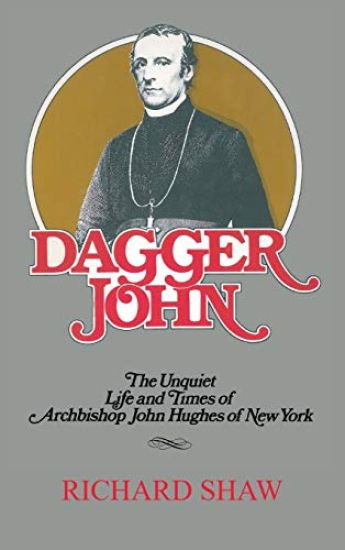
His opponents called him ""Dagger John"" with mixed derision and awe. His enemies, and there were many of them, used uglier words. His allies approached him with careful deference, his subordinates with trepidation. He was, in real life, the Most Reverend John Hughes, Archbishop of New York, a one-time day laborer and foreman of slaves who became a preacher and pamphleteer and a political force to be reckoned with. No demure ecclesiastic, Hughes was a hard-nosed battler for the rights of immigrant Irish in the middle decades of the 19th century. He championed their cause in an age when the Catholic Church was only grudgingly accepted as a partner in the American dream. Hughes was, moreover, the prototype of the autocratic prelate who would rule the American Catholic Church for the next one hundred years. Squelching democratic strivings among his clergy and laity whenever they appeared, he created a model for the highly structured Romanized Church that would eventually dominate the American religious scene. This book is the first major biography of John Hughes to be published in more than a century. It reflects new research into the life of Hughes and the details of his many struggles. It does not set out to explain the inner impulses of the man - who was, in the end, tightlipped about his private life. But it does shed new light on the public Hughes, a churchman who appeared in the newspapers as often as he appeared in the pulpit. It recounts his raucous, sometimes hilarious battles with the pre-Civil War nativists, with disgruntled clergy from his own Church, and with public figures such as James Gordon Bennett. It tells of his (often high-handed) dealings with revolutionaries, politicians, fellow bishops, apostates, Presidents, ranting bigots, Popes, and his own poor, belligerent, but fiercely devoted Catholic flock.
Conquer Type 2 Diabetes

Conquer Type 2 Diabetes

Richard Shaw

Hammersmith Health Books
2019
nidottu
Type-2 diabetes doesn't have to be a lifelong condition; for many people, especially those who have been recently diagnosed, it's possible to reverse the symptoms of this malignant disease. But how can that be done? In 2017 the author, inspired by results obtained from research done at Newcastle University, UK, decided to try and kick the disease by following a carefully structured, low-carb, whole-food diet and starting a modest exercise regime. Conquer Type 2 Diabetes describes what he did to lose 31 kilos and all his diabetes signs (high blood sugar, high cholesterol, high blood pressure) and symptoms. It explains how he managed carbs, calories, sugars and weight loss, plus the light exercise regime he adopted to strengthen his chances. In so doing he answers the question so many people have been asking him - what did you do to shed an illness that affects more than 400 million people worldwide and is conventionally regarded as incurable and progressive? The book includes the author's meal and exercise plan and 40 mouth-watering low-carb recipes to ensure eating can remain a pleasure and something to look forward to while reversing type 2.
The Orchard House

The Orchard House

Richard Shaw

Antrim House Books
2019
pokkari
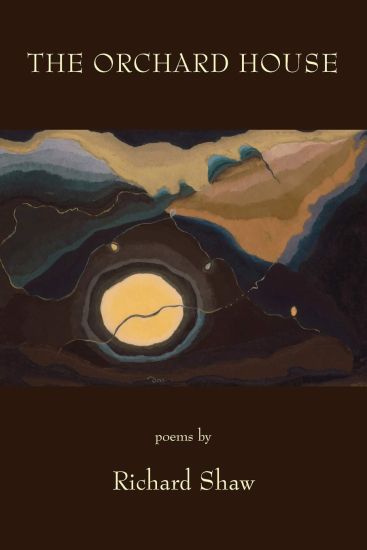
The Orchard House is a transcendent book replete with lyric poems not just regarding the human interface with nature but something infinitely more. Richard Shaw's poems are meditations that develop into mystical experience through keen observation. His vision is akin to W. S. Merwin's in his book of odes, Present Company; and his sensibilities viv vis the natural world remind one of Theodore Enslin's or Mary Oliver's. The Orchard House is a book to savor; in it, Shaw creates an enduring image of the fortitude of our heart being similar to that of a lighthouse that contains "one enormous reflector / like the one we sometimes feel / at the back of the chest." The aesthetic ethos of The Orchard House might be best represented in the conclusion of the poem "August Stars," whose startling sidereal beauty is "an annunciation / electric / through twilit air." - Wally Swist, author of Huang Po and the Dimensions of Love and The Map of Eternity What better abode for a nature poet than a house in the middle of an old apple orchard? As Emily Dickinson would put it, Richard Shaw has learned to "see--New Englandly--." The natural world of New England quickens within him in these quietly rhapsodic poems. His unpunctuated lines convey breathlessness, silences, and ecstasy. As for Dickinson and Robert Francis, those New England poets who are his forebears, solitude is his muse. He places his poems "in the chipped / upturned bowl // time spent alone / has fashioned me into." What a generous vessel is this poet, this book that contains fox skulls, Bach cello suites, scarlet tanagers, tiger lilies, Vermeer, black ice, katydids, rain, stars. - Donald Platt, author of Man Praying and Tornadoesque