Kirjojen hintavertailu. Mukana 11 717 486 kirjaa ja 12 kauppaa.

Kirjahaku

Etsi kirjoja tekijän nimen, kirjan nimen tai ISBN:n perusteella.

6 kirjaa tekijältä Richard Shiff

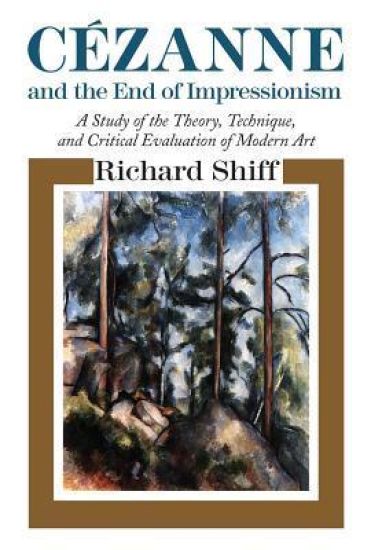
Cezanne and the End of Impressionism

Cezanne and the End of Impressionism

Richard Shiff

University of Chicago Press
1986
nidottu
Drawing on a broad foundation in the history of nineteenth-century French art, Richard Shiff offers an innovative interpretation of Cézanne's painting. He shows how Cézanne's style met the emerging criteria of a "technique of originality" and how it satisfied critics sympathetic to symbolism as well as to impressionism. Expanding his study of the interaction of Cézanne and his critics, Shiff considers the problem of modern art in general. He locates the core of modernism in a dialectic of making (technique) and finding (originality). Ultimately, Shiff provides not only clarifying accounts of impressionism and symbolism but of a modern classicism as well.
Doubt

Doubt

Richard Shiff

Routledge
2007
sidottu
In an age where art history’s questions are now expected to receive answers, Richard Shiff presents a challenging alternative. In this essential new addition to James Elkins’s series Theories of Modernism and Postmodernism in the Visual Arts, Richard Shiff embraces doubt as a critical tool and asks how particular histories of art have come to be. Shiff’s turn to doubt is not a retreat to relativism, but rather an insistence on clear thinking about art. In particular, Shiff takes issue with the style of self-referential art writing seemingly 'licensed' by Roland Barthes. With an introduction by Rosie Bennett, Doubt is a study of the tension between practicing art and practicing criticism.
Doubt

Doubt

Richard Shiff

Routledge
2007
nidottu
In an age where art history’s questions are now expected to receive answers, Richard Shiff presents a challenging alternative. In this essential new addition to James Elkins’s series Theories of Modernism and Postmodernism in the Visual Arts, Richard Shiff embraces doubt as a critical tool and asks how particular histories of art have come to be. Shiff’s turn to doubt is not a retreat to relativism, but rather an insistence on clear thinking about art. In particular, Shiff takes issue with the style of self-referential art writing seemingly 'licensed' by Roland Barthes. With an introduction by Rosie Bennett, Doubt is a study of the tension between practicing art and practicing criticism.
Writing after Art

Writing after Art

Richard Shiff

David Zwirner
2023
nidottu
In his engaging and penetrating observations of major modern and contemporary visual art, Shiff has written about an impressive range of artists, including Willem de Kooning, Marlene Dumas, Jasper Johns, Donald Judd, Barnett Newman, Pablo Picasso, Bridget Riley, and Peter Saul. A leading scholar and powerful voice, Shiff’s insight into prominent artistic practices spans generation, place, and approach, as seen in this considered selection of essays on twenty-seven artists. These writings first appeared in exhibition catalogues for institutions including the Centre Georges Pompidou, the Solomon R. Guggenheim Museum, The Museum of Modern Art, and Tate Modern. Shiff supplements his unquestionable fluency in art history with insights cultivated from his readings in philosophy, phenomenology, literary theory, and psychoanalysis, among other fields. Shiff’s writing—conceptually rich, meditative, and enjoyable to read—is attuned to the nuances of artistic style and technique, drawing out art’s social implications not merely from broad histories but also directly from artists’ mark making and technical gestures. Actively engaged as a viewer and a writer, Shiff has transformed the act of looking at art into contemplative and captivating writing. Writing After Art includes essays on Georg Baselitz, Mark Bradford, Georges Braque, Jim Campbell, Chuck Close, Willem de Kooning, Peter Doig, Marlene Dumas, Dan Flavin, Suzan Frecon, Lucian Freud, Ellen Gallagher, Jasper Johns, Donald Judd, Ellsworth Kelly, Brice Marden, Julie Mehretu, Barnett Newman, Pablo Picasso, Bridget Riley, Peter Saul, Richard Serra, Joel Shapiro, Richard Tuttle, Cy Twombly, Jack Whitten, and Zeng Fanzhi.
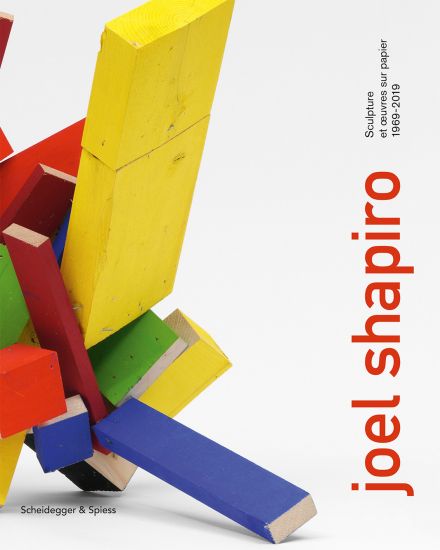
Joel Shapiro

Joel Shapiro

Richard Shiff

Scheidegger und Spiess AG, Verlag
2019
sidottu
Born in New York in 1941, Joel Shapiro is one of the most significant artists of his generation. Since the first public showing of his work in 1969 as part of the landmark Anti-Illusion: Procedures/Materials exhibiton at the Whitney Museum of American Art, he has been the subject of numerous solo exhibitions in galleries and museums around the world. Most renowned for having developed in the 1980s and '90s a distinctive language of dynamic sculpture that blurs the lines between abstraction and figuration, Shapiro became known through his earliest 1970s New York shows for introducing common forms of often diminutive size. Since then he has continued to push the material and conceptual boundaries of sculpture by working in a number of materials and employing various working methods. Joel Shapiro: Sculpture and Works on Paper 1969-2019 is the first book in over twenty years to survey the artist's entire working career. In an extensive essay, art historian Richard Shiff provides a fresh and incisive examination of Shapiro's oeuvre and working process. With more than two hundred striking full-colour illustrations, this is a long-anticipated and much-needed survey of this vital and essential American artist.
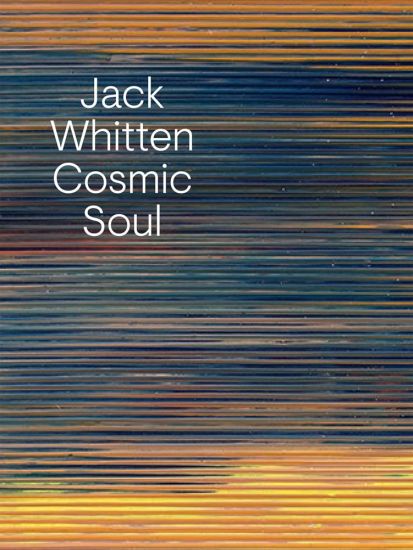
Jack Whitten: Cosmic Soul

Jack Whitten: Cosmic Soul

Richard Shiff

Hauser Wirth
2022
nidottu
A multifaceted, critical interpretation of celebrated American artist Jack Whitten's art and thinking over six decades, informed by the artist's extensive writings and personal conversations with the author. This comprehensive monograph, authored by art historian Richard Shiff, offers a multifaceted and critical interpretation of Jack Whitten’s art-making and philosophy of life. Informed both by Whitten’s extensive writings and his personal conversations with the author, Cosmic Soul offers a close reading of the artist’s outlook. Vividly illustrated and ranging freely through the course of the artist’s remarkable six-decade career, Shiff’s text illuminates the distinctive character of Whitten’s thought and the art it generated.