Kirjojen hintavertailu. Mukana 11 244 527 kirjaa ja 12 kauppaa.

Kirjahaku

Etsi kirjoja tekijän nimen, kirjan nimen tai ISBN:n perusteella.

13 kirjaa tekijältä Richard Shusterman

Philosophy and the Art of Writing

Philosophy and the Art of Writing

Richard Shusterman

TAYLOR FRANCIS LTD
2022
sidottu
Philosophy and literature enjoy a close, complex relationship. Elucidating the connections between these two fields, this book examines the ways philosophy deploys literary means to advance its practice, particularly as a way of life that extends beyond literary forms and words into physical deeds, nonlinguistic expression, and subjective moods and feelings.Exploring thinkers from Socrates and Confucius to Foucault and Simone de Beauvoir, Richard Shusterman probes the question of what roles literature could play in a vision of philosophy as something essentially lived rather than merely written. To develop this vision of philosophy that incorporates literature but seeks to go beyond the verbal to realize the embodied fullness of life and capture its inexpressible dimensions, Shusterman gives particular attention to authors who straddle the literature/philosophical divide: from Augustine and Montaigne through Wordsworth and Kierkegaard to T.S. Eliot, Georges Bataille, Maurice Blanchot, and Bertrand Russell. The book concludes with a chapter on the Chinese art of writing with its mixture of poetry, calligraphy, and painting.Philosophy and the Art of Writing should interest students and researchers in literary theory and philosophy. It also opens the practice of philosophy to people who are not professionals in the writing of philosophy or literary theory.
Practicing Philosophy

Practicing Philosophy

Richard Shusterman

Routledge
1997
sidottu
Applying contemporary pragmatism to the crucial question of how philosophy can help us live better, Shusterman develops his distinctive aesthetic model of philosophical living that includes politics, somatics, and ethnicity, while critically engaging the rival views of Dewey, Wittgenstein, and Foucault, as well as Rorty, Putnam, Goodman, Habermas, and Cavell.
Practicing Philosophy

Practicing Philosophy

Richard Shusterman

Routledge
1996
nidottu
Applying contemporary pragmatism to the crucial question of how philosophy can help us live better, Shusterman develops his distinctive aesthetic model of philosophical living that includes politics, somatics, and ethnicity, while critically engaging the rival views of Dewey, Wittgenstein, and Foucault, as well as Rorty, Putnam, Goodman, Habermas, and Cavell.
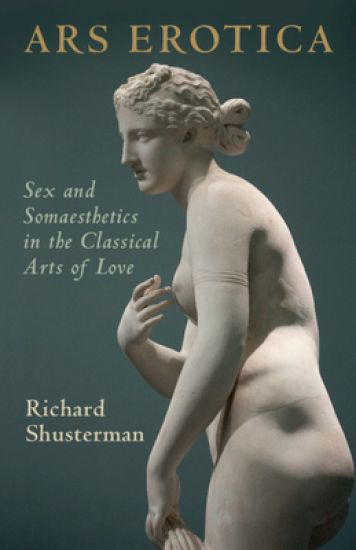
Ars Erotica

Ars Erotica

Richard Shusterman

Cambridge University Press
2021
pokkari
The term ars erotica refers to the styles and techniques of lovemaking with the honorific title of art. But in what sense are these practices artistic and how do they contribute to the aesthetics and ethics of self-cultivation in the art of living? In this book, Richard Shusterman offers a critical, comparative analysis of the erotic theories proposed by the most influential premodern cultural traditions that shaped our contemporary world. Beginning with ancient Greece, whose god of desiring love gave eroticism its name, Shusterman examines the Judaeo-Christian biblical tradition and the classical erotic theories of Chinese, Indian, Islamic, and Japanese cultures, before concluding with medieval and Renaissance Europe. His exploration of their errors and insights shows how we could improve the quality of life and love today. By using the engine of eros to cultivate qualities of sensitivity, grace, skill, and self-mastery, we can reimagine a richer, more positive vision of sex education.
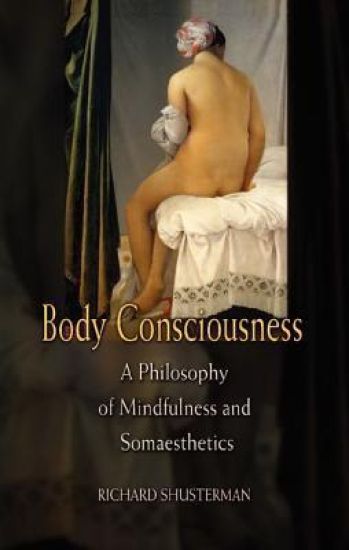
Body Consciousness

Body Consciousness

Richard Shusterman

Cambridge University Press
2008
pokkari
Contemporary culture increasingly suffers from problems of attention, over-stimulation, and stress, and a variety of personal and social discontents generated by deceptive body images. This book argues that improved body consciousness can relieve these problems and enhance one's knowledge, performance, and pleasure. The body is our basic medium of perception and action, but focused attention to its feelings and movements has long been criticised as a damaging distraction that also ethically corrupts through self-absorption. In Body Consciousness, Richard Shusterman refutes such charges by engaging the most influential twentieth-century somatic philosophers and incorporating insights from both Western and Asian disciplines of body-mind awareness. Rather than rehashing intractable ontological debates on the mind-body relation, Shusterman reorients study of this crucial nexus towards a more fruitful, pragmatic direction that reinforces important but neglected connections between philosophy of mind, ethics, politics, and the pervasive aesthetic dimensions of everyday life.
Body Consciousness

Body Consciousness

Richard Shusterman

Cambridge University Press
2008
sidottu
Contemporary culture increasingly suffers from problems of attention, over-stimulation, and stress, and a variety of personal and social discontents generated by deceptive body images. This book argues that improved body consciousness can relieve these problems and enhance one's knowledge, performance, and pleasure. The body is our basic medium of perception and action, but focused attention to its feelings and movements has long been criticised as a damaging distraction that also ethically corrupts through self-absorption. In Body Consciousness, Richard Shusterman refutes such charges by engaging the most influential twentieth-century somatic philosophers and incorporating insights from both Western and Asian disciplines of body-mind awareness. Rather than rehashing intractable ontological debates on the mind-body relation, Shusterman reorients study of this crucial nexus towards a more fruitful, pragmatic direction that reinforces important but neglected connections between philosophy of mind, ethics, politics, and the pervasive aesthetic dimensions of everyday life.
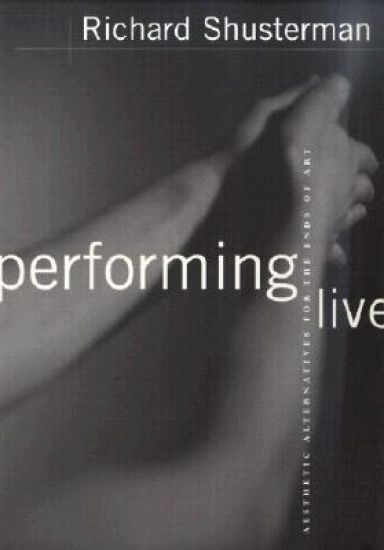
Performing Live

Performing Live

Richard Shusterman

Cornell University Press
2000
pokkari
Current philosophies of art remain sadly dominated by visions of its end and lamentations of decline. Defining the very notions of art and the aesthetic as special products of Western modernity, they suggest that postmodern challenges to traditional high culture pose a devastating danger to Art's future. Richard Shusterman's new book cuts through the seductive confusions of these views by tracing the earthy roots of aesthetic experience and showing how the recent flourishing of aesthetic forms outside modernity's sacralized realm of fine art evince the persistent presence of an artistic impulse far deeper and more durable than the modernist moment. Performing Live defends the abiding power of aesthetic experience by exploring its diverse roles, methods, and meanings, especially in fields marginal to traditional aesthetics but now most vibrantly alive in today's culture and new media. Ranging from rap, techno, and country music to cinema, cyberspace and urban design, Shusterman develops his radical theory of "somaesthetics," charting the complex network of bodily arts so prominent in contemporary life and self-styling. By blending concrete aesthetic analysis with insightful social critique, Shusterman, a well-known pragmatist philosopher, provides a rich menu and critical guide for today's pursuit of the art of living.
Surface and Depth

Surface and Depth

Richard Shusterman

Cornell University Press
2002
pokkari
A paradox of surface and depth pervades the field of aesthetics. How can art's surface meanings and qualities be properly appreciated without understanding the cultural context that shapes their creation and perception? But exploring such underlying cultural conditions challenges the perception of thosequalities and meanings of aesthetic surface that constitute the captivating power of art. If aesthetics deals with both surface and depth, impassioned immediacy yet also critical distance of judgment, how can this doubleness be held together in one philosophical vision? In his new book, Richard Shusterman explores the dialectics of surface and depth by examining key issues in the philosophy of art and culture—from the logic of interpretation and evaluation to the roots of taste and convention, from the meanings of aesthetic purity and immediacy to the role of nature, theory, and history in our experience and understanding of art. In treating these topics, Shusterman combines the methods of analytic philosophy, critical theory, and poststructualism to arrive at new positions, displaying the philosophical versatility, originality of vision, and graceful, accessible writing that have become his trademark. Surface and Depth is crowned by a new definition of art as dramatization.
Pragmatist Aesthetics

Pragmatist Aesthetics

Richard Shusterman

Rowman Littlefield
2000
nidottu
This much acclaimed book has emerged as neo-pragmatism's most significant contribution to contemporary aesthetics. By articulating a deeply embodied notion of aesthetic experience and the art of living, and by providing a compellingly rigorous defense of popular art—crowned by a pioneer study of hip hop—Richard Shusterman reorients aesthetics towards a fresher, more relevant, and socially progressive agenda. The second edition contains an introduction where Shusterman responds to his critics, and it concludes with an added chapter that formulates his novel notion of somaesthetics.
Philosophy and the Art of Writing

Philosophy and the Art of Writing

Richard Shusterman

TAYLOR FRANCIS LTD
2024
nidottu
Philosophy and literature enjoy a close, complex relationship. Elucidating the connections between these two fields, this book examines the ways philosophy deploys literary means to advance its practice, particularly as a way of life that extends beyond literary forms and words into physical deeds, nonlinguistic expression, and subjective moods and feelings.Exploring thinkers from Socrates and Confucius to Foucault and Simone de Beauvoir, Richard Shusterman probes the question of what roles literature could play in a vision of philosophy as something essentially lived rather than merely written. To develop this vision of philosophy that incorporates literature but seeks to go beyond the verbal to realize the embodied fullness of life and capture its inexpressible dimensions, Shusterman gives particular attention to authors who straddle the literature/philosophical divide: from Augustine and Montaigne through Wordsworth and Kierkegaard to T.S. Eliot, Georges Bataille, Maurice Blanchot, and Bertrand Russell. The book concludes with a chapter on the Chinese art of writing with its mixture of poetry, calligraphy, and painting.Philosophy and the Art of Writing should interest students and researchers in literary theory and philosophy. It also opens the practice of philosophy to people who are not professionals in the writing of philosophy or literary theory.
Ars Erotica

Ars Erotica

Richard Shusterman

Cambridge University Press
2021
sidottu
The term ars erotica refers to the styles and techniques of lovemaking with the honorific title of art. But in what sense are these practices artistic and how do they contribute to the aesthetics and ethics of self-cultivation in the art of living? In this book, Richard Shusterman offers a critical, comparative analysis of the erotic theories proposed by the most influential premodern cultural traditions that shaped our contemporary world. Beginning with ancient Greece, whose god of desiring love gave eroticism its name, Shusterman examines the Judaeo-Christian biblical tradition and the classical erotic theories of Chinese, Indian, Islamic, and Japanese cultures, before concluding with medieval and Renaissance Europe. His exploration of their errors and insights shows how we could improve the quality of life and love today. By using the engine of eros to cultivate qualities of sensitivity, grace, skill, and self-mastery, we can reimagine a richer, more positive vision of sex education.
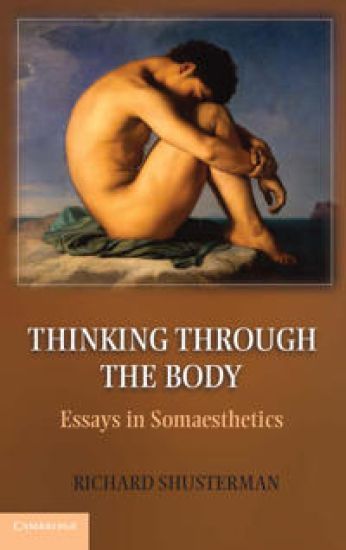
Thinking through the Body

Thinking through the Body

Richard Shusterman

Cambridge University Press
2012
sidottu
This book provides a richly rewarding vision of the burgeoning interdisciplinary field of somaesthetics. Composed of fourteen wide-ranging but finely integrated essays by Richard Shusterman, the originator of the field, Thinking through the Body explains the philosophical foundations of somaesthetics and applies its insights to central issues in ethics, education, cultural politics, consciousness studies, sexuality and the arts. Integrating Western philosophy, cognitive science and somatic methodologies with classical Asian theories of body, mind and action, these essays probe the nature of somatic existence and the role of body consciousness in knowledge, memory and behavior. Deploying somaesthetic perspectives to analyze key aesthetic concepts (such as style and the sublime), he offers detailed studies of embodiment in drama, dance, architecture and photography. The volume also includes somaesthetic exercises for the classroom and explores the ars erotica as an art of living.
Leibliche Erfahrung in Kunst und Lebensstil

Leibliche Erfahrung in Kunst und Lebensstil

Richard Shusterman

Walter de Gruyter
2005
sidottu
In seinem Buch geht Richard Shusterman den vielfaltigen Formen nach, in denen wir Erfahrungen der Leiblichkeit machen. Diese Erfahrungen sind nicht auf den in der Philosophie traditionell eng bestimmten Bereich der Asthetik beschrankt, sondern stellen ein konstitutives Merkmal sowohl der popularen Kunst als auch der Alltagskultur und des Lebensstils dar."