
Kirjahaku
Etsi kirjoja tekijän nimen, kirjan nimen tai ISBN:n perusteella.
10 kirjaa tekijältä Richard Sullivan

February, 1968, Hue City, Republic of Vietnam. Lance Corporal T. A. Tomlin and what's left of his ragtag squad of Marines huddle behind broken walls at dawn. Phantom jets scream above the ruins of the city. The platoon commander brandishes his map and gives them a mission: Find a temple. What do we do when we get there? Tomlin shouts over engine roar and explosions. Somebody tells me, I tell you, LT yells back. Find the temple, find some cover and hang tight. The morning started badly and didn't improve. Running a gauntlet of AK-47 and mortar fire, only two of them stumble onto the temple. Where the rest of his Marines have gotten to, Tomlin has no idea. But then, he's not thinking all that well, courtesy of a steel fragment newly in residence in the back of his head. His self-apppointed mentor, LCpl M. Debro, has his own problems--a rifle round passing the back and lung. No, things wern't going well. Particularly since an extremely unhappy enemy soldier--a cross between a Greek harpy and a devoted mother, who takes holding a grudge to the next level--is lodged behind a window not too far away and with her tuned-up sniper rifle she's running up an impressive body count amidst the strange outfit that just roped in nearby from an unmarked helicopter in the middle of a firefight. Tomlin would've been confused enough even without the half ounce of steel lodged at the base of his skull. And then there's Buddha, whatever Buddha's doing there. An NVA regiment en route to join the party. Suddenly, no jets anywhere--there's never a Phantom when you need one. The only landing zone a hundered yards away is going to be hot, but beggars can't be choosers. It's suicide, but the chopper pilot's got a pair and he's inbound for the medevac. If Tomlin can get Debro there, voila Look up at Red Cross girls from a hospital bed. Trouble is, with Tomlin's mental processes on a runaway train and Debro wtaching a private screening of a cowboy movie, a hundred yards can be a hundred miles. And Tomlin has no way of knowing the woman with the sniper rifle has swapped it out for a rocket-propelled grenade launcher that has "helocopter" written all over it. There's more. Buddha gets his say. A bit of nostalgia involving a Roman galley creeps in. There's a moon launching (powered by Poseidon) and a trip to Hell complete with scattered ghouls, a powder-white drill instructor and the Devil beating his wife. There's sharks and seagulls, Jimi Hendrix and Red Skelton, Washington crossing the Delaware, Captain Ahab and even a Glossary. There's lava lamps, commentary on politics, a nine-fingered piano concert and a prehistoric shellfish. Not to mention a full moon in daylight, the villain of the piece. It's not your grandfather's war story.

Reclaim Your Youth: Growing Younger After 40: You Really Can Turn Back The Clock
Richard Sullivan
Createspace Independent Publishing Platform
2009
nidottu
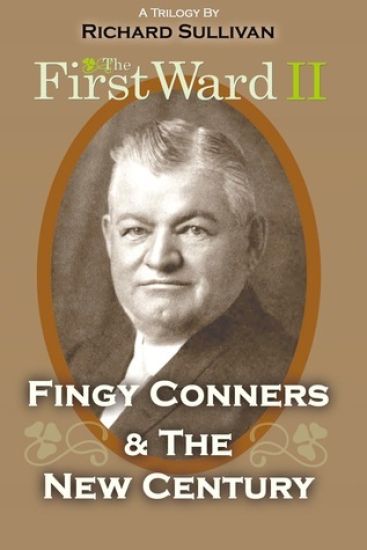
The First Ward II: Fingy Conners & The New Century
Richard Sullivan
Createspace Independent Publishing Platform
2012
nidottu
The Ultimate Anti-Hero Was In Fact An Actual Historic Figure: Fingy Conners. But a forgotten and discredited actual hero, James "Big Ben" Parker, is deprived his due. African American James "Big Ben" Parker stood in line to meet President William McKinley, unknowingly waiting directly behind McKinley's assassin Leon Czolgosz. Parker jumped on Czolgosz, driving him to the ground and helping disarm him before the President's secret service detail could react. Praised initially, within days his story has been re-written to remove him totally from his valorous interception. Based on the lives and histories of the actual real-life characters, THE FIRST WARD saga continues in Volume 2 with the turn of the century story of infamous millionaire saloon-boss murderer Fingy Conners and the Sullivan Brothers. Their lives being hopelessly intermingled both genetically and socially, family allegiances stand in the way of justice.Deprived of the very enterprise that initiated his vast fortune after his loss to laborers in the infamous Scooper's Strike of 1899, Fingy Conners sets out on a path of retribution: scorched-earth revenge on the entire city of Buffalo by way of destroying its economy and upending its multi-million dollar investment in the construction of the 1901 Pan American Exposition. Fingy schemes to control the entirety of the grain shipping and milling trade by moving the entire business out of the country to Montreal, where he enjoys dual citizenship. However, Alderman John P. Sullivan has an ace up his sleeve: his wife's powerful Canadian cousin.Based on actual events and the real people who drove them, The First Ward II: Fingy Conners and The New Century documents the rivalry between dock-walloper-turned-multi-millionaire politician Fingy Conners and two brothers who emerged from the Buffalo Orphan Asylum to claim political power: Alderman John P. Sullivan and Buffalo Police Detective-Sergeant James E. Sullivan. Their lives intersect with the giants of their day; world champion boxing hero cousin John L. Sullivan, humorist Mark Twain, Presidents William McKinley and Teddy Roosevelt and publisher William Randolph Hearst. Interwoven amid the drama are details surrounding the challenging construction, and ultimate triumph, of Buffalo's 1901 Pan American Exposition, followed in 1907 by the most successful Old Home Week ever held in the US-which doubled the city's population-bringing the past vividly to life.

Family Tree Secrets & Genealogy Search Tips
Richard Sullivan
Createspace Independent Publishing Platform
2014
nidottu
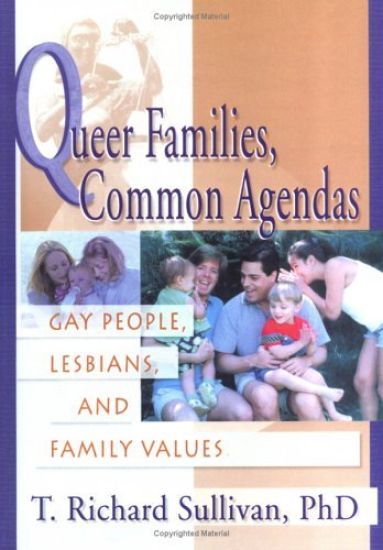
Queer Families, Common Agendas
Richard Sullivan
Routledge Member of the Taylor and Francis Group
2000
sidottu
Vital information on family services, custody, and access rights for gay parents!Queer Families, Common Agendas: Gay People, Lesbians, and Family Values examines the real life experience of those affected by current laws and policies regarding homosexual families. The book will help policy makers, lawyers, social workers, and the general public better understand these families. Here you will be able to compare the progress of policy in the U.S. and Canada for gay and lesbian parents and their children and explore relevant legal approaches in the two countries. In Queer Families, Common Agendas: Gay People, Lesbians, and Family Values, a range of strategies for advancing the rights of sexual minority parents are considered for legal feasibility and political viability. You will gain insight into the contradictions in policies and practices that ultimately disadvantage children based on their family origins, and you will discover alternative approaches for improved services to homosexual families. Queer Families, Common Agendas explores:family law and protection of women-headed households legal definitions of motherhood and fatherhood in the United States, Canada, and the United Kingdom family and adoption idealogies concerning gay families and their rights to adopt new ways to make social services responsive to minority families the lesbian and gay “agenda” the value of family and the family of values--as opposed to the worn-out phrase “family values” Queer Families, Common Agendas serves as a primer to assist you in understanding the legal struggles that lesbian and gay families are facing today. You will explore concerns about family law, protection of women-headed households, motherhood, fatherhood, adoption and family ideology, and how to make social services responsive to gay and lesbian families. This excellent reference provides you with the necessary background and techniques to create services that are responsive and effective with sexual minority families.
Queer Families, Common Agendas
Richard Sullivan
Routledge Member of the Taylor and Francis Group
2000
nidottu
Vital information on family services, custody, and access rights for gay parents!Queer Families, Common Agendas: Gay People, Lesbians, and Family Values examines the real life experience of those affected by current laws and policies regarding homosexual families. The book will help policy makers, lawyers, social workers, and the general public better understand these families. Here you will be able to compare the progress of policy in the U.S. and Canada for gay and lesbian parents and their children and explore relevant legal approaches in the two countries. In Queer Families, Common Agendas: Gay People, Lesbians, and Family Values, a range of strategies for advancing the rights of sexual minority parents are considered for legal feasibility and political viability. You will gain insight into the contradictions in policies and practices that ultimately disadvantage children based on their family origins, and you will discover alternative approaches for improved services to homosexual families. Queer Families, Common Agendas explores:family law and protection of women-headed households legal definitions of motherhood and fatherhood in the United States, Canada, and the United Kingdom family and adoption idealogies concerning gay families and their rights to adopt new ways to make social services responsive to minority families the lesbian and gay “agenda” the value of family and the family of values--as opposed to the worn-out phrase “family values” Queer Families, Common Agendas serves as a primer to assist you in understanding the legal struggles that lesbian and gay families are facing today. You will explore concerns about family law, protection of women-headed households, motherhood, fatherhood, adoption and family ideology, and how to make social services responsive to gay and lesbian families. This excellent reference provides you with the necessary background and techniques to create services that are responsive and effective with sexual minority families.

The First Ward IV - His Lips Forgot The Taste Of Truth
Richard Sullivan
Createspace Independent Publishing Platform
2017
pokkari
If Fingy Conners had sprung from some writer's fanciful imaginings, such a character would be dismissed as outlandish and improbable, so thoroughly and so swiftly did this actual historic figure accrue wealth, political power and cruel domination over so many. The author, having been previously criticized by some as having drawn Fingy Conners "too cartoon-like" finds his historically accurate portrayal redeemed now that we have so many strikingly equivalent present day examples in the news.Volume 4 in Richard Sullivan's The First Ward novel series begins at the turn of the 20th Century with serial killer J. Frank Hickey fleeing NYC for the anonymity of Buffalo after murdering a little newsboy in Central Park. Little Michael Kruck is not Hickey's first victim. While in Buffalo, the short, bookish, bespectacled alcoholic Hickey becomes involved in a saloon brawl and is arrested by Detective Jim Sullivan. While in his jail cell dead drunk, he loudly brags about killing the newsboy, but recants the following morning upon sobering up. He is ultimately released. For the next nine years by Hickey's admitted count there are no less than 11 more male child/teen victims, the most recent being a seven year old missing Lackawanna child of Syrian immigrants whose body goes undiscovered despite the killer's multiple written confessions. Hickey sends a series of postcards to the town's Police Chief telling him precisely where to find the boy's body, but the incompetent Chief inexplicably dismisses these as a hoax, resulting in needless year of prolonged grief, widespread fear, and public ridicule.Based on the actual historical figures, "The First Ward: His Lips Forgot The Taste Of Truth" is Volume 4 of a 5-Volume series of related, yet stand-alone books. The main characters are friends since childhood from Buffalo's waterfront Irish First Ward - cops, politicians and thugs - men whose lifelong relationships allow for even the most egregious crimes to go "unsolved" and unpunished.Millionaire Fingy Conners leaves a wake of countless dead and maimed in a 50-year authoritarian reign that finds him ultimately becoming the Chairman of the Democratic Party of New York State. Conners wielded absolute power in Buffalo for half a century, owning the police, the politicians, the judges, the clergy, and even powerful publisher William Randolph Hearst, who all cast a blind eye and lent a helping hand in the commission and cover up of his brazen crimes and wrongdoings.Brothers Alderman John P. Sullivan and Detective Sergeant Jim Sullivan continue to grapple with life's tragedies while aiding and abetting their criminal associates and initiating strife in their own families. The women of The First Ward, acting as moral center, try and make sense of this pre-suffrage world in which they have little choice or voice-even as they prove themselves over and again to be the stronger gender, despite society's being dominated and controlled by men.