Kirjojen hintavertailu. Mukana 11 244 527 kirjaa ja 12 kauppaa.

Kirjahaku

Etsi kirjoja tekijän nimen, kirjan nimen tai ISBN:n perusteella.

408 kirjaa tekijältä Richard Wagner

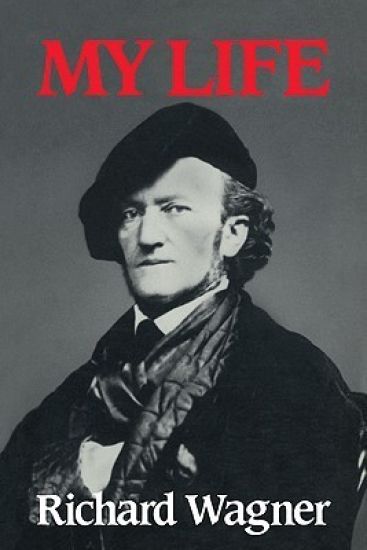
Richard Wagner: My Life

Richard Wagner: My Life

Richard Wagner

Cambridge University Press
1987
pokkari
This reprint is of the first English paperback edition of Richard Wagner's autobiography. This is a primary document of enormous importance for all Wagner enthusiasts, being virtually the sole source of information of the composer's childhood and youth. Written for Wagner's second wife, Cosima, and his patron, King Ludwig II, the autobiography runs from the composer's birth up to the eve of his fifty-first birthday in 1864. Given the intended readership and the circumstances of its composition it is hardly surprising that Wagner should either omit or distort facts from time to time: he does not linger over previous affairs, he portrays his relationship with his first wife, Minna, as a good deal more distant than it really was and he plays down his involvement in the Dresden uprising of 1849. Despite all this, the book presents a panoramic view of Wagner's times and contemporaries and offers a unique perspective on the operas themselves. This translation is of the complete edition published in Munich in 1963 and based on the manuscript in the Wagner Archives in Bayreuth. Wagner's slips of memory are noted, as are references to obscure names and events.
Richard Wagner's Letters to his Dresden Friends

Richard Wagner's Letters to his Dresden Friends

Richard Wagner

Cambridge University Press
2014
pokkari
Richard Wagner (1813–83) grew up in Dresden and served as Kapellmeister to King Frederick Augustus II of Saxony there from 1843 until he was forced to flee the country after the 1849 uprising. His operas Rienzi and Der fliegende Holländer received their first performances at the Dresden Court Theatre. During his time in the city, Wagner became firm friends with the composer and violinist Theodor Uhlig, the stage manager and chorus master Wilhelm Fischer, and the comedian and costume designer Ferdinand Heine. This collection of letters from the composer to his three great friends covers the period 1841–68. First published in 1888, the letters are reissued here in the 1890 English translation by the pianist and Beethoven scholar John South Shedlock (1843–1919). They offer an intimate and compelling insight into Wagner's personal and professional life and his forthright views on many contemporary musicians and public figures.
Richard to Minna Wagner

Richard to Minna Wagner

Richard Wagner

Cambridge University Press
2014
pokkari
The German actress Minna Planer (1809–66) was Wagner's first wife. Though it lasted until her death, their marriage, never an easy one, was punctuated by long periods of separation, and during its early years Minna was the main breadwinner. William Ashton Ellis (1852–1919) abandoned his medical career to devote himself to his Wagner studies. Best known for his translations of Wagner's prose works, he published in 1909 this collection of letters from the composer, translated from the originals in Baron Hans von Wolzogen's Richard Wagner an Minna Wagner (1908). Concerned predominantly with domestic and business affairs, many of them complaining at Minna's lack of support, the letters offer an intriguing and intimate view of this larger-than-life composer. Spanning 1842–58, Volume 1 covers the couple's period in Dresden, Wagner's hurried departure after the 1849 uprising, and the years in Zurich culminating in the relationship with Mathilde Wesendonck.
Richard to Minna Wagner

Richard to Minna Wagner

Richard Wagner

Cambridge University Press
2014
pokkari
The German actress Minna Planer (1809–66) was Wagner's first wife. Though it lasted until her death, their marriage, never an easy one, was punctuated by long periods of separation, and during its early years Minna was the main breadwinner. William Ashton Ellis (1852–1919) abandoned his medical career to devote himself to his Wagner studies. Best known for his translations of Wagner's prose works, he published in 1909 this collection of letters from the composer, translated from the originals in Baron Hans von Wolzogen's Richard Wagner an Minna Wagner (1908). Concerned predominantly with domestic and business affairs, many of them complaining at Minna's lack of support, the letters offer an intriguing and intimate view of this larger-than-life composer. Spanning the period 1858–63, Volume 2 covers their uneasy, brief reconciliation in Paris, Wagner's concerns over Minna's failing health, and her return to Dresden in 1862, which marked their final separation.
Richard to Minna Wagner 2 Volume Set

Richard to Minna Wagner 2 Volume Set

Richard Wagner

Cambridge University Press
2014
muu
The German actress Minna Planer (1809–66) was Wagner's first wife. Though it lasted until her death, their marriage, never an easy one, was punctuated by long periods of separation, and during its early years Minna was the main breadwinner. William Ashton Ellis (1852–1919) abandoned his medical career to devote himself to his Wagner studies. Best known for his translations of Wagner's prose works, he published in 1909 this collection of letters from the composer, translated from the originals in Baron Hans von Wolzogen's Richard Wagner an Minna Wagner (1908). Concerned predominantly with domestic and business affairs, many of them complaining at Minna's lack of support, the letters offer an intriguing and intimate view of this larger-than-life composer. Volume 1 covers the period 1842–58, during which the couple lived in Dresden and Zurich. Volume 2 spans the years 1858–63, during which the couple separated but did not divorce.
Letters of Richard Wagner to Emil Heckel

Letters of Richard Wagner to Emil Heckel

Richard Wagner

Cambridge University Press
2014
pokkari
A great admirer of Richard Wagner, the music publisher Emil Heckel (1831–1908) founded the first Wagner Society in Mannheim in 1871. His purpose was to inspire others to help raise the necessary funds for the inaugural Bayreuth Festival. William Ashton Ellis (1852–1919) abandoned his medical career in order to devote himself to his Wagner studies. Best known for his translations of Wagner's prose works, he published in 1899 this English translation of Heckel's memoirs (originally edited by his son Karl), interwoven with letters from Wagner to Heckel, who is described by the composer as his 'energetic friend'. Notwithstanding the stylistic idiosyncrasies of the translation, the work provides a valuable first-hand account of the progress made towards establishing what would become one of the world's most prestigious music festivals. The letters span the years 1871 to 1883.
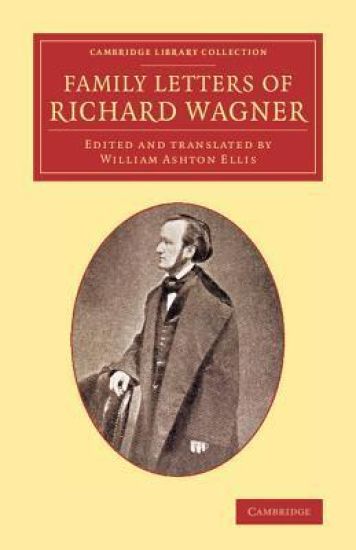
Family Letters of Richard Wagner

Family Letters of Richard Wagner

Richard Wagner

Cambridge University Press
2014
pokkari
William Ashton Ellis (1852–1919) abandoned his medical career in order to devote himself to his Wagner studies. Best known for his translations of Wagner's prose works and of Carl Friedrich Glasenapp's multi-volume biography of the composer, Ellis published in 1911 this English translation of Wagner's Familienbriefe, spanning the years 1832–74. An inveterate letter writer, Wagner was the youngest-but-one of ten children and Ellis describes the character of these letters to his sisters, his mother, his brother-in-law and his nieces as a reflection of the composer in the 'driest and most neutral of lights', claiming that within the family it is impossible to be pretentious. An appendix by Glasenapp, giving brief biographical details of family members, is also included. Despite the stylistic idiosyncrasies of the translations, these letters remain of importance, capturing something of the tone of Wagner's prose style and shedding light on his extraordinary life.
The Autobiography of Richard Jeffery Wagner

The Autobiography of Richard Jeffery Wagner

Richard Wagner

Page Publishing, Inc.
2022
pokkari
From being drafted into the military during the Vietnam war to solving the so-called hard problem of consciousness; from playing in chess tournaments to working on space robots for interplanetary spacecraft; from attending public schools in John Steinbeck's hometown to teaching computer science at a major university; from riding the big surf at Waimea Bay to inventing the world's fastest sorting algorithm; from racing model cars as a teenager to mentoring teenagers on high school robotics teams: Dr. Wagner's debut book, twenty years in the making, chronicles his struggle to live meaningfully in a quest for a coherent understanding of the human condition."... an interesting life full of amazing experience ... indeed an extraordinary man. I am honored to be his friend. He has been a great inspiration and motivation to my son, Kai, and myself." --Ron Van Clief, the Black Dragon