Kirjojen hintavertailu. Mukana 11 342 296 kirjaa ja 12 kauppaa.

Kirjahaku

Etsi kirjoja tekijän nimen, kirjan nimen tai ISBN:n perusteella.

10 kirjaa tekijältä Richard Whatmore

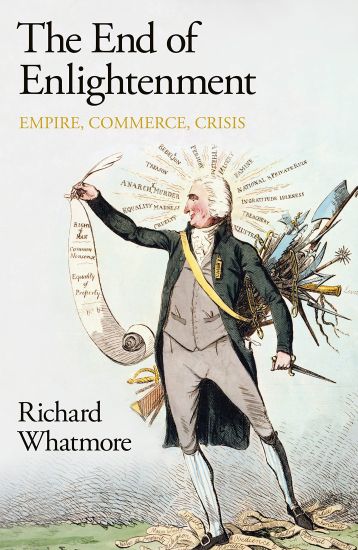
The End of Enlightenment

The End of Enlightenment

Richard Whatmore

PENGUIN BOOKS LTD
2025
pokkari
'A brilliant work of intellectual interpretation by our foremost historian of Enlightenment ideas. Whatmore rescues the Enlightenment from today's circular debates and places it where it belongs: in the pulsing, chaotic era of its genesis and demise' Christopher de BellaigueThe Enlightenment is popularly seen as the Age of Reason, a key moment in human history when ideals such as freedom, progress, natural rights and constitutional government prevailed. In this radical re-evaluation, historian Richard Whatmore shows why, for many at its centre, the Enlightenment was a profound failure.By the early eighteenth century, hope was widespread that Enlightenment could be coupled with toleration, the progress of commerce and the end of the fanatic wars of religion that were destroying Europe. At its heart was the battle to establish and maintain liberty in free states – and the hope that absolute monarchies such as France and free states like Britain might even subsist together, equally respectful of civil liberties. Yet all of this collapsed when states pursued wealth and empire by means of war. Xenophobia was rife and liberty itself turned fanatic.The End of Enlightenment traces the changing perspectives of economists, philosophers, politicians and polemicists around the world, including figures as diverse as David Hume, Adam Smith, Edmund Burke and Mary Wollstonecraft. They had strived to replace superstition with reason, but witnessed instead terror and revolution, corruption, gross commercial excess and the continued growth of violent colonialism.Returning us to these tumultuous events and ideas, and digging deep into the thought of the men and women who defined their age, Whatmore offers a lucid exploration of disillusion and intellectual transformation, a brilliant meditation on our continued assumptions about the past, and a glimpse of the different ways our world might be structured - especially as the problems addressed at the end of Enlightenment are still with us today.
The History of Political Thought

The History of Political Thought

Richard Whatmore

Oxford University Press
2021
nidottu
Thinking about politics has tended to be historical in nature because of the comparisons and contrasts that can be drawn between past and present. Different periods in politics have used the past differently. At times political thought can be said to have been drawn directly from the study of history; at others, perhaps including our own time, the relationship is more indirect. This Very Short Introduction explores the core concerns and questions in the field of the history of political thought. Richard Whatmore considers the history of political thought as a branch of political philosophy/political science, and examines the approaches of core theorists such as Reinhart Koselleck, Strauss, Michel Foucault, and the so-called Cambridge School of Quentin Skinner and John Pocock. Assessing the current relationship between political history, theory and action, Whatmore concludes with an analysis of its relevant for current politics. ABOUT THE SERIES: The Very Short Introductions series from Oxford University Press contains hundreds of titles in almost every subject area. These pocket-sized books are the perfect way to get ahead in a new subject quickly. Our expert authors combine facts, analysis, perspective, new ideas, and enthusiasm to make interesting and challenging topics highly readable.
Republicanism and the French Revolution

Republicanism and the French Revolution

Richard Whatmore

Oxford University Press
2000
sidottu
Republicanism and the French Revolution reassesses Jean-Baptiste Say's political economy by locating the author's ideas amidst the intellectual upheavals of Old Regime and revolutionary France. Traditionally Say has been portrayed as a rather staid figure, the archetypal liberal and classical political economist devoted to Adam Smith's Wealth of Nations. This study reveals the historic Say to have been altogether different; a passionate and committed republican intellectual and French patriot, he was as opposed to Britain's constitution, commerce, and political culture as he was to Bonaparte's First Empire. The relationship between Say's political thought and political economy, evinced in the full range of his writings from 1789 to 1832, is scrutinized for the first time, elucidating the true origins of his republicanism. This derived from a rich seam of political speculation among French and Genevan radicals concerning the possibility of transforming large and corrupt monarchies into modern republics whose political culture was characterized by commerce and virtue. By the 1790s such ideas had come to define the French Revolution itself, at once promising to restore French greatness and replace Britain as the leading cultural force in Europe. Say looked back to such luminaries as Diderot, Gibbon, and Franklin as members of the modern republican Pantheon and dedicated his life to formulating a political economy that would persuade legislators and ordinary citizens to embrace the republican creed.
Against War and Empire

Against War and Empire

Richard Whatmore

Yale University Press
2012
sidottu
As Britain and France became more powerful during the eighteenth century, small states such as Geneva could no longer stand militarily against these commercial monarchies. Furthermore, many Genevans felt that they were being drawn into a corrupt commercial world dominated by amoral aristocrats dedicated to the unprincipled pursuit of wealth. In this book Richard Whatmore presents an intellectual history of republicans who strove to ensure Geneva’s survival as an independent state. Whatmore shows how the Genevan republicans grappled with the ideas of Rousseau, Voltaire, Bentham, and others in seeking to make modern Europe safe for small states, by vanquishing the threats presented by war and by empire.
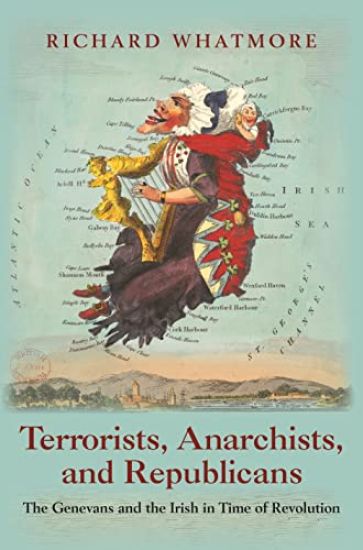
Terrorists, Anarchists, and Republicans

Terrorists, Anarchists, and Republicans

Richard Whatmore

PRINCETON UNIVERSITY PRESS
2019
sidottu
A bloody episode that epitomised the political dilemmas of the eighteenth centuryIn 1798, members of the United Irishmen were massacred by the British amid the crumbling walls of a half-built town near Waterford in Ireland. Many of the Irish were republicans inspired by the French Revolution, and the site of their demise was known as Geneva Barracks. The Barracks were the remnants of an experimental community called New Geneva, a settlement of Calvinist republican rebels who fled the continent in 1782. The British believed that the rectitude and industriousness of these imported revolutionaries would have a positive effect on the Irish populace. The experiment was abandoned, however, after the Calvinists demanded greater independence and more state money for their project. Terrorists, Anarchists, and Republicans tells the story of a utopian city inspired by a spirit of liberty and republican values being turned into a place where republicans who had fought for liberty were extinguished by the might of empire.Richard Whatmore brings to life a violent age in which powerful states like Britain and France intervened in the affairs of smaller, weaker countries, justifying their actions on the grounds that they were stopping anarchists and terrorists from destroying society, religion and government. The Genevans and the Irish rebels, in turn, saw themselves as advocates of republican virtue, willing to sacrifice themselves for liberty, rights and the public good. Terrorists, Anarchists, and Republicans shows how the massacre at Geneva Barracks marked an end to the old Europe of diverse political forms, and the ascendancy of powerful states seeking empire and markets—in many respects the end of enlightenment itself.
Terrorists, Anarchists, and Republicans

Terrorists, Anarchists, and Republicans

Richard Whatmore

Princeton University Press
2021
pokkari
A bloody episode that epitomised the political dilemmas of the eighteenth centuryIn 1798, members of the United Irishmen were massacred by the British amid the crumbling walls of a half-built town near Waterford in Ireland. Many of the Irish were republicans inspired by the French Revolution, and the site of their demise was known as Geneva Barracks. The Barracks were the remnants of an experimental community called New Geneva, a settlement of Calvinist republican rebels who fled the continent in 1782. The British believed that the rectitude and industriousness of these imported revolutionaries would have a positive effect on the Irish populace. The experiment was abandoned, however, after the Calvinists demanded greater independence and more state money for their project. Terrorists, Anarchists, and Republicans tells the story of a utopian city inspired by a spirit of liberty and republican values being turned into a place where republicans who had fought for liberty were extinguished by the might of empire.Richard Whatmore brings to life a violent age in which powerful states like Britain and France intervened in the affairs of smaller, weaker countries, justifying their actions on the grounds that they were stopping anarchists and terrorists from destroying society, religion and government. The Genevans and the Irish rebels, in turn, saw themselves as advocates of republican virtue, willing to sacrifice themselves for liberty, rights and the public good. Terrorists, Anarchists, and Republicans shows how the massacre at Geneva Barracks marked an end to the old Europe of diverse political forms, and the ascendancy of powerful states seeking empire and markets—in many respects the end of enlightenment itself.
What is Intellectual History?

What is Intellectual History?

Richard Whatmore

Polity Press
2015
sidottu
What is intellectual history? Those who practice intellectual history have described themselves as eavesdroppers upon the conversations of the past, explorers of alien ideological worlds, and translators between historic societies and our own, while their critics have often derided them as narrow-mindedly studying the ideas of dead white men. Some consider the discipline to be among the most important in the humanities and social sciences because it facilitates a better understanding of contemporary ideological programmes and facilitates their rational evaluation. In this engaging and refreshing introduction to the field, Richard Whatmore begins by examining the historical development of intellectual history, before dissecting its various methodological debates. He presents various alternative ways in which we should think about intellectual history, as well as presenting his own very clear definition of the field. Drawing on a wide range of historical examples, Whatmore shows how ideas - philosophical, political, religious, scientific, artistic - originated in their historical context and how they were both shaped by, and helped to shape, the societies in which they originated. He ends by casting a critical eye over the current state of intellectual history, and a brief discussion of how it might develop in the future. What is Intellectual History? will become an essential textbook for scholars and students of intellectual history, philosophy, politics, and the humanities.
What is Intellectual History?

What is Intellectual History?

Richard Whatmore

Polity Press
2015
nidottu
What is intellectual history? Those who practice intellectual history have described themselves as eavesdroppers upon the conversations of the past, explorers of alien ideological worlds, and translators between historic societies and our own, while their critics have often derided them as narrow-mindedly studying the ideas of dead white men. Some consider the discipline to be among the most important in the humanities and social sciences because it facilitates a better understanding of contemporary ideological programmes and facilitates their rational evaluation. In this engaging and refreshing introduction to the field, Richard Whatmore begins by examining the historical development of intellectual history, before dissecting its various methodological debates. He presents various alternative ways in which we should think about intellectual history, as well as presenting his own very clear definition of the field. Drawing on a wide range of historical examples, Whatmore shows how ideas - philosophical, political, religious, scientific, artistic - originated in their historical context and how they were both shaped by, and helped to shape, the societies in which they originated. He ends by casting a critical eye over the current state of intellectual history, and a brief discussion of how it might develop in the future. What is Intellectual History? will become an essential textbook for scholars and students of intellectual history, philosophy, politics, and the humanities.
David Hume

David Hume

Richard Whatmore

Ashgate Publishing Limited
2013
sidottu
This volume on Hume's politics brings together essays that have been formative of the scholarly and more general debate about Hume's political thought. Unlike many theorists who express their thought in terms of system, Hume uses the incidental genre of the essay as the vehicle for his writing and his mode of presentation is a reflection, indeed an expression, of his belief in the limited power of reason to give any over-all shape to human life. Hume's politics are particularly suited for discussion of a wide range of view-points. The possibilities of seeing in Hume both the conservative and the liberal are pursued along with Hume's sophisticated analysis of party-politics. His acute and pioneering theorisation of perhaps the most central issue for 18th-century political observers, that of commerce and politics, is brought out in the context of his ideas of the international order. His fundamental theory of justice is discussed in its connection with law, property and government.