Kirjojen hintavertailu. Mukana 12 016 292 kirjaa ja 12 kauppaa.

Kirjahaku

Etsi kirjoja tekijän nimen, kirjan nimen tai ISBN:n perusteella.

12 kirjaa tekijältä Richard Wolin

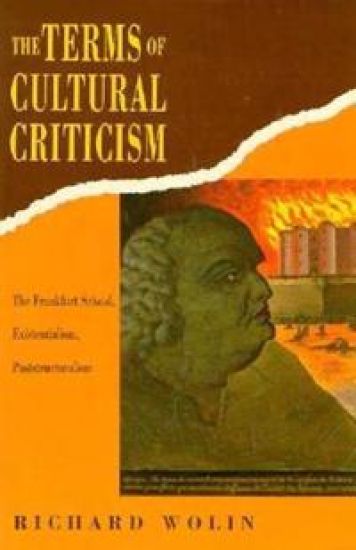
The Terms of Cultural Criticism

The Terms of Cultural Criticism

Richard Wolin

Columbia University Press
1995
pokkari
Despite their differences in origin, the three influential schools of twentieth-century continental cultural criticism--the Frankfurt School, existentialism, and poststructuralism--have long been treated as an ensemble and with critical hesitancy. Examining these schools as responses to the apparent collapse of Western civilization in the twentieth-century and as formidable intellectual challenges to the cultural legacies of the Enlightenment, this book provides a productive base for criticism and broadens our understanding of their histories and reception.
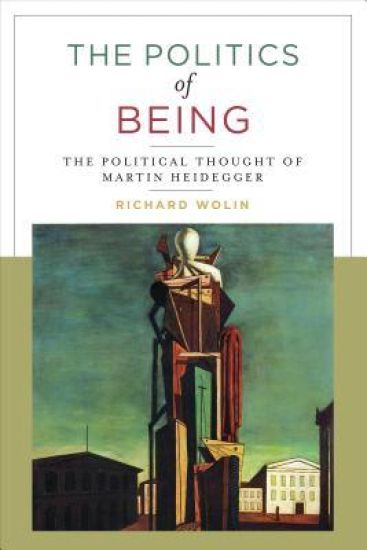
The Politics of Being

The Politics of Being

Richard Wolin

Columbia University Press
2016
sidottu
Martin Heidegger's ties to Nazism have tarnished his stature as one of the towering figures of twentieth-century philosophy. The publication of the Black Notebooks in 2014, which revealed the full extent of Heidegger's anti-Semitism and enduring sympathy for National Socialism, only inflamed the controversy. Richard Wolin's The Politics of Being: The Political Thought of Martin Heidegger has played a seminal role in the international debate over the consequences of Heidegger's Nazism. In this edition, the author provides a new preface addressing the effect of the Black Notebooks on our understanding of the relationship between politics and philosophy in Heidegger's work. Building on his pathbreaking interpretation of the philosopher's political thought, Wolin demonstrates that philosophy and politics cannot be disentangled in Heidegger's oeuvre. Volkisch ideological themes suffuse even his most sublime philosophical treatises. Therefore, despite Heidegger's profundity as a thinker, his critique of civilization is saturated with disturbing anti-democratic and anti-Semitic leitmotifs and claims.
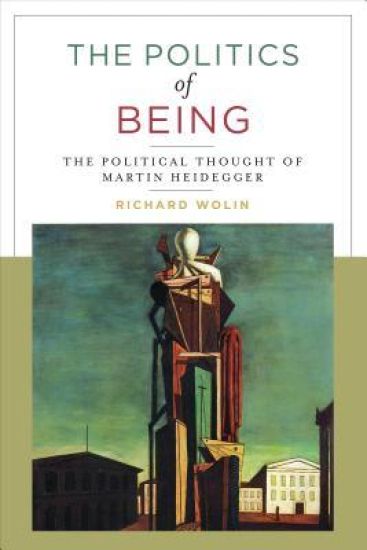
The Politics of Being

The Politics of Being

Richard Wolin

Columbia University Press
2016
pokkari
Martin Heidegger's ties to Nazism have tarnished his stature as one of the towering figures of twentieth-century philosophy. The publication of the Black Notebooks in 2014, which revealed the full extent of Heidegger's anti-Semitism and enduring sympathy for National Socialism, only inflamed the controversy. Richard Wolin's The Politics of Being: The Political Thought of Martin Heidegger has played a seminal role in the international debate over the consequences of Heidegger's Nazism. In this edition, the author provides a new preface addressing the effect of the Black Notebooks on our understanding of the relationship between politics and philosophy in Heidegger's work. Building on his pathbreaking interpretation of the philosopher's political thought, Wolin demonstrates that philosophy and politics cannot be disentangled in Heidegger's oeuvre. Volkisch ideological themes suffuse even his most sublime philosophical treatises. Therefore, despite Heidegger's profundity as a thinker, his critique of civilization is saturated with disturbing anti-democratic and anti-Semitic leitmotifs and claims.
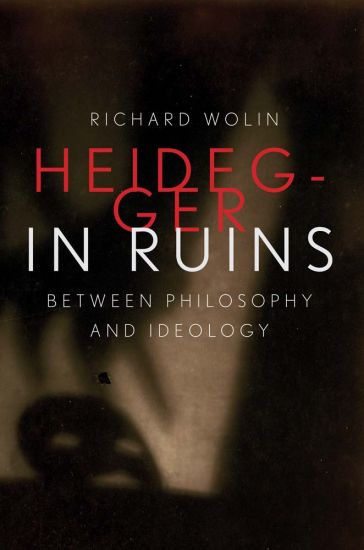
Heidegger in Ruins

Heidegger in Ruins

Richard Wolin

YALE UNIVERSITY PRESS
2023
sidottu
What does it mean when a radical understanding of National Socialism is inextricably embedded in the work of the twentieth century’s most important philosopher? “Combines close readings of Heidegger’s key writings with a rich cultural, literary and political history. . . . Wolin’s evidence-based work is its own riposte to the ludic mythomania of the philosopher’s political fanboys.”—Lyndsey Stonebridge, New Statesman Martin Heidegger’s sympathies for the conservative revolution and National Socialism have long been well known. As the rector of the University of Freiburg in the early 1930s, he worked hard to reshape the university in accordance with National Socialist policies. He also engaged in an all-out struggle to become the movement’s philosophical preceptor, “to lead the leader.” Yet for years, Heidegger’s defenders have tried to separate his political beliefs from his philosophical doctrines. They argued, in effect, that he was good at philosophy but bad at politics. But with the 2014 publication of Heidegger’s Black Notebooks, it has become clear that he embraced a far more radical vision of the conservative revolution than previously suspected. His dissatisfaction with National Socialism, it turns out, was mainly that it did not go far enough. The notebooks show that far from being separated from Nazism, Heidegger’s philosophy was suffused with it. In this book Richard Wolin explores what the notebooks mean for our understanding of arguably the most important philosopher of the twentieth century, and of his ideas—and why his legacy remains radically compromised.
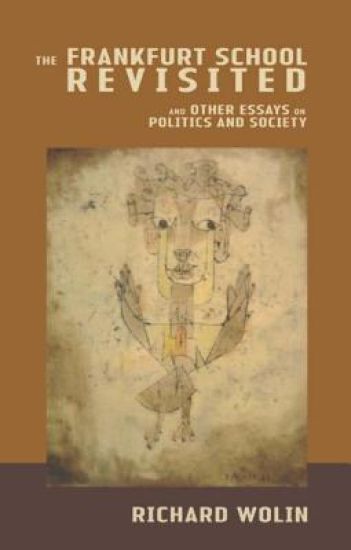
The Frankfurt School Revisited

The Frankfurt School Revisited

Richard Wolin

Routledge
2006
sidottu
This volume is a collection of essays by Richard Wolin, a leading political theorist and intellectual historian. It is the follow up to Wolin’s two recent, widely acclaimed books: Heidegger’s Children and The Seduction of Unreason. In those books, he explored the legacy of Martin Heidegger and his impact on some of his most influential and notable students. He dealt particularly with the effect that Heidegger’s subsequent embrace of fascism and National Socialism had on these students. Delving further in his next book, Wolin explored the question of why philosophers and intellectuals have been drawn to antiliberal, antidemocratic fascism. The essays in this book are focused on European Political Thought particularly with figures associated with the Frankfurt School. The collection represents a virtual who’s who of European political thinkers with essays on Walter Benjamin, Adorno, Marcuse, Arendt, Heidegger, Weber, Jaspers, and Carl Schmitt. Moving beyond these thinkers and those books, this collection will also include essays on contemporary political issues such as post-communist revolutions, human rights, global democracy, the revival of republicanism, and religion and public life.
The Frankfurt School Revisited

The Frankfurt School Revisited

Richard Wolin

Routledge
2006
nidottu
This volume is a collection of essays by Richard Wolin, a leading political theorist and intellectual historian. It is the follow up to Wolin’s two recent, widely acclaimed books: Heidegger’s Children and The Seduction of Unreason. In those books, he explored the legacy of Martin Heidegger and his impact on some of his most influential and notable students. He dealt particularly with the effect that Heidegger’s subsequent embrace of fascism and National Socialism had on these students. Delving further in his next book, Wolin explored the question of why philosophers and intellectuals have been drawn to antiliberal, antidemocratic fascism. The essays in this book are focused on European Political Thought particularly with figures associated with the Frankfurt School. The collection represents a virtual who’s who of European political thinkers with essays on Walter Benjamin, Adorno, Marcuse, Arendt, Heidegger, Weber, Jaspers, and Carl Schmitt. Moving beyond these thinkers and those books, this collection will also include essays on contemporary political issues such as post-communist revolutions, human rights, global democracy, the revival of republicanism, and religion and public life.
Walter Benjamin

Walter Benjamin

Richard Wolin

University of California Press
1994
pokkari
Few twentieth-century thinkers have proven as influential as Walter Benjamin, the German-Jewish philosopher and cultural and literary critic. Richard Wolin's book remains among the clearest and most insightful introductions to Benjamin's writings, offering a philosophically rich exposition of his complex relationship to Adorno, Brecht, Jewish Messianism, and Western Marxism. Wolin provides nuanced interpretations of Benjamin's widely studied writings on Baudelaire, historiography, and art in the age of mechanical reproduction. In a new Introduction written especially for this edition, Wolin discusses the unfinished Arcades Project, as well as recent tendencies in the reception of Benjamin's work and the relevance of his ideas to contemporary debates about modernity and postmodernity.
Heidegger's Children

Heidegger's Children

Richard Wolin

Princeton University Press
2015
pokkari
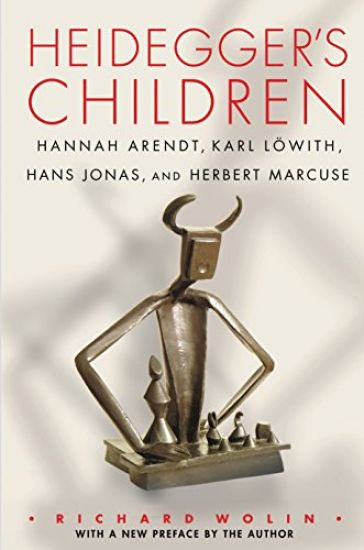
Martin Heidegger is perhaps the twentieth century's greatest philosopher, and his work stimulated much that is original and compelling in modern thought. A seductive classroom presence, he attracted Germany's brightest young intellects during the 1920s. Many were Jews, who ultimately would have to reconcile their philosophical and, often, personal commitments to Heidegger with his nefarious political views. In 1933, Heidegger cast his lot with National Socialism. He squelched the careers of Jewish students and denounced fellow professors whom he considered insufficiently radical. For years, he signed letters and opened lectures with "Heil Hitler!" He paid dues to the Nazi party until the bitter end. Equally problematic for his former students were his sordid efforts to make existential thought serviceable to Nazi ends and his failure to ever renounce these actions. This book explores how four of Heidegger's most influential Jewish students came to grips with his Nazi association and how it affected their thinking. Hannah Arendt, who was Heidegger's lover as well as his student, went on to become one of the century's greatest political thinkers. Karl Lowith returned to Germany in 1953 and quickly became one of its leading philosophers. Hans Jonas grew famous as Germany's premier philosopher of environmentalism. Herbert Marcuse gained celebrity as a Frankfurt School intellectual and mentor to the New Left. Why did these brilliant minds fail to see what was in Heidegger's heart and Germany's future? How would they, after the war, reappraise Germany's intellectual traditions? Could they salvage aspects of Heidegger's thought? Would their philosophy reflect or completely reject their early studies? Could these Heideggerians forgive, or even try to understand, the betrayal of the man they so admired? Heidegger's Children locates these paradoxes in the wider cruel irony that European Jews experienced their greatest calamity immediately following their fullest assimilation. And it finds in their responses answers to questions about the nature of existential disillusionment and the juncture between politics and ideas.
The Wind From the East

The Wind From the East

Richard Wolin

Princeton University Press
2017
pokkari
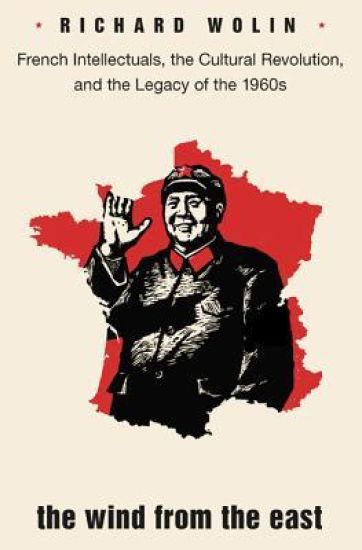
Michel Foucault, Jean-Paul Sartre, Julia Kristeva, Phillipe Sollers, and Jean-Luc Godard. During the 1960s, a who's who of French thinkers, writers, and artists, spurred by China's Cultural Revolution, were seized with a fascination for Maoism. Combining a merciless expose of left-wing political folly and cross-cultural misunderstanding with a spirited defense of the 1960s, The Wind from the East tells the colorful story of this legendary period in France. Richard Wolin shows how French students and intellectuals, inspired by their perceptions of the Cultural Revolution, and motivated by utopian hopes, incited grassroots social movements and reinvigorated French civic and cultural life. Wolin's riveting narrative reveals that Maoism's allure among France's best and brightest actually had little to do with a real understanding of Chinese politics. Instead, it paradoxically served as a vehicle for an emancipatory transformation of French society. Recounting the cultural and political odyssey of French students and intellectuals in the 1960s, The Wind from the East illustrates how the Maoist phenomenon unexpectedly sparked a democratic political sea change in France.
The Seduction of Unreason

The Seduction of Unreason

Richard Wolin

Princeton University Press
2019
pokkari
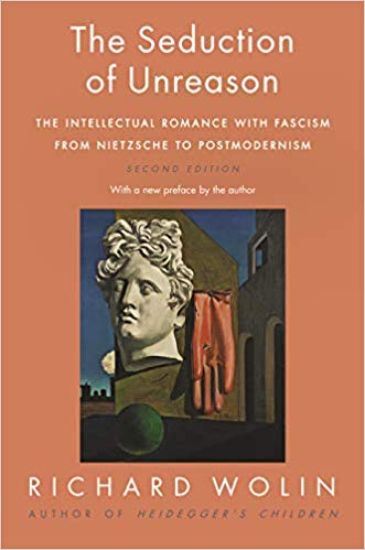
Ever since the shocking revelations of the fascist ties of Martin Heidegger and Paul de Man, postmodernism has been haunted by the specter of a compromised past. In this intellectual genealogy of the postmodern spirit, Richard Wolin shows that postmodernism's infatuation with fascism has been extensive and widespread. He questions postmodernism's claim to have inherited the mantle of the Left, suggesting instead that it has long been enamored with the opposite end of the political spectrum. Wolin reveals how, during in the 1930s, C. G. Jung, Hans-Georg Gadamer, Georges Bataille, and Maurice Blanchot were seduced by fascism's promise of political regeneration and how this misapprehension affected the intellectual core of their work. The result is a compelling and unsettling reinterpretation of the history of modern thought. In a new preface, Wolin revisits this illiberal intellectual lineage in light of the contemporary resurgence of political authoritarianism.
Labyrinths

Labyrinths

Richard Wolin

University of Massachusetts Press
1995
nidottu
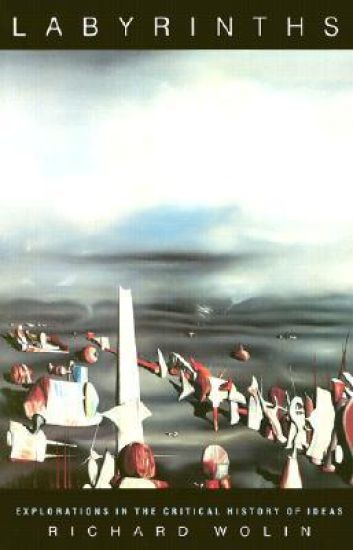
Ten essays on issues in philosophy, literary theory and intellectual history. The question of radical imperialism of the postmodern turn, the unstated agenda of neoconservative cultural theory and a discussion of Walter Benjamin's place in cultural studies are included in the text.