Kirjojen hintavertailu. Mukana 11 244 527 kirjaa ja 12 kauppaa.

Kirjahaku

Etsi kirjoja tekijän nimen, kirjan nimen tai ISBN:n perusteella.

69 kirjaa tekijältä Richard Wright

Richard Wright: The Library of America Unexpurgated Edition: Native Son / Uncle Tom's Children / Black Boy / And More
For the first time in a deluxe boxed set, the definitive edition of Richard Wright's landmark works in the form in which he intended them to be read. Here, in authoritative texts based on the author's original typescripts and proofs, is the Library of America's acclaimed edition of Richard Wright's major works. Wright's first novel, Lawd Today , published posthumously in 1963 and here presented for the first time in its original form, interweaves news bulletins, songs, exuberant wordplay, and scenes of confrontation and celebration into a kaleidoscopic chronicle of the events of one day in the life of a black Chicago postal worker. Uncle Tom's Children first brought Wright to national attention. The characters in these five stories struggle to survive the cruelty of racism in the South, as Wright asks "what quality of will must a Negro possess to live and die with dignity in a country that denied his humanity." Wright's masterpiece, Native Son, exploded on the American literary scene in 1940. The story of Bigger Thomas, a young black man living in the raw, noisy, crowded slums of Chicago's South Side, captured the hopes and yearnings, the pain and rage of black Americans with an unprecedented intensity and vividness. The text printed in this volume restores the changes and cuts--including the replacement of an entire scene--that Wright was forced to make by book club editors who feared offending their readers. Wright's wrenching memoir Black Boy, an eloquent account of his struggle to escape a life of poverty, ignorance and fear in his native South, was an immediate bestseller when it appeared in 1945. But Wright's complete autobiography, published for the first time in this volume as Black Boy (American Hunger), is a far more complex and probing work, chronicaling his encounter with racism in the North, his apprenticeship as a writer, and his disillusionment with the Communist Party. Wright's 1953 novel The Outsider appears here in a text that restores the many stylistic changes and long cuts made by his editors without his knowledge. When Cross Damon is mistakenly believed to have died in a subway accident, he seizes the opportunity to invent a new life for himself. The text here, based on Wright's final, corrected typescript, casts new light on his development of the style he called "poetic realism." Boxed set contains Richard Wright: Early Works, 936 pp., and Richard Wright: Later Works, 887 pp., volumes #55 and #56 in the Library of America series.
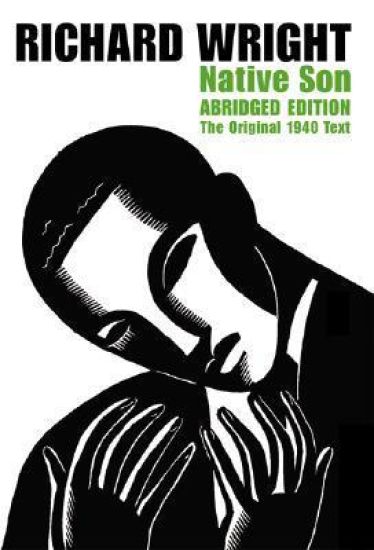
Native Son

Native Son

Richard Wright

HARPER PERENNIAL
2003
nidottu
Now an HBO Film "If one had to identify the single most influential shaping force in modern Black literary history, one would probably have to point to Wright and the publication of Native Son." - Henry Louis Gates Jr.Right from the start, Bigger Thomas had been headed for jail. It could have been for assault or petty larceny; by chance, it was for murder and rape. Native Son tells the story of this young black man caught in a downward spiral after he kills a young white woman in a brief moment of panic.Set in Chicago in the 1930s, Richard Wright's powerful novel is an unsparing reflection on the poverty and feelings of hopelessness experienced by people in inner cities across the country and of what it means to be black in America.This abridged edition of Native Son reprints the original edition from 1940. It also includes an essay by Wright, How "Bigger" was Born, as well as an afterword by John Reilly.
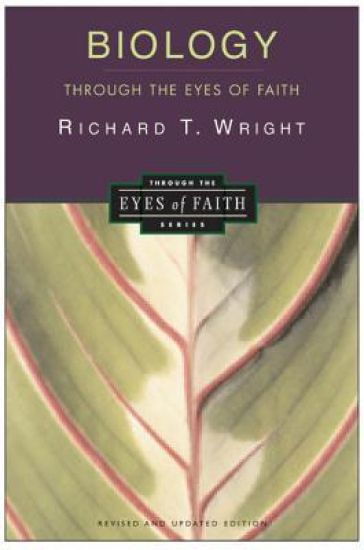
Biology Through the Eyes of Faith: Christian College Coalition Series
Newly RevisedThe Council of Christian Colleges and Universities SeriesStressing the biblical message of stewardship, biologist Richard T. Wright celebrates the study of God's creation and examines the interaction of the life sciences with society in medicine, genetics, and the environment. The author brings a biblical perspective to theories on origins, contrasting creationism, intelligent design, and evolution. Highlighting the unique nature of biology and its interaction with Christian thought, Wright demonstrates that Christian stewardship can be the key to a sustainable future.This comprehensive work, one of a series cosponsored by the Council for Christian Colleges and Universities, addresses the needs of the Christian student of biology to align science and faith. It demonstrates that the study of biology penetrates to the core of human existence and has much to contribute to the construction of a consistent Christian worldview.
Native Son

Native Son

Richard Wright

HARPER PERENNIAL
2008
nidottu
One of The Atlantic's Great American Novels"If one had to identify the single most influential shaping force in modern Black literary history, one would probably have to point to Wright and the publication of Native Son." --Henry Louis Gates Jr.Right from the start, Bigger Thomas had been headed for jail. It could have been for assault or petty larceny; by chance, it was for murder and rape. Native Son tells the story of this young black man caught in a downward spiral after he kills a young white woman in a brief moment of panic.Set in Chicago in the 1930s, Richard Wright's powerful novel is an unsparing reflection on the poverty and feelings of hopelessness experienced by people in inner cities across the country and of what it means to be black in America.This beautifully designed Harper Perennial Deluxe Edition--the restored text of Native Son established by the Library of America--also includes an essay by Wright titled, How "Bigger" was Born, along with notes on the text.
A Father's Law

A Father's Law

Richard Wright

HARPER PERENNIAL
2008
nidottu
Written shortly before and left unfinished at the time of his death and published for the first time, a masterful novel by the author of Native Son explores one man's conflict over his dual roles as a black police officer and father, especially after he begins to suspect that his son is a murderer. Original. 50,000 first printing.
Black Boy

Black Boy

Richard Wright

HARPER PERENNIAL
2008
nidottu
A special Harper Perennial Deluxe Edition of Richard Wright's powerful account of his journey from innocence to experience in the Jim Crow South--a poignant and disturbing record of social injustice and human sufferingWhen it exploded onto the literary scene in 1945, Black Boy was both praised and condemned. Orville Prescott of the New York Times wrote that "if enough such books are written, if enough millions of people read them maybe, someday, in the fullness of time, there will be a greater understanding and a more true democracy." Yet from 1975 to 1978, Black Boy was banned in schools throughout the United States for "obscenity" and "instigating hatred between the races."Wright's once controversial, now celebrated autobiography measures the raw brutality of the Jim Crow South against the sheer desperate will it took to survive as a Black boy. Enduring poverty, hunger, fear, abuse, and hatred while growing up in the woods of Mississippi, Wright lied, stole, and raged at those around him--whites indifferent, pitying, or cruel and Blacks resentful of anyone trying to rise above their circumstances. Desperate for a different way of life, he headed north, eventually arriving in Chicago, where he forged a new path and began his career as a writer. At the end of Black Boy, Wright sits poised with pencil in hand, determined to "hurl words into this darkness and wait for an echo." More than seventy-five years later, his words continue to reverberate.One of the great American memoirs, Wright's account is a deeply moving record of struggle and endurance--a seminal literary work that illuminates our own time.
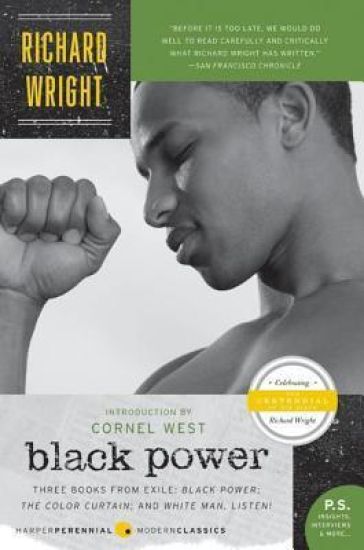
Black Power

Black Power

Richard Wright

HarperCollins
2023
nidottu
Originally published in 1954, Richard Wright′s Black Power is an extraordinary nonfiction work by one of America′s premier literary giants of the twentieth century. An impassioned chronicle of the author′s trip to Africa′s Gold Coast before it became the free nation of Ghana, it speaks eloquently of empowerment and possibility, and resonates loudly to this day. Also included in this omnibus edition are two nonfiction works Wright produced around the time of Black Power. White Man, Listen is a stirring collection of his essays on race, politics, and other essential social concerns ("Deserves to be read with utmost seriousness"-New York Times). The Color Curtain is an indispensable work urging the removal of the color barrier. It remains one of the key commentaries on the question of race in the modern era. ("Truth-telling will perhaps always be unpopular and suspect, but in The Color Curtain, as in all his later nonfiction, Wright did not hesitate to tell the truth as he saw it."-Amritjit Singh, Ohio University)
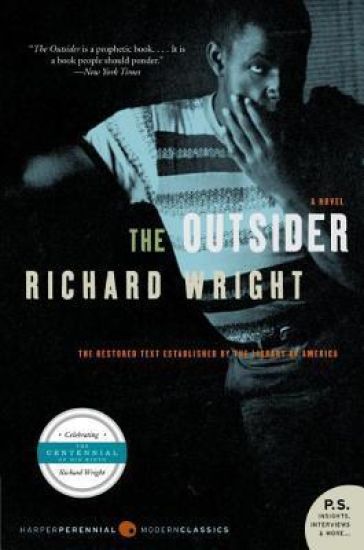
The Outsider

The Outsider

Richard Wright

HARPER PERENNIAL
2023
nidottu
From Richard Wright, one of the most powerful, acclaimed, and essential American authors of the twentieth century, comes a compelling story of one man's attempt to escape his past and start anew in Harlem. Cross Damon is a man at odds with society and with himself--a man of superior intellect who hungers for peace but who brings terror and destruction wherever he goes. The Outsider is an important work of fiction that depicts American racism and its devastating consequences in raw and unflinching terms. Brilliantly imagined and frighteningly prescient, it is an epic exploration of the tragic roots of criminal behavior.
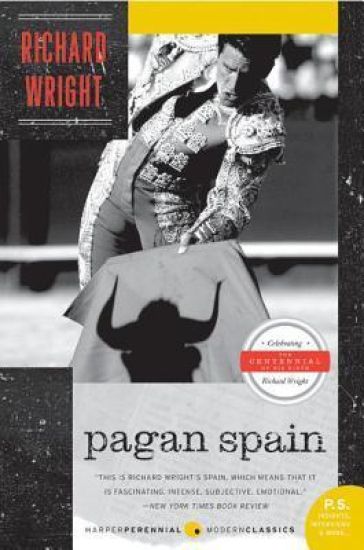
Pagan Spain

Pagan Spain

Richard Wright

HARPER PERENNIAL
2023
nidottu
A master chronicler of the African-American experience, Richard Wright brilliantly expanded his literary horizons with Pagan Spain, originally published in 1957. An amalgam of expert travel reportage, dramatic monologue, and arresting sociological critique, Pagan Spain serves as a pointed and still-relevant commentary on the grave human dangers of oppression and governmental corruption.The Spain Richard Wright visited in the mid-twentieth century was not the romantic locale of song and story, but a place of tragic beauty and dangerous contradictions. The portrait he offers in Pagan Spain is a blistering, powerful, yet scrupulously honest depiction of a land and people in turmoil, caught in the strangling dual grip of cruel dictatorship and what Wright saw as an undercurrent of primitive faith.
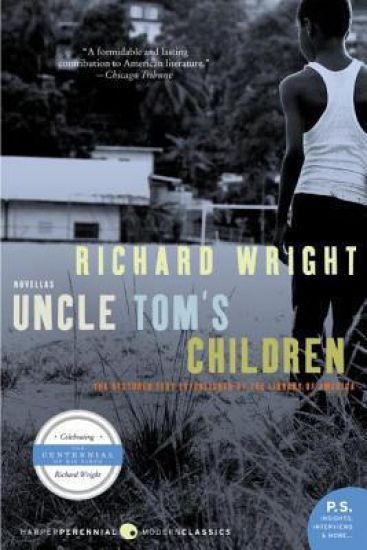
Uncle Tom's Children: Novellas

Uncle Tom's Children: Novellas

Richard Wright

HARPER PERENNIAL
2023
nidottu
"I found these stories both heartening. . . and terrifying as the expression of a racial hatred that has never ceased to grow and gets no chance to die." --Malcolm Cowley, The New RepublicRichard Wright's powerful collection of novellas set in the American Deep SouthEach of the poignant and devastating stories in Uncle Tom's Children concerns an aspect of the lives of Black people in the post-slavery era, exploring their resistance to white racism and oppression. This extraordinary collection also includes a personal essay by Wright titled "The Ethics of Living Jim Crow."Originally published in 1938, Uncle Tom's Children was the first book from Wright, who would go on to win international renown for his powerful and visceral depiction of the Black experience. The author of numerous works, most notably the acclaimed novel Native Son and his stunning autobiography, Black Boy, Wright stands today as one of the greatest American writers of the twentieth century.
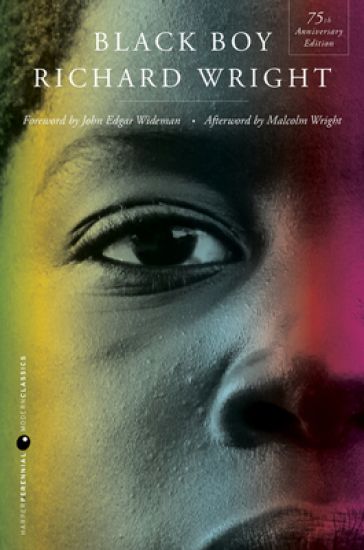
Black Boy

Black Boy

Richard Wright

HARPER PERENNIAL
2023
nidottu
"Superb. . . . A great American writer speaks with his own voice about matters that still resonate at the center of our lives." --New York Times Book ReviewA striking new edition of Richard Wright's powerful and unforgettable memoir, with a foreword by John Edgar Wideman and an afterword by Malcolm Wright, the author's grandson.When it exploded onto the literary scene in 1945, Black Boy was both praised and condemned. Orville Prescott of the New York Times wrote that "if enough such books are written, if enough millions of people read them maybe, someday, in the fullness of time, there will be a greater understanding and a more true democracy." Yet from 1975 to 1978, Black Boy was banned in schools throughout the United States for "obscenity" and "instigating hatred between the races."Wright's once controversial, now celebrated autobiography measures the raw brutality of the Jim Crow South against the sheer desperate will it took to survive as a black boy. Enduring poverty, hunger, fear, abuse, and hatred while growing up in the woods of Mississippi, Wright lied, stole, and raged at those around him--whites indifferent, pitying, or cruel and blacks resentful of anyone trying to rise above their circumstances. Desperate for a different way of life, he may his way north, eventually arriving in Chicago, where he forged a new path and began his career as a writer. At the end of Black Boy, Wright sits poised with pencil in hand, determined to "hurl words into this darkness and wait for an echo." More than seventy-five year later, his words continue to reverberate. "To read Black Boy is to stare into the heart of darkness," John Edgar Wideman writes in his foreword. "Not the dark heart Conrad searched for in Congo jungles but the beating heart I bear."One of the great American memoirs, Wright's account is a poignant record of struggle and endurance--a seminal literary work that illuminates our own time.
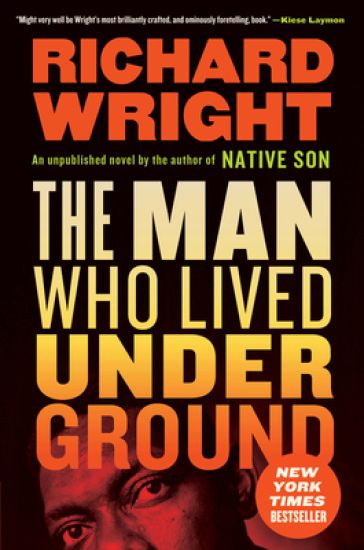
The Man Who Lived Underground

The Man Who Lived Underground

Richard Wright

HARPER PERENNIAL
2022
nidottu
New York Times Bestseller - One of the Best Books of the Year: Time magazine, Chicago Tribune, Boston Globe, and Esquire - One of Oprah's 15 Favorite Books of the YearFrom the legendary author of Native Son and Black Boy, the novel he was unable to publish during his lifetime--an explosive story of racism, injustice, brutality, and survival. "Not just Wright's masterwork, but also a milestone in African American literature . . . One of those indispensable works that reminds all its readers that, whether we are in the flow of life or somehow separated from it, above- or belowground, we are all human." (Gene Seymour, CNN.com)"The Man Who Lived Underground reminds us that any 'greatest writers of the 20th century' list that doesn't start and end with Richard Wright is laughable. It might very well be Wright's most brilliantly crafted, and ominously foretelling, book."--Kiese LaymonFred Daniels, a Black man, is picked up by the police after a brutal double murder and tortured until he confesses to a crime he did not commit. After signing a confession, he escapes from custody and flees into the city's sewer system.This is the devastating premise of Richard Wright's scorching novel, The Man Who Lived Underground, written between his landmark books Native Son (1940) and Black Boy (1945), at the height of his creative powers. Now, for the first time, by special arrangement between the Library of America and the author's estate, the full text of the work that meant more to Wright than any other ("I have never written anything in my life that stemmed more from sheer inspiration") is published in the form that he intended, complete with his companion essay, "Memories of My Grandmother." Malcolm Wright, the author's grandson, contributes an afterword.
Uncle Tom's Children: Novellas

Uncle Tom's Children: Novellas

Richard Wright

HARPER PERENNIAL
2021
nidottu
"I found these stories both heartening. . . and terrifying as the expression of a racial hatred that has never ceased to grow and gets no chance to die." --Malcolm Cowley, The New RepublicRichard Wright's powerful collection of novellas set in the American Deep South, now available as a limited Olive Edition from Harper Perennial.Each of the poignant stories in Uncle Tom's Children concerns an aspect of the lives of Black people in the post-slavery era, exploring their resistance to white racism and oppression. The collection also includes a personal essay by Wright titled "The Ethics of Living Jim Crow."Originally published in 1938, Uncle Tom's Children was the first book from Wright, who would go on to win international renown for his powerful and visceral depiction of the Black experience. The author of numerous works, most notably the acclaimed novel Native Son and his stunning autobiography, Black Boy, Wright stands today as one of the greatest American writers of the twentieth century.
Black Boy

Black Boy

Richard Wright

HARPER PERENNIAL
2025
nidottu
"Superb. . . . A great American writer speaks with his own voice about matters that still resonate at the center of our lives."--New York Times Book ReviewCelebrating its eightieth anniversary, Richard Wright's eloquent autobiography about growing up in the Jim Crow South that gives unique voice to being Southern, black, and male in early 20th century America--now available as a special Harper Perennial Olive Edition.When Black Boy exploded onto the literary scene in 1945, it was both praised and condemned. Orville Prescott of the New York Times wrote that "if enough such books are written, if enough millions of people read them maybe, someday, in the fullness of time, there will be a greater understanding and a more true democracy." Yet from 1975 to 1978, Black Boy was banned in schools throughout the United States for "obscenity" and "instigating hatred between the races," and continues to remain controversial, coming under the scrutiny of censors today who are banning an alarming number of books.Wright's celebrated autobiography measures the raw brutality of the Jim Crow South against the sheer desperate will it took to survive as a black boy. Enduring poverty, hunger, fear, abuse, and hatred while growing up in the woods of Mississippi, Wright lied, stole, and raged at those around him--whites indifferent, pitying, or cruel and blacks resentful of anyone trying to rise above their circumstances. Desperate for a different way of life, he may his way north, eventually arriving in Chicago, where he forged a new path and began his career as a writer. At the end of Black Boy, Wright sits poised with pencil in hand, determined to "hurl words into this darkness and wait for an echo." Eighty year later, his words continue to reverberate.One of the great American memoirs, Wright's account is a poignant record of struggle and endurance--a seminal literary work that illuminates our own time.Harper Perennial Olive Editions are exclusive small-format editions of some of our bestselling and celebrated titles, and feature unique hand-drawn cover illustrations. All Olive Editions are available for a limited time only.
Rite of Passage

Rite of Passage

Richard Wright

Harpercollins
1995
nidottu
"Johnny, you're leaving us tonight . . . " Fifteen-year-old Johnny Gibbs does, well in school, respects his teachers, and loves his family. Then suddenly, with a few short words, his idyllic life is shattered. He learns that the family he has loved all his life is not his own, but a foster family. And now he is being sent to live with someone else. Shocked by the news, Johnny does the only thing he can think of: he runs. Leaving his childhood behind forever, Johnny takes to the streets where he learns about living life--the hard way. Richard Wright, internationally acclaimed author of Black Boy and Native Son, gives us a coming-of-age story as compelling today as when it was first written, over fifty years ago. 'Johnny Gibbs arrives home jubilantly one day with his straight 'A' report card to find his belongings packed and his mother and sister distraught. Devastated when they tell him that he is not their blood relative and that he is being sent to a new foster home, he runs away. His secure world quickly shatters into a nightmare of subways, dark alleys, theft and street warfare. . . . Striking characters, vivid dialogue, dramatic descriptions, and enduring themes introduce a enw generation of readers to Wright's powerful voice.'--SLJ. Notable 1995 Children's Trade Books in Social Studies (NCSS/CBC)
Anglo-Norman Studies

Anglo-Norman Studies

Richard Wright

The Boydell Press
1991
sidottu
Annual publication of the proceedings of the annual Battle Conference on Anglo-Norman Studies The volumes offer a wide range of insightful essays which add considerably to our understanding of the central middle ages, alongside maps, genealogical tables and illustrations. Indispensable to all those interested in western Europe in the eleventh and twelfth centuries.
Black Boy Lib/E

Black Boy Lib/E

Richard Wright

Harpercollins
2020
cd
Richard Wright's powerful and eloquent memoir of his journey from innocence to experience in the Jim Crow South. At once an unashamed confession and a profound indictment, Black Boy is a poignant record of struggle and endurance--a seminal literary work that illuminates our own time.When it exploded onto the literary scene in 1945, Black Boy was both praised and condemned. Orville Prescott of the New York Times wrote that "if enough such books are written, if enough millions of people read them maybe, someday, in the fullness of time, there will be a greater understanding and a more true democracy." Yet from 1975 to 1978, Black Boy was banned in schools throughout the United States for "obscenity" and "instigating hatred between the races."The once controversial, now classic American autobiography measures the brutality and rawness of the Jim Crow South against the sheer desperate will it took to survive as a black boy. Enduring poverty, hunger, fear, abuse, and hatred while growing up in the woods of Mississippi, Wright lied, stole, and raged at those around him--whites indifferent, pitying, or cruel, and blacks resentful of anyone trying to rise above their circumstances. Desperate for a different way of life, he made his way north, eventually arriving in Chicago, where he forged a new path and began his career as a writer. At the end of Black Boy, Wright sits poised with pencil in hand, determined to hurl words into this darkness and wait for an echo. Seventy-five years later, his words continue to reverberate.
Black Boy

Black Boy

Richard Wright

Harpercollins
2020
mp3 cd-levyllä
Richard Wright's powerful and eloquent memoir of his journey from innocence to experience in the Jim Crow South. At once an unashamed confession and a profound indictment, Black Boy is a poignant record of struggle and endurance--a seminal literary work that illuminates our own time.When it exploded onto the literary scene in 1945, Black Boy was both praised and condemned. Orville Prescott of the New York Times wrote that "if enough such books are written, if enough millions of people read them maybe, someday, in the fullness of time, there will be a greater understanding and a more true democracy." Yet from 1975 to 1978, Black Boy was banned in schools throughout the United States for "obscenity" and "instigating hatred between the races."The once controversial, now classic American autobiography measures the brutality and rawness of the Jim Crow South against the sheer desperate will it took to survive as a black boy. Enduring poverty, hunger, fear, abuse, and hatred while growing up in the woods of Mississippi, Wright lied, stole, and raged at those around him--whites indifferent, pitying, or cruel, and blacks resentful of anyone trying to rise above their circumstances. Desperate for a different way of life, he made his way north, eventually arriving in Chicago, where he forged a new path and began his career as a writer. At the end of Black Boy, Wright sits poised with pencil in hand, determined to hurl words into this darkness and wait for an echo. Seventy-five years later, his words continue to reverberate.