
Kirjahaku
Etsi kirjoja tekijän nimen, kirjan nimen tai ISBN:n perusteella.
14 kirjaa tekijältä Rickey Butch Walker
Warrior Mountains Indian Heritage - Teacher's Edition
Rickey Butch Walker
Bluewater Publications
2008
pokkari
Warrior Mountians Indian Heritage Student Edition
Rickey Butch Walker
Bluewater Publishing
2011
pokkari
Warrior Mountains Indian Heritage was written for the academic and cultural enrichment of all students especially those of Southeastern Indian ancestry. The lessons are for students' reading enjoyment and are designed to meet reading and social studies objectives while providing interesting stories filled with valuable information about Southeastern Indian culture. The lessons are historically specific to the Cherokee, Creek, and Chickasaw Indians of the Southeastern United States. The student edition of Warrior Mountains Indian Heritage has local, regional, and national significance since it discusses important aspects of the history, culture, and lifestyles of some major tribes of the Southeastern United States. The student text can be used as a guide for teachers of various grades to incorporate appropriate lessons of historically important details into their reading and social studies objectives.
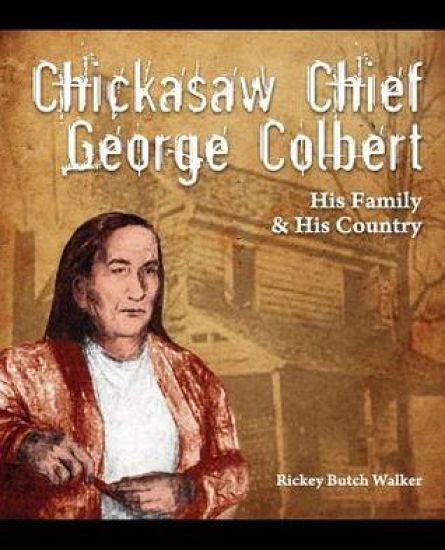

Very few people have lived a life comparable to that of Chickasaw Chief George Colbert; Butch Walker tells the story of this little known Celtic Indian man that lived a life worthy of a Hollywood movie in Chickasaw Chief George Colbert: His Family and His Country. This historic timepiece tells Colbert's story from a son of a Scots father and Chickasaw mother to a decorated military leader, successful ferry operator, plantation owner, businessman, and Chickasaw chief. George Colbert was a relatively unknown historical figure and decorated military hero that led the Chickasaws through Indian removal which was one of the darkest eras of American history. This man was trusted by the Indians, friends to the whites, and respected by local and national figures alike, including former presidents of the United States. Butch Walker has diligently researched the history, family, and overall historical significance of this Chickasaw Chief; Walker spent countless hours researching the life and legacy of George Colbert who was half Celtic (Scots) and half Indian (Chickasaw). George was never defined or limited by his blood quantum; he was a proven leader of the Chickasaw Nation. This book takes the reader from the birth of George's father, through the time of the French-Chickasaw War, beyond the Chickasaw Removal. The tale of the "Half-Blood Prince" of the 17th century is for anyone wanting to increase their knowledge of southeastern Indians, particularly the "Unconquered Unconquerable Chickasaws." The life of George Colbert appears to be taken right from the pages of a Hollywood script. Chickasaw Chief George Colbert: His Family and His Country is a must read for anyone wanting to learn more about the Chickasaw Colbert family.

Appalachian Indian Trails of the Chickamauga
Rickey Butch Walker
Bluewater Publications
2013
pokkari
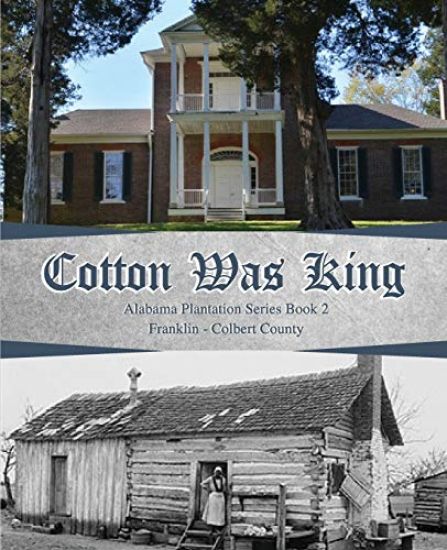
In, "Cotton Was King Franklin-Colbert Counties" Rickey Butch Walker gives a wonderful account of Chickasaw Chief George Colbert as a cotton planter and the role of the Chickasaw Colbert's prior to the first white planters who moved with their slaves to claim the fertile lands of the Tennessee River Valley. After the Indian claims to the land were abolished by the 1816 treaty. The United States government transferred land titles to white settlers through federal land sales beginning in 1817. From the nutritionally deprived soil of cotton farms in the east, slave-owning planters poured into early Franklin County, Alabama, most of which is now present-day Colbert County. Rickey Butch Walker gives profiles of many of these wealthy plantation owners prior to the Civil War. This is the first detailed narrative of some of the white families of Franklin- Colbert County who helped develop the cotton industry of northwest Alabama. Some of the affluent planters, their plantations, land holding, property locations, and numbers of black slaves are discussed in detail. These early planters were dependent on black slave labor to become very wealthy and control vast tracts of land. This is a valuable read for anyone interested in the local history of cotton barons who came to North Alabama from North Carolina and Virginia.
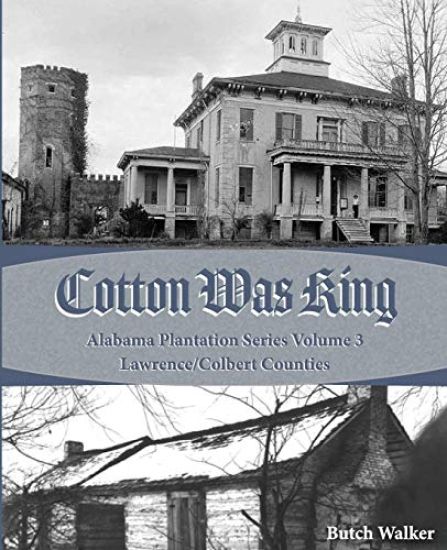
Today, many of the names of local residents can be clearly traced to some of these planters and slaves. Walker has listed planters and the number of their slaves from 1820 through the 1860 census records. He has provided agricultural information, land records, census records, pictures, family members, birth and death information, and stories to make history come alive. This is a great book for those seeking individual profiles and local family information. I am honored to recommend "Cotton Was King" Volume 3. "Cotton Was King" Volume 3 begins with a review of Chief Doublehead and other important Indians who owned these lands before the Turkey Town Treaty of 1816. The author, Rickey Butch Walker, raised in Lawrence County, has always had a love for his Indian heritage and the history of his home county. The book is a historical record of early cotton planters and slave owners who were the first settlers to move into the Indian Territory after the treaty was signed and covers what is now Lawrence and Colbert Counties. There is not another book that compares to the historical account of the earliest days of the area. As we travel through this time capsule of the past, many hidden stories of planters and their slaves are brought to light. It is a compelling read for all who love history and want to get to the truth of the historical roots of Lawrence County.
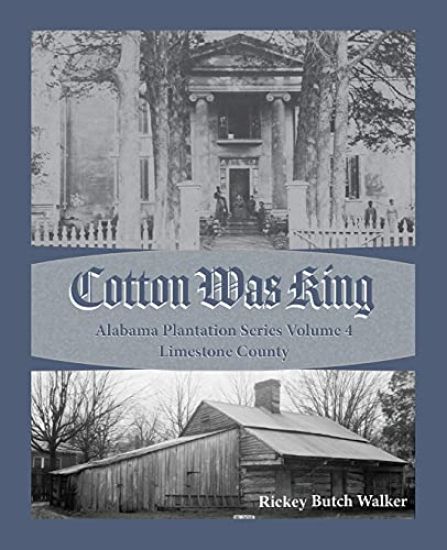
Cotton Was King Limestone, Alabama Plantation Series Book Four gives a history of Limestone County from Indian occupation to the Civil War including the Indian tribes that lived and controlled the area prior to white settlers. During historic times, Doublehead leased lands in the area to white settlers; an 1810 petition lists alphabetically some 400 of these settlers in the Elk River area. Also discussed is the creation of Limestone County, Athens, Sims Settlement, Fort Hampton, Over Elk Region, and early roads and ferries. Beginning in early 1818, many wealthy cotton planters mostly from Virginia migrated into the area after Indian removal in 1816. Over 620 cotton planters in Limestone County owning more than ten black slaves are listed in a table from 1820 through 1860. Several individual profiles of wealthy cotton planters and slave owners are discussed in detail.
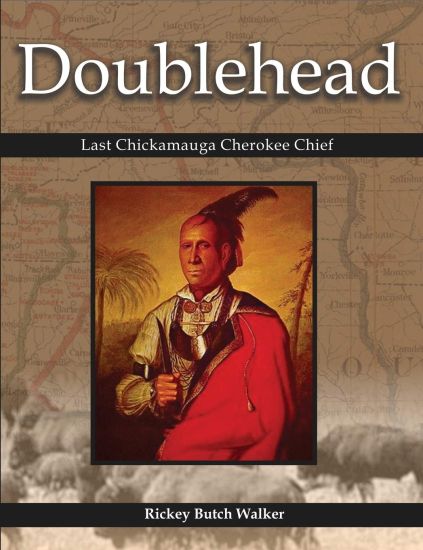
Among all the famous Native American Indian chiefs, people today easily recognize names like Geronimo, Sitting Bull, Tecumseh, and Crazy Horse. However, unless you live in North Alabama or Central Tennessee, chances are you've never heard of Cherokee Chief Doublehead. Described as overbearing, hot-tempered, and haughty, he possessed possibly one of the strongest personalities of any man who lived at the time. Through sheer force of will, Chief Doublehead became the principal leader among the Cherokees. Refusing to cede the valuable hunting grounds to white intruders, he managed to confederate several tribes of Indians to wage war for twenty-five years. It has been said tha Doublehead killed more men than anyone who lived during that time period. Butch Walker has written an excellent biography on the great chief, which has been long overdue. Walker takes Doublehead from warrior to famous chief to shrewd businessman. Butch Walker has painstakingly researched all available material on the fierce Cherokee Chief Doublehead. This is a must-read for anyone interested in Native American history.
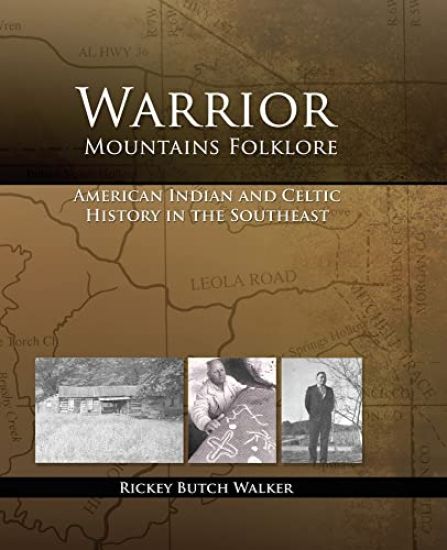
Many years ago, Rickey Butch Walker took his tape recorder and camera and systematically began interviewing some of the oldest living descendants of the pioneer families of the Warrior Mountains of northwest Alabama. No price can be put on the stories that he recorded. He captured snapshots of Americana and family history that would have been lost forever. These historical sketches and photographs will be revered forever by the descendants of the families who lived on mountain farms in one of Alabama's most rugged back country. His down-to-earth style of writing is reminiscent of summer afternoons that I have spent in a front porch chair captivated and fascinated by listening to old timers telling of the old days and the old ways. My the world has changed and maybe not for the better. Lamar Marshall, Cultural Heritage Director, Wild South
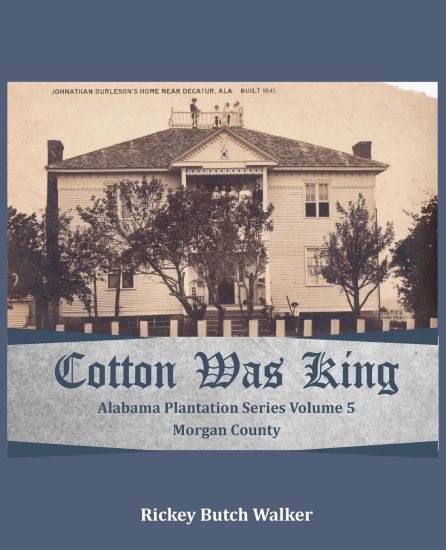
Cotton Was King, Volume 5, Morgan County is a comprehensive collection of the historical migration of wealthy land speculators, cotton planters, slave holders, farmers, and settlers. These folks were coming to northwest Alabama for the land grab that resulted with the removal of the Cherokee, Chickasaw, Creek and other Tribes of indigenous peoples from Morgan County and across North Alabama. You will gain information Rickey Butch Walker has gleaned from a variety of sources including the Morgan County Censuses of 1830, 1840, 1850, and 1860.Morgan County was Cotaco County even before Alabama was a State, Decatur before it was the Morgan County Seat, and Rhodes Ferry before it was Decatur. You will read about the trails, roads, creeks, rivers, ferry locations, and boundary lines that crisscrossed early North Alabama in the late 1700's to the middle 1800's. You will find information about North Alabama's inhabitants during that time; where they migrated from and settled including their occupations, marriages, births, children, relatives, ages, land holdings/values, crops, livestock, property descriptions, when they died, and where they were buried.You will learn who the slave owners were and their vast land holdings until the end of the Civil War. You will also read about the first railroad south and west of the Appalachians which became known as the Tuscumbia, Courtland & Decatur Railroad Company and of its importance in transporting cotton around the dangerous Muscle Shoals onto river steamers and then on to the worldwide markets. And you will gain knowledge about the proximity of this railroad and why Decatur became the primary offloading point for the 1837-38 Indian removal.