Kirjojen hintavertailu. Mukana 11 627 425 kirjaa ja 12 kauppaa.

Kirjahaku

Etsi kirjoja tekijän nimen, kirjan nimen tai ISBN:n perusteella.

13 kirjaa tekijältä Rita Felski

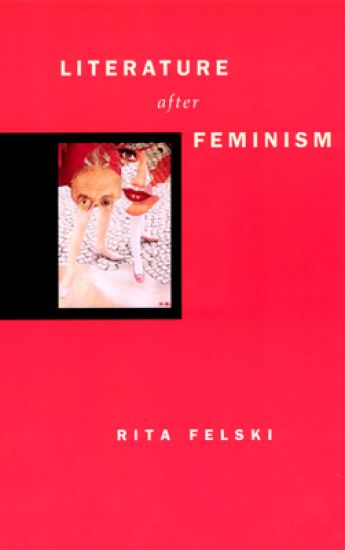
Literature after Feminism

Literature after Feminism

Rita Felski

University of Chicago Press
2003
sidottu
Recent commentators have portrayed feminist critics as grim-faced ideologues who are destroying the study of literature. Feminists, they claim, reduce art to politics and are hostile to any form of aesthetic pleasure. "Literature After Feminism" is the first work to comprehensively rebut such caricatures, while also offering a clear-eyed assessment of the relative merits of various feminist approaches to literature. Spelling out her main arguments clearly and succinctly, Rita Felski explains how feminism has changed the ways people read and think about literature. She organizes her book around four key questions: Do women and men read differently? How have feminist critics imagined the female author? What does plot have to do with gender? And what do feminists have to say about the relationship between literary and political value? Interweaving incisive commentary with literary examples, Felski advocates a double critical vision that can do justice to the social and political meanings of literature without dismissing or scanting the aesthetic. "Literature After Feminism" should be welcomed by anyone looking for a lucid and balanced account of feminist criticism.
Literature after Feminism

Literature after Feminism

Rita Felski

University of Chicago Press
2003
nidottu
Recent commentators have portrayed feminist critics as grim-faced ideologues who are destroying the study of literature. Feminists, they claim, reduce art to politics and are hostile to any form of aesthetic pleasure. "Literature After Feminism" is the first work to comprehensively rebut such caricatures, while also offering a clear-eyed assessment of the relative merits of various feminist approaches to literature. Spelling out her main arguments clearly and succinctly, Rita Felski explains how feminism has changed the ways people read and think about literature. She organizes her book around four key questions: Do women and men read differently? How have feminist critics imagined the female author? What does plot have to do with gender? And what do feminists have to say about the relationship between literary and political value? Interweaving incisive commentary with literary examples, Felski advocates a double critical vision that can do justice to the social and political meanings of literature without dismissing or scanting the aesthetic. "Literature After Feminism" should be welcomed by anyone looking for a lucid and balanced account of feminist criticism.
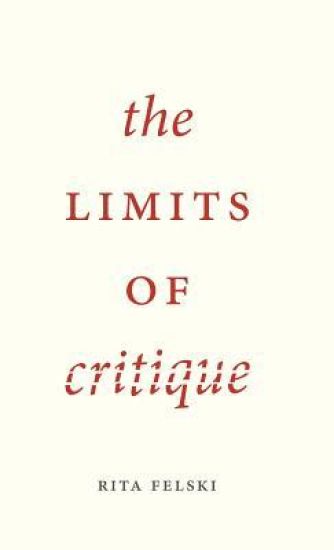
The Limits of Critique

The Limits of Critique

Rita Felski

University of Chicago Press
2015
sidottu
Why must critics unmask and demystify literary works? Why do they believe that language is always withholding some truth, that the critic's task is to reveal the unsaid or repressed? In this book, Rita Felski examines critique, the dominant form of interpretation in literary studies, and situates it as but one method among many, a method with strong allure-but also definite limits. Felski argues that critique is a sensibility best captured by Paul Ricoeur's phrase "the hermeneutics of suspicion." She shows how this suspicion toward texts forecloses many potential readings while providing no guarantee of rigorous or radical thought. Instead, she suggests, literary scholars should try what she calls "postcritical reading": rather than looking behind a text for hidden causes and motives, literary scholars should place themselves in front of it and reflect on what it suggests and makes possible. By bringing critique down to earth and exploring new modes of interpretation, The Limits of Critique offers a fresh approach to the relationship between artistic works and the social world.
The Limits of Critique

The Limits of Critique

Rita Felski

University of Chicago Press
2015
nidottu
Why must critics unmask and demystify literary works? Why do they believe that language is always withholding some truth, that the critic's task is to reveal the unsaid or repressed? In this book, Rita Felski examines critique, the dominant form of interpretation in literary studies, and situates it as but one method among many, a method with strong allure-but also definite limits. Felski argues that critique is a sensibility best captured by Paul Ricoeur's phrase "the hermeneutics of suspicion." She shows how this suspicion toward texts forecloses many potential readings while providing no guarantee of rigorous or radical thought. Instead, she suggests, literary scholars should try what she calls "postcritical reading": rather than looking behind a text for hidden causes and motives, literary scholars should place themselves in front of it and reflect on what it suggests and makes possible. By bringing critique down to earth and exploring new modes of interpretation, The Limits of Critique offers a fresh approach to the relationship between artistic works and the social world.
Hooked

Hooked

Rita Felski

University of Chicago Press
2020
sidottu
How does a novel entice or enlist us? How does a song surprise or seduce us? Why do we bristle when a friend belittles a book we love, or fall into a funk when a favored TV series comes to an end? What characterizes the aesthetic experiences of feeling captivated by works of art? In Hooked, Rita Felski challenges the ethos of critical aloofness that is a part of modern intellectuals’ self-image. The result is sure to be as widely read as Felski’s book, The Limits of Critique. Wresting the language of affinity away from accusations of sticky sentiment and manipulative marketing, Felski argues that “being hooked” is as fundamental to the appreciation of high art as to the enjoyment of popular culture. Hooked zeroes in on three attachment devices that connect audiences to works of art: identification, attunement, and interpretation. Drawing on examples from literature, film, music, and painting—from Joni Mitchell to Matisse, from Thomas Bernhard to Thelma and Louise—Felski brings the language of attachment into the academy. Hooked returns us to the fundamentals of aesthetic experience, showing that the social meanings of artworks are generated not just by critics, but also by the responses of captivated audiences.
Hooked

Hooked

Rita Felski

University of Chicago Press
2020
nidottu
How does a novel entice or enlist us? How does a song surprise or seduce us? Why do we bristle when a friend belittles a book we love, or fall into a funk when a favored TV series comes to an end? What characterizes the aesthetic experiences of feeling captivated by works of art? In Hooked, Rita Felski challenges the ethos of critical aloofness that is a part of modern intellectuals’ self-image. The result is sure to be as widely read as Felski’s book, The Limits of Critique. Wresting the language of affinity away from accusations of sticky sentiment and manipulative marketing, Felski argues that “being hooked” is as fundamental to the appreciation of high art as to the enjoyment of popular culture. Hooked zeroes in on three attachment devices that connect audiences to works of art: identification, attunement, and interpretation. Drawing on examples from literature, film, music, and painting—from Joni Mitchell to Matisse, from Thomas Bernhard to Thelma and Louise—Felski brings the language of attachment into the academy. Hooked returns us to the fundamentals of aesthetic experience, showing that the social meanings of artworks are generated not just by critics, but also by the responses of captivated audiences.
Beyond Feminist Aesthetics

Beyond Feminist Aesthetics

Rita Felski

Harvard University Press
1989
nidottu
Beyond Feminist Aesthetics has a dual focus. First, Rita Felski gives a critical account of current American and European feminist literary theory, and second, she offers an analysis of contemporary fiction by women, drawing in particular on the genres of the autobiographical confession and the novel of self-discovery, in order to show that this literature raises questions for feminism that cannot be answered in terms of a purely gender based analysis.Felski argues that the idea of a feminist aesthetic is a nonissue that feminists have needlessly pursued; she suggests, in contrast, that it is impossible to speak of “masculine” and “feminine,” “subversive” and “reactionary” literary forms in isolation from the social conditions of their production and reception. The political value of such works of literature from the standpoint of feminism can be determined only by an investigation of their social functions and effects in relation to the interests of women in a particular historical context. This leads her to argue for an interdisciplinary approach to the analysis of literature which can integrate literary and social theory, and to develop such an approach by drawing upon the model of a feminist counter-public sphere.Rita Felski has produced a closely reasoned, stimulating book that creates a new framework for discussing the relationship between literature and feminist politics. It will interest students and teachers of women’s studies, comparative literature, cultural studies, and fiction.
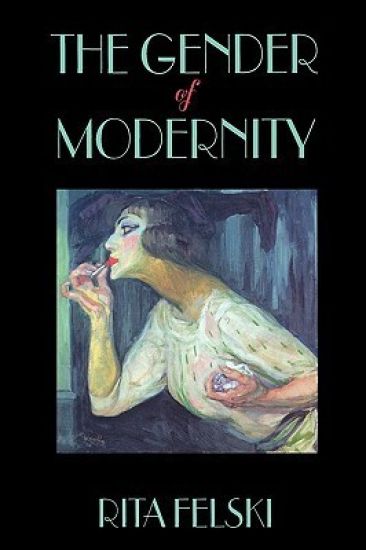
The Gender of Modernity

The Gender of Modernity

Rita Felski

Harvard University Press
1995
nidottu
In an innovative and invigorating exploration of the complex relations between women and the modern, Rita Felski challenges conventional male-centered theories of modernity. She also calls into question those feminist perspectives that have either demonized the modern as inherently patriarchal, or else assumed a simple opposition between men’s and women’s experiences of the modern world.Combining cultural history with cultural theory, and focusing on the fin de siècle, Felski examines the gendered meanings of such notions as nostalgia, consumption, feminine writing, the popular sublime, evolution, revolution, and perversion. Her approach is comparative and interdisciplinary, covering a wide variety of texts from the English, French, and German traditions: sociological theory, realist and naturalist novels, decadent literature, political essays and speeches, sexological discourse, and sentimental popular fiction. Male and female writers from Simmel, Zola, Sacher-Masoch, and Rachilde to Marie Corelli, Wilde, and Olive Schreiner come under Felski’s scrutiny as she exposes the varied and often contradictory connections between femininity and modernity.Seen through the lens of Felski’s discerning eye, the last fin de siècle provides illuminating parallels with our own. And Felski’s keen analysis of the matrix of modernism offers needed insight into the sense of cultural crisis brought on by postmodernism.
Doing Time

Doing Time

Rita Felski

New York University Press
2000
sidottu
Contemporary theory is full of references to the modern and the postmodern. How useful are these terms? What exactly do they mean? And how is our sense of these terms changing under the pressure of feminist analysis? In Doing Time, Rita Felski argues that it makes little sense to think of the modern and postmodern as opposing or antithetical terms. Rather, we need a historical perspective that is attuned to cultural and political differences within the same time as well as the leaky boundaries between different times. Neither the modern nor the postmodern are unified, coherent, or self-evident realities. Drawing on cultural studies and critical theory, Felski examines a range of themes central to debates about postmodern culture, including changing meanings of class, the end of history, the status of art and aesthetics, postmodernism as "the end of sex," and the politics of popular culture. Placing women at the center of analysis, she suggests, has a profound impact on the way we thing about historical periods. As a result, feminist theory is helping to reshape our vision of both the modern and the postmodern.
Doing Time

Doing Time

Rita Felski

New York University Press
2000
pokkari
Contemporary theory is full of references to the modern and the postmodern. How useful are these terms? What exactly do they mean? And how is our sense of these terms changing under the pressure of feminist analysis? In Doing Time, Rita Felski argues that it makes little sense to think of the modern and postmodern as opposing or antithetical terms. Rather, we need a historical perspective that is attuned to cultural and political differences within the same time as well as the leaky boundaries between different times. Neither the modern nor the postmodern are unified, coherent, or self-evident realities. Drawing on cultural studies and critical theory, Felski examines a range of themes central to debates about postmodern culture, including changing meanings of class, the end of history, the status of art and aesthetics, postmodernism as "the end of sex," and the politics of popular culture. Placing women at the center of analysis, she suggests, has a profound impact on the way we thing about historical periods. As a result, feminist theory is helping to reshape our vision of both the modern and the postmodern.
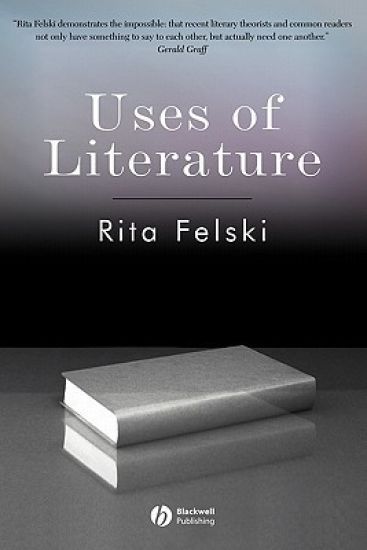
Uses of Literature

Uses of Literature

Rita Felski

Wiley-Blackwell (an imprint of John Wiley Sons Ltd)
2008
sidottu
Uses of Literature bridges the gap between literary theory and common-sense beliefs about why we read literature. Explores the diverse motives and mysteries of why we readOffers four different ways of thinking about why we read literature - for recognition, enchantment, knowledge, and shockArgues for a new “phenomenology” in literary studies that incorporates the historical and social dimensions of readingIncludes examples of literature from a wide range of national literary traditions
Uses of Literature

Uses of Literature

Rita Felski

Wiley-Blackwell (an imprint of John Wiley Sons Ltd)
2008
nidottu
Uses of Literature bridges the gap between literary theory and common-sense beliefs about why we read literature. Explores the diverse motives and mysteries of why we readOffers four different ways of thinking about why we read literature - for recognition, enchantment, knowledge, and shockArgues for a new “phenomenology” in literary studies that incorporates the historical and social dimensions of readingIncludes examples of literature from a wide range of national literary traditions
Kirjallisuuden hyödyllisyys

Kirjallisuuden hyödyllisyys

Rita Felski

VASTAPAINO
2024
nidottu
Lukijat liikuttuvat romaaneista, näytelmistä, runoista. Juuri tämä pitää kirjallisuuden hengissä.Professori Rita Felski pohtii kirjassaan Kirjallisuuden hyödyllisyys motiiveja ja mysteerejä, miksi luemme. Hän väittää, että kirjallisuuden lukemisen taustalla on halu tietää, tunnistaa, lumoutua ja järkyttyä. Kirja rakentaa siltoja kirjallisuudentutkimuksen teorioiden ja arkitiedon välille.Kirjallisuuden hyödyllisyys on kirjoitettu helposti lähestyttävällä tavalla. Se haastaa mukaansa kaikki, jotka ovat kiinnostuneita kirjallisuuden merkityksestä.