Kirjojen hintavertailu. Mukana 11 244 527 kirjaa ja 12 kauppaa.

Kirjahaku

Etsi kirjoja tekijän nimen, kirjan nimen tai ISBN:n perusteella.

7 kirjaa tekijältä Ritesh Modi

Deep-Dive Terraform on Azure
Get started with the foundations of Infrastructure as Code and learn how Terraform can automate the deployment and management of resources on Azure. This book covers all of the software engineering practices related to Terraform and Infrastructure as Code with Azure as a cloud provider.The book starts with an introduction to infrastructure as Code and covers basic concepts, principles, and tools, followed by an overview of Azure and Terraform that shows you how Terraform can be used to provision and manage Azure resources. You will get started writing multiple Terraform scripts and explore its various concepts. Author Ritesh Modi takes a deep dive into Terraform and teaches you about deployment and multiple resource creation using loops. Writing a reusable script using modules is discussed as well as management and administration of secrets, sensitive data, and passwords within Terraform code. You will learn to store and version Terraform scripts and know how Terraform is used in Azure DevOps pipelines. And you will write unit and integration tests for Terraform and learn its best practices. The book also highlights and walks through the Terraform Azure Provider and shows you a simple way to create a new Terraform provider.After reading this book, you will be able to write quality Terraform scripts that are secure by design, modular, and reusable in Azure.What Will You LearnUnderstand implementation within infrastructure and application deploymentsProvision resources in Azure using TerraformUse unit and integration testingExplore concepts such as local vs remote, importing state, workspaces, and backends Who This Book Is ForSoftware engineers, DevOps professionals, and technology architects
DevOps with Windows Server 2016

DevOps with Windows Server 2016

Ritesh Modi

Packt Publishing Limited
2017
nidottu
Obtain enterprise agility and continuous delivery by implementing DevOps with Windows Server 2016 About This Book • This practical learning guide will improve your application lifecycle management and help you manage environments efficiently • Showcase through a sample application ways to apply DevOps principles and practices in the real world • Implement DevOps using latest technologies in Windows Server 2016 such as Windows Container, Docker, and Nano Servers Who This Book Is For This book is for .NET developers and system administrators who have a basic knowledge of Windows Server 2016 and are now eager to implement DevOps at work using Windows Server 2016. Knowledge of Powershell, Azure, and containers will help. What You Will Learn • Take a deep dive into the fundamentals, principles, and practices of DevOps • Achieve an end-to-end DevOps implementation • Execute source control management using GITHUB and VSTS vNext • Automate the provisioning and configuration of infrastructure • Build and release pipeline • Measure the success of DevOps through application instrumentation and monitoring In Detail Delivering applications swiftly is one of the major challenges faced in fast-paced business environments. Windows Server 2016 DevOps is the solution to these challenges as it helps organizations to respond faster in order to handle the competitive pressures by replacing error-prone manual tasks using automation. This book is a practical description and implementation of DevOps principles and practices using the features provided by Windows Server 2016 and VSTS vNext. It jumps straight into explaining the relevant tools and technologies needed to implement DevOps principles and practices. It implements all major DevOps practices and principles and takes readers through it from envisioning a project up to operations and further. It uses the latest and upcoming concepts and technologies from Microsoft and open source such as Docker, Windows Container, Nano Server, DSC, Pester, and VSTS vNext. By the end of this book, you will be well aware of the DevOps principles and practices and will have implemented all these principles practically for a sample application using the latest technologies on the Microsoft platform. You will be ready to start implementing DevOps within your project/engagement. Style and approach This practical, learning book is linear and progressive, and every chapters builds on the previous chapters. We focus on the practical skills required to implement DevOps, with a summary of the key concepts only where strictly necessary.
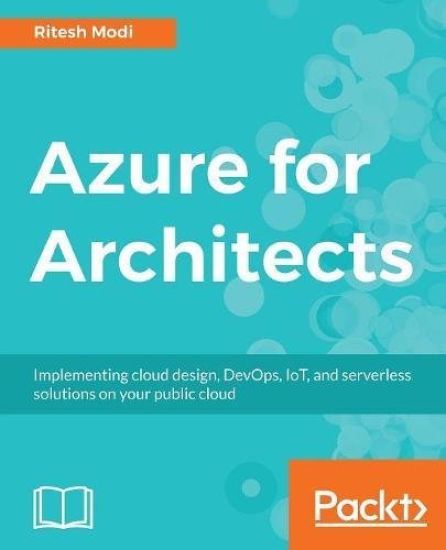
Azure for Architects

Azure for Architects

Ritesh Modi

Packt Publishing Limited
2017
nidottu
Your one stop guide to making the most out of Azure Cloud About This Book • Get familiar with the different design patterns available in Microsoft Azure • Develop Azure cloud architecture and a pipeline management system • Get to know the security best practices for your Azure deployment Who This Book Is For If you are Cloud Architects, DevOps Engineers, or developers who want to learn key architectural aspects of the Azure Cloud platform, then this book is for you. Prior basic knowledge of the Azure Cloud platform is good to have. What You Will Learn • Familiarize yourself with the components of the Azure Cloud platform • Understand the cloud design patterns • Use enterprise security guidelines for your Azure deployment • Design and implement Serverless solutions • See Cloud architecture and the deployment pipeline • Understand cost management for Azure solutions In Detail Over the years, Azure cloud services has grown quickly, and the number of organizations adopting Azure for their cloud services is also gradually increasing. Leading industry giants are finding that Azure fulfills their extensive cloud requirements. This book will guide you through all the important and tough decision-making aspects involved in architecturing a Azure public cloud for your organization. The book starts with an extensive introduction to all the categories of designs available with Azure. These design patterns focus on different aspects of cloud such as high availability, data management, and so on. Gradually, we move on to various aspects such as building your cloud structure and architecture. It will also include a brief description about different types of services provided by Azure, such as Azure functions and Azure Analytics, which can prove beneficial for an organization. This book will cover each and every aspect and function required to develop a Azure cloud based on your organizational requirements. By the end of this book, you will be in a position to develop a full-fledged Azure cloud. Style and approach This hands-on guide to the Azure Cloud platform covers different architectural concepts and implementations necessary for any enterprise scale deployment.
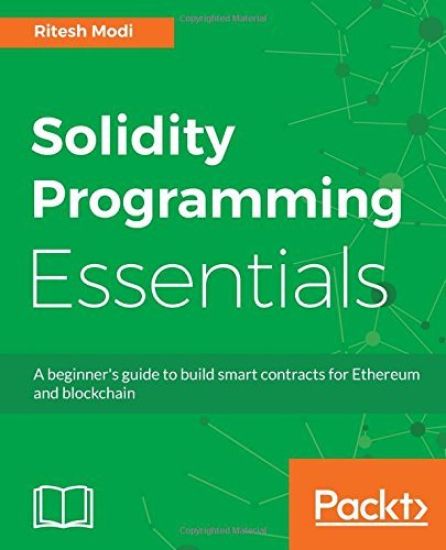
Solidity Programming Essentials

Solidity Programming Essentials

Ritesh Modi

Packt Publishing Limited
2018
nidottu
Learn the most powerful and primary programming language for writing smart contracts and find out how to write, deploy, and test smart contracts in Ethereum.Key FeaturesGet you up and running with Solidity Programming language Build Ethereum Smart Contracts with Solidity as your scripting language Learn to test and deploy the smart contract to your private Blockchain Book DescriptionSolidity is a contract-oriented language whose syntax is highly influenced by JavaScript, and is designed to compile code for the Ethereum Virtual Machine. Solidity Programming Essentials will be your guide to understanding Solidity programming to build smart contracts for Ethereum and blockchain from ground-up.We begin with a brief run-through of blockchain, Ethereum, and their most important concepts or components. You will learn how to install all the necessary tools to write, test, and debug Solidity contracts on Ethereum. Then, you will explore the layout of a Solidity source file and work with the different data types. The next set of recipes will help you work with operators, control structures, and data structures while building your smart contracts. We take you through function calls, return types, function modifers, and recipes in object-oriented programming with Solidity. Learn all you can on event logging and exception handling, as well as testing and debugging smart contracts.By the end of this book, you will be able to write, deploy, and test smart contracts in Ethereum. This book will bring forth the essence of writing contracts using Solidity and also help you develop Solidity skills in no time.What you will learnLearn the basics and foundational concepts of Solidity and Ethereum Explore the Solidity language and its uniqueness in depthCreate new accounts and submit transactions to blockchainGet to know the complete language in detail to write smart contractsLearn about major tools to develop and deploy smart contractsWrite defensive code using exception handling and error checkingUnderstand Truffle basics and the debugging processWho this book is forThis book is for anyone who would like to get started with Solidity Programming for developing an Ethereum smart contract. No prior knowledge of EVM is required.
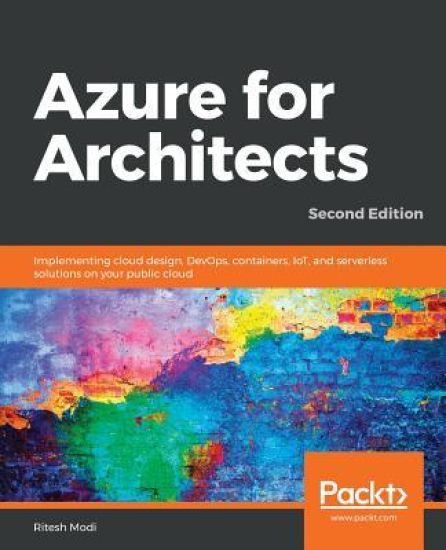
Azure for Architects

Azure for Architects

Ritesh Modi

Packt Publishing Limited
2019
nidottu
Create advanced data and integrated solutions using Azure Event Grid, functions, and containersKey FeaturesGet familiar with the different design patterns available in Microsoft AzureDevelop Azure cloud architecture and a pipeline management systemGet to know the security best practices for your Azure deploymentBook DescriptionOver the years, Azure cloud services have grown quickly, and the number of organizations adopting Azure for their cloud services is also gradually increasing. Leading industry giants are finding that Azure fulfills their extensive cloud requirements.Azure for Architects – Second Edition starts with an extensive introduction to major designing and architectural aspects available with Azure. These design patterns focus on different aspects of the cloud, such as high availability, security, and scalability. Gradually, we move on to other aspects, such as ARM template modular design and deployments.This is the age of microservices and serverless is the preferred implementation mechanism for them. This book covers the entire serverless stack available in Azure including Azure Event Grid, Azure Functions, and Azure Logic Apps. New and advance features like durable functions are discussed at length. A complete integration solution using these serverless technologies is also part of the book. A complete chapter discusses all possible options related to containers in Azure including Azure Kubernetes services, Azure Container Instances and Registry, and Web App for Containers.Data management and integration is an integral part of this book that discusses options for implementing OLTP solutions using Azure SQL, Big Data solutions using Azure Data factory and Data Lake Storage, eventing solutions using stream analytics, and Event Hubs. This book will provide insights into Azure governance features such as tagging, RBAC, cost management, and policies.By the end of this book, you will be able to develop a full-?edged Azure cloud solution that is Enterprise class and future-ready.What you will learnCreate an end-to-end integration solution using Azure Serverless StackLearn Big Data solutions and OLTP–based applications on AzureUnderstand DevOps implementations using Azure DevOpsArchitect solutions comprised of multiple resources in AzureDevelop modular ARM templatesDevelop Governance on Azure using locks, RBAC, policies, tags and costLearn ways to build data solutions on AzureUnderstand the various options related to containers including Azure Kubernetes ServicesWho this book is forIf you are Cloud Architects, DevOps Engineers, or developers who want to learn key architectural aspects of the Azure Cloud platform, then this book is for you. Prior basic knowledge of the Azure Cloud platform is good to have.
Azure Resource Manager Templates Quick Start Guide

Azure Resource Manager Templates Quick Start Guide

Ritesh Modi

Packt Publishing Limited
2019
nidottu
Compose and decompose ARM templates and use advanced concepts like looping, conditions, dependencies, PowerShell and Desired State Configuration.Key FeaturesDesign, implement, and unit test ARM templatesDevelop and deploy ARM templates following security best practicesBook DescriptionAzure Resource Manager (ARM) templates are declarations of Azure resources in the JSON format to provision and maintain them using infrastructure as code. This book gives practical solutions and examples for provisioning and managing various Azure services using ARM templates.The book starts with an understanding of infrastructure as code, a refresher on JSON, and then moves on to explain the fundamental concepts of ARM templates. Important concepts like iteration, conditional evaluation, security, usage of expressions, and functions will be covered in detail. You will use linked and nested templates to create modular ARM templates. You will see how to create multiple instances of the same resources, how to nest and link templates, and how to establish dependencies between them. You will also learn about implementing design patterns, secure template design, the unit testing of ARM templates, and adopting best practices.By the end of this book, you will understand the entire life cycle of ARM templates and their testing, and be able to author them for complex deployments.What you will learnUnderstand the foundations of ARM templates including nested and linked templatesDesign, create, and unit test ARM templates using best practicesLearn about conditional deployments, looping, Custom Script Extensions using PowerShell, Bash, and DSCImplement design patterns related to ARM templatesRun post-deployment PowerShell and Desired State Configuration scriptsCreate solutions and deploy them on Azure using ARM templatesWho this book is forThis books is for developers, DevOps engineers, and architects who have experience in Azure.
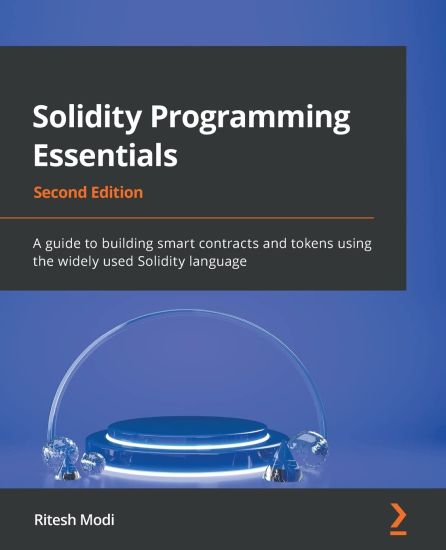
Solidity Programming Essentials

Solidity Programming Essentials

Ritesh Modi

PACKT PUBLISHING LIMITED
2022
nidottu
A comprehensive guide sprinkled with lots of hands-on code samples to get you up and running with Solidity and writing your smart contracts on Blockchain and EthereumKey FeaturesLearn proven smart contract implementation challenges and solve them using SolidityGo deeper into Solidity to write effective upgradable and maintainable smart contracts using best practicesGet to grips with the latest version of Solidity with updated codes and examplesBook DescriptionSolidity is a high-level language for writing smart contracts, and the syntax has large similarities with JavaScript, thereby making it easier for developers to learn, design, compile, and deploy smart contracts on large blockchain ecosystems including Ethereum and Polygon among others. This book guides you in understanding Solidity programming from scratch.The book starts with step-by-step instructions for the installation of multiple tools and private blockchain, along with foundational concepts such as variables, data types, and programming constructs. You'll then explore contracts based on an object-oriented paradigm, including the usage of constructors, interfaces, libraries, and abstract contracts. The following chapters help you get to grips with testing and debugging smart contracts. As you advance, you'll learn about advanced concepts like assembly programming, advanced interfaces, usage of recovery, and error handling using try-catch blocks. You'll also explore multiple design patterns for smart contracts alongside developing secure smart contracts, as well as gain a solid understanding of writing upgradable smart concepts and data modeling. Finally, you'll discover how to create your own ERC20 and NFT tokens from scratch.By the end of this book, you will be able to write, deploy, and test smart contracts in Ethereum.What you will learnWrite efficient, effective, and secure smart contractsCode, compile, and test smart contracts in an object-oriented wayImplement assembly code in SolidityAdopt upgradable and haltable ownership and security design patternsUnderstand exception handling and debugging in SolidityCreate new ERC20 and NFT tokens from the ground upWho this book is forThis Ethereum book is primarily aimed at beginners who want to get started with Solidity Programming for developing an Ethereum smart contract. No prior knowledge of EVM is required, but knowing the basics of any programming language will help you follow along.