Kirjojen hintavertailu. Mukana 12 595 353 kirjaa ja 12 kauppaa.

Kirjahaku

Etsi kirjoja tekijän nimen, kirjan nimen tai ISBN:n perusteella.

16 kirjaa tekijältä Rob Couteau, Jim Feast

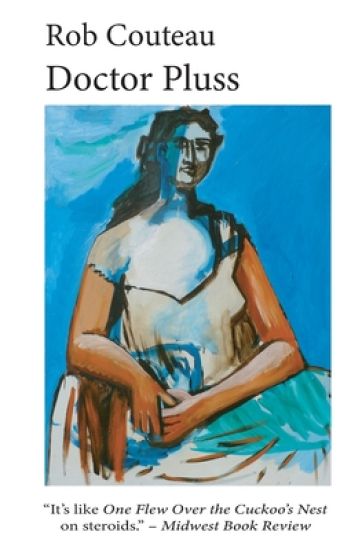
Doctor Pluss (Third, Revised Edition)

Doctor Pluss (Third, Revised Edition)

Rob Couteau; Jim Feast

Dominantstar
2020
pokkari
Critical acclaim for Doctor Pluss "Doctor Pluss is exceptionally well developed and emotionally compelling, connecting metaphorical description with experiences that often challenge the traditional roles of doctor and patient, linking them in unexpected ways ... Couteau is not afraid to push the literary boundaries of convention in pursuit of a different form of descriptive truth, bringing readers along in a rollicking ride through schizophrenic experience that ultimately questions the foundations of reality and perception from both sides of the therapist's couch ... His interpretations and descriptions of the schizophrenic experience are particularly astute, astonishing, and evocatively described ... Readers who choose Doctor Pluss are in for a treat. It's like One Flew Over the Cuckoo's Nest on steroids: a thought-provoking examination of sanity, insanity, and the crossover process that leaves readers thinking long after this therapeutic slice of life is consumed." - Diane Donovan, Midwest Book Review (April 2020)."Amazingly beautiful, haunting prose. It's a great book." - Christopher Sawyer-Lau anno, author of The Continual Pilgrimage: American Writers in Paris (City Lights), An Invisible Spectator: A Biography of Paul Bowles (Grove Press)."Intellectual freshness, richness, and potency ... Couteau is an impressively creative writer, whom Barney Rosset urged me to review." - Jim Feast, former assistant editor of the Evergreen Review.
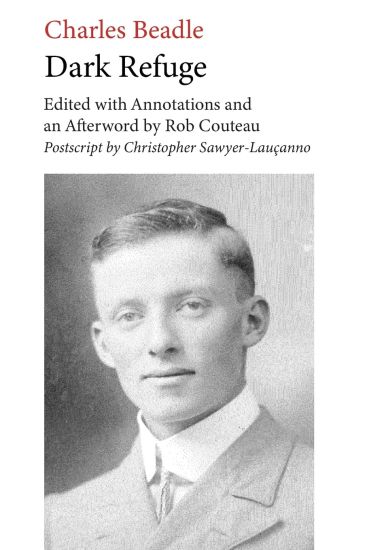
Dark Refuge. Edited with Annotations and an Afterword by Rob Couteau
In 1938 Jack Kahane's Obelisk Press published Beadle's last novel, Dark Refuge: an unrecognized modern masterpiece that quickly fell into obscurity despite its literary merit and lyrical beauty. It contains thinly disguised portraits of Modigliani, Max Jacob, Beatrice Hastings, Natalie Clifford Barney, L opold Zborowski, and various other figures who haunted the Parisian demimonde of this period.
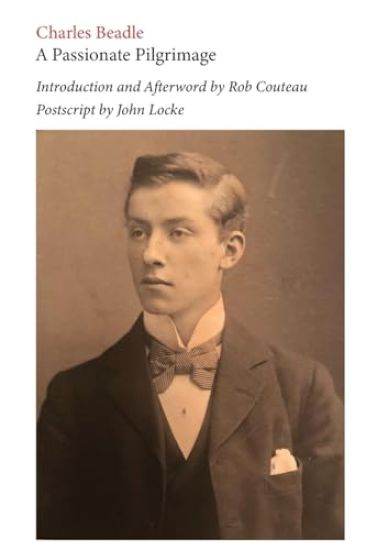
A Passionate Pilgrimage. Edited with an Introduction and Afterword by Rob Couteau
In 1915, Charles Beadle had the honor of creating a banned literary novel, A Passionate Pilgrimage, one of ten books blacklisted between 1914 and 1916 by Britain's Circulating Libraries Association. By today's standards, there's nothing lewd, graphic, or obscene in this largely autobiographical confession. But for the Britain of 1915, Beadle's carefree portrayal of casual sensual encounters between an unmarried protagonist ("Jim") and various members of the opposite sex was a literary taboo - especially since it doesn't lead to moral retribution. Instead of suffering a fateful nemesis, Jim is focused on how to express his natural instincts without being waylaid by hypocritical doublethink. He also holds unconventional views regarding marriage, religion, and the forging of a personal life philosophy. Bucking the collective morality, he even empathizes with the plight of sex workers, whom he regards as victims deprived of a better life simply because of a bad roll of the dice. The author's sympathetic portrayal of Jim's romantic relationship with a dark-skinned African native, whom he regards as a more worthwhile companion than her "proper" Victorian counterparts, must have been a difficult pill for the contemporary puritans to swallow. Such notions flew in the face of the "Genteel Tradition" of Anglo-Saxon literature: a convention of "cautious Victorianism" that was about to crumble under fledgling but mounting attacks by courageous authors such as Theodore Dreiser (another censored innovator, with whom Beadle was personally acquainted), who sought to explore the unspoken realities of contemporary life. The upcoming decade of the Twenties would mark a full-frontal assault by the literary giants of the avant-garde; thus, A Passionate Pilgrimage appears at the very cusp of this creative revolution. Drawing directly from personal experience, Beadle affords us a rare glimpse into the underbelly of Victorian society, breaking through the "mind-forg'd manacles" of what was then considered an "acceptable" or "tasteful" tale and exploring points of view that only an anti-Victorian story might dare encompass. With the Obelisk Press publication of his seventh novel, Dark Refuge (1938), he produced an even more provocative chronicle - and one that was also banned in the Anglo-Saxon world due to its brazen portrayal of the Parisian demimonde of the interwar years. Therefore, both of these censored books portray the shifting mores of the times and encompass a major trajectory in the author's life. Newly revised, with over 200 annotations.
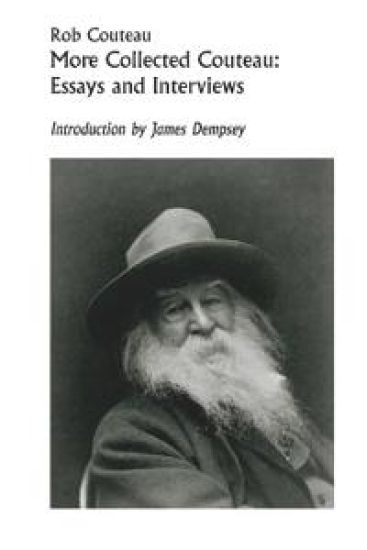
More Collected Couteau

More Collected Couteau

Rob Couteau

Dominantstar
2020
pokkari
Literary essays on Marion Morehouse, Hubert Selby, Henry Miller, and Jack Kerouac; interviews with Albert Hofmann (about LSD), Michael Korda (about T.E. Lawrence and Ulysses S. Grant), Jeffrey Jackson (about the Paris flood of 1910), Robert Roper (about Walt Whitman and Nabokov's Lolita, Justin Kaplan (about Mark Twain and Walt Whitman's Leaves of Grass), Christopher Sawyer-Lau anno (about E.E. Cummings, James Dempsey (about Scofield Thayer).
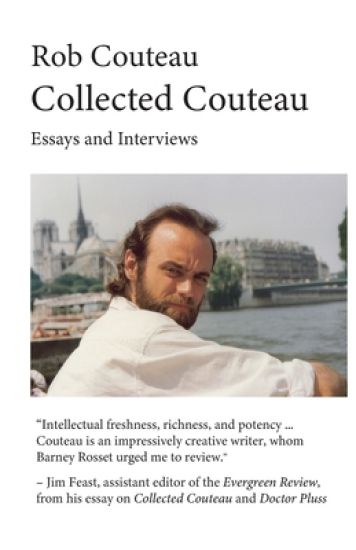
Collected Couteau. Essays and Interviews (Third, Revised Edition)
Collected Couteau features an anthology the author's early writings and publications. It contains the only complete, unabridged versions of interviews with Ray Bradbury and Last Exit to Brooklyn author Hubert Selby. The 188-page trade-sized paperback also features an unabridged interview with Paul Bowles's biographer Christopher Sawyer-Lau anno, in which the latter discusses Paul Bowles, Allen Ginsberg, William Burroughs, Louis-Ferdinand C line, and the Beats. The collection includes an essay on Walt Whitman and numerous book reviews, including essays on Tea in the Harem, by Mehdi Charef; The Demon and The Room, by Hubert Selby; Libra, by Don DeLillo; Love in the Time of Cholera, by Gabriel Garcia Marquez; The Mustache, by Emmanuel Carr re; A Literate Passion: The Letters of Anais Nin and Henry Miller, and a review of Allen Ginsberg's 1990 photography show in Paris. It also contains an in-depth review of Carl Jung: Wounded Healer of the Soul, by Claire Dunne; and Jung, My Mother and I. The Analytic Diaries of Catherine Rush Cabot, by Jane Cabot Reid.
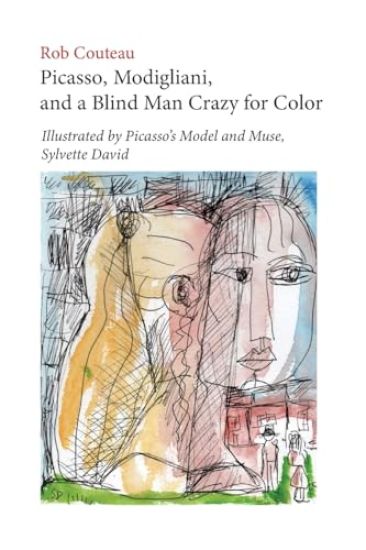
Picasso, Modigliani, and a Blind Man Crazy for Color. Illustrated by Picasso's Model and Muse, Sylvette David. Second, Revised Edition
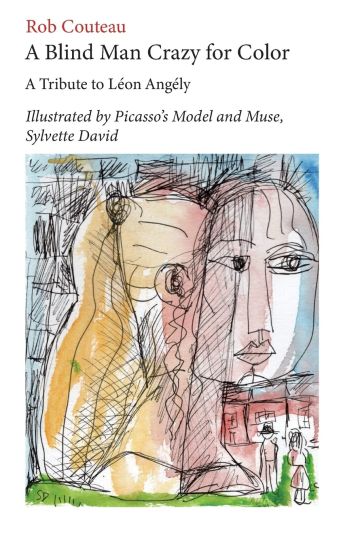
In the early years of the twentieth century, a retired legal clerk in Montmartre named Leon Angely collected Picassos, Modiglianis, and Utrillos before any of these artists were well known. And he purchased many of these creations after his failing vision left him almost completely blind. Legend has it that Leon was assisted by a young girl who served as his "eyes," and based on her description of the work he would make his selections. This homage to the 'blind man who was crazy for color' uncovers previously unknown information about this important yet largely forgotten figure who inspired one of Picasso's most powerful engravings, featuring a 'Blind Minotaur' being led by a little girl. The book is illustrated with original artwork by Picasso's model and muse, Sylvette David, who posed for the painter when she was only nineteen years old, in 1954. Now eighty-seven, Sylvette credits Picasso with inspiring her to devote her life to painting. Her work is frequently exhibited in Europe, and in 2021 she was invited to lecture at the Musee Picasso is Paris.
Intimate Souvenirs

Intimate Souvenirs

Rob Couteau; Christopher Sawyer-Laucanno

Dominantstar
2023
pokkari
A literary memoir about a writer's coming of age in Gravesend, Brooklyn in the 1960s and 1970s; working with the homeless mentally ill in the Lower East Side in the 1980s; and expatriation to Paris in the 1990s. Includes a frontispiece illustration by Picasso's model and muse, Sylvette David, an Introduction by Robert Roper, and an Afterword by Christopher Sawyer-Laucanno.
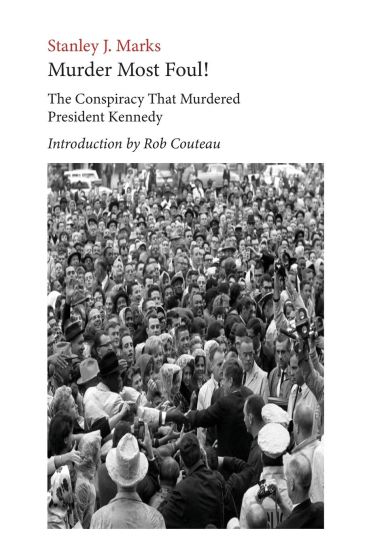
A Murder Most Foul! A Three-act Play about the JFK Assassination

A Murder Most Foul! A Three-act Play about the JFK Assassination

Stanley J Marks; Rob Couteau; James DiEugenio

Dominantstar
2023
pokkari
This never-before-published three-act play about the JFK assassination was originally copyrighted in 1968 by Stanley J. Marks, author of the groundbreaking "Murder Most Foul The Conspiracy That Murdered President Kennedy" (1967). A fearless author who was blacklisted by HUAC, Marks published about twenty books on politics and religion, one of which received accolades from Arnold Toynbee and Herbert Marcuse. His first book, The Bear That Walks Like a Man, a bestseller reviewed in over thirty newspapers, received praise from FDR's former ambassador to Poland. In 1973 the JFK Library contacted Marks with a request to purchase Murder Most Foul , his first nonfiction book on the JFK case. And in 1979 the House of Representatives Select Subcommittee on Assassinations cited five of Marks' titles in its report.
Dark Refuge

Dark Refuge

Charles Beadle; Rob Couteau; Christopher Sawyer-Laucanno

Dominantstar
2024
pokkari
A lost modern masterpiece, Dark Refuge is now available for the first time since 1938. No other Anglo-Saxon author from this period describes the Parisian demimonde so accurately, because to do so would risk being thrown into jail. With thinly disguised portraits of Modigliani, Max Jacob, Beatrice Hastings, Natalie Clifford Barney, Leopold Zborowski, and other legendary modernists who haunt the underworld of the 1910s and '20s, its brazen account of drug-fueled pansexual orgies prevented the censorable chronicle from being distributed outside of France, despite its literary merit and lyrical beauty. The author of seven other novels, Charles Beadle was a world traveler who was born at sea in 1881. When he was 18 years old he spent a dozen years exploring Africa. In his mid-20s he organized an expedition to Fez and traveled there disguised as a dancing girl, to interview the sultan of Morocco. In the 1910s he lived in Montmartre, where he befriended Beatrice Hastings, the mistress of Modigliani and translator of Max Jacob. Modigliani later portrayed Beadle in a drawing. During WWI he journeyed across America and published genre fiction in Adventure magazine. After the war he returned to Paris, later moving to the Riviera. In 1941 Faber and Faber published Artist Quarter, a nonfiction work co-authored by Beadle and Douglas Goldring and considered to be the urtext of all Modigliani biography. Published for the first time since 1938, this edition of Dark Refuge features over 200 annotated notes that include previously unknown details about the author's life and that create a multileveled context for the novel. This is followed by an Afterword, "The Dark Refuge of Charles Beadle," in which Rob Couteau traces Beadle's biography from his earliest years to his disappearance in the 1940s. It includes previously unpublished letters, documents, and photos as well an artfully rendered summary and analysis of Beadle's greatest work. In a brief Postscript, author Christopher Sawyer-Lau anno concludes that Beadle has created "a tremendous modernist novel that should rank among other classics such as Tropic of Cancer, Nightwood, Nadja, Ulysses, To the Lighthouse, and, of course, Naked Lunch." This is the Third, Revised Edition.
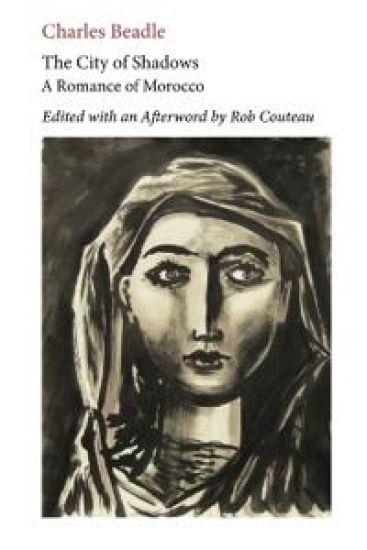
The City of Shadows

The City of Shadows

Charles Beadle; Rob Couteau

Dominantstar
2025
pokkari
The 1908 Battle of Marrakech forms the narrative nucleus of Charles Beadle's first novel, now back in print for the first time since 1911. The battle resulted in the defeat of Sultan Aziz, who was deposed by his brother, the "Pretender" Sultan Moulay Hafid, whom Beadle interviewed a few months before Hafid usurped the throne. Although the details of the skirmish remain murky, historians regard Beadle's novel as the most accurate account of the conflict. The City of Shadows also portrays a story of forbidden love between Zahra, a young native Moroccan woman, and the protagonist, a British adventurer named Paul. Reminiscent of Tristan and Isolde, Zahra's declaration of love violates fundamental social hierarchies and religious traditions, yet she decides that punishment, banishment, or even death is a small price to pay for following her heart.