Kirjojen hintavertailu. Mukana 12 016 292 kirjaa ja 12 kauppaa.

Kirjahaku

Etsi kirjoja tekijän nimen, kirjan nimen tai ISBN:n perusteella.

13 kirjaa tekijältä Rob Dunn

Every Living Thing

Every Living Thing

Rob Dunn

HarperPerennial
2012
nidottu
"If you have any interest in life beyond your own, you should read this book." -Paul R. Ehrlich, author of The Dominant Animal Biologist Rob Dunn's Every Little Thing is the story of man's obsessive quest to catalog life, from nanobacteria to new monkeys. In the tradition of E.O. Wilson, this engaging and fascinating work of popular science follows humanity's unending quest to discover every living thing in our natural world-from the unimaginably small in the most inhospitable of places on earth to the unimaginably far away in the unexplored canals on Mars.
The Wild Life of Our Bodies

The Wild Life of Our Bodies

Rob Dunn

HarperPerennial
2015
nidottu
"An extraordinary book...With clarity and charm [Dunn] takes the reader into the overlap of medicine, ecology, and evolutionary biology to reveal an important domain of the human condition."-Edward O. Wilson, author of Anthill and The Future of Life Biologist Rob Dunn reveals the crucial influence that other species have upon our health, our well being, and our world in The Wild Life of Our Bodies-a fascinating tour through the hidden truths of nature and codependence. Dunn illuminates the nuanced, often imperceptible relationships that exist between homo sapiens and other species, relationships that underpin humanity's ability to thrive and prosper in every circumstance. Readers of Michael Pollan's The Omnivore's Dilemma will be enthralled by Dunn's powerful, lucid exploration of the role that humankind plays within the greater web of life on Earth.
The Man Who Touched His Own Heart

The Man Who Touched His Own Heart

Rob Dunn

Little, Brown Company
2015
sidottu
The Man Who Touched His Own Heart tells the raucous, gory, mesmerizing story of the heart, from the first "explorers" who dug up cadavers and plumbed their hearts' chambers, through the first heart surgeries-which had to be completed in three minutes before death arrived-to heart transplants and the latest medical efforts to prolong our hearts' lives, almost defying nature in the process.Thought of as the seat of our soul, then as a mysteriously animated object, the heart is still more a mystery than it is understood. Why do most animals only get one billion beats? (And how did modern humans get to over two billion-effectively letting us live out two lives?) Why are sufferers of gingivitis more likely to have heart attacks? Why do we often undergo expensive procedures when cheaper ones are just as effective? What do Da Vinci, Mary Shelley, and contemporary Egyptian archaeologists have in common? And what does it really feel like to touch your own heart, or to have someone else's beating inside your chest? Rob Dunn's fascinating history of our hearts brings us deep inside the science, history, and stories of the four chambers we depend on most.
Never Out of Season

Never Out of Season

Rob Dunn

Little, Brown Company
2017
sidottu
Did you know that 10 plants make up 80% of our plant-based food supply? That the bananas we eat today were standardized in the 1960s, into one consistent strain, and that they are succumbing to a pathogen that might wipe them out? That an $8 cup of coffee is just around the corner? Our food supply is heavily and increasingly corporate, streamlined for efficiencies from seed to store. Those efficiencies make bananas and coffee cheap; make wheat, rice, and beef prevalent; and all but guarantee that food tastes the same every time we eat--and they also mean that the foods we depend on most are one bug or virus away from disappearing.The lesson, as told by science writer and biologist Rob Dunn through rich history and science and via characters and scenes, is to eat the way we always used to--locally, in season, and with an eye towards preserving food quality for the human race. Rigorously researched and highly provocative, this is the book to read if you want to know about the future of our food.
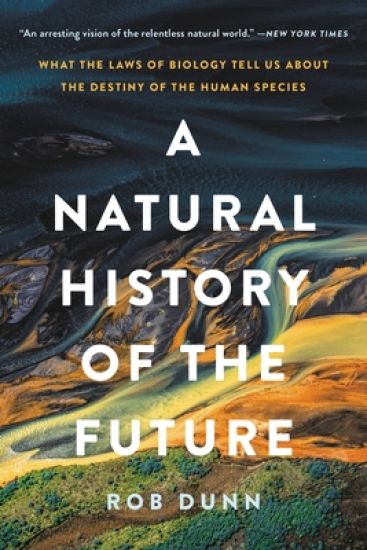
A Natural History of the Future: What the Laws of Biology Tell Us about the Destiny of the Human Species
"An arresting vision of this relentless natural world" (New York Times) by a leading ecologist, who urges us to heed nature's iron laws Our species has amassed unprecedented knowledge of nature, which we have tried to use to seize control of life and bend the planet to our will. In A Natural History of the Future, biologist Rob Dunn argues that such efforts are futile. We may see ourselves as life's overlords, but we are instead at its mercy. In the evolution of antibiotic resistance, the power of natural selection to create biodiversity, and even the surprising life of the London Underground, Dunn finds laws of life that no human activity can annul. When we create artificial islands of crops, dump toxic waste, or build communities, we provide new materials for old laws to shape. Life's future flourishing is not in question. Ours is. As ambitious as Edward O. Wilson's Sociobiology and as timely as Elizabeth Kolbert's The Sixth Extinction, A Natural History of the Future sets a new standard for understanding the diversity and destiny of life itself.
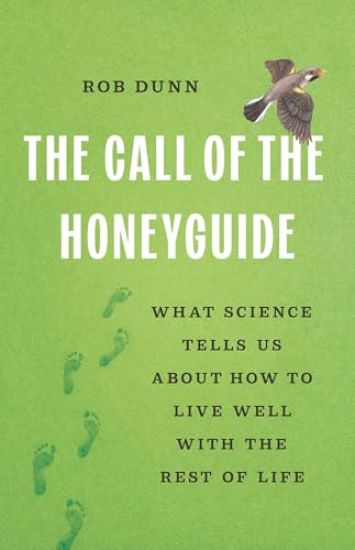
The Call of the Honeyguide

The Call of the Honeyguide

Rob Dunn

BASIC BOOKS
2025
sidottu
How rethinking our relationships with other species can help us reimagine the future of humankind In the woodlands of sub-Saharan Africa, sometime deep in our species' past, something strange happened: a bird called out, not to warn others of human presence, but to call attention to herself. Having found a beehive, that bird-a honeyguide-sought human aid to break in. The behavior can seem almost miraculous: How would a bird come to think that people could help her? Isn't life simply bloodier than that? As Rob Dunn argues in The Call of the Honeyguide, it isn't. Nature is red in tooth and claw, but in equal measure, life works together. Cells host even smaller life, wrapped in a web of mutual interdependence. Ants might go to war, but they also tend fungi, aphids, and even trees. And we humans work not just with honeyguides but with yeast, crops, and pets. Ecologists call these beneficial relationships mutualisms. And they might be the most important forces in the evolution of life. We humans often act as though we are all alone, independent from the rest of life. As The Call of the Honeyguide shows, we are not. It is a call to action for a more beneficent, less lonely future.
Never Home Alone

Never Home Alone

Rob Dunn

Basic Books
2019
pokkari
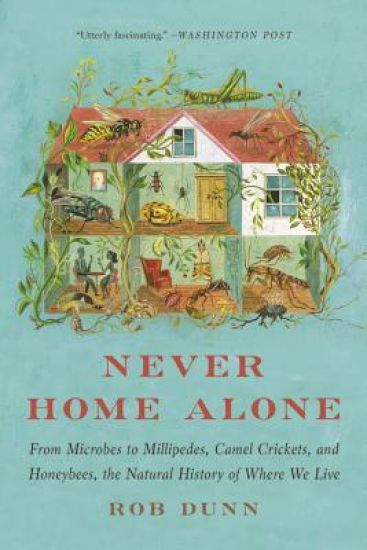
In Never Home Alone, biologist Rob Dunn takes us to the edge of biology's latest frontier: our own homes. Every house is a wilderness -- from the Egyptian meal moths in our kitchen cupboards and the yeast in a sourdough starter, to the camel crickets living in the basement, to the thousands of species of insects, bacteria, fungi, and plants live literally under our noses. Our reaction, too often, is to sterilize. As we do, we unwittingly cultivate an entirely new playground for evolution. Unfortunately, this means that we have created a range of new parasites, from antibiotic-resistant microbes to nearly impossible to kill cockroaches, to threaten ourselves with, and destroyed helpful housemates. If we're not careful, the "healthier" we try to make our homes, the more likely we'll be putting our own health at risk.A rich natural history and a thrilling scientific investigation, Never Home Alone shows us that if are to truly thrive in our homes, we must learn to welcome the unknown guests that have been there the whole time.
Never Home Alone

Never Home Alone

Rob Dunn

Basic Books
2019
sidottu
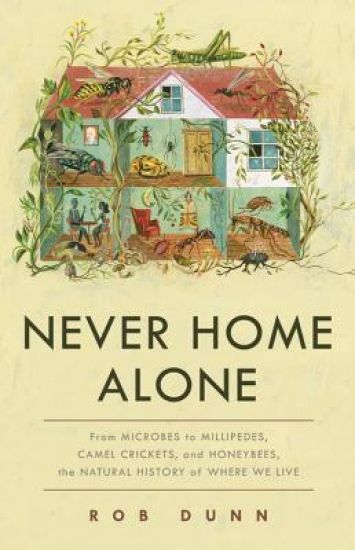
It's the dream scenario for many of us after a long week: having the house completely to ourselves. No partners, no parents, no kids, no pets. But as we settle into the couch, something stirs: maybe a mouse darts out from under a cupboard, or a fly buzzes lazily past the window. We're not actually alone at all. Until quite recently, no one had taken the life that lives with us very seriously: until Rob Dunn and his team decided to take a closer look. Upon investigating the terra incognita of our homes, they discovered that there are nearly 200,000 species living in our bedrooms, kitchens, living areas, bathrooms, and basements. Some of these species can kill us. Some benefit us. And some seem simply benign. But almost all of them were completely unknown--and they've been living alongside us the whole time.In Never Home Alone, biologist Rob Dunn takes us to the edge of biology's latest frontier: our own homes. Every house is a wilderness--from the Egyptian meal moths in our cupboards, to the camel crickets living in the basement, to the antibiotic-resistant Staphylococcus waiting on the kitchen counter, thousands of species of insects, bacteria, fungi, and plants live literally under our noses. As we have become increasingly obsessed with cleaning and sterilizing our homes and separating our living spaces from nature, we have unwittingly cultivated an entirely new playground for evolution. Unfortunately, this means that we have created a range of new parasites, from antibiotic-resistant microbes to nearly impossible to kill cockroaches, to threaten ourselves with. At the same time, many of the more helpful organisms--such as microbes that can protect us from autoimmune diseases or promote healthy digestion, or the centipedes that can hunt down those pesky roaches--are caught in the crosshairs. If we're not careful, the "healthier" we try to make our homes, the more likely we'll be putting our own health at risk.A rich natural history and a thrilling scientific investigation, Rob Dunn's Never Home Alone shows us that if are to truly thrive in our homes, we must learn to welcome the unknown guests that have been there the whole time.
Never Home Alone

Never Home Alone

Rob Dunn

Basic Books
2020
nidottu
In Never Home Alone, biologist Rob Dunn takes us to the edge of biology's latest frontier: our own homes. Every house is a wilderness -- from the Egyptian meal moths in our kitchen cupboards and the yeast in a sourdough starter, to the camel crickets living in the basement, to the thousands of species of insects, bacteria, fungi, and plants live literally under our noses. Our reaction, too often, is to sterilise. As we do, we unwittingly cultivate an entirely new playground for evolution. Unfortunately, this means that we have created a range of new parasites, from antibiotic-resistant microbes to nearly impossible to kill cockroaches, to threaten ourselves with and destroyed helpful housemates. If we're not careful, the "healthier" we try to make our homes, the more likely we'll be putting our own health at risk.A rich natural history and a thrilling scientific investigation, Never Home Alone shows us that if are to truly thrive in our homes, we must learn to welcome the unknown guests that have been there the whole time.
Nie allein zu Haus

Nie allein zu Haus

Rob Dunn

Springer
2021
nidottu
Dieses Buch lässt einen das eigene Zuhause mit anderen Augen sehen.Selbst wenn die Böden blitzsauber sind und das Haus leer erscheint, sind unsere Häuser voller Leben. In Nie allein zu Haus stellt uns der Biologe Rob Dunn die fast 200.000 Arten vor, die bei uns zu Hause leben, von den ägyptischen Mehlmotten in unseren Schränken über die Kamelgrillen in unseren Kellern bis hin zum Laktobazillus, der auf unseren Küchenarbeitsplatten lebt. Während wir davon besessen sind, unsere Häuser zu sterilisieren und unsere Räume von der Natur zu trennen, bauen wir unbewusst einen völlig neuen Spielplatz für die Evolution. Der neue Lebensraum beeinflusst die Organismen, die mit uns leben, bringt einige dazu gefährlicher zu werden, und untergräbt gleichzeitig jene Arten, die unserem Körper gut tun oder uns helfen, bedrohlichere Organismen in Schach zu halten.
Tuleviku looduslugu

Tuleviku looduslugu

Rob Dunn

Rahva raamat
2023
nidottu
Viimase saja aasta jooksul on inimene kogunud tohutul hulgal teadmisi loodusest ja puudnud nendesamade teadmiste abil ennenagematult jouliselt loodust ka allutada. Me ehitame jogedele tammisid ja viljeleme uuratutel poldudel monokultuure, uritades alatasa loodust oma tahtmist mooda vormida. Vormida nii jouliselt, et tundub, nagu voiksime seda tehes looduse sootuks havitada. Raamatus "Tuleviku looduslugu" vaidab bioloog Rob Dunn, et see pole kaugeltki nii. Selle asemel et kusida, kas loodus suudab inimtegevusele vastu pidada, peaksime hoopis kusima, kas inimene suudab jaada ellu looduse meelevallas. Hoolimata meie puudlustest loodust endale allutada, on elul omad reeglid ja inimene neid umber teha ei suuda. Selgitades lugejale pohilisi okoloogia-, evolutsiooni- ja biogeograafiaseadusi, naitab Dunn, miks elu ei saa peatada. Me kasvatame oma pollukultuure monopoldudel, kuid avastame siis, et tekkinud on uued eluvormid, mis neid rundavad. Me viskame loodusesse murgiseid jaatmeid ja naeme siis, et prugilademes on hakanud vohama mikroobid. Londoni metroos on koguni tekkinud uus saaseliik, mis elab edukalt nailiselt ebasoodsas elupaigas. Me ei suuda elule katt ette panna, olgu meie plaanid kui tahes kavalad. Dunn naitab, miks on ohus hoopis inimese, mitte looduse tulevik. "Vaimustav, sokeeriv ja inspireeriv tuleviku kasiraamat uhe meie aja koige loomingulisema ja sonaosavama bioloogi sulest. Dunni raamat on tais tabavaid, viimastel teadusavastustel pohinevaid tahelepanekuid Maal elamise imedest ja hadadest."-DAVID GEORGE HASKELL, raamatu "The Forest Unseen" autor "Veidrad uued urbaniseerunud liigid, viirused, mis mooda maamuna levides endale ohvreid otsivad ja suurim valjakutse, mis elul Maal on tulnud kahe miljoni aasta jooksul vastu votta: see raamat on antropotseeni vaimustav ja kainestav okoloogia."-REBECCA WRAGG SYKES, raamatu "Hoimlased" autor "Ajakohane, motlema panev analuus esitatuna kergesti seeditavas keeles, mis on saanud Dunnile iseloomulikuks tunnuseks." -THOR HANSON, raamatu "Hurricane Lizards and Plastic Squid" autor