Kirjojen hintavertailu. Mukana 11 244 527 kirjaa ja 12 kauppaa.

Kirjahaku

Etsi kirjoja tekijän nimen, kirjan nimen tai ISBN:n perusteella.

13 kirjaa tekijältä Rob Johnson

The Great War and the Middle East

The Great War and the Middle East

Rob Johnson

Oxford University Press
2016
sidottu
The First World War in the Middle East swept away five hundred years of Ottoman domination. It ushered in new ideologies and radicalised old ones - from Arab nationalism and revolutionary socialism to impassioned forms of atavistic Islamism. It created heroic icons, like the enigmatic Lawrence of Arabia or the modernizing Atatürk, and destroyed others. And it completely re-drew the map of the region, forging a host of new nation states, including Turkey, Iraq, Syria, Jordan, Lebanon, and Saudi Arabia - all of them (with the exception of Turkey) under the 'protection' of the victor powers, Britain and France. For many, the self-serving intervention of these powers in the region between 1914 and 1919 is the major reason for the conflicts that have raged there on and off ever since. Yet many of the most commonly accepted assertions about the First World War in the Middle East are more often stated than they are truly tested. Rob Johnson, military historian and former soldier, now seeks to put this right by examining in detail the strategic and operational course of the war in the Middle East. Johnson argues that, far from being a sideshow to the war in Europe, the Middle Eastern conflict was in fact the centre of gravity in a war for imperial domination and prestige. Moreover, contrary to another persistent myth of the First World War in the Middle East, local leaders and their forces were not simply the puppets of the Great Powers in any straightforward sense. The way in which these local forces embraced, resisted, succumbed to, disrupted, or on occasion overturned the plans of the imperialist powers for their own interests in fact played an important role in shaping the immediate aftermath of the conflict - and in laying the foundations for the troubled Middle East that we know today.
The Great War and the Middle East

The Great War and the Middle East

Rob Johnson

Oxford University Press
2021
nidottu
The First World War in the Middle East swept away five hundred years of Ottoman domination. It ushered in new ideologies and radicalised old ones - from Arab nationalism and revolutionary socialism to impassioned forms of atavistic Islamism. It created heroic icons, like the enigmatic Lawrence of Arabia or the modernizing Atatürk, and destroyed others. And it completely re-drew the map of the region, forging a host of new nation states, including Turkey, Iraq, Syria, Jordan, Lebanon, and Saudi Arabia - all of them (with the exception of Turkey) under the 'protection' of the victor powers, Britain and France. For many, the self-serving intervention of these powers in the region between 1914 and 1919 is the major reason for the conflicts that have raged there on and off ever since. Yet many of the most commonly accepted assertions about the First World War in the Middle East are more often stated than they are truly tested. Rob Johnson, military historian and former soldier, now seeks to put this right by examining in detail the strategic and operational course of the war in the Middle East. Johnson argues that, far from being a sideshow to the war in Europe, the Middle Eastern conflict was in fact the centre of gravity in a war for imperial domination and prestige. Moreover, contrary to another persistent myth of the First World War in the Middle East, local leaders and their forces were not simply the puppets of the Great Powers in any straightforward sense. The way in which these local forces embraced, resisted, succumbed to, disrupted, or on occasion overturned the plans of the imperialist powers for their own interests in fact played an important role in shaping the immediate aftermath of the conflict - and in laying the foundations for the troubled Middle East that we know today.
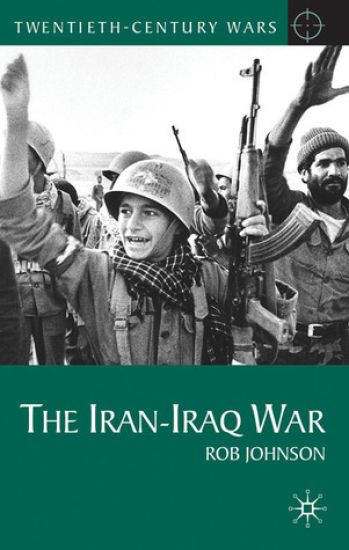
The Iran-Iraq War

The Iran-Iraq War

Rob Johnson

Red Globe Press
2010
sidottu
The Iran-Iraq War was personified by the determination and ambition of the key leaders, Saddam Hussein and Ayatollah Khomeini, and characterised by mass casualties, the repression of the civilian populations and chemical warfare. Fought with lucrative oil money, it left the belligerents with crippling debts.In this important reappraisal, Rob Johnson explores the major issues surrounding the war, offers a fresh analysis of the military aspects and assesses the far-reaching consequences for the wider world. It is essential reading for anyone who wishes to understand the ensuing conflicts in the reqion, including the invasion of Iraq in 2003.
The Iran-Iraq War

The Iran-Iraq War

Rob Johnson

Red Globe Press
2010
nidottu
The Iran-Iraq War was personified by the determination and ambition of the key leaders, Saddam Hussein and Ayatollah Khomeini, and characterised by mass casualties, the repression of the civilian populations and chemical warfare. Fought with lucrative oil money, it left the belligerents with crippling debts.In this important reappraisal, Rob Johnson explores the major issues surrounding the war, offers a fresh analysis of the military aspects and assesses the far-reaching consequences for the wider world. It is essential reading for anyone who wishes to understand the ensuing conflicts in the reqion, including the invasion of Iraq in 2003.
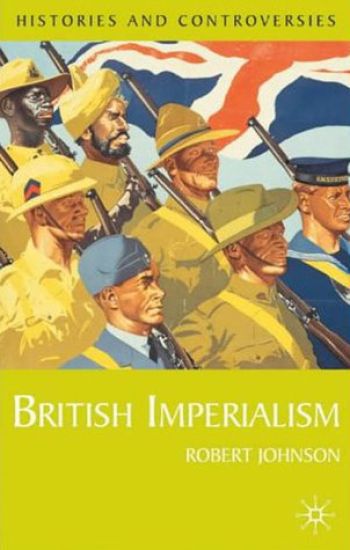
British Imperialism

British Imperialism

Rob Johnson

Red Globe Press
2002
nidottu
This guide offers a succinct, easy-to-read introduction to the key issues and historiography of British imperialism from the late 18th century to 2002. Each chapter addresses questions posed by the nature of imperialism in its various military, economic, political and cultural forms.
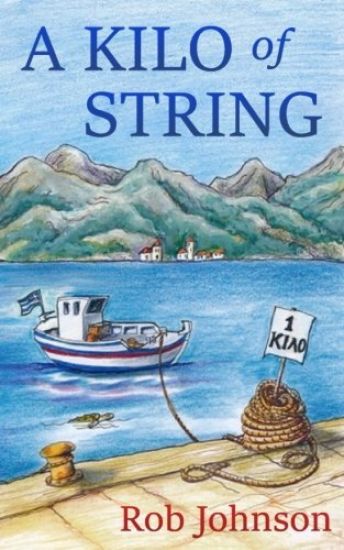
A Kilo of String

A Kilo of String

Rob Johnson

Xerika Publishing
2017
nidottu
"Fabulously funny - a real must for lovers of all things Greek."After living in Greece for thirteen years, writer and reluctant olive farmer Rob Johnson has got used to most of the things that he and his wife Penny found so bizarre at the beginning. Most, but not all.A Kilo of String is the story-so-far of this not-particularly-plucky couple's often bewildering experiences among the descendants of Sophocles, Plato and Nana Mouskouri with occasional digressions into total irrelevances.This is a book which is almost guaranteed not to change your life, but what it will do is answer many of the fundamental questions about life in Greece, such as: How do you avoid ordering a double tomato for your pine marten when booking a hotel room? Should olive harvesting be registered with the Dangerous Sports Association? Why are chicken livers useful (other than to the chickens themselves)?"A brilliant book, very funny and a great insight into Greece and its people.""Left me laughing so hard I would have spat out my dentures, if I wore them."A Kilo of String is loosely based on Rob Johnson's podcast series of the same name, which is free to listen to and download at https: //rob-johnson.org.uk/podcasts/a-kilo-of-string/.
The Lost Years of William S. Burroughs

The Lost Years of William S. Burroughs

Rob Johnson

Texas A M University Press
2006
nidottu
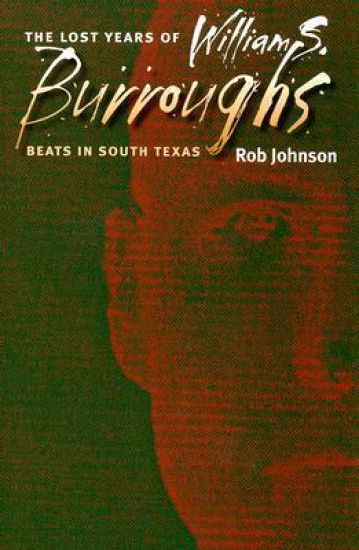
The sometimes raunchy, often legally dubious New York and Mexican exploits of William S. Burroughs, one of the godfathers of the ""Beat"" generation, are well known. Less familiar are his experiences in the Lower Rio Grande Valley of South Texas, where for several years he was a cotton farmer (while avoiding the law in New York). This intriguing chapter in the famous author's life is thoroughly recounted for the first time in Rob Johnson's new book. From 1946 to 1949, Bill Burroughs prepared himself for the writing of his first books by, among other pursuits, raising marijuana and opium poppies and entertaining Beat visitors such as Allen Ginsberg and Neal Cassady at his farm in New Waverly, Texas. Less known, though, are stories about his other farm, a ""serious"" fifty-acre spread, in the Valley near Edinburg, described in the 1977 edition of ""Junky"". Here, he raised legal crops such as cotton, carrots, and peas. Other Beat writers move casually in and out of the narrative, which includes the ""William Tell"" episode in Mexico in which Burroughs fatally shot his wife, who had placed a drink glass on her head as a target.
Abandoned Not Broken

Abandoned Not Broken

Rob Johnson

Xulon Press
2020
pokkari
For many of us, it can be difficult to imagine that our own life stories are worth telling. Are they exciting or impactful enough to share with others? What wisdom can we impart on those we tell? What can younger generations take from our experiences that would even apply to their lives? In this book, Rob Johnson faces these questions head-on. Abandoned, Not Broken tells the moving true story of a young boy adopted as a baby and raised in a small, tight-knit trailer community. Spanning the author's life from birth to present day, this touching memoir explores his troubled beginnings, his spiritual journey, a televised marriage proposal, endeavors in entrepreneurship, a campaign for local office, success, failure, perseverance, and more. All the while, this book offers an honest and powerful testimony of God's love that will move and inspire its readers. Armed with the philosophy that one's story is worth telling if even one person is positively affected by what you've been through, this book sets out to uplift and encourage its readers, proving that the stories God gives us are always worth sharing. Connect with Rob Johnson and let him know how you have been inspired to NEVER GIVE UP... FACEBOOK: Abandoned NoT Broken INSTAGRAM: @robjohnsonanb EMAIL: [email protected]
The Afghan Way of War

The Afghan Way of War

Rob Johnson

C Hurst Co Publishers Ltd
2011
sidottu
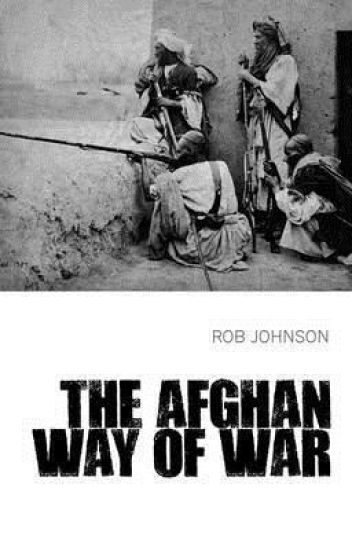
Readers of this book are presented with a novelty, namely the Afghan perspective on the successive military and counterinsurgency campaigns that the British, Russians and Americans/Coalition have fought against the Afghans, from the first encounter in the 1830s to today's ongoing war waged by the Taliban. Included in the narrative are the wider Pashtun population that lived astride the British Imperial/Pakistan border, not just those Pashtuns resident in the modern state of Afghanistan. The literature on the Afghan wars and frontier actions is almost entirely Anglo-centric and 'agency' on the part of Afghans/Pashtuns is almost entirely absent. Even modern accounts by journalists, former soldiers, policy-makers and commentators have tended to reduce the Afghans and Pashtuns to stereotypes and deprive them of any initiative. Ironically their nineteenth-century contemporaries were rather more generous in their appraisal of their fighting prowess. Rob Johnson therefore presents more than just another military history of the Afghan Wars; he seeks to open a new chapter in the debate about Afghanistan and, crucially, aims to 'tell the story' from the Afghan side, countering the inaccurate and sometimes rather fanciful interpretations of events, in order to present a more precise and utilitarian account of the military history of the Afghans. Successive chapters illustrate the various methods adopted by the Afghans to confront their enemies, focussing on a limited number of themes to create coherence. Collectively, they demonstrate that the 'Afghan Way of War' was eminently pragmatic, but that the spirit by which Afghans fought the British, or the Soviets, or each other, was coloured by a cultural code. In recent decades, that code has been altered and eroded dramatically so that in the last ten years what is paramount is the Afghans' sense that they are resisting coercive governance, foreign influences and ideas and occupation.
The Afghan Way of War

The Afghan Way of War

Rob Johnson

C Hurst Co Publishers Ltd
2014
nidottu
Readers of this book are presented with a novelty, namely the Afghan perspective on the successive military and counterinsurgency campaigns that the British, Russians and Americans/Coalition have fought against the Afghans, from the first encounter in the 1830s to today's ongoing war waged by the Taliban. Included in the narrative is the wider Pashtun population that lived astride the British Imperial/Pakistan border, not just those Pashtuns resident in the modern state of Afghanistan. The literature on the Afghan wars and frontier actions is almost entirely Anglo-centric and 'agency' on the part of Afghans/Pashtuns is almost entirely absent. Even modern accounts by journalists, former soldiers, policy-makers and commentators have tended to reduce the Afghans and Pashtuns to stereotypes and deprive them of any initiative. Ironically their nineteenth-century contemporaries were rather more generous in their appraisal of their fighting prowess. Rob Johnson therefore presents more than just another military history of the Afghan Wars; he seeks to open a new chapter in the debate about Afghanistan and, crucially, aims to 'tell the story' from the Afghan side, countering the inaccurate and sometimes rather fanciful interpretations of events, in order to present a more precise and utilitarian account of the military history of the Afghans. Successive chapters illustrate the various methods adopted by the Afghans to confront their enemies, focussing on a limited number of themes to create coherence. Collectively, they demonstrate that the 'Afghan Way of War' was eminently pragmatic, but that the spirit by which Afghans fought the British, or the Soviets, or each other, was coloured by a cultural code. In recent decades, that code has been altered and eroded dramatically so that in the last ten years what has been paramount is the Afghans' sense that they are resisting coercive governance, foreign influences and ideas and occupation.
True to Their Salt

True to Their Salt

Rob Johnson

C Hurst Co Publishers Ltd
2017
sidottu
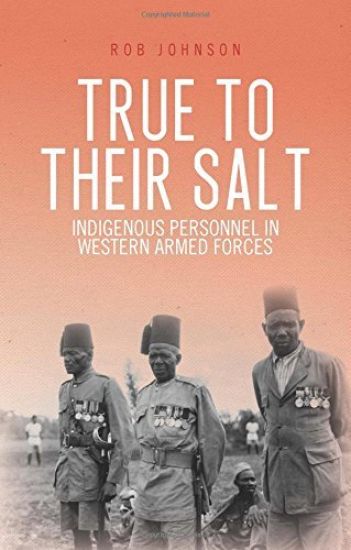
In the last decade an Iraqi Army and an Afghan National Army were created entirely from scratch, the founding of which was deemed to be a crucial measure for the establishment of security and the withdrawal of Western forces from Iraq and Afghanistan. Raising new armies is always problematic, especially during an insurgency, but doing so outside the sovereignty of one's own state raises questions of legality, concerns about their conduct and the risk of an over-empowered local military. The recruitment of proxies, including former insurgents, or the arming of local fighters and auxiliaries, levies and militias, may also exacerbate an internal security situation. In seeking answers to this conundrum Rob Johnson turns to history. His book sets out how recruitment of local auxiliaries was an essential component of European colonialism, and how, in the transfer of power and security at the end of that colonial era, the raising of local forces using existing Western models became the norm. He then offers a comprehensive survey of the post-colonial legacy, particularly the recent utilisation of surrogates and auxiliaries, the work of embedded training teams, and mentoring. Rob Johnson is Departmental Lecturer in the History of War, University of Oxford, and author of The Afghan Way of War: Culture and Pragmatism, A Critical History, published by Hurst.
A Region in Turmoil

A Region in Turmoil

Rob Johnson

Reaktion Books
2005
nidottu
Since 2001 there has been considerable interest in the individual conflicts that have engulfed the states of South Asia, from the long insurgency of Myanmar, through the struggle of the Tamil Tigers in Sri Lanka, the Maoist insurgency in Nepal, the unrest in the Punjab and Assam, the Bangladeshi war of independence, the gruelling conflict in Kashmir, to the intractable conflicts of Afghanistan and the current ?War on Terror?. In A Region in Turmoil: South Asian Conflicts since 1947, Rob Johnson explains and evaluates the historic and political roots of conflicts in South Asia in a systematic and thematic way. To date, few accounts have attempted to draw together the conflicts of the South Asian region as a whole, and they are rarely examined in the regional or global context. The failure to take a regional perspective in the past has meant that important connections have not always been understood in the West, and the view from South Asia has perhaps not been fully explored. The author addresses this gap, illustrating the causes, developments, context and conclusions (or absence of them) of conflicts in the South Asian region. The subject is vitally important, not least because the two leading states, India and Pakistan, are both nuclear powers who have resorted to war with each other on a number of occasions since independence. In addition, the insurgencies of the last fifty years continue to destabilize the states of the region, and now the rest of the world. The global context of these campaigns are analyzed from the end of empire, through the Cold War, to the global effort against terrorism today. Highly topical, this book will be of interest not only to students and scholars, but to a wide general audience as well.