Kirjojen hintavertailu. Mukana 11 342 296 kirjaa ja 12 kauppaa.

Kirjahaku

Etsi kirjoja tekijän nimen, kirjan nimen tai ISBN:n perusteella.

6 kirjaa tekijältä Rob Wallace

Improvisation and the Making of American Literary Modernism

Improvisation and the Making of American Literary Modernism

Rob Wallace

Continuum Publishing Corporation
2012
nidottu
This title explores the concept and practice of improvisation in literary modernism and the interconnections between American literature and music. Improvisation, despite its almost ubiquitous presence in many art forms, is notoriously misunderstood and mysterious. Although earlier strands of American philosophy and art emphasized what might be called improvisational practices, it was during the modernist period that improvisational practice and theory began to make a significant impact on art and culture, specifically via the African American musical forms of jazz and blues. This musical development held important consequences for the larger artistic, cultural, and political life of America as a whole - and, eventually, the world. The historical convergence of jazz and philosophical currents like pragmatism in American culture provides the framework for Wallace's discussion of improvisation in literary modernism. Focusing on poets ranging from Gertrude Stein to Langston Hughes, Wallace's work provides a fresh perspective on the complex circuits of modernist culture. "Improvisation and The Making of American Literary Modernism" will be of interest to scholars of poetry, music, American and modernist studies, and race and ethnic studies.

Improvisation and the Making of American Literary Modernism

Improvisation and the Making of American Literary Modernism

Rob Wallace

CONTINUUM PUBLISHING CORPORATION
2010
sidottu
Improvisation, despite its almost ubiquitous presence in many art forms, is notoriously misunderstood and mysterious. Although earlier strands of American philosophy and art emphasized what might be called improvisational practices, it was during the modernist period that improvisational practice and theory began to make a significant impact on art and culture, specifically via the African American musical forms of jazz and blues. This musical development held important consequences for the larger artistic, cultural, and political life of America as a whole and, eventually, the world. The historical convergence of jazz and philosophical currents like pragmatism in American culture provides the framework for Wallace's discussion of improvisation in literary modernism. Focusing on poets ranging from Gertrude Stein to Langston Hughes, Wallace's work provides a fresh perspective on the complex circuits of modernist culture. Improvisation and The Making of American Literary Modernism will be of interest to scholars of poetry, music, American and modernist studies, and race and ethnic studies.
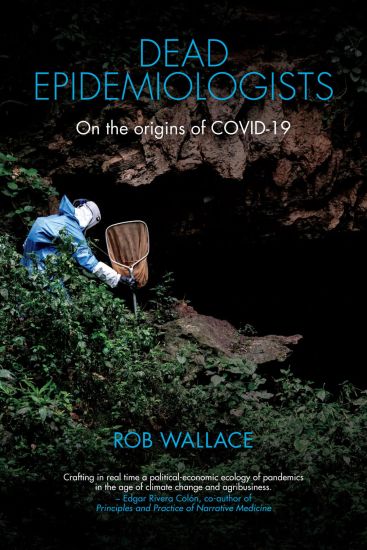
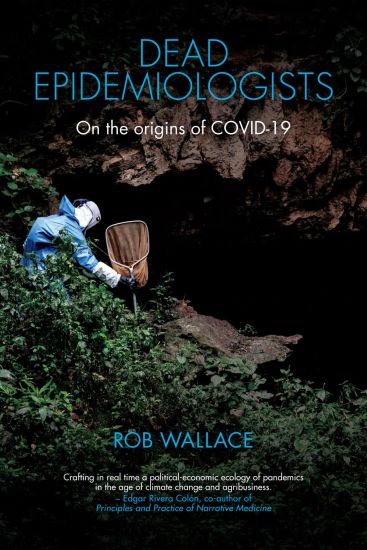
Dead Epidemiologists

Dead Epidemiologists

Rob Wallace

Monthly Review Press,U.S.
2020
nidottu
The COVID-19 pandemic shocked the world. It shouldn’t have. Since this century’s turn, epidemiologists have warned of new infectious diseases. Indeed, H1N1, H7N9, SARS, MERS, Ebola Makona, Zika, and a variety of lesser viruses have emerged almost annually. But what of the epidemiologists themselves? Some bravely descended into the caves where bat species hosted coronaviruses, including the strains that evolved into the COVID-19 virus. Yet, despite their own warnings, many of the researchers appear unable to understand the true nature of the disease—as if they are dead to what they’ve seen. Dead Epidemiologists is an eclectic collection of commentaries, articles, and interviews revealing the hidden-in-plain-sight truth behind the pandemic: Global capital drove the deforestation and development that exposed us to new pathogens. Rob Wallace and his colleagues—ecologists, geographers, activists, and, yes, epidemiologists—unpack the material and conceptual origins of COVID-19. From deepest Yunnan to the boardrooms of New York City, this book offers a compelling diagnosis of the roots of COVID-19, and a stark prognosis of what—without further intervention—may come.
Dead Epidemiologists

Dead Epidemiologists

Rob Wallace

Monthly Review Press,U.S.
2020
sidottu
The COVID-19 pandemic shocked the world. It shouldn’t have. Since this century’s turn, epidemiologists have warned of new infectious diseases. Indeed, H1N1, H7N9, SARS, MERS, Ebola Makona, Zika, and a variety of lesser viruses have emerged almost annually. But what of the epidemiologists themselves? Some bravely descended into the caves where bat species hosted coronaviruses, including the strains that evolved into the COVID-19 virus. Yet, despite their own warnings, many of the researchers appear unable to understand the true nature of the disease—as if they are dead to what they’ve seen. Dead Epidemiologists is an eclectic collection of commentaries, articles, and interviews revealing the hidden-in-plain-sight truth behind the pandemic: Global capital drove the deforestation and development that exposed us to new pathogens. Rob Wallace and his colleagues—ecologists, geographers, activists, and, yes, epidemiologists—unpack the material and conceptual origins of COVID-19. From deepest Yunnan to the boardrooms of New York City, this book offers a compelling diagnosis of the roots of COVID-19, and a stark prognosis of what—without further intervention—may come.
The Fault in Our Sars

The Fault in Our Sars

Rob Wallace

MONTHLY REVIEW PRESS,U.S.
2023
pokkari
Proposes the pragmatic changes we must make to survive COVID and the worst of the new diseases on the horizonThe Trump administration's neglect and incompetence helped put half-a-million Americans in the ground, dead from COVID-19. Joe Biden was elected president in part on the promise of setting us on a science-driven course correction, but, a little more than a year later, another half-a-million Americans were killed by the virus. What happened? In The Fault in Our SARS, evolutionary epidemiologist Rob Wallace catalogs the Biden administration's failures in controlling the outbreak. He also shows that, beyond matters of specific political persona or party, it was a decades-long structural decline associated with putting profits ahead of people that gutted U.S. public health. COVID-19 isn't just an American tragedy. Each in its own way, countries around the world following the "profit-first" model failed their people. Global vaccination campaigns were bottled up by efforts to protect pharmaceutical companies' intellectual property rights. Economies were treated as somehow more real than the people and ecologies upon which they depend. Frustrated populations pushed back against lockdowns, abuses of governmental trust, and, fair or not, the very concept of public health. A social rot meanwhile wended its way into the heart of the sciences that, tasked with controlling disease, serve the systems that helped bring about COVID-19 in the first place. In The Fault in Our SARS, Wallace and an array of invited contributors aim to strip down the capitalist social psychology that in effect protected the SARS virus. The team proposes instead new approaches in health and ecology that appeal both to humanity's highest ideals and the pragmatic changes we must make to survive COVID and the worst of the new diseases on the horizon.
The Fault in Our Sars

The Fault in Our Sars

Rob Wallace

MONTHLY REVIEW PRESS,U.S.
2023
sidottu
Proposes the pragmatic changes we must make to survive COVID and the worst of the new diseases on the horizonThe Trump administration's neglect and incompetence helped put half-a-million Americans in the ground, dead from COVID-19. Joe Biden was elected president in part on the promise of setting us on a science-driven course correction, but, a little more than a year later, another half-a-million Americans were killed by the virus. What happened? In The Fault in Our SARS, evolutionary epidemiologist Rob Wallace catalogs the Biden administration's failures in controlling the outbreak. He also shows that, beyond matters of specific political persona or party, it was a decades-long structural decline associated with putting profits ahead of people that gutted U.S. public health. COVID-19 isn't just an American tragedy. Each in its own way, countries around the world following the "profit-first" model failed their people. Global vaccination campaigns were bottled up by efforts to protect pharmaceutical companies' intellectual property rights. Economies were treated as somehow more real than the people and ecologies upon which they depend. Frustrated populations pushed back against lockdowns, abuses of governmental trust, and, fair or not, the very concept of public health. A social rot meanwhile wended its way into the heart of the sciences that, tasked with controlling disease, serve the systems that helped bring about COVID-19 in the first place. In The Fault in Our SARS, Wallace and an array of invited contributors aim to strip down the capitalist social psychology that in effect protected the SARS virus. The team proposes instead new approaches in health and ecology that appeal both to humanity's highest ideals and the pragmatic changes we must make to survive COVID and the worst of the new diseases on the horizon.