Kirjojen hintavertailu. Mukana 11 244 527 kirjaa ja 12 kauppaa.

Kirjahaku

Etsi kirjoja tekijän nimen, kirjan nimen tai ISBN:n perusteella.

12 kirjaa tekijältä Rob Wilson

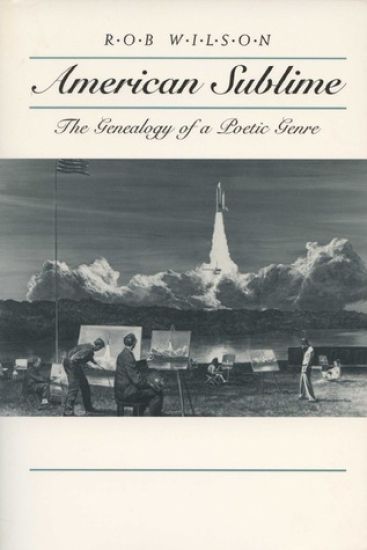
American Sublime

American Sublime

Rob Wilson

University of Wisconsin Press
1991
nidottu
Tracing ideas of the sublime in American literature from Puritan writings to the postmodern epoch, the author demonstrates that the North American landscape has been the ground for political as well as aesthetic transport. He adopts an historical approach to the subject.
The Shelly Cashman Series® Microsoft® Office 365® & Excel® Comprehensive
Kaye's THE SHELLY CASHMAN SERIES® MICROSOFT® OFFICE 365® & EXCEL® COMPREHENSIVE, 1st Edition, includes updated Microsoft 365 features and enhanced support for Mac users in introductory-level modules. The trademark step-by-step, screen-by-screen, project-based approach encourages you to expand your understanding of Office applications through experimentation and critical thinking. Module Learning objectives are mapped to Microsoft Office Specialist (MOS) certification objectives. In addition, MindTap and updated SAM (Skills Assessment Manager) digital resources are available to guide additional study and ensure successful results.
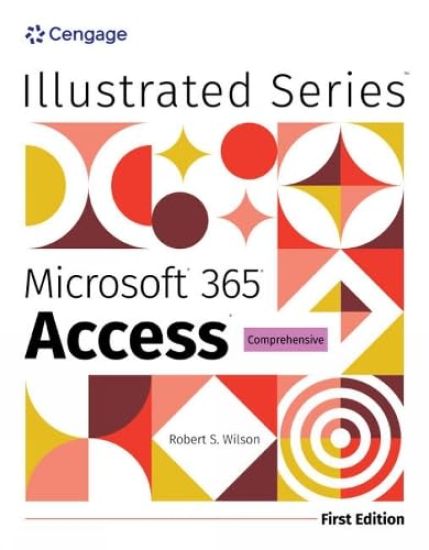
Illustrated Microsoft® 365® Access® Comprehensive, First Edition
Including the latest Microsoft 365 features and enhanced support for Mac users in introductory level modules, Wilson's ILLUSTRATED MICROSOFT® 365® ACCESS® COMPREHENSIVE, FIRST EDITION, helps you quickly master the nuances of Microsoft® Office. Its concise, student-friendly approach uses a proven two-page layout that allows you to work through an entire task without turning the page. Each module begins with a brief overview of the principles covered while large, full-color screen images illustrate what you see on your computer. Module Learning Objectives are mapped to Microsoft Office Specialist (MOS) certification objectives, and module scenarios are based on data from market insights, helping you sharpen the critical skills you need for real-world success. In addition, MindTap and SAM (Skills Assessment Manager) digital resources help maximize your study time and results.
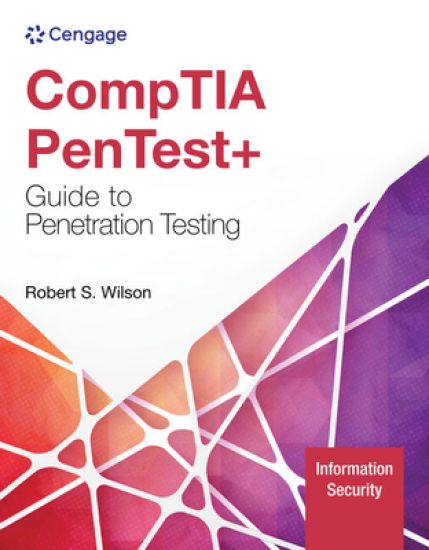
CompTIA PenTest+ Guide to Penetration Testing

CompTIA PenTest+ Guide to Penetration Testing

Rob Wilson

CENGAGE LEARNING, INC
2023
nidottu
Cybersecurity attacks grow more complex every day. The first edition of Wilson's COMPTIA PENTEST+ GUIDE TO PENETRATION TESTING helps you gain the knowledge and skills necessary to analyze systems in the same way hackers do. It provides the information you need to successfully pass the CompTIA PenTest+ PTO-002 certification exam and contains detailed examples, projects, and hands-on activities (including virtual machine labs and interactive online features) where you can practice using the actual tools and methodologies needed to be a successful penetration tester. The author begins by exploring the concept of penetration testing, and then walks you through the process of building your own penetration testing lab of virtual machines (hosted on your own computer, which is used to practice the use of pen testing tools and methods). A final project guides you in the creation of a penetration testing report that includes all the areas covered in earlier modules.
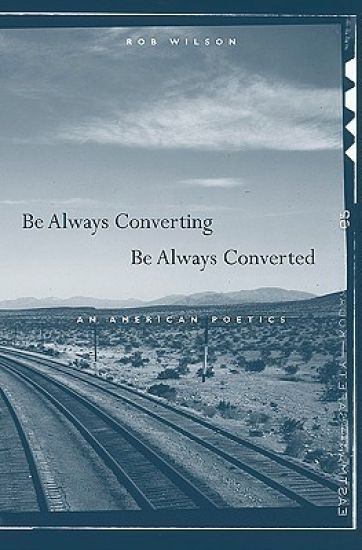
Be Always Converting, Be Always Converted

Be Always Converting, Be Always Converted

Rob Wilson

Harvard University Press
2009
sidottu
“Be always converting, and be always converted; turn us again, O Lord,” Thomas Shepard urged his Cambridge congregation in the 1640s. This mandate coming down from American Puritan times to New Age seekers, to be “always converting, and always converted,” places a radical burden on the self as site of renewal and world-change, even as conversion becomes surrounded by deconversion (rejection of prior beliefs) and counterconversion (turns to alternative beliefs) across global modernity.Rob Wilson’s reconceptualization of the American project of conversion begins with the story of Henry ‘Opukaha‘ia, the first Hawaiian convert to Christianity, “torn from the stomach” of his Native Pacific homeland and transplanted to New England. Wilson argues that ‘Opukaha‘ia’s conversion is both remarkable and prototypically American, because he dared to redefine himself via this drive to rebirth.By mapping the poetics and politics of conversion and counterconversion, Wilson returns conversion to its central place in the American literature, history, and psyche. Through ‘Opukaha‘ia’s story, and through the works of the Tongan social scientist and fiction writer Epeli Hau‘ofa, Wild West poet Ai, and the mercurial Bob Dylan, Wilson demonstrates that conversion—seemingly an anachronistic concern in this secular age—is instead a global, yet deeply American subject, less about “salvation” or finality than about “experimentation” and the quest for modern beatitude.
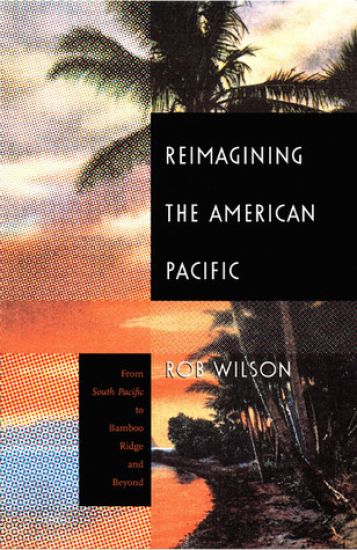
Reimagining the American Pacific

Reimagining the American Pacific

Rob Wilson

Duke University Press
2000
sidottu
In this compelling critique Rob Wilson explores the creation of the “Pacific Rim” in the American imagination and how the concept has been variously adapted and resisted in Hawai‘i, the Pacific Islands, New Zealand, and Australia. Reimagining the American Pacific ranges from the nineteenth century to the present and draws on theories of postmodernism, transnationality, and post-Marxist geography to contribute to the ongoing discussion of what constitutes “global” and “local.”Wilson begins by tracing the arrival of American commerce and culture in the Pacific through missionary and imperial forces in the nineteenth century and the parallel development of Asia/Pacific as an idea. Using an impressive range of texts-from works by Herman Melville, James Michener, Maori and Western Samoan novelists, and Bamboo Ridge poets to Baywatch, films and musicals such as South Pacific and Blue Hawaii, and native Hawaiian shark god poetry-Wilson illustrates what it means for a space to be “regionalized.” Claiming that such places become more open to transnational flows of information, labor, finance, media, and global commodities, he explains how they then become isolated, their borders simultaneously crossed and fixed. In the case of Hawai’i, Wilson argues that culturally innovative, risky forms of symbol making and a broader-more global-vision of local plight are needed to counterbalance the racism and increasing imbalance of cultural capital and goods in the emerging postplantation and tourist-centered economy.Reimagining the American Pacific leaves the reader with a new understanding of the complex interactions of global and local economies and cultures in a region that, since the 1970s, has been a leading trading partner of the United States. It is an engaging and provocative contribution to the fields of Asian and American studies, as well as those of cultural studies and theory, literary criticism, and popular culture.
Reimagining the American Pacific

Reimagining the American Pacific

Rob Wilson

Duke University Press
2000
pokkari
In this compelling critique Rob Wilson explores the creation of the “Pacific Rim” in the American imagination and how the concept has been variously adapted and resisted in Hawai‘i, the Pacific Islands, New Zealand, and Australia. Reimagining the American Pacific ranges from the nineteenth century to the present and draws on theories of postmodernism, transnationality, and post-Marxist geography to contribute to the ongoing discussion of what constitutes “global” and “local.”Wilson begins by tracing the arrival of American commerce and culture in the Pacific through missionary and imperial forces in the nineteenth century and the parallel development of Asia/Pacific as an idea. Using an impressive range of texts-from works by Herman Melville, James Michener, Maori and Western Samoan novelists, and Bamboo Ridge poets to Baywatch, films and musicals such as South Pacific and Blue Hawaii, and native Hawaiian shark god poetry-Wilson illustrates what it means for a space to be “regionalized.” Claiming that such places become more open to transnational flows of information, labor, finance, media, and global commodities, he explains how they then become isolated, their borders simultaneously crossed and fixed. In the case of Hawai’i, Wilson argues that culturally innovative, risky forms of symbol making and a broader-more global-vision of local plight are needed to counterbalance the racism and increasing imbalance of cultural capital and goods in the emerging postplantation and tourist-centered economy.Reimagining the American Pacific leaves the reader with a new understanding of the complex interactions of global and local economies and cultures in a region that, since the 1970s, has been a leading trading partner of the United States. It is an engaging and provocative contribution to the fields of Asian and American studies, as well as those of cultural studies and theory, literary criticism, and popular culture.
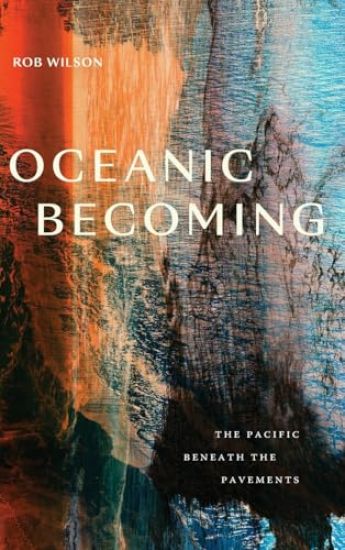
Oceanic Becoming

Oceanic Becoming

Rob Wilson

DUKE UNIVERSITY PRESS
2025
sidottu
From disappearing coral reefs and ocean acidification to floating great garbage patches, the Pacific Ocean is an ever-present reminder of the Anthropocene. In Oceanic Becoming, Rob Wilson demonstrates that in the midst of the planetary crises the Pacific now faces, it must be understood as interconnected to the other oceans. Wilson frames this interconnection as “Oceania,” reconceiving the world oceans as tied to sites of urban dwelling and life sustenance-from Boston to Brisbane-that are increasingly threatened by late capitalism. Confronting these threats, Wilson argues, requires a project he theorizes as “worlding”-a process of world-making and world-remaking across Oceania that would create new forms of belonging and connection at local, regional, and transnational levels. Wilson shows how Oceania is not just a site of peril but one charged with emergent literary and social formations that can provide the basis for new solidarities, futures, and ecologies.
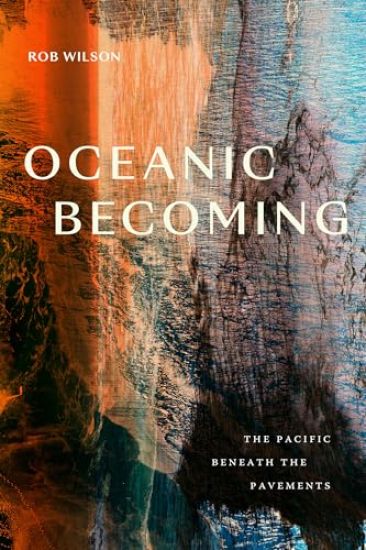
Oceanic Becoming

Oceanic Becoming

Rob Wilson

DUKE UNIVERSITY PRESS
2025
pokkari
From disappearing coral reefs and ocean acidification to floating great garbage patches, the Pacific Ocean is an ever-present reminder of the Anthropocene. In Oceanic Becoming, Rob Wilson demonstrates that in the midst of the planetary crises the Pacific now faces, it must be understood as interconnected to the other oceans. Wilson frames this interconnection as “Oceania,” reconceiving the world oceans as tied to sites of urban dwelling and life sustenance-from Boston to Brisbane-that are increasingly threatened by late capitalism. Confronting these threats, Wilson argues, requires a project he theorizes as “worlding”-a process of world-making and world-remaking across Oceania that would create new forms of belonging and connection at local, regional, and transnational levels. Wilson shows how Oceania is not just a site of peril but one charged with emergent literary and social formations that can provide the basis for new solidarities, futures, and ecologies.