Kirjojen hintavertailu. Mukana 11 342 296 kirjaa ja 12 kauppaa.

Kirjahaku

Etsi kirjoja tekijän nimen, kirjan nimen tai ISBN:n perusteella.

5 kirjaa tekijältä Robert A. Cook

SunWatch

SunWatch

Robert A. Cook

The University of Alabama Press
2007
sidottu
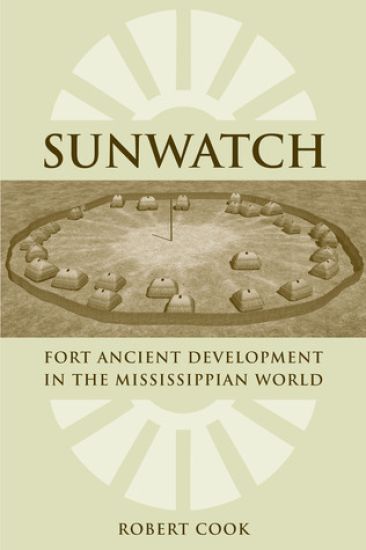
The last prehistoric cultures to inhabit the Middle Ohio Valley (ca. A.D. 1000-1650) are referred to as Fort Ancient societies, which exhibited a wide variety of Mississippian period characteristics. What is less well-known and little understood are the social processes by which Mississippian characteristics spread to Fort Ancient communities. Through a comprehensive study of SunWatch, one of the few thoroughly excavated Fort Ancient settlements, the author focuses on the development of village social structure within a broad geographic and temporal framework, recognizing border areas as particularly dynamic contexts of social change. As a fundamental study of social patterning of Fort Ancient villages, this work reveals the interrelationships of small social units in culture change and social structure development and provides a full reconsideration of the Mississippian dimensions of Fort Ancient societies and a model for future investigations of larger patterning in the late prehistory of the region.
SunWatch

SunWatch

Robert A. Cook

The University of Alabama Press
2007
nidottu
This is a model for investigations of the Mississippian dimensions of Fort Ancient societies. The last prehistoric cultures to inhabit the Middle Ohio Valley (ca. A.D. 1000-1650) are referred to as Fort Ancient societies, which exhibited a wide variety of Mississippian period characteristics. What is less well known and little understood are the social processes by which Mississippian characteristics spread to Fort Ancient communities. Through a comprehensive study of Sun Watch, one of the few thoroughly excavated Fort Ancient settlements, the author focuses on the development of village social structure within a broad geographic and temporal framework, recognizing border areas as particularly dynamic contexts of social change. As a fundamental study of social patterning of Fort Ancient villages, this work reveals the interrelationships of small social units in culture change and social structure development and provides a full reconsideration of the Mississippian dimensions of Fort Ancient societies and a model for future investigations of larger patterning in the late prehistory of the region.
Continuity and Change in the Native American Village

Continuity and Change in the Native American Village

Robert A. Cook

Cambridge University Press
2017
sidottu
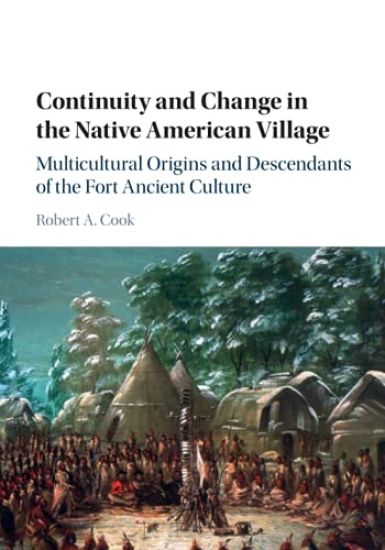
Two common questions asked in archaeological investigations are: where did a particular culture come from, and which living cultures is it related to? In this book, Robert A. Cook brings a theoretically and methodologically holistic perspective to his study on the origins and continuity of Native American villages in the North American Midcontinent. He shows that to affiliate archaeological remains with descendant communities fully we need to unaffiliate some of our well-established archaeological constructs. Cook demonstrates how and why Native American villages formed and responded to events such as migration, environment and agricultural developments. He focuses on the big picture of cultural relatedness over broad regions and the amount of social detail that can be gleaned from archaeological and biological data, as well as oral histories.
Continuity and Change in the Native American Village

Continuity and Change in the Native American Village

Robert A. Cook

Cambridge University Press
2021
pokkari
Two common questions asked in archaeological investigations are: where did a particular culture come from, and which living cultures is it related to? In this book, Robert A. Cook brings a theoretically and methodologically holistic perspective to his study on the origins and continuity of Native American villages in the North American Midcontinent. He shows that to affiliate archaeological remains with descendant communities fully we need to unaffiliate some of our well-established archaeological constructs. Cook demonstrates how and why Native American villages formed and responded to events such as migration, environment and agricultural developments. He focuses on the big picture of cultural relatedness over broad regions and the amount of social detail that can be gleaned from archaeological and biological data, as well as oral histories.