Kirjojen hintavertailu. Mukana 12 539 609 kirjaa ja 12 kauppaa.

Kirjahaku

Etsi kirjoja tekijän nimen, kirjan nimen tai ISBN:n perusteella.

13 kirjaa tekijältä Robert A. Kaster

Cicero: Brutus and Orator

Cicero: Brutus and Orator

Robert A. Kaster

Oxford University Press Inc
2020
sidottu
Cicero's Brutus and Orator constitute his final major statements on the history of Roman oratory and the nature of the ideal orator. In the Brutus he traces the development of political and judicial speech over the span of 150 years, from the early second century to 46 BCE, when both of these treatises were written. In an immensely detailed account of some 200 speakers from the past he dispenses an expert's praise and criticism, provides an unparalleled resource for the study of Roman rhetoric, and engages delicately with the fraught political circumstances of the day, when the dominance of Julius Caesar was assured and the future of Rome's political institutions was thrown into question. The Orator written several months later, describes the form of oratory that Cicero most admired, even though he insists that neither he nor any other orator has been able to achieve it. At the same time, he defends his views against critics — the so-called Atticists — who found Cicero's style overwrought. In this volume, the first English translation of both works in more than eighty years, Robert Kaster provides faithful and eminently readable renderings, along with a detailed introduction that places the works in their historical and cultural context and explains the key stylistic concepts and terminology that Cicero uses in his analyses. Extensive notes accompany the translations, helping readers at every step contend with unfamiliar names, terms, and concepts from Roman culture and history.
Cicero: Brutus and Orator

Cicero: Brutus and Orator

Robert A. Kaster

Oxford University Press Inc
2020
nidottu
Cicero's Brutus and Orator constitute his final major statements on the history of Roman oratory and the nature of the ideal orator. In the Brutus he traces the development of political and judicial speech over the span of 150 years, from the early second century to 46 BCE, when both of these treatises were written. In an immensely detailed account of some 200 speakers from the past he dispenses an expert's praise and criticism, provides an unparalleled resource for the study of Roman rhetoric, and engages delicately with the fraught political circumstances of the day, when the dominance of Julius Caesar was assured and the future of Rome's political institutions was thrown into question. The Orator written several months later, describes the form of oratory that Cicero most admired, even though he insists that neither he nor any other orator has been able to achieve it. At the same time, he defends his views against critics — the so-called Atticists — who found Cicero's style overwrought. In this volume, the first English translation of both works in more than eighty years, Robert Kaster provides faithful and eminently readable renderings, along with a detailed introduction that places the works in their historical and cultural context and explains the key stylistic concepts and terminology that Cicero uses in his analyses. Extensive notes accompany the translations, helping readers at every step contend with unfamiliar names, terms, and concepts from Roman culture and history.
Studies on the Text of Seneca's De beneficiis

Studies on the Text of Seneca's De beneficiis

Robert A. Kaster

Oxford University Press
2021
sidottu
Studies on the Text of Seneca's De beneficiis is a companion volume to Kaster's Oxford Classical Texts critical edition of Seneca's De beneficiis, the first new edition in nearly a century. De beneficiis is the most detailed treatment surviving from antiquity of the proper ways to show favour to others and to express gratitude when one has been favoured. After a survey of the documentary resources (medieval and Renaissance manuscripts and earlier printed editions) on which our knowledge of the text depends, the core of the book-seven chapters, one for each of the treatise's seven books--treats 200 passages where the Latin text is or has been thought to be corrupt and clarifies the reasons for favouring the reading adopted in the new edition. Three appendices treat further matters of detail. Three indexes detailing passages discussed or cited, personal names, and manuscripts and editions provide a useful guide for the reader.
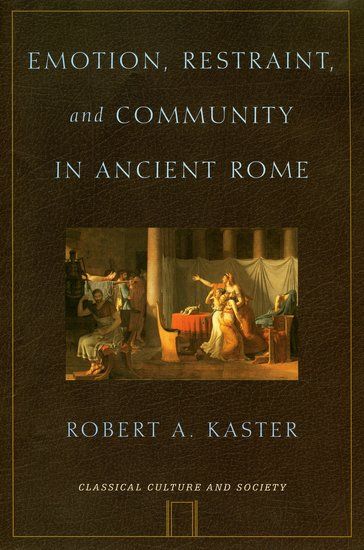
Emotion, Restraint, and Community in Ancient Rome

Emotion, Restraint, and Community in Ancient Rome

Robert A. Kaster

Oxford University Press Inc
2005
sidottu
Emotion, Restraint, and Community examines the ways in which emotions, and talk about emotions, interacted with the ethics of the Roman upper classes in the late Republic and early Empire. By considering how various Roman forms of fear, dismay, indignation, and revulsion created an economy of displeasure that shaped society in constructive ways, the book casts new light both on the Romans and on cross-cultural understanding of emotions.
Emotion, Restraint and Community in Ancient Rome

Emotion, Restraint and Community in Ancient Rome

Robert A. Kaster

Oxford University Press Inc
2007
nidottu
Emotion, Restraint, and Community examines the ways in which emotions, and talk about emotions, interacted with the ethics of the Roman upper classes in the late Republic and early Empire. By considering how various Roman forms of fear, dismay, indignation, and revulsion created an economy of displeasure that shaped society in constructive ways, the book casts new light both on the Romans and on cross-cultural understanding of emotions.
Studies on the Text of Suetonius' De uita Caesarum

Studies on the Text of Suetonius' De uita Caesarum

Robert A. Kaster

Oxford University Press
2016
sidottu
Studies on the Text of Suetonius' De uita Caesarum is a companion volume to the critical edition of Suetonius' Lives of the Caesars in the Oxford Classical Texts series, edited by Robert Kaster. It provides detailed insight into the research and textual analysis behind the edition. Part I presents the first comprehensive and accurate account of the medieval manuscript tradition (ninth to thirteenth centuries) on which the Oxford Classical Text is based, and Part II analyses hundreds of passages where a variety of textual problems are encountered, often offering new solutions. Four appendices provide additional support to the arguments of Part I, while a fifth lists all the places (just over 300) where the new text differs from the edition by Maximilian Ihm that has been the standard since 1907.
Seneca: De Beneficiis (L. Annaei Senecae De beneficiis: Libri VII, De clementia: Libri II, Apocolocyntosis)
This is the first new critical edition of De beneficiis in almost 100 years, based on a fresh examination of the extant archetype (N) and on more extensive familiarity with the later medieval and humanist manuscripts than any previous edition. Each work in the edition is provided with a critical apparatus that is both informative and economical. The apparatus fontium et testium standing between the text and the critical apparatus on each page provides full references to the texts Seneca himself cites and extensive cross-references among the three works in the edition and between those works and Seneca's other prose writings, along with many parallel passages beyond the Senecan corpus. An appendix critica to De beneficiis contains much information on the text's documentary basis and critical history that future editors should find useful to have at hand even if it was not judged worthy of inclusion in this edition's critical apparatus.
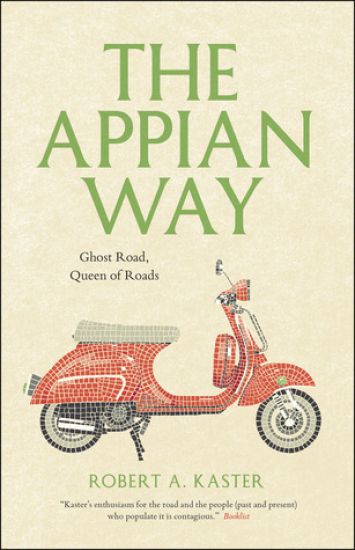
The Appian Way

The Appian Way

Robert A. Kaster

University of Chicago Press
2014
nidottu
To walk on remnants of the storied Appian Way today, from Rome to the heel of Italy, is to walk in the footsteps of ghosts. Our guide to those ghosts-and the layers of history they represent-is Robert A. Kaster. In The Appian Way, he brings a lifetime of studying Roman literature and history to his adventures along the ancient highway. A footsore Roman soldier pushing the imperial power south; craftsmen and farmers bringing their goods to the towns that lined the road; pious pilgrims headed to Jerusalem-all come to life once more as Kaster travels what's left of the Appian Way. He invites us to close our eyes and trek with him back in time, to the campaigns of Garibaldi, the revolt of Spartacus, and the glory days of Imperial Rome. No traveler will want to miss this fascinating journey.
The Appian Way

The Appian Way

Robert A. Kaster

University of Chicago Press
2012
sidottu
The Roman poet Statius called the Via Appia "the Queen of Roads," and for nearly a thousand years that description held true, as countless travelers trod its path from the center of Rome to the heel of Italy. Today, the road is all but gone, destroyed by time, neglect, and the incursions of modernity; to travel the Appian Way today is to be a seeker, to walk in the footsteps of ghosts. Our guide to those ghosts - and the layers of history they represent - is Robert A. Kaster. In "The Appian Way", he brings a lifetime of studying Roman literature and history to his adventures along the ancient highway. A footsore Roman soldier pushing the imperial power south; craftsmen and farmers bringing their goods to the towns that lined the road; pious pilgrims headed to Jerusalem, using stage-by-stage directions we can still follow - all come to life once more as Kaster walks (and drives - and suffers car trouble) on what's left of the Appian Way. Other voices help him tell the story: Cicero, Goethe, Hawthorne, Dickens, James, and even Monty Python offer commentary, insight, and curmudgeonly grumbles, their voices blending like the ages of the road to create a telescopic, perhaps kaleidoscopic, view of present and past. To stand on the remnants of the Via Appia today is to stand in the pathway of history. With "The Appian Way", Kaster invites us to close our eyes and walk with him back in time, to the campaigns of Garibaldi, the revolt of Spartacus, and the glory days of Imperial Rome. No traveler will want to miss this fascinating journey.
Guardians of Language

Guardians of Language

Robert A. Kaster

University of California Press
1988
sidottu
What did it mean to be a professional teacher in the prestigious "liberal schools" - the schools of grammar and rhetoric - in late antiquity? How can we account for the abiding prestige of these schools, which remained substantially unchanged in their methods and standing despite the political and religious changes that had taken place around them? The grammarian was a pivotal figure in the lives of the educated upper classes of late antiquity. Introducing his students to correct language and to the literature esteemed by long tradition, he began the education that confirmed his students' standing in a narrowly defined elite. His profession thus contributed to the social as well as cultural continuity of the Empire. The grammarian received honor - and criticism; the profession gave the grammarian a firm sense of cultural authority but also placed him in a position of genteel subordination within the elite. Robert A. Kaster provides the first thorough study of the place and function of these important but ambiguous figures. He also gives a detailed prosopography of the grammarians, and of the other "teachers of letters" below the level of rhetoric, from the middle of the third through the middle of the sixth century, which will provide a valuable research tool for other students of late-antique education.
Anger, Mercy, Revenge

Anger, Mercy, Revenge

Lucius Annaeus Seneca; Robert A Kaster; Martha C Nussbaum; Robert A. Kaster; Martha C. Nussbaum

University of Chicago Press
2010
sidottu
Lucius Annaeus Seneca (4 BCE to 65 CE) was a Roman Stoic philosopher, dramatist, statesman, and advisor to the emperor Nero, all during the Silver Age of Latin literature. Here, with the publication of "Anger, Mercy, Revenge" and "Natural Questions", the University of Chicago Press proudly inaugurates "The Complete Works of Lucius Annaeus Seneca", a fresh and compelling series of new English-language translations of his works in eight accessible volumes. Edited by world-renowned classicists Elizabeth Asmis, Shadi Bartsch, and Martha C. Nussbaum, this engaging collection restores Seneca - whose works have been highly praised by modern authors from Erasmus to Emerson - to his rightful place among those classical writers most widely studied in the humanities. "Anger, Mercy, Revenge" comprises three key writings: the moral essays 'On Anger' and 'On Clemency' - which were penned as advice for the then young emperor Nero - and the Apocolocyntosis, a brilliant satire lampooning the end of the reign of Claudius. "Natural Questions" is a stand-alone treatise in which Seneca compiles and comments on the physical sciences of his day, offering us a valuable look at the ancient scientific mind at work. Both volumes introduce the Latinless reader to the writings of one of the ancient world's most fascinating - and acclaimed - philosophical figures, making them perfect for the undergraduate student and lay scholar alike.
Anger, Mercy, Revenge

Anger, Mercy, Revenge

Lucius Annaeus Seneca; Robert A Kaster; Martha C Nussbaum; Robert A. Kaster; Martha C. Nussbaum

University of Chicago Press
2012
nidottu
Lucius Annaeus Seneca (4 BCE - 65 CE) was a Roman Stoic philosopher, dramatist, statesman, and adviser to the emperor Nero, all during the Silver Age of Latin literature. The "Complete Works of Lucius Annaeus Seneca" is a fresh and compelling series of new English-language translations of his works in eight accessible volumes. Edited by world-renowned classicists Elizabeth Asmis, Shadi Bartsch, and Martha C. Nussbaum, this engaging collection restores Seneca - whose works have been highly praised by modern authors from Desiderius Erasmus to Ralph Waldo Emerson - to his rightful place among the classical writers most widely studied in the humanities. "Anger, Mercy, Revenge" comprises three key writings: the moral essays "On Anger" and "On Clemency" - the latter penned as advice for the young emperor Nero - and the "Apocolocyntosis", a brilliant satire lampooning the end of the reign of Claudius. Friend and tutor, as well as philosopher, Seneca welcomed the end of Claudius' sovereignty and the beginning of the age of Nero in tones alternately serious, poetic, and comic - making "Anger, Mercy, Revenge" a collection just as complicated, astute, and ambitious as its author.